

A familiar paddle brand, a large discount, and a storefront that looks ready for tournament season. Joolauspickleball.com gives shoppers plenty to recognize at first glance.
The useful question comes before checkout: who would actually take your payment, and what connects this particular website to the brand on the paddle?
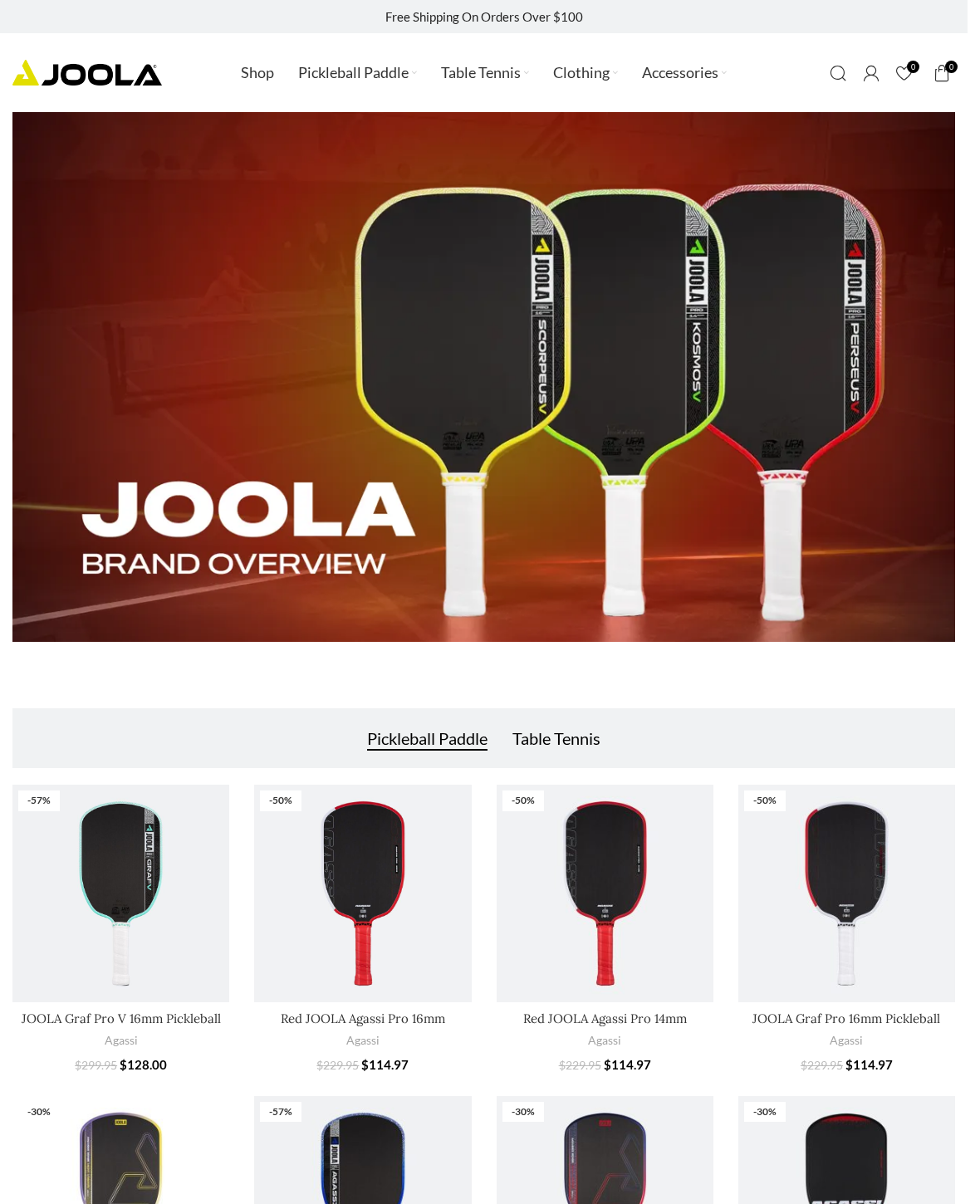
Overview
The official-store presentation deserves a serious challenge
Our Joolauspickleball.com review found official-store language, a newly registered domain, weak seller identification, and a published complaint about payment without an order confirmation.
The site should not be treated as JOOLA’s official store simply because it uses the brand’s name, product images, or sporting history.
JOOLA’s established website is joola.com. An independent retailer needs its own verifiable identity and a separately established relationship with the brand.
The main findings are:
- Registry data records the domain’s creation on October 8, 2026.
- The homepage uses official-store wording, while the footer describes an independent retailer.
- The contact page provides a form without clearly identifying the operator.
- The returns page contains exclusions unrelated to a specialist paddle shop.
- A customer report alleges a $100 payment and no confirmation.
What the complaint establishes, and what remains unverified
A report published on ScamPulse on October 8 says the buyer paid by credit card through PayPal and did not receive an order confirmation.
The reporter also says JOOLA customer support identified the site as a scam. We have not independently authenticated that conversation or the transaction.
This is a customer allegation, not a court finding or proof of every buyer’s experience. Its significance increases when assessed alongside the storefront’s observable problems.
The site exists and serves product pages. That does not answer whether it is authorized, whether orders are fulfilled, or whether the operator can be held accountable.
Our buying recommendation
We recommend avoiding payment unless JOOLA independently confirms this exact domain and the seller provides a traceable legal identity.
Do not resolve those questions through a contact link supplied only by the questionable store. Reach the brand through its established website.
If you already ordered, investigate the actual merchant and payment record promptly. An attractive catalog is not a reason to ignore a missing receipt or unfamiliar payee.
Why a Familiar Brand Can Make an Unfamiliar Store Seem Safe
A paddle shopper may know the model name and recognize the logo without knowing the retailer. That distinction creates the opening for a convincing lookalike.
The shopping decision starts with a genuine interest: replacing a worn paddle, trying a particular core thickness, or finding a less expensive version of a familiar model.
When the catalog shows the right equipment, the shopper may stop checking who owns the checkout. Recognition of the product replaces verification of the merchant.
A brand’s history can reinforce that shortcut. An independent store can describe a manufacturer’s long history without having any similarly long operating record itself.
The reviewed About page retells JOOLA’s background. That establishes the subject of the page, not the age, ownership, or authorization of this domain.
Likewise, an outbound link to the real brand does not prove an affiliation. Any website can place a public link to another business.
Shoppers should therefore verify two different things: the equipment they want and the business they intend to pay. One cannot substitute for the other.
How the Joola Lookalike Store Funnel Works
Step 1: The brand name does the initial convincing
The site’s name combines JOOLA with a familiar sporting category. Its design uses recognizable paddle imagery and navigation that resembles an ordinary equipment shop.
That presentation can make a shopper feel they have reached a specialized brand destination. The feeling may arrive before they inspect the full address.
Read the actual domain rather than a search-result heading, social account name, or advertisement label. Similar wording can direct you to a separate business.
This investigation does not establish every advertisement used to reach the store. The important observation is the identity the landing page presents after arrival.
A lock icon only concerns the connection between your browser and that website. It does not verify its merchandise, brand authorization, or refund behavior.
Step 2: Discounted equipment shifts attention toward the bargain
The captured catalog displayed substantial reductions, including a paddle offered at $128 beside a $299.95 comparison price.
A steep discount can be legitimate. It becomes a reason for additional checking when the operator is unclear and the store’s history is extremely short.
Compare the exact model, generation, thickness, and color with established retailers. Similar names can refer to different specifications or older equipment.
A crossed-out price is the seller’s presentation, not independent evidence of market value. Look at the actual amount charged by merchants you can identify.
Do not buy several paddles merely because the shipping threshold makes a larger basket attractive. Verify one purchase before increasing the potential loss.
For competitive play, also confirm the appropriate approval status of the precise paddle model. A retailer’s general sporting claims do not settle tournament eligibility.
Step 3: The store’s own identity remains difficult to pin down
A dependable retailer should tell you who is responsible for your order. A logo and a contact form provide less information than a named business.
Here, the footer’s independent-retailer description sits awkwardly beside the homepage’s official-store presentation. The supposed relationship needs outside confirmation.
A retailer can legitimately sell branded goods without being the brand itself. However, it should not leave customers guessing whether they are buying from the manufacturer.
Use JOOLA’s authorized-retailer information as a starting point, then ask about the exact domain if its status remains unclear.
Absence from a directory is not conclusive fraud evidence. The purpose of the check is to obtain a reliable answer before payment, not infer authorization from appearance.
Step 4: Payment creates a record that must match your order
At checkout, compare the payee, total, delivery address, equipment specifications, and quantity. Keep a copy of the final summary before authorizing a transaction.
A recognizable payment processor does not establish that a merchant is genuine. The processor and the sporting retailer are different participants in the purchase.
If you use PayPal, check the transaction within your account by opening the service directly. Do not rely only on an email carrying its logo.
Write down the merchant name and transaction identifier. If the seller’s name differs from the storefront, ask for an explanation while preserving the original record.
After payment, look for a confirmation identifying the items purchased. A card debit without an understandable receipt needs prompt investigation.
Check your spam folder, but do not assume a missing confirmation is harmless indefinitely. The seller should be able to identify the order and its status.
Step 5: A complaint can reveal how little the policy promises resolve
The reviewed return policy directs buyers to customer service for return instructions and an address. That makes the quality of reachable support particularly important.
Its exclusion list includes lingerie, beauty products, pet supplies, and mermaid blankets. Those categories do not fit the impression of a specialist pickleball retailer.
Generic policy text does not independently prove non-delivery. It does raise the question of whether the terms were prepared for the merchandise actually being sold.
The banner advertises free returns, while the body of the policy assigns return costs to the buyer. Obtain clarification before assuming an unwanted paddle is inexpensive to return.
If tracking appears, inspect it through the carrier’s own website. Verify the destination and shipment details available, rather than accepting any tracking number as proof.
Keep contacting support in writing, but also preserve your payment provider’s deadlines. A vague promise that an order is coming should not keep you waiting indefinitely.
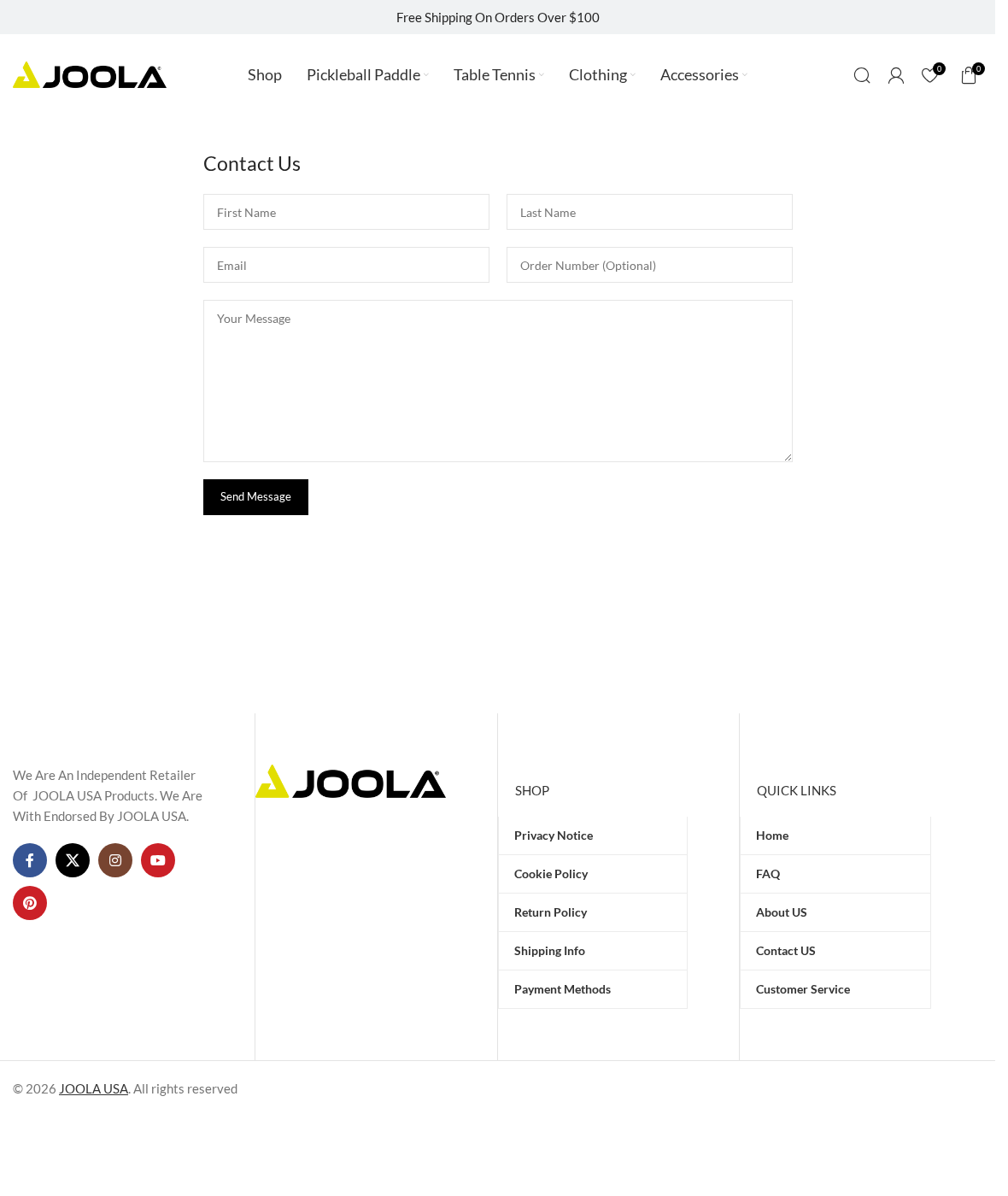
Seller Identity, Contact, and Return Checks
The brand’s history is not the merchant’s identity
The About page’s sports history does not identify a separate company operating this store. Customers need the entity receiving payment, not just a biography of JOOLA.
Before ordering, request that entity’s legal name and relationship to the manufacturer. Compare any answer with the payment payee and order receipt.
If the seller claims authorization, seek confirmation from the brand independently. A self-written endorsement statement is the claim being checked, not verification of it.
The contact form is not a verified business location
The captured contact page offers a message form. It does not provide an obvious named operator, direct support telephone, or independently established physical location.
We did not submit the form or test response times. The finding concerns the information available to buyers, not an invented claim that messages always go unanswered.
A customer report associates the site with a Florida address, but that connection has not been independently established. It should not be treated as a confirmed warehouse.
Never mail a return to an address from an unrelated review or registry result. Obtain instructions matching your actual transaction and preserve who supplied them.
The domain is new, but the registrar is not the seller
Verisign’s registry record dates registration to October 8, 2026. That is objective domain information, separate from the brand’s much older sporting history.
It does not establish the operator’s location, the manufacturer’s location, or the experience of every customer. A newly registered domain alone is not proof of fraud.
The record’s registrar and hosting-related entries should not be substituted for merchant ownership. Service providers can serve businesses across many countries.
What matters here is the combination: a very short domain history, uncertain business identity, confusing authorization language, and a reported payment problem.
Refund instructions need a usable destination
The published procedure requires contact before sending goods back. If support cannot supply a valid destination and authorization, a return promise is difficult to use.
Ask whether shipping costs are prepaid or reimbursed, and what condition the paddle must be in. Test-playing equipment may affect an unused-item return policy.
For a parcel that never arrives, you should not be asked to perform a physical return. Explain non-delivery separately from dissatisfaction with received equipment.
What to Check if a Paddle Actually Arrives
Delivery answers one question: whether a package arrived. It does not automatically establish that the paddle is authentic, correctly specified, or covered by the expected warranty.
Photograph the packaging, labels, model information, accessories, and condition before using it. Compare them with the item on your receipt.
If you suspect a counterfeit, ask JOOLA through its established support channels about available verification. A copied logo or QR code is not a reliable authentication method.
Do not claim that every paddle sold through this site is counterfeit. We have not examined a delivered item or obtained a manufacturer’s assessment of one.
For a wrong or damaged product, describe the specific mismatch. Your payment provider can assess concrete evidence more readily than a broad accusation about an entire website.
What to Do If You Ordered from Joolauspickleball.com
-
Find the payment record and receipt. Record the charge, payee, transaction number, order date, and intended paddle. Check whether an order confirmation exists.
If none arrived, preserve that fact and any attempts to obtain one. Do not place a second order to see whether the checkout works.
-
Request an identifiable order status. Ask the seller for the purchased model, dispatch date, carrier, and tracking information. Save your message and any response.
Keep requests short and specific. A reply that repeats delivery slogans without identifying your shipment does not resolve the missing-order problem.
-
Verify the brand relationship independently. Contact JOOLA through joola.com, providing the exact store domain and any relevant product identifiers.
The brand may be able to clarify authorization or authenticity. That does not make it responsible for refunding a purchase made from a different operator.
-
Use the appropriate payment dispute route. Open your payment service directly and ask about a non-received item or other accurately described problem.
If the transaction also involves a card issuer, ask how its process interacts with the payment service. Avoid contradictory claims or attempts to recover twice.
-
Secure any password you reused. If you registered an account using a password shared with another service, change that password on the other service promptly.
Ask your issuer about card protection if you entered card details and now suspect misuse. Monitor actual transactions rather than assuming every future charge is related.
-
Document the outcome for a factual report. Include receipts, screenshots, correspondence, and any carrier evidence. Distinguish what happened to you from allegations made by other buyers.
Report through consumer-protection channels where appropriate. Ignore anyone promising a guaranteed refund in exchange for another payment or access to your financial account.
Frequently Asked Questions
Is Joolauspickleball.com JOOLA’s official website?
The official brand site is joola.com. This separate domain’s own footer describes an independent retailer, so its official-store presentation should not be accepted without verification.
When was Joolauspickleball.com registered?
The registry record reviewed dates its registration to October 8, 2026. That dates the domain, not the real JOOLA brand or a proven legal business.
Does the customer complaint prove all orders are fraudulent?
No. It is a specific reported payment problem. Combined with the site’s identity and policy issues, it provides a strong reason to avoid an unverified purchase.
Does paying through PayPal make the store legitimate?
No. A payment service processes transactions separately from merchant authorization. Any protection depends on the actual payment type, applicable conditions, evidence, and dispute deadlines.
Are the paddles definitely counterfeit?
We have not tested or authenticated a delivered paddle. Brand authorization, product authenticity, fulfillment, and refund behavior require separate evidence.
What should I do if I was charged but received no confirmation?
Check the transaction directly, request written order details, and promptly ask the payment provider about your options. Save evidence instead of waiting without a clear deadline.
The Bottom Line
Joolauspickleball.com has serious, observable trust problems. Its official-store presentation should not override the missing seller clarity, inconsistent returns, and reported payment issue.
Use an established retailer or obtain independent confirmation from JOOLA before paying. If you already ordered, focus on the payment record and timely, evidence-backed recovery steps.








