

A relaxed dress with an eye-catching art print can make an unfamiliar shop feel worth a try. Somewille builds its storefront around that appeal.
Before choosing a pattern or adding another item for free shipping, look at how the store handles the less attractive parts of an order.
Overview
What the Somewille clothing store offers
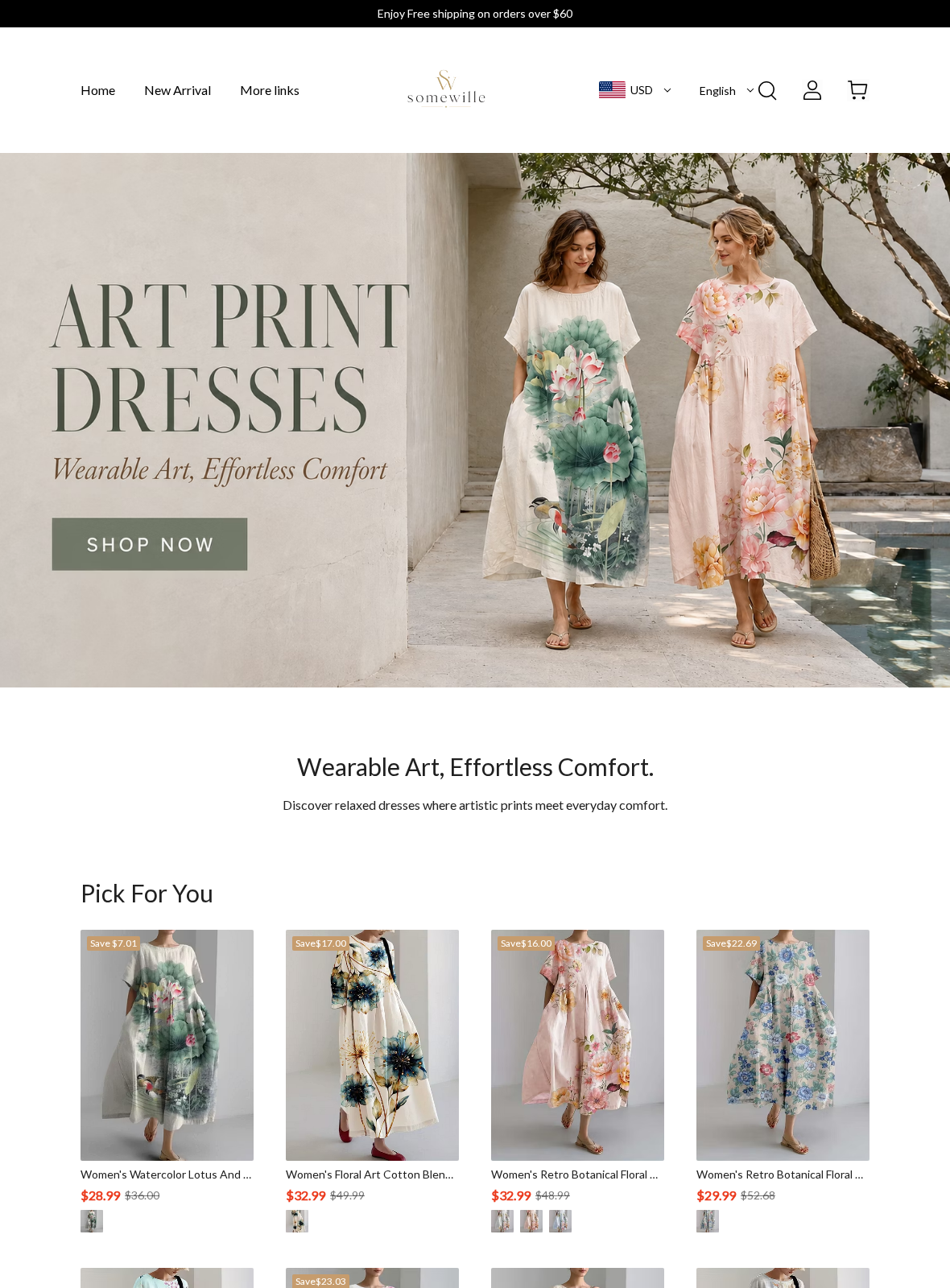
Somewille.com sells women’s clothing, including loose-fitting dresses with floral and Japanese-art-style prints. Its presentation emphasizes comfort, decorative designs, and sale pricing.
The homepage advertises free shipping on orders over $60. A featured dress is displayed at $28.99 beside a higher reference price.
These are ordinary retail devices. The question is whether the business behind them provides a dependable route to delivery, support, and a refund.
The shipping policy switches to another store’s name
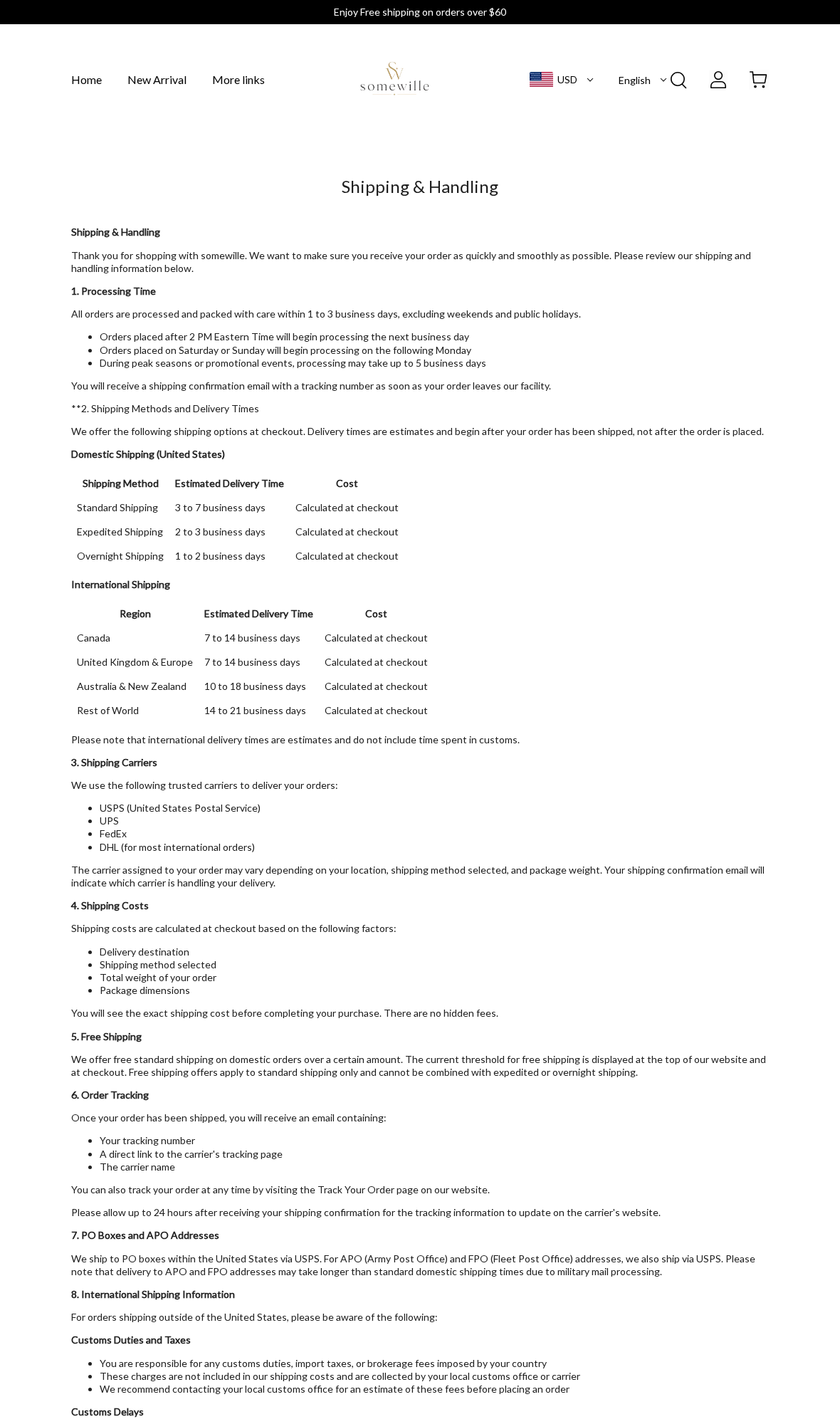
Somewille’s shipping page repeatedly refers to Hello Omni. In its lost-package instructions, it directs customers to helloomni@outlook.com instead of the shop’s usual email.
The regular contact page and footer use somewille@outlook.com. A customer trying to locate a paid order is therefore given conflicting support identities.
This is not just an awkward slogan. It affects the procedure customers would follow when something goes wrong with delivery.
Complaints add a reason not to dismiss the mismatch
Published customer reviews describe missing orders and unanswered messages. These are individual accounts, not independently inspected transaction records or proof that every order fails.
They nevertheless concern the same practical issue as the confused shipping instructions: getting a useful answer after payment. The offer does not merit a buying recommendation.
- Somewille publishes a 30-day return-request window.
- Ordinary returns require unworn, unwashed goods with tags and packaging.
- The shipping policy names Hello Omni and supplies a different email.
- The terms identify a Hong Kong company, not merely the Somewille brand.
- Manufacturing quality and individual delivery outcomes have not been independently tested here.
How the Somewille Shopping Offer Works
Step 1: Attractive prints create confidence in the clothes
The storefront shows relaxed dresses with distinctive artwork. That makes it easy to imagine comfortable clothing for travel, errands, or warm weather.
But a photograph cannot establish fabric weight, lining, stitching, or whether the delivered print matches the image. Those details determine whether the garment works for you.
A cotton-blend description, for example, needs actual fiber percentages. It should not be interpreted as pure cotton simply because the image suggests a soft natural fabric.
Check the measurements for the exact garment rather than relying on a familiar size letter. Loose styling can hide important differences in length and width.
The Japanese-art category describes an aesthetic. It does not establish Japanese manufacture, an artisan origin, or the production method of a particular dress.
Step 2: Sale prices and free shipping enlarge the cart
Lower prices and crossed-out reference figures make the clothes look accessible. The free-shipping threshold then creates an incentive to add another item.
If your intended order is below $60, compare paying shipping with buying something extra. Spending more to avoid a smaller delivery charge is not automatically a saving.
The additional item also creates another potential fit or return problem. Consider the total purchase you would actually keep, not just the threshold you can reach.
The policy says free standard shipping applies to qualifying domestic orders. International, expedited, and overnight arrangements need their own cost check.
Save the final amount before paying, including currency, shipping, and any taxes. A homepage banner is not the complete price of every order.
Step 3: Processing and transit add up to the real wait
Somewille lists 1–3 business days for processing, with up to five during busy periods. Standard US transit is separately listed as 3–7 business days.
That puts the ordinary stated total at roughly 4–10 business days, before considering peak processing or delays. It is not a three-day delivery guarantee.
International estimates are longer and exclude customs time. The policy also makes customers responsible for applicable import charges outside its stated domestic arrangements.
The page names common carriers, but their logos or names do not establish that your parcel was accepted. Check the tracking on the carrier’s own website.
If you need clothing for an event, do not build your plans around the shortest number in the table. Ask for a realistic dispatch and arrival estimate.
Step 4: A missing parcel exposes the support confusion
The contact page tells shoppers to email Somewille. The shipping policy’s lost-package section instead names Hello Omni and directs a confirmed-loss inquiry to another Outlook address.
That is precisely when clarity matters most. A shopper may already have spent days checking a tracking status while trying to work out who should respond.
The copied-looking wording does not prove the two brands share ownership. It does show that Somewille has not kept its delivery-help instructions consistently branded.
Ask Somewille to explain which channel handles your order and provide an accountable response. Do not send personal order information to an unexplained alternative address.
A correct reply should identify your purchase, confirm the carrier’s finding, and state the next remedy. General reassurance that tracking will update is not enough indefinitely.
Step 5: Returning the clothing introduces eligibility and postage
The refund policy permits a request within 30 days of receipt. Clothing must remain unworn, unwashed, unused, and in its original condition.
It says customers pay ordinary return postage unless the delivered item is defective, damaged, or incorrect. That distinction can materially change the cost of a return.
A wrong garment or serious description mismatch should be reported as that problem. Do not reduce it to a preference return just to obtain an answer.
The policy also lists categories that may be non-returnable, including final-sale items and certain personal garments or accessories. Check the exact item’s status before ordering.
Request the authorized destination before mailing anything. The seller’s corporate address, parcel sender, and returns recipient need not be the same location.
The Company, Support Identity, and Delivery Trail
The terms name TransGlobe Commerce Limited
The website identifies TransGlobe Commerce Limited in its terms. That is the disclosed company name; Somewille is the storefront brand a shopper first encounters.
The terms also provide a registration-number string. A number printed on a website should not be treated as independent proof that the merchant controls the named company.
Compare the company disclosure with the receipt and card descriptor. If a different entity took payment, ask the seller to explain that relationship in writing.
The important question is who is responsible for fulfilling your order and returning your money, not how many retail names appear in a template.
The Hong Kong address does not establish the shipping origin
The terms list Room 12, 6/F, The Cloud, 111 Tung Chau Street, Tai Kok Tsui, Kowloon, Hong Kong as the company address.
That is distinct from the US-domestic delivery presentation. An overseas company can legitimately ship from local stock, but the policy does not authenticate a specific US warehouse.
Ask where your particular item dispatches from and where a return must go. Those answers matter more than a region label on a shipping table.
No physical inspection establishes the function of the listed premises. Do not assume they are a factory, retail counter, or a facility accepting customer returns.
The support instructions are inconsistent
Somewille’s contact page publishes somewille@outlook.com and says it aims to respond within 24–48 hours on weekdays. A free-mail address is not itself evidence of fraud.
The stronger concern is the separate Hello Omni identity and email inside the procedure for lost packages. The customer should not have to solve that mismatch.
No phone call or email exchange was tested for this review. Published complaints about unanswered messages are customer allegations, not a support test performed by MalwareTips.
Keep your own communication history. It shows what you requested, which address you used, and whether the seller provided a usable answer.
The listing needs a traceable garment description
Ask for composition, measurements, care instructions, and the manufacturer or responsible supplier where available. A decorative product image cannot replace the actual garment label.
Do not infer Chinese manufacture solely from the Hong Kong company disclosure. Likewise, a US shipping category does not make the garment American-made.
If an item arrives, compare the fabric label and construction with what was promised. Document a concrete mismatch rather than relying on a general impression of cheapness.
These checks protect a potential complaint. They are not a reason to keep shopping when the retailer’s support route already raises significant doubts.
What Customer Complaints Can and Cannot Tell You
The Somewille review profile on Trustpilot contains accounts describing non-delivery and difficulty getting replies. The displayed review sample is small.
Those reports should be read as individual experiences, not as a complete survey of all orders. A star rating cannot independently establish the merchant’s intent.
The complaints are still relevant because they describe the very service you would need after a missing parcel. They should not be waved away by secure-checkout logos.
Automated site scores can also disagree or become outdated. A low score is not the investigation, and a clean technical scan is not proof of dependable retail service.
The buying recommendation rests on the concrete support mismatch, the uncertain practical return route, and reported unresolved deliveries. None is fixed by an attractive storefront.
What to Do if You Ordered From Somewille
- Build a record of the purchase.
Keep the confirmation, item description, size measurements, paid amount, promised shipping method, and return conditions. Save screenshots rather than relying on a listing remaining unchanged.
If you purchased several garments, record each item separately. Split shipments can make a partially missing order look more complicated than it is.
- Check carrier movement, not just the store tracker.
Use the carrier named in your confirmation and look for acceptance, movement, and delivery details. A number with no carrier activity may not represent dispatch.
For a delivered-but-missing parcel, check household members and the carrier’s delivery information. Ask the carrier whether the scan corresponds to your address.
- Contact the seller through the known Somewille channel.
Email somewille@outlook.com with the order number and precise issue. Request a firm dispatch update, corrected order, cancellation, or refund as appropriate.
If you are redirected to Hello Omni, ask why and which business is responsible. Do not send a full card number, bank code, or identity document.
- Inspect delivered clothes before wearing or washing them.
Photograph the package, item, size and fabric labels, and visible faults. Compare the clothing with the listing rather than another product’s photographs.
Report wrong goods or defects promptly. Keep the tags and packaging while you seek instructions so ordinary eligibility disputes do not obscure the actual problem.
- Get return costs and destination confirmed.
Ask for authorization, the full recipient address, and whether postage is your responsibility. Explain if the reason is an incorrect or defective item.
Do not mail to the company address by assumption. If you return goods, preserve packing photographs, the carrier receipt, and proof of delivery.
- Escalate a purchase that remains unresolved.
Contact your card issuer or payment service with the order, tracking, promises, and communication record. Ask which dispute reason matches the facts.
Confirm the relevant deadline instead of waiting indefinitely for another reply. Explain a partial delivery or partial refund accurately if only part of the order is affected.
- Report documented conduct without guessing about a network.
A consumer complaint can describe the inconsistent support instructions and your actual transaction outcome. Include dates, amounts, and the seller’s responses.
Do not blame an unrelated store merely because a name appears in copied text. Similar templates are not enough to establish common ownership.
Frequently Asked Questions
Is Somewille.com a confirmed scam store?
The storefront operates, but its shipping-help instructions name another business and email. Customer reports also describe non-delivery and unanswered messages.
Those concerns justify choosing another retailer. They do not establish the outcome of every sale or prove criminal intent behind each transaction.
Why does Somewille mention Hello Omni?
Its shipping policy uses Hello Omni in customs and lost-package wording, including a different support email. The site does not clearly explain that relationship.
This may reflect reused copy, but shoppers need correct instructions for their paid orders. Ask Somewille for an accountable, order-specific response.
Is Somewille based in the United States?
The terms identify TransGlobe Commerce Limited and list a Hong Kong address. US-domestic delivery options do not independently authenticate a US headquarters or warehouse.
Company location and dispatch location can differ. Request the origin and return destination for the particular item you intend to buy.
Does Somewille provide a refund policy?
Yes. It publishes a 30-day request window, condition requirements, and an inspection process. Ordinary return postage is generally the buyer’s responsibility.
The existence of a policy does not establish that a specific refund will be processed. Keep the promise and obtain usable return instructions.
Are Somewille’s art-print dresses made in Japan?
The Japanese-art category is not manufacturing evidence. The inspected material does not authenticate a Japanese factory or production origin for the advertised garments.
Check the actual label and request supplier information if origin affects your decision. An artistic theme cannot answer that question.
What if my order is marked delivered but never arrived?
Ask the carrier for the delivery details and check whether the scan corresponds to your address. Preserve that record alongside the order confirmation.
Request a resolution from Somewille, then consult your payment provider if it remains unresolved. Do not let confusing support instructions delay action past the applicable deadline.
The Bottom Line
Do not order from Somewille. The delivery policy points to another brand’s support channel, and published complaints raise concerns about getting help after payment.
If you already bought clothing, document delivery and product problems, request a specific remedy, and contact your payment provider promptly if the seller leaves the issue unresolved.








