

Men’s wellness products often appeal to something people would rather discuss privately. RedEdge offers a small daily bottle as part of that conversation.
Before deciding whether to try it, look past the reassuring presentation. The details that matter most may not be the ones the page emphasizes.
Overview
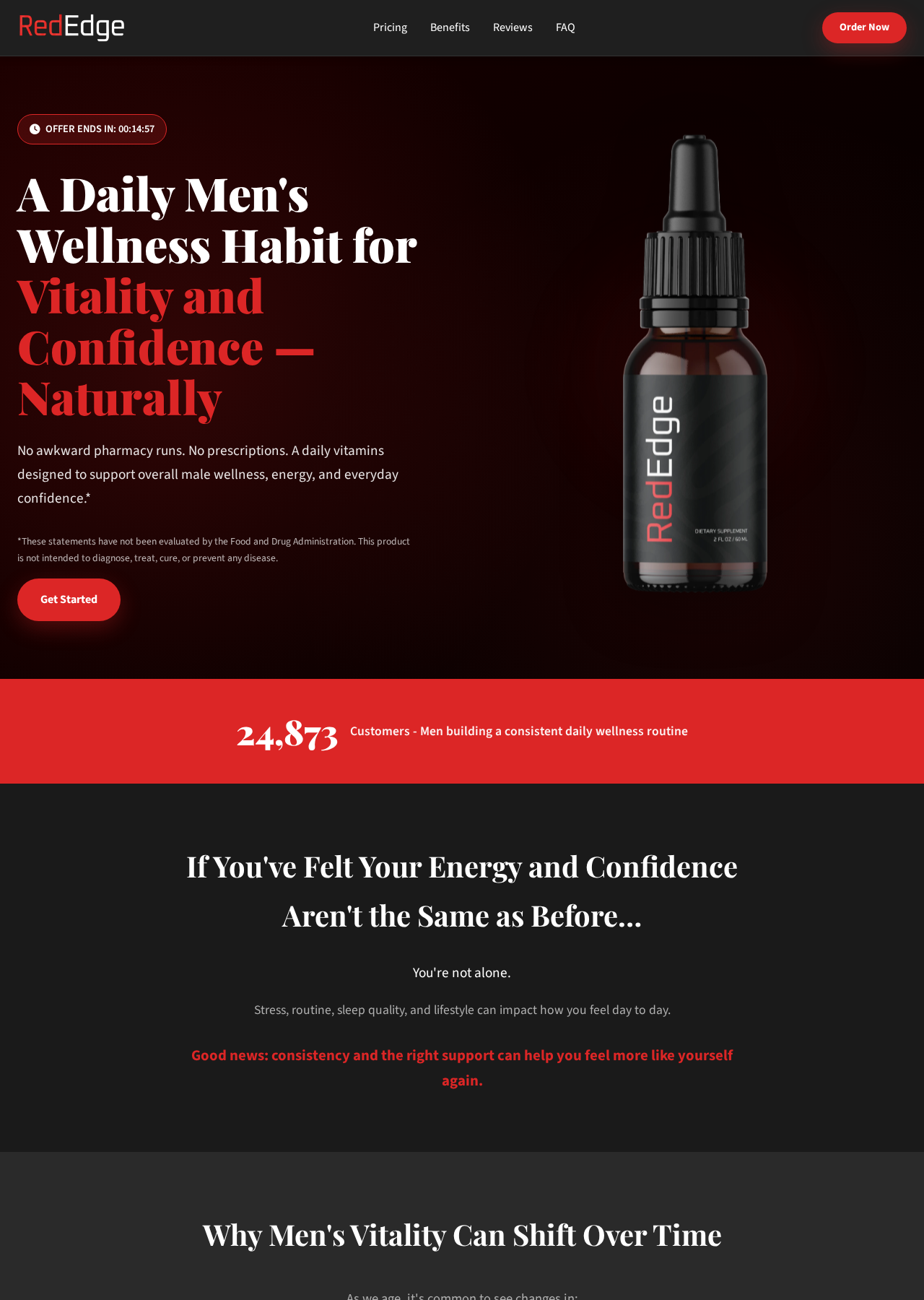
RedEdge is sold as a daily men’s wellness supplement
The current RedEdge offer uses a dropper bottle and promotes general male wellness, including energy, circulation support, and confidence.
The sales page expressly says the product is not medication and is not intended to treat erectile dysfunction.
That limitation is essential. A supplement sold with wellness language should not be treated as a substitute for evaluation or prescribed treatment.
The offer does not provide a full formula for buyers to assess
The examined page does not display a complete Supplement Facts panel with ingredient amounts. General descriptions of the benefits do not fill that gap.
Without those details, a buyer cannot meaningfully check the dose, compare the formula with research, or evaluate potential medication interactions.
Our recommendation is straightforward: do not buy RedEdge until the seller supplies a readable, complete label and identifies the responsible manufacturer.
Bundle pricing increases the amount committed
The page offers one bottle at $89, three at $59 each, or six at $49 each. The bundle totals are $177 and $294.
A lower per-bottle price does not mean a smaller purchase. The largest displayed package requires substantially more money upfront.
- Request the full label before paying for any quantity.
- Judge medical implications against the page’s explicit treatment disclaimer.
- Compare the entire basket total, not just the per-bottle figure.
- Keep the specific 30-day guarantee shown with the offer.
- Identify both the supplement supplier and the company taking the payment.
How the RedEdge Offer Moves a Buyer Toward an Order
Step 1: Private concerns are framed as a simple daily habit
The presentation connects energy and confidence with a routine that appears easy to adopt. A small bottle can seem less demanding than a medical appointment.
That appeal deserves scrutiny precisely because the subject can feel sensitive. Discomfort about discussing a problem should not determine what you buy.
Start by separating a general desire for wellness from a particular symptom. A supplement cannot diagnose why your energy, circulation, or sexual function has changed.
If an advertisement implied a treatment outcome, compare that promise with the actual product page. The purchase terms should not quietly replace the outcome that persuaded you.
Step 2: Broad benefits take the place of a precise formula
Descriptions of vitality, balance, and healthy routines can sound informative while leaving the essential product question unanswered: what exactly is in each serving?
A dropper bottle tells you the delivery format, not the active ingredients. Even a clear front-label image cannot replace the full information panel.
Before spending $89 on a bottle, ask for the label’s serving size, ingredient names, amounts, and warnings. Those are ordinary purchasing questions, not unreasonable demands.
If the response only repeats the benefit list, the seller has not answered. Hold the purchase rather than interpreting vague reassurance as a complete safety explanation.
Step 3: Short testimonials make improvement feel easy to imagine
The current page includes brief customer statements about feeling more consistent and energetic. These are presented by the seller as personal experiences.
Such statements are not a controlled test of the product. They do not identify which ingredients caused a change or exclude other explanations.
A customer could alter sleep, exercise, or medication while starting a supplement. Without a comparison group, attributing every improvement to the bottle is unreliable.
We have not established that these particular testimonials are fabricated. Their limitation is that they cannot supply the formula information or clinical evidence a buyer needs.
Step 4: A bundle makes the lower unit price look like the best decision
The six-bottle choice has the lowest advertised unit price. That can shift your attention from whether to buy anything toward which package appears to save most.
But a claimed saving is calculated against a comparison price, not against spending nothing. Committing $294 to an unassessed formula remains a substantial decision.
The arithmetic is simple: six times $49 is $294. It is not a six-bottle purchase for $49, and the checkout total should make that unmistakable.
There is no evidence here that customers choosing one bottle are forcibly sent six. Confirm the selected quantity and total instead of importing complaints from unrelated sellers.
Step 5: Guarantee language softens concern about the commitment
The offer advertises a 30-day money-back guarantee. That promise should be checked for its starting date, return requirements, and any excluded charges.
Buying a multi-bottle supply does not necessarily extend the refund deadline until every bottle has been used. The displayed guarantee remains a separate condition.
Resolve that before selecting the bigger package. A lengthy supply and a short evaluation window can work against someone expecting plenty of time to decide.
Ask who processes the request and how to reach them. A guarantee is useful only when a buyer can invoke it with a clear order record.
What You Need From the Label Before Considering RedEdge
The amount matters as much as the ingredient name
A supplement can list familiar ingredients while providing amounts unlike those used in research. Recognizing a name does not establish an effective or appropriate dose.
For a liquid product, you also need to understand the serving measurement. A dropperful, a stated volume, and an unspecified number of drops are not automatically equivalent.
Request a legible label for the version actually being sold. A generic explanation of an ingredient from another product is not a substitute.
Do not assemble a formula from search snippets or promotional reviews. If the manufacturer cannot document it, the buyer should not have to guess.
Safety cannot be inferred from natural branding
Natural origin does not settle whether an ingredient is suitable for you. Dose, health conditions, allergies, and other medicines all matter.
The NIH’s supplement guidance explains why consumers should review labels and discuss supplement use with healthcare professionals.
Without the complete formula, that discussion becomes difficult. Your pharmacist cannot assess an unknown mixture merely from a general claim about circulation support.
If you take medication or have persistent symptoms, bring the actual label to a qualified professional. Do not replace a prescribed treatment with an unidentified supplement.
The product is not an approved treatment for erectile dysfunction
The current offer itself disclaims treating erectile dysfunction. That is not a footnote buyers should overlook when deciding what result they expect.
A wellness purchase and treatment for a medical problem involve different evidence. Improvements in confidence are not proof that an underlying condition has been addressed.
MalwareTips separately examines the masculinity coffee-recipe campaign. This investigation focuses on the RedEdge product, its disclosed information, and its purchase conditions.
Do not carry a dramatic advertisement’s promise into a checkout that sells something narrower. If the page disclaims the result you wanted, do not buy for that result.
RedEdge Supplier, Payment Company, and Product Traceability
The page names NutraMakers LLC in its product messaging
The marketing-message consent identifies Rededge as a product of NutraMakers LLC. That is a company name provided by the offer, not a manufacturing facility we inspected.
Ask whether that entity owns the brand, produces the formula, or commissions it from another manufacturer. Those roles can differ.
For an actual bottle, check the manufacturer or distributor information, lot identification, and expiry details. They should allow the product to be traced beyond its front label.
PagAmerican acts as the merchant of record
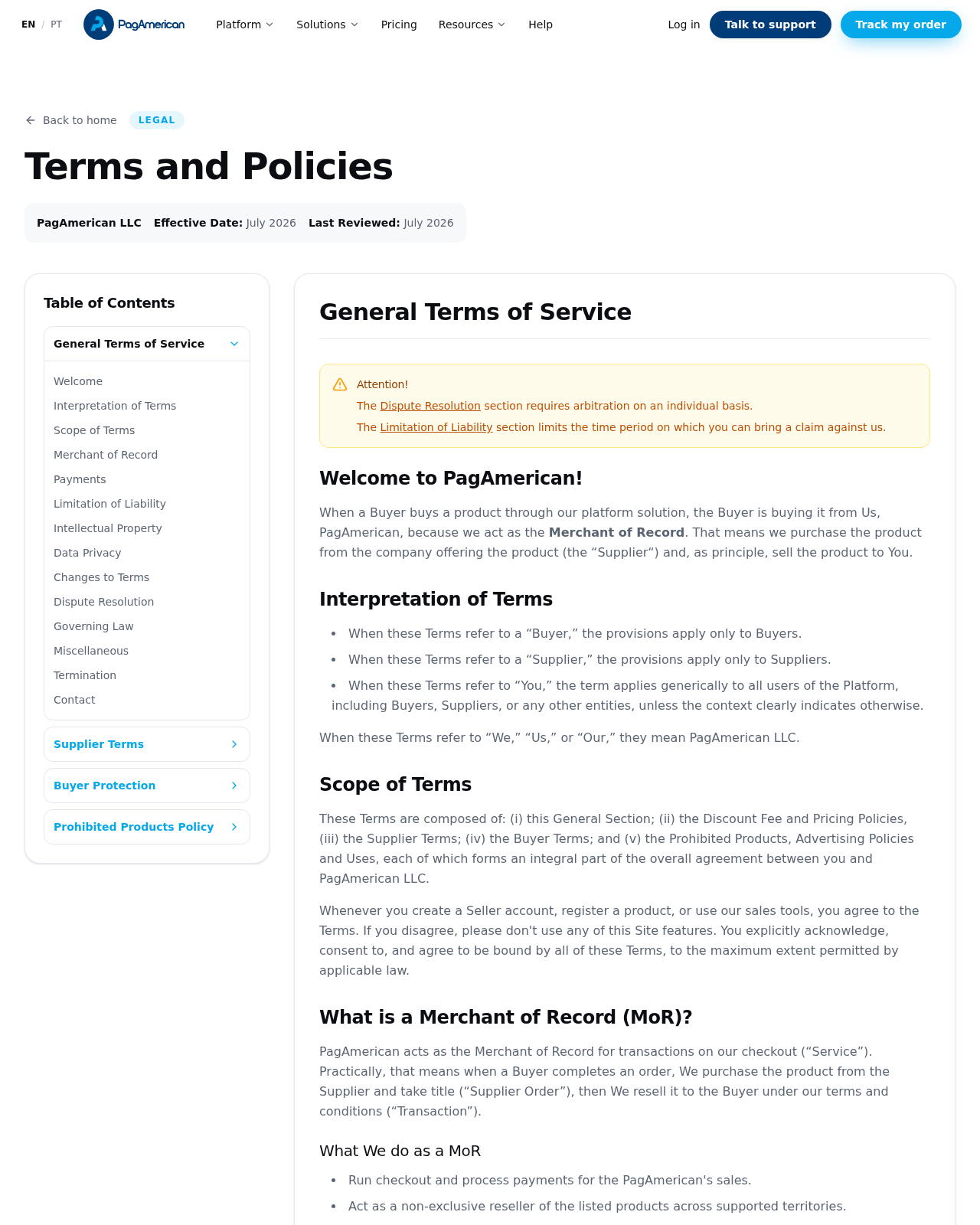
The linked PagAmerican terms identify PagAmerican LLC as the merchant of record and the buyer’s contracting party for its transactions.
They describe buying from suppliers and reselling to customers. This is more than a name casually appearing beside a payment button.
Keep the transaction receipt identifying the seller of record. If a dispute arises, ask that party to address the charge and coordinate the product issue.
The return and guarantee terms need to be reconciled
PagAmerican’s general guarantee is 60 days unless the product page or checkout specifies otherwise. RedEdge’s offer specifies 30 days, so do not assume the longer period.
The legal page also includes a broad description of orders as usually non-refundable. Ask how that wording applies alongside the specific guarantee attached to your order.
This is a reason to request clarification, not proof that all requests will be refused. Preserve the actual offer rather than relying on a generic platform promise.
Support and manufacturing origin should be documented, not assumed
The payment company’s guarantee provisions publish support@pagamerican.app. Use the receipt and linked formal policies to identify the correct support route for a completed purchase.
Request manufacturer details that match the delivered bottle, not just an assurance that production meets high standards. Keep those details with the lot number and receipt.
A returns address, if supplied, would not by itself identify the manufacturer. Ask for the product’s origin and responsible facility separately from return instructions.
What the Billing Evidence Does and Does Not Show
The displayed RedEdge package choices show bottle quantities and prices. They do not, on the examined offer, establish an automatic refill commitment.
We did not complete a purchase or test the final payment process. It would therefore be inaccurate to call a recurring charge confirmed.
Before paying, check the final summary for subscription language, replenishment intervals, optional extras, tax, and shipping. The absence of a headline refill claim is not the final receipt.
For an existing order, the confirmation and actual payment history are the relevant records. Compare what you authorized with what was charged.
Marketing texts are a separate issue. Agreeing to promotional messages should not be confused with authorizing repeated product shipments.
If the final arrangement is not clear, stop. You should be able to understand the formula, quantity, full price, and payment schedule before submitting an order.
What to Do if You Ordered RedEdge
- Ask for the full label before deciding to use the product.
Request the Supplement Facts panel, other ingredients, serving directions, warnings, and manufacturer information. Keep the seller’s answer with the order confirmation.
If a bottle has arrived, photograph all sides and retain the packaging. Do not rely on the front-label product name to establish what is inside.
- Compare the quantity and total with the order you intended.
Check whether the receipt shows one, three, or six bottles. Match the total against the selected package and any shipping or tax disclosed at payment.
If there is a mismatch, report it promptly. Explain the selection you made and supply the confirmation rather than assuming another buyer’s experience applies to you.
- Make a guarantee request within the applicable period.
Keep the offer’s 30-day promise and ask the merchant to confirm the starting date and required return process. Submit the request without waiting unnecessarily.
Ask whether opened bottles are eligible, whether return authorization is required, and who pays shipping. Do not mail products to an address found in an unrelated review.
Retain tracking if a return is authorized. A delivery record helps distinguish a received return from a parcel the merchant says it cannot locate.
- Check for any further billing separately.
Review the receipt for a recurring arrangement and monitor your payment account. If another charge appears, request the authorization and explanation from the merchant.
If a subscription was actually accepted and is unwanted, cancel it explicitly. A request to stop marketing messages may not stop a product renewal.
- Put health concerns ahead of the refund process.
Discuss the complete label with a pharmacist or clinician, particularly if you take medicines or have a relevant health condition.
Seek medical advice for unexpected symptoms. A satisfaction guarantee does not establish that a supplement is suitable for you or replace treatment for a medical problem.
- Escalate an unresolved transaction with specific evidence.
Ask your payment provider about available dispute procedures and deadlines. Supply the offer, receipt, correspondence, return records, and the particular promise not honored.
Distinguish missing goods, incorrect quantity, refused guarantee, and unauthorized billing. Each is a more useful complaint than an unsupported accusation about the entire company.
Frequently Asked Questions
Is RedEdge a confirmed subscription scam?
No automatic refill was established from the examined offer. The confirmed concerns are incomplete formula disclosure and purchase conditions that need clarification.
Check the actual final order and receipt for your transaction. Do not assume every supplement uses the same billing mechanism.
Does RedEdge treat erectile dysfunction?
The current sales page expressly says it is not intended to treat that condition. Do not buy it expecting a substitute for an approved treatment.
Persistent changes in sexual function deserve an appropriate medical assessment, not a decision based on a wellness advertisement.
What ingredients does RedEdge contain?
The examined offer does not show a complete ingredient-and-amount panel. We will not invent a formula from unverified promotional descriptions.
Request a readable label for the precise product being supplied, including serving size, warnings, and the responsible manufacturer.
Is the six-bottle price only $49?
No. The displayed figure is $49 per bottle, making the six-bottle subtotal $294. Three bottles at $59 each total $177.
Compare the full payment amount before ordering. A lower unit price can still mean a larger commitment to a product you have not assessed.
Does the guarantee last 30 or 60 days?
The RedEdge offer states 30 days. The payment platform’s general 60-day policy expressly allows a different period on the product page or checkout.
Keep the applicable promise and ask how the deadline and return conditions are calculated for your order.
What should I do before buying?
Hold the purchase until you have the full formula, manufacturer details, exact quantity, total charge, and written guarantee conditions.
If the seller cannot provide those basics, skip the product. A polished bottle and private-health reassurance are not enough.
The Bottom Line
RedEdge asks buyers to commit real money without displaying the complete formula on the examined offer. That is a sufficient reason to pause the purchase.
Do not buy for a medical result the page disclaims. If you already ordered, request the label and start any guarantee claim within the stated window.








