

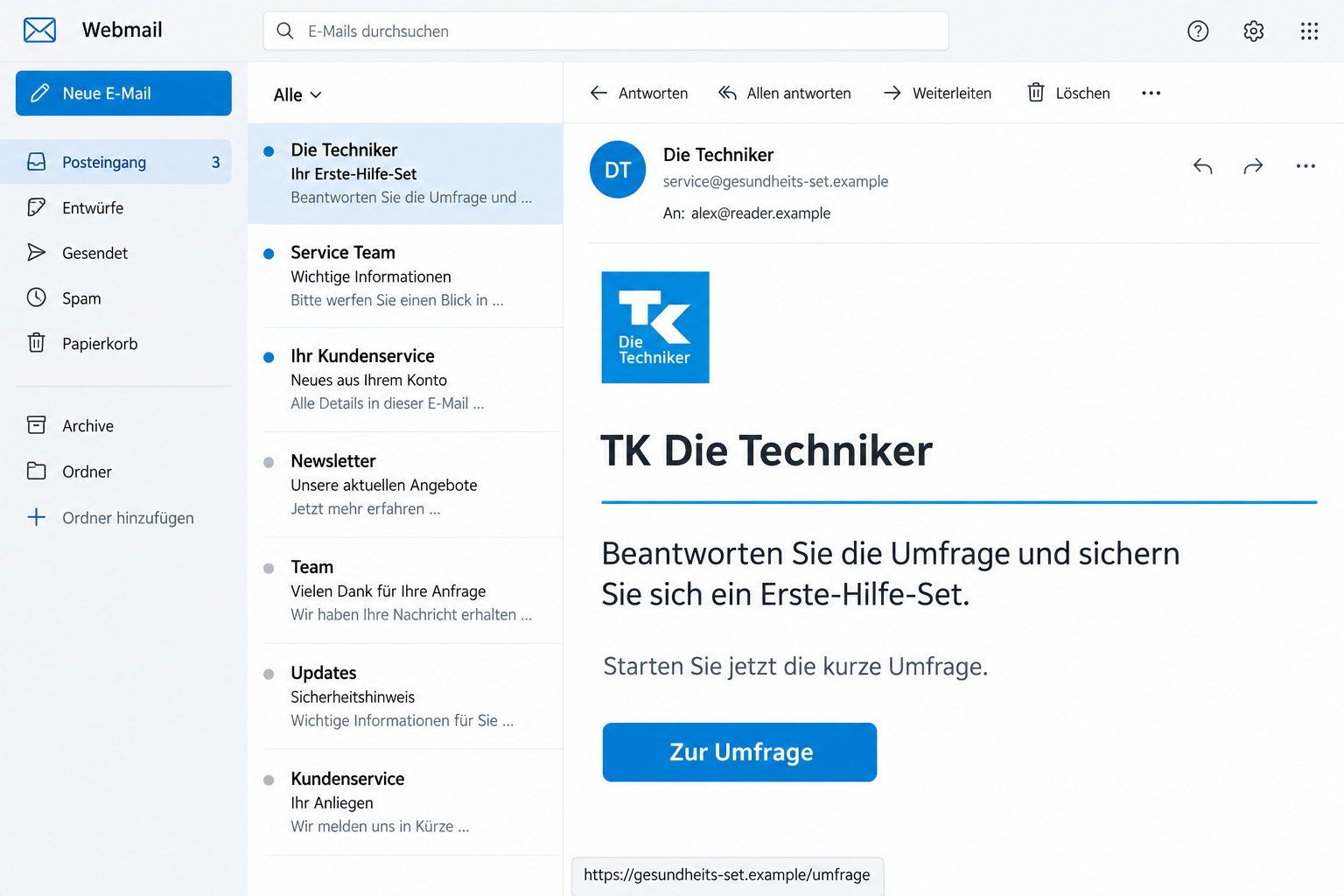
An email carrying Die Techniker’s name offers a first-aid kit for answering a short survey. It sounds like a useful extra from your health insurer.
You weren’t shopping for anything, but the offer seems easy enough to claim. The important question comes when the survey starts asking for something in return.
Overview
The Kit Is the Bait, Not a Verified Insurance Benefit
The TK first-aid kit email scam borrows the identity of Techniker Krankenkasse, the German health insurer. It offers a health-related gift through a false survey.
The insurer specifically warns about these offers, sometimes described as Medicare Kits. After the survey, recipients are asked for credit-card details for shipping.
The problem starts before delivery: an impostor is using the insurer’s identity to collect information. Waiting to see whether a kit arrives won’t protect the card.
TK Has Identified the Survey-to-Card Request
TK’s primary warning describes repeated impersonation emails, including free or heavily discounted first-aid sets linked to fake questionnaires.
It says TK doesn’t request sensitive information such as credit-card details through these emails. Its name and logo don’t make the offer genuine.
The lead image illustrates that kind of message using invented contact details. It doesn’t reproduce a verified original subject or prove that a kit was dispatched.
A Card Request Changes What You’re Agreeing to Share
Stop when an unsolicited insurer gift becomes a card-information task. Verify an actual benefit through the insurer you contact yourself.
- A first-aid theme makes the offer feel connected to healthcare, but doesn’t authenticate it.
- Completing the questionnaire doesn’t create an obligation to enter a card.
- Shipping language doesn’t make disclosure harmless.
- If card information was supplied, the issuer needs to know even if no unfamiliar charge has appeared yet.
Why a Practical Gift Can Feel More Believable Than a Prize
A first-aid kit isn’t an extravagant reward. You might keep one at home or in a car, so the offer can seem ordinary rather than suspicious.
The insurer’s name helps connect the object to your existing relationship. You may assume that a health-related gift belongs to a genuine prevention or member program.
That assumption is exactly what needs checking. A useful object and a recognizable organization don’t establish who created the email or collects the answers.
The survey also gives the gift an apparent explanation. You are supposedly earning it by providing feedback, which can make the exchange feel balanced.
But a questionnaire isn’t independent evidence of a promotion. Whoever operates the page controls both the questions and the promise that follows them.
Think about what you intended to do before the email arrived. If you weren’t applying for a benefit, don’t let the message quietly create a financial task.
You can decline the offer without affecting a genuine insurance claim. If you have a real question about benefits, take it to TK through its established service.
How the TK First-Aid Kit Email Scam Works
Step 1: A Health-Insurer Identity Makes the Gift Seem Relevant
The email presents an offer under TK’s name. Familiar health-insurance branding makes the proposed kit appear connected to a company you may already trust.
Don’t confuse that familiarity with authentication. A sender can copy words and a logo without being authorized to represent the insurer.
The real organization confirms that the first-aid offers are among the fraudulent messages reported to it. This isn’t just a guess based on awkward spelling.
Messages can look polished and still be false. You don’t have to find a typographical error before rejecting the request.
Step 2: A Fake Survey Keeps You Working Toward the Reward
The offer asks for participation before presenting the claimed benefit. That can make the later steps feel like completing an activity you have already started.
Each answer adds a little investment of time. By the end, abandoning the kit may feel like wasting the effort, even when the request changes.
You can stop at any point. A stranger doesn’t gain a right to your address, financial details, or additional answers because you completed several questions.
Also consider what you already disclosed. General survey responses, contact information, and health-related answers are different categories and may call for different follow-up.
The warning doesn’t publish one universal questionnaire. Don’t assume that every version asks the same questions or that all recipients disclosed medical information.
Step 3: Shipping Becomes the Reason to Ask for a Card
TK describes the next request clearly: credit-card details are sought for shipping arrangements after the survey.
The gift may still be described as free or discounted. That keeps attention on the kit’s supposed value rather than the new recipient of your card information.
A small-looking transaction isn’t a small disclosure. If you type a card’s usable details into an untrusted form, the risk isn’t limited to your intended purchase.
No fixed shipping price or later charge is established by this warning. Don’t assume a particular fee, renewal interval, or subscription applies to every version.
Leave the form instead of paying to discover what happens next. If you already entered card information, contact the issuer rather than waiting for delivery.
The Word “Medicare” Doesn’t Authenticate the Offer
TK uses Medicare Kits as a label for some first-aid-kit offers in its warning. That wording shouldn’t be mistaken for proof of a US government benefit.
The relevant question is whether TK authorized the specific promotion. Neither a medical-sounding product name nor a familiar healthcare term answers it.
Don’t supply an insurance identifier simply to check eligibility with the sender. An unverified offer shouldn’t receive more sensitive information during its own verification.
If a message suggests that accepting the gift is necessary for your coverage, confirm that independently. Don’t let a giveaway dictate how you manage insurance.
A card request also isn’t made trustworthy by a picture of a professional-looking kit. An image tells you little about who receives the payment information.
You don’t need to evaluate the contents, manufacturer, or medical usefulness of a kit to reject a fraudulent claim process.
Check Genuine TK Messages in the Right Place
TK provides a secure digital mailbox through its app and Meine TK. Open your usual service independently.
A genuine notification email can tell you that new post exists. That doesn’t mean the safest response is to trust every link carrying the insurer’s name.
If you want to know whether a promotion exists, ask through the genuine account or TK’s official contact route.
Describe the offer without submitting a card or completing more survey questions. Staff can assess a message without you first claiming its reward.
If you don’t use the digital mailbox, you can still contact the insurer independently. Don’t register through a page offered by the suspicious email.
A failure to find a gift in an account isn’t permission to try the sender’s alternative. Ask the real insurer if something remains unclear.
Keep an existing reimbursement or genuine benefit application separate. This warning doesn’t say that legitimate insurer programs or ordinary customer research never exist.
Don’t Mix This Survey With Other TK Impersonations
The insurer’s warning describes several different approaches, not one compulsory sequence. A false bonus email and a first-aid survey can be separate attempts.
It also warns about calls pressuring people into care-supply subscriptions. Those telephone cases don’t establish a subscription hidden behind every first-aid-kit form.
That distinction helps after exposure. Tell your bank or insurer what your own page requested instead of assuming another reported story happened to you.
If a charge later appears, record its description and amount. Ask the issuer to investigate the actual transaction, including any recurring-payment concern you observe.
Don’t infer a medical-record breach from a generic survey email. Identify the specific information you entered before deciding which organizations need notifying.
And don’t switch insurers because an unrelated message claims financial trouble. Verify anything affecting real coverage directly with the genuine organization.
A Missing Shipping Charge Doesn’t Clear the Card
If you typed card details but never saw a successful order, tell the issuer that. Don’t use the absence of a thank-you page as reassurance.
The warning concerns collection of card information. You don’t need a delivered kit or a completed purchase to explain why that disclosure needs attention.
If the bank requested an approval, describe the wording and action separately. An approval associated with payment isn’t made harmless by the gift page’s shipping explanation.
Don’t assume an unfamiliar merchant name identifies the insurer. Ask the issuer to connect an actual statement entry with the payment attempt you made.
Keep pending entries and completed transactions distinct when reporting. Let the financial provider explain their status rather than relying on the survey operator’s account of it.
If you left before supplying payment information, say so. Answering ordinary questions and disclosing a usable card are different incidents, even within the same lure.
Only the issuer can advise on the appropriate card action for your situation. Don’t wait for the supposed shipping department to grant permission to report it.
What to Do if You Have Fallen Victim to This Scam
Deal with the information you actually supplied. You don’t need to finish the survey or accept another instruction to report what happened.
-
Contact the card issuer if you entered card details. Use the bank’s app or a known number, not a customer-service link on the gift page.
Explain that an insurer impersonation survey collected the details for supposed shipping. Ask what card protection, replacement, or transaction review is appropriate.
-
Describe any approval or payment separately. A card disclosure and an approved banking request aren’t the same event.
Give the issuer the transaction records and actual amount if a charge occurred. Don’t rely on the page’s confirmation or a promised automatic refund.
-
List the survey information you shared. Distinguish your name and contact details from insurance identifiers, health answers, identity documents, and account credentials.
Keep that inventory private. It can help the insurer understand the incident without creating another copy of sensitive information in a public complaint.
-
Change any exposed account password. Do this through the real service and replace reused versions elsewhere. Protect the associated email account when relevant.
Don’t assume your TK account was accessed merely because you answered questions. Review actual activity or seek support if credentials or approvals were involved.
-
Notify the genuine insurer. Use its official website or established account. Explain the first-aid offer and any sensitive insurance information disclosed.
Reporting the message helps distinguish it from genuine correspondence. It doesn’t itself block a card or reverse a transaction, so keep working with the financial provider.
-
Preserve useful evidence. Keep the original email, existing page captures, transaction references, and approximate times. Avoid returning to the form to collect missing details.
If money was taken or identity information misused, seek appropriate police or official fraud-reporting assistance. Don’t publish full card or insurance identifiers while warning others.
-
Check the device if anything was installed. An answered survey doesn’t automatically mean infection, but an unexpected download or permission deserves separate attention.
A Malwarebytes scan may help assess suspected malware. AdGuard can help limit unwanted advertising or redirects if those appeared.
Security software doesn’t retract survey answers, cancel a payment, or secure an exposed password. Match those problems with the provider responsible for them.
Afterward, Watch the Request Rather Than the Reward
If another email offers the same kit, don’t start over to see whether that version works. The insurer’s warning concerns the mechanism, not one broken link.
If a caller knows which survey you answered, that knowledge doesn’t independently establish an insurer relationship. Contact TK yourself before discussing anything sensitive.
Someone helping you can read the non-sensitive offer wording. They don’t need your complete card details or account password to help locate genuine support.
Keep bank notifications enabled where available and inspect actual statements. A small unfamiliar transaction still deserves asking the issuer about it.
If no card or credential was supplied, don’t assume you must replace every account. Record the actual interaction and take proportionate action.
Once the report is complete, remove the message from active email. A tempting gift left open can be revisited by another family member using the device.
Frequently Asked Questions
Is the Free TK First-Aid Kit Email Real?
TK identifies false first-aid-kit surveys that request card details for shipping. Don’t claim the kit through an unsolicited message using that pattern.
Does “Medicare Kit” Mean This Is a Government Program?
No. The label doesn’t verify a government or insurer relationship. Check the actual offer with the organization it claims to represent.
Should I Pay a Small Shipping Fee to Find Out?
No. The card disclosure matters even when a proposed charge looks minor. Verify the offer before entering payment information.
Does Every Version Enroll Me in a Subscription?
That isn’t established here. Report any actual charges or recurring-payment evidence to your issuer rather than assuming a fixed billing pattern.
Is My Health Record Exposed Because I Received It?
No. Receiving the message doesn’t prove access to health records. Tell the insurer about sensitive information you actually submitted.
Who Should I Contact After Entering My Card?
Contact the issuer promptly through a trusted route, then notify TK separately. The insurer’s report doesn’t replace financial protection.
The Bottom Line
Don’t enter card details to claim this TK first-aid kit email scam’s reward. The insurer has identified the fake survey and shipping-information request.
If you supplied a card, speak to the issuer now. Verify genuine benefits directly with TK and protect any other information actually disclosed.

Join the discussion
0 commentsShare your experience or ask a question about this article.
Discussion
Start the conversation
Have a question or something useful to share? Add the first comment.