

A Wisconsin DMV message appears while you are thinking about tomorrow’s drive. It mentions an unpaid fee, and suddenly a routine notification feels like something you cannot postpone.
The Wisconsin DMV text scam is especially confusing when you already receive legitimate reminders. Understanding the difference helps you check the issue without following the wrong instructions.
Overview
A demand for immediate payment is not a normal DMV reminder
Wisconsin’s Division of Motor Vehicles is part of the state’s Department of Transportation. Criminals can borrow those names when requesting money or personal information.
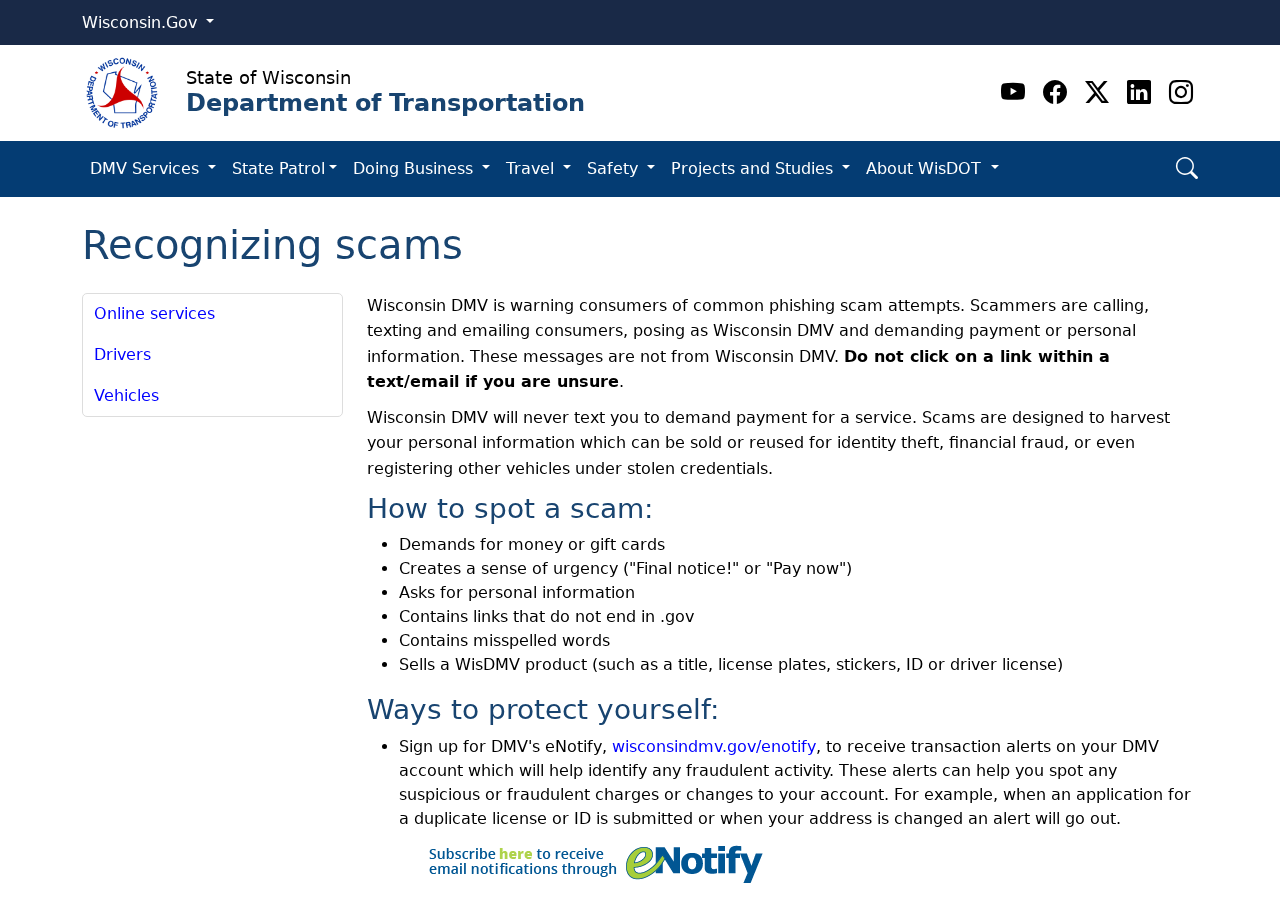
The agency’s Recognizing scams page says Wisconsin DMV will never text a demand for payment for a service.
It warns about messages using urgency, asking for personal information, or posing as government services. The official warning shown above concerns that impersonation, not misconduct by the real DMV.
If an unfamiliar text tells you to clear a balance through its link, do not treat the agency name as permission to pay.
Genuine eNotify emails and texts do exist
Wisconsin DMV offers eNotify reminders and account alerts. A rule that every DMV text or email must be fake would be wrong.
The service can provide renewal reminders and notices about changes such as an address update or issuance of a driver license or ID.
Those legitimate communications do not authenticate a separate demand arriving from a stranger. Verify the specific action through the actual service rather than judging only the sender label.
If you chose electronic notices, keep track of that choice. Knowing how you normally receive reminders makes an unexpected request easier to assess.
The alleged fee needs a record outside the message
Before dealing with any supposed violation, identify the matter itself. A text does not become an official record simply because it prints a reference or deadline.
Useful details to check independently include:
- The actual agency or authority responsible for the issue.
- A transaction or renewal you already know is pending.
- The vehicle, license, or other record being discussed.
- Whether the action appears through an independently reached service.
- Whether the message is requesting money or information the real agency did not ask you to send.
Start with Wisconsin DMV’s official website or published assistance. If the allegation involves another authority, ask that authority through its own verified contact.
Why Real Reminders Can Make a Fake Notice Harder to Spot
Not every important notice arrives on paper
You may have signed up for electronic renewal reminders months ago. A new message can therefore feel more ordinary than a paper envelope you were not expecting.
That familiarity is useful for legitimate services, but an impostor can imitate the format. Compare the claimed action with your own records and account preferences.
Do not assume that a real renewal coming due makes every payment text relevant. Two messages can concern the same general topic without coming from the same sender.
A threat about driving affects more than a bill
You may need your vehicle for work, family care, or a medical appointment. A warning about restrictions can make a modest-looking payment seem easier than taking a chance.
That pressure does not establish a violation or the sender’s authority. A consequence printed in a message still needs confirmation through the appropriate official process.
If a genuine deadline exists, keep handling it through its proper channel. Rejecting the unverified demand does not mean ignoring legitimate correspondence.
Formal wording can distract from a weak connection
A message may use official-sounding department names and legal language. You might focus on what the warning means before asking whether its author has any authority.
Start with who is asking. Once you have reached the real agency, you can discuss the fee without accepting a stranger’s deadline.
A correctly spelled agency name is public information. So are logos and explanations of DMV services. Their appearance alone is not evidence that a page belongs to the state.
How the Wisconsin DMV Text Scam Works
Step 1: An unfamiliar message introduces an alleged unpaid fee
The text or email claims a DMV-related matter needs attention. It may present the issue as overdue, unresolved, or already approaching enforcement.
That wording makes the message sound like a follow-up, even if you have never seen an earlier notice. You may start searching your memory for missing paperwork.
Use your own records to identify any genuine issue. Do not confirm a license number, address, or vehicle detail to help an unknown sender complete its story.
Step 2: Urgency makes independent checking feel inconvenient
The message pushes for a quick response. Its deadline can make verification seem like a delay that will lead to something worse.
You can step away from that timetable. Contacting the real agency is how you find out whether there is a genuine requirement, not an obstacle to resolving it.
If you cannot reach a service immediately, use its published assistance or office information. A temporary access problem does not make the suspicious link a safe substitute.
Step 3: A link borrows the appearance of a state service
The address may contain words associated with Wisconsin or transportation. Those words can appear inside an unrelated domain without making it a government website.
A copied heading can reinforce the impression after you arrive. Matching text between the message and page is not independent confirmation of the operator.
Do not rely solely on the connection lock. It does not tell you whether the agency owns the site or recognizes the fee being requested.
There is no need to investigate the destination by entering information. Open the genuine service through a route you choose, away from the text.
Step 4: Clearing the supposed issue requires private information or money
The destination can present a payment or verification form as the final step. Completing it may seem like a small task compared with the threatened consequence.
But the website’s operator can receive what you type. A name, identity detail, card entry, or account password each creates a different kind of exposure.
Wisconsin DMV warns that information harvested through scams can be reused for identity fraud, including vehicle-related misuse. That is a risk, not proof every recipient’s records were accessed.
Stop if you notice the mismatch. Trying a second card after an apparent rejection can expose another payment method without validating the demand.
Step 5: A confirmation or follow-up keeps the false explanation alive
The page may suggest the matter is resolved or waiting for processing. You could then stop checking even though no genuine DMV transaction occurred.
Alternatively, another message may claim more action is required. The new request could reuse details from the earlier interaction while presenting itself as assistance.
Check actual records through the relevant authority and protect anything shared. A reassuring reply from the original sender is not a separate confirmation.
Use eNotify as a Check, Not a Reason to Trust Every Message
Know what you signed up to receive
The official eNotify information describes renewal reminders for eligible services and notices about certain record changes. Review the preferences and contact details you maintain with DMV.
If you choose paperless notices, understand which communications that changes. Do not assume every vehicle or every kind of correspondence follows one identical delivery method.
When a reminder surprises you, check the real service independently. A sender name or familiar no-reply address should not be the only thing supporting a payment decision.
Investigate an unexpected record-change alert through DMV
An alert about a change you did not request deserves attention. Ask anyone legitimately handling your records whether they initiated it, then contact DMV if it remains unexplained.
Do not reply to the questionable message with copies of identification. Ask the agency what it needs and use its verified method for supplying any necessary information.
Account alerts can help you notice changes. They do not mean that all misuse is prevented, nor do they automatically correct a record for you.
Keep the agency and other payment authorities separate
A real traffic or vehicle issue may involve a court or another responsible authority. The DMV name in a text does not settle who should handle it.
Use original paperwork to identify the matter and find the correct contact independently. Ask how to confirm the reference before agreeing to the sender’s payment instructions.
A relative can help find your paperwork and the right contact. Keep your identifiers out of unfamiliar forms while you work through the question together.
What to Do if You Have Fallen Victim to This Scam
-
Stop the unverified payment or conversation. Do not provide another code, payment method, identity document, or account detail to finish the alleged clearance.
Make a short list of actions already taken. Separate opening a message from entering information, approving a payment, downloading something, or allowing access.
Keep the original notice and any receipt privately. Avoid returning to a suspicious website just to obtain additional evidence for a report.
-
Contact your card issuer or bank about financial details. Use a contact you already trust and describe the payment or information entered on the page.
Ask about protection, unfamiliar transactions, card replacement, and any available recovery attempt. A failed-looking payment page does not confirm that the card stayed private.
Keep the financial provider’s instructions and reference. Filing a report elsewhere does not automatically open a dispute or guarantee that funds can be returned.
-
Ask the genuine DMV about any affected driving or vehicle record. Explain whether you supplied an identifier, saw an unexpected change, or received a suspicious account alert.
Use the official website and published assistance rather than the message’s number. Let the agency tell you what documentation and process apply.
Do not submit another form merely because the sender says the first entry failed. The genuine agency can address its own records without that shortcut.
-
Secure any account password you used. Access the real service independently, replace the exposed password, and examine the security options available there.
Address the same password anywhere else you reused it. Pay attention to recovery contact information and tell the provider if a sign-in approval or code was also shared.
You do not need to change every unrelated password simply because a text arrived. Match the response to the actual information and actions involved.
-
Seek identity-protection guidance for sensitive documents or numbers. If you supplied an identity document or other valuable identifier, record what was shared and seek tailored help.
IdentityTheft.gov can guide the appropriate protective steps. Include any confirmed misuse while distinguishing it from something you fear might happen.
A scam text does not prove a breach at Wisconsin DMV. Avoid publishing that accusation or circulating private records while trying to warn others.
-
Handle software exposure if there was any. If a page prompted a download, installation, or remote connection, stop using the sender as your technical adviser.
Get trusted assistance. Malwarebytes can help inspect malicious-software concerns; it cannot amend a DMV record, cancel a legitimate obligation, or refund a payment.
AdGuard can reduce intrusive ads and some unsafe web destinations. Use it as additional browsing protection, not a way to certify a government demand.
-
Report the impersonation and finish any genuine administrative task. Use your messaging service’s spam controls and the reporting routes linked by Wisconsin DMV.
You can report attempted fraud through ReportFraud.ftc.gov. Share relevant evidence through verified channels without including unnecessary private financial information.
Then check whether a real renewal or other matter remains outstanding. Do not let the suspicious sender supply the final word about your actual status.
-
Be prepared for a second message offering to fix the first. Decline new fees or information requests introduced through the same unverified conversation.
Continue with the agency and financial provider you contacted yourself. If someone else manages the vehicle paperwork, agree on that process so the next warning causes less confusion.
Frequently Asked Questions
Does Wisconsin DMV send genuine texts and emails?
Yes. eNotify provides legitimate reminders and certain record-change alerts. That does not authenticate an unfamiliar text demanding payment through its own link.
What does Wisconsin DMV say about payment-demand texts?
Its official scam warning says it will never text a demand for payment for a service. Verify an alleged obligation independently instead of using the demand’s route.
Does Wisconsin-related wording make a website official?
No. Such wording can appear in an unrelated address. Begin with the actual government service rather than trusting the name displayed on a page.
Should I ignore a real record-change alert?
No. Check whether an authorized person made the change and contact the genuine DMV if it remains unexplained. Do not send identification to an unverified sender.
Can eNotify prevent every kind of identity misuse?
No. Alerts can help reveal certain changes, but they do not replace record review or contact with DMV when something is wrong.
What if I already paid the supposed fee?
Contact the financial provider promptly, preserve the transaction details, and check the alleged matter with the appropriate authority. Do not pay again to obtain a promised reversal.
The Bottom Line
Do not pay through a Wisconsin DMV text scam. Check the claimed issue independently, while remembering that genuine eNotify reminders and account alerts do exist.
If you already supplied information or money, protect the affected account and contact your financial provider or DMV as appropriate. Keep the real record separate from the sender’s reassurance.

Join the discussion
0 commentsShare your experience or ask a question about this article.
Discussion
Start the conversation
Have a question or something useful to share? Add the first comment.