

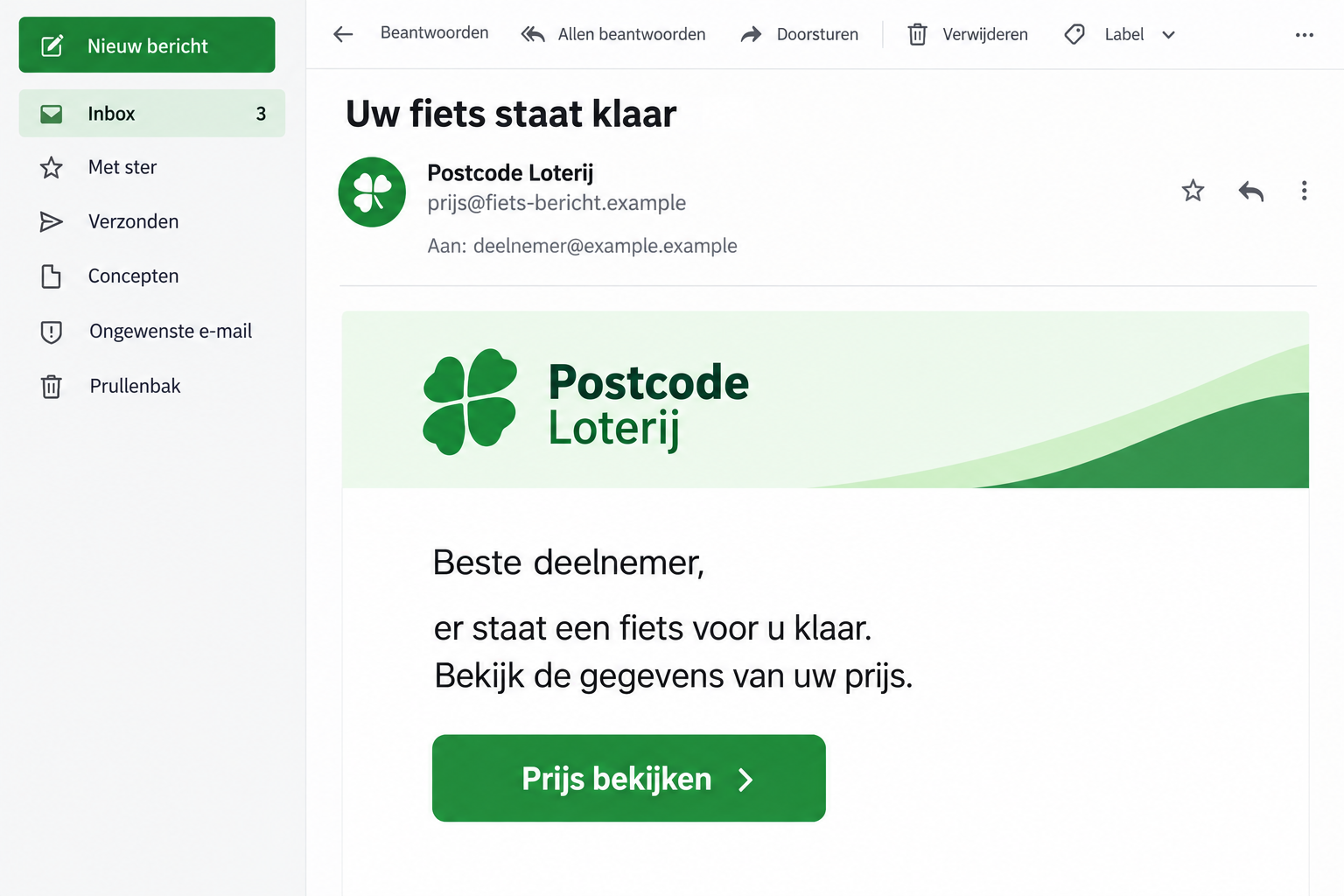
An email says a bicycle is waiting for you from Postcode Loterij. It looks like the kind of prize a real lottery might give a participant.
You only need to open the message’s claim page, apparently. Before you do, check who actually offered that bike.
Overview
The prize message is a confirmed impersonation
The Postcode Loterij bike email scam uses a promised bicycle to pull recipients toward a false claim process.
The lottery has issued an official warning about these bike emails. It says the problem is known and being investigated.
This is not a question of whether the bicycle is good value. The message is pretending to come from an organization that has warned about it.
The familiar lottery name does most of the work
A bicycle is a believable household prize. The sender doesn’t need an extravagant jackpot story to make you wonder whether you’ve genuinely won.
Being a participant can make the email feel even more relevant. It still doesn’t connect the sender to your actual membership or a genuine award.
Check the request at three separate points:
- The sender: inspect the full address, not only the familiar display name.
- The destination: find out whether the claim route belongs to the real organization.
- The request: question any money transfer or sensitive information demanded to continue.
Don’t claim the bike through the unexpected link
Verify the prize with the real lottery using independently found contact details. You don’t need to open the doubtful claim page to ask.
The lead image uses fictional details and sample wording. No fixed fee, subscription, final banking form, or actual delivery is established by that illustration.
Why a Bicycle Can Look More Credible Than a Jackpot
A giant windfall can immediately feel suspicious. A practical object is easier to imagine arriving at your home after an ordinary promotion.
You may start thinking about who would use the bike before checking the sender. That small change in attention helps the claim button feel like administration.
The message also gives a reason for asking you to do something. A physical prize sounds as though it could require delivery arrangements.
But a plausible delivery task doesn’t authenticate the page requesting your information. The person claiming to arrange the prize still needs verification.
If you’ve entered several promotions, resist trying to remember which one might explain the email. Find your own records rather than letting the sender supply an explanation.
If you haven’t entered anything, don’t assume the company must have selected you through another legitimate route. Ask the genuine organization before engaging.
There’s nothing foolish about being pleased by a possible prize. Just don’t let the excitement turn an unfamiliar sender into someone you trust with the claim.
How the Postcode Loterij Bike Email Scam Works
Step 1: An unsolicited email announces the bicycle
The message arrives carrying the lottery’s identity and a winner story. The proposed reward gives you a reason to read rather than delete.
A personalized greeting can add familiarity, but knowing a name or email address isn’t the same as access to a genuine winner record.
Do not assume the email proves a breach of your membership account. The documented fact is impersonation, not a demonstrated compromise of every recipient’s records.
Keep the message long enough to check it, but don’t treat receiving it as confirmation that a bicycle exists or has been assigned to you.
Step 2: Familiar branding makes claiming seem routine
The sender presents the next action as a simple continuation of the award. A claim button can feel less risky than a direct request for money.
That’s why the destination matters even before a payment appears. You may be moving from a copied email into a website controlled by someone else.
Inspecting a visible address may reveal a mismatch. If you remain unsure, stop there rather than opening the site to see whether it looks professional.
Logos, help text, and reassuring statements can all be added to a page. They don’t independently connect it to the lottery.
Step 3: The false claim route becomes the place to resolve everything
Once you accept the sender’s route, later requests can feel like required steps toward receiving the prize. Judge each request by what it actually asks.
A request for a bank transfer does not become safe because it follows a winner announcement. The lottery explicitly warns against these payment demands in email.
If the page requests passwords, financial details, or authorizations, don’t provide them to discover what happens next. Verify the claimed award outside that process.
The published warning doesn’t establish one identical checkout for every message. What you actually shared or approved determines the response if you already continued.
Check the Winner Story Without Sharing More Information
Reach the real lottery independently
Start at the organization’s official website by typing its address yourself. Find its member service there rather than using contacts printed in the unexpected email.
Explain that you received a bicycle-prize message and ask whether the specific communication is recognized. Keep the subject and sender details available.
You can ask that question without accepting the message’s claim procedure. Don’t send extra identity documents to the doubtful sender just to obtain a case number.
If you normally use an online account, access it through your established route. Don’t let a supposed prize page choose a different login for you.
Allow the real service to explain its own verification requirements. A stranger’s claim that the prize will be lost while you check is not authority.
Keep your question specific: is this bicycle message recognized, and what would the legitimate next step be? You don’t need a general account review to ask.
If the company confirms the message is false, don’t return to negotiate delivery with its sender. The existence of a tempting product doesn’t change that answer.
If the service needs more time to examine it, leave the link unused. An unresolved inquiry is not permission to enter payment information.
Record the date and reference of your genuine inquiry. That helps you recognize your own support conversation if more prize messages arrive later.
Don’t treat a lookalike support reply as that conversation. Compare the actual contact route, not merely a reused reference or familiar signature.
Ask which promotion the prize supposedly belongs to. A vague celebration of your participation is different from a record you can connect to something you actually entered.
If you entered as a household, compare your own confirmation with the message. Don’t assume another family member must have supplied details that make the email genuine.
A real entry confirmation can establish that you participated in an activity. It does not authenticate a later sender claiming to distribute its prizes.
Use the name clue without turning it into a guarantee
The lottery’s warning identifies its current name as Postcode Loterij, without Nationale. Older branding in a supposed current message can therefore be a useful clue.
It is not a complete test. Someone copying the correct name still hasn’t proved they work for the organization.
Don’t try to authenticate a message by finding an identical logo online. The same search makes it easy for an impostor to copy recognizable branding.
Instead, connect the specific prize and request to the real service. That remains useful when wording or appearance changes.
A genuine email link can exist without validating this one
The company says its real emails can contain links. The sensible rule isn’t that every message containing a button must be fake.
The rule is that an unexpected prize claim needs independent confirmation before you use its route or provide sensitive information.
Don’t reply to a doubtful email asking whether it’s legitimate. That simply asks the person making the claim to endorse their own claim.
A friendly answer, plausible signature, or photograph of a bicycle wouldn’t settle it either. Those details don’t replace confirmation from the actual organization.
If You Already Entered Delivery Details
Write down the types of information you supplied. A delivery address, telephone number, password, card detail, and bank approval create different concerns.
An address disclosure doesn’t automatically give someone withdrawal access. It can, however, make a later call about the supposed delivery sound convincing.
If another message mentions your home or repeats the bike story, don’t assume it independently confirms the prize. It may only repeat information from the first interaction.
Don’t continue a false claim to ask for deletion of your information. Use appropriate reporting advice rather than giving the same contact additional details.
When discussing the incident publicly, redact the delivery address and any membership reference. You can warn other readers without publishing your household information.
What to Do if You Have Fallen Victim to This Scam
-
Stop the prize claim. Close the page and decline any further instruction to pay, sign in, or confirm delivery through the sender.
Don’t order a second prize or complete a supposed cancellation step to undo the first interaction.
-
Speak to your bank or card issuer after financial exposure. Explain the bicycle-prize pretext and exactly which details or approvals were involved.
If money moved, use the real transaction record to give the amount, recipient, date, and reference. Ask what can be blocked, disputed, or recalled.
There is no promise of recovery. A small initial charge also doesn’t tell you whether exposed payment details need further protection.
-
Secure passwords you entered. Use the authentic website of each affected account. Replace reused passwords elsewhere instead of protecting only the account named in the email.
Where relevant, review recovery settings and signed-in sessions. Keep new authentication codes away from anyone contacting you about the bicycle.
-
Contact the real lottery about the impersonation. Confirm whether any genuine prize communication exists and tell member service what you disclosed.
Use official contact details you found yourself. Don’t assume the lottery already knows your individual circumstances because it published a general warning.
-
Keep a copy of the evidence. Preserve the original email, relevant link information, screenshots, payment records, and any follow-up exchanges.
Note whether you only viewed a page or actually submitted a form. An error message afterward doesn’t establish that submitted data stayed private.
Do not record full passwords, security codes, or unredacted card images in an incident summary intended for sharing.
-
Use official fraud-reporting routes. The lottery refers recipients to Fraudehelpdesk for phishing advice. Report any financial crime through the relevant authorities as appropriate.
Keep the bank and lottery reports separate. One concerns money and payment access; the other helps investigate misuse of the brand.
-
Check unwanted software or browser changes only where relevant. If the claim process prompted an installer, unfamiliar download, or notification permission, address that exposure too.
Malwarebytes can help examine unwanted software. AdGuard may reduce risky advertisements or redirects, but cannot recover your payment or remove information already disclosed.
No confirmed malware installation follows merely from receiving this message. Don’t accept a stranger’s paid cleanup offer on that assumption.
Don’t Let the Delivery Story Bring You Back
Once you’ve stopped, a later message may claim something remains unfinished. A shipping update or failed-delivery explanation should not bypass your original doubts.
Do not pay another party simply because it knows the prize description. Verify the award before considering any new contact connected with it.
If someone offers to recover money spent during the claim, question that person as carefully as the first sender. Reject advance-fee recovery promises.
For a family member who responded, help them locate the payment record and official support. Calm, practical help is more useful than arguing about whether the prize seemed believable.
If several household members received the email, compare the messages without clicking their links. Similar copies are not separate proof that any household won.
After reporting, save the genuine member-service route somewhere convenient. Future prize questions should start there, not with the latest sender’s button.
Frequently Asked Questions
Has Postcode Loterij confirmed the fake bike emails?
Yes. The lottery has warned about messages claiming recipients won a bicycle. The genuine organization is the identity being copied.
Does being a lottery participant make the message genuine?
No. Your actual participation doesn’t authenticate an unexpected sender. Verify the specific award through the lottery’s independently reached member service.
Should I pay a fee to claim the bicycle?
Don’t pay through the unexpected email. The company’s warning says its emails do not ask recipients to transfer money through such requests.
Is an email automatically safe if it uses the current company name?
No. Correct branding can be copied too. A name clue can raise suspicion, but only independent confirmation can resolve the specific claim.
What if I gave my address but no financial information?
Stop and document that disclosure. Watch for convincing follow-up contact, but don’t assume an address alone gave the sender bank access.
Will an antivirus scan undo the claim form?
No. Software checks cannot retrieve submitted personal information. Protect affected accounts or payment details and report the impersonation through genuine channels.
The Bottom Line
Do not claim a bicycle through the unexpected Postcode Loterij email. The lottery has identified these messages as impersonation; verify any real prize directly.
If the claim process received banking details or a payment, contact your bank now. Secure exposed passwords and keep the original message for reporting.

Join the discussion
0 commentsShare your experience or ask a question about this article.
Community experiences
Did this happen to you?
Your experience could help someone recognize the same scam. Submit a private report for our team to review.
I experienced this tooReports are reviewed before publication. Sharing publicly is always your choice.
Discussion
Start the conversation
Have a question or something useful to share? Add the first comment.