

You search for OptiVision because an eye-health advertisement caught your attention. The page looks reassuring, complete with bottle pictures, discount promises, and official-looking badges.
Then a different product name appears. Before you decide the change is harmless, follow what the page actually says you would be buying.
Overview
An OptiVision search can end at an OptiPlax offer
The page at optivision-co.us uses OptiVision throughout its headline and main description. Its purchasing links, however, point to an OptiPlax sales page.
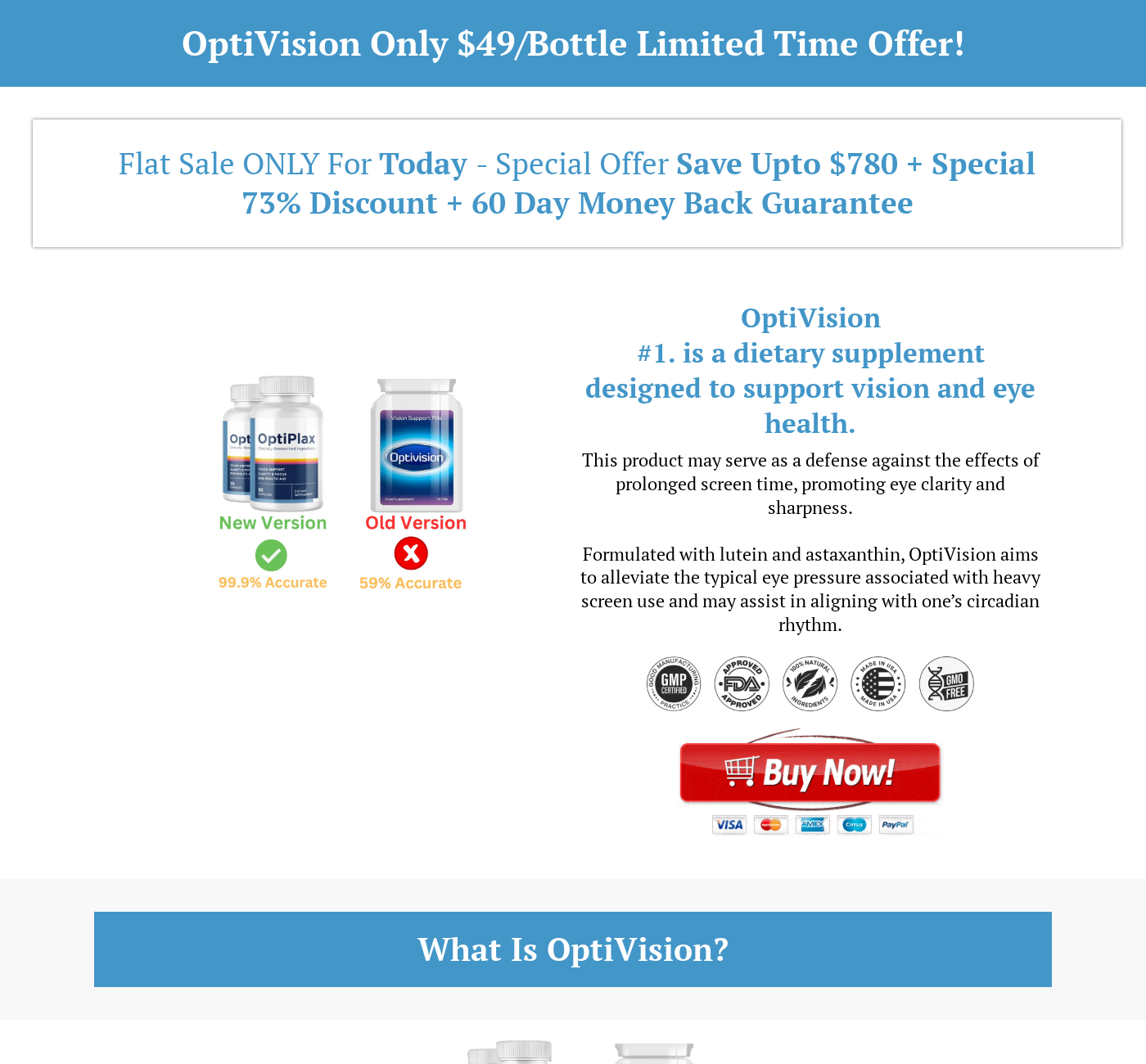
The bottle illustration presents OptiPlax as a new version and OptiVision as an old version. That is the promoter’s explanation, not independent confirmation of continuity.
A product change should come with a clear manufacturer, comparable labels, quantities, and the exact item named in the order. The picture alone cannot establish those connections.
The description mixes several different formula stories
One passage discusses lutein, zeaxanthin, and astaxanthin. Another introduces a 22-ingredient structure organized around eye protection, circulation, and a gut-related explanation.
The text also slips into the name OptiWell. That inconsistency makes it harder to know which formulation the descriptions, benefits, and recommendations actually concern.
The destination introduces OptiPlax and a different explanation involving deposits in eye tissues. Familiar ingredients do not make these descriptions interchangeable.
- OptiVision is the name attracting the visitor.
- OptiPlax is the name used by the linked sales destination.
- The page also refers to OptiWell inside its description.
- An FDA approval badge appears beside supplement marketing.
- The destination describes a one-time purchase, not automatic refills.
The decision is about this route, not every similarly named product
Do not buy through this offer while treating the advertised names and formulas as equivalent. The purchase route does not provide a dependable explanation of that equivalence.
This warning concerns the inspected pages. It does not accuse every eye supplement, optical business, or manufacturer using a similar name of participating in the promotion.
Nor does a changed product name prove hidden recurring billing. The linked offer specifically describes a one-off purchase, an important distinction from a verified refill scheme.
What the Official-Looking Labels Do Not Establish
The word official can be placed on a web page without identifying who authorized it. What matters is whether the manufacturer and transaction records support the claim.
Here, the footer explains that the website may earn a fee when a visitor follows a merchant link. That makes an affiliate relationship relevant.
An affiliate can promote a product without manufacturing it, controlling its formula, or administering returns. A persuasive page is not necessarily your eventual contracting party.
That separation becomes especially important when names change. A buyer may expect the formulation described on the first page but receive the product named at checkout.
Keep those documents together. The advertisement explains why you paid; the receipt identifies what the transaction says you purchased.
A clearly disclosed successor product is not automatically suspicious. But a successor claim should explain what changed instead of relying on matching bottle colors and confidence.
The displayed accuracy comparison raises another question. It supplies exceptionally precise figures without explaining what was measured or how either product’s accuracy was defined.
A supplement is not an instrument whose accuracy can be understood from a bare score. The page needs a measurable outcome and a credible method.
How the OptiVision Purchase Route Works
Step 1: The product name answers an existing worry
Someone experiencing eye strain, poor night vision, or concern about aging may recognize a name seen in an earlier advertisement and search for reassurance.
A page repeating that name can feel like confirmation that the offer is established. In reality, repetition only shows that the page targets the same search.
The useful starting point is your actual symptom and diagnosis. Screen-related discomfort, cataract, retinal disease, and a changing prescription require different decisions.
Do not let a broad eye-support message blur those distinctions. A supplement page cannot determine why your vision has changed.
Step 2: Familiar nutrients make the formula sound settled
Descriptions of lutein and zeaxanthin sound recognizable because these nutrients appear in genuine eye-health research. Recognition can make the surrounding claims feel equally established.
But a useful ingredient is not evidence that every combination, dose, or retail product delivers the advertised outcome.
The changing formulation descriptions should therefore slow the decision. Ask for a legible label showing amounts per serving rather than accepting several overlapping ingredient narratives.
If a proprietary blend hides individual quantities, a clinician may be unable to compare the product meaningfully with research or your other supplements.
General discussions about the gut, circulation, and antioxidants cannot fill that gap. The evidence must fit the actual bottle, not simply sound biologically plausible.
Step 3: Badges and discounts reduce the urge to check
The offer combines savings language with manufacturing and approval imagery. Those elements make the page look organized, safe, and ready for immediate purchase.
The FDA badge is particularly problematic. The FDA does not approve dietary supplements before sale in the way it approves drugs.
A facility reference also cannot establish that the agency approved this product’s formula, medical benefits, or advertising.
Discounts answer a different question: how the seller wants the price to feel. They do not establish effectiveness or make the item suitable for your condition.
Ignore the urgency long enough to identify the complete order. A low bottle price can require a larger package than you intended to buy.
Step 4: The button changes the named product
The inspected links lead from the OptiVision page to theoptiplax.com. The destination names OptiPlax and presents its own sales explanation and order options.
Before proceeding, compare the product name, label, manufacturer, capsule count, recommended use, and refund terms across both pages.
If those details differ, treat the destination as a separate purchase decision. You are not obliged to accept a replacement because a promoter calls it newer.
A change in brand does not by itself establish common ownership. It also does not prove that every claim about the earlier formulation applies to the destination.
No order was placed, and a completed checkout total was not authenticated. A purchasing button should not be mistaken for a verified transaction.
Step 5: The guarantee depends on the destination’s requirements
The OptiPlax page describes a 60-day guarantee and says a full refund requires all bottles, empty or otherwise, plus the packing slip.
That instruction is more specific than a simple promise of satisfaction. Throwing away packaging or an apparently unimportant insert can create unnecessary difficulty later.
The page also says the purchase is one-time, without hidden autoship. There is no basis here to replace that statement with a categorical subscription accusation.
Still, check your own receipt. An affiliate page, order form, and later upsell can contain different offers, and your authorization applies to your actual transaction.
If another bottle arrives or another charge appears, obtain the relevant authorization rather than assuming either that it is normal or that every buyer experienced it.
Company, Contact, and Return Details That Matter
The promoter’s terms name a website rather than a clear manufacturer
The optivision-co.us terms identify the company by the website address. That does not clearly establish an incorporated manufacturer responsible for the advertised formula.
A consumer needs to distinguish the affiliate, product vendor, retailer, and fulfillment provider. The same contact may not handle every part of the purchase.
Ask which legal entity appears on the invoice and which organization will answer a dispute about the product or its advertising.
The retailer’s address is not proof of a factory
The destination identifies BuyGoods as retailer and gives a Wilmington, Delaware address. It also says the retailer’s role does not endorse the promotional claims.
That address should not be described as a manufacturing laboratory or return warehouse without confirmation. A business contact and a parcel-receiving destination serve different purposes.
No factory inspection or address-occupancy check was conducted. The practical question is where your authorized return must go, not what a recognizable address seems to imply.
Product support and order support are different routes
The destination separates vendor support from BuyGoods order support. Use the route that fits the problem and keep the receipt reference in the correspondence.
A formulation question belongs with the responsible vendor. A payment, order lookup, or unresolved refund may require the retailer’s transaction-support channel.
No response-time or cancellation test was performed. Do not infer unreachable support merely because more than one company participates in the order.
The actual label must explain the actual bottle
Get a complete label before taking a substituted product. Check the ingredients, individual quantities, allergens, manufacturer, lot number, and directions on the delivered item.
Compare that information with your medication list and any other eye vitamins. Similar ingredient names can create duplication even when the brands are different.
Neither manufacturing origin nor contamination was established. The supported concern is the confusing promotion and unsupported approval impression, not an invented supply-chain finding.
Real Eye-Supplement Research Has Specific Limits
The National Eye Institute’s AREDS research concerns particular formulations and stages of age-related macular degeneration. It does not validate every product described as vision support.
Those findings do not make supplements a cure for cataracts or a substitute for assessing a new visual problem. Your diagnosis determines whether supplementation is relevant.
Ingredient amounts matter as well as names. A formula containing lutein is not automatically the tested AREDS2 formulation.
Bring the full label to your eye-care professional. Ask whether there is a specific reason for you to use it and whether an alternative has clearer evidence.
Do not postpone urgent assessment for sudden vision loss, new flashes, or a curtain-like shadow. A product guarantee cannot compensate for delayed care.
For routine discomfort, describe when it happens and what makes it worse. That information is more useful clinically than an advertiser’s universal explanation.
Keep a list of your current eye drops and medicines as well. A new supplement should fit the whole treatment plan, not replace it by implication.
Ask about duplicate vitamins before stacking several eye-health products. Different brand names do not prevent two preparations from supplying the same high-dose ingredient.
If a seller supplies a research paper, compare the study population with your diagnosis. Results for one stage of one disease cannot answer every vision complaint.
Finally, distinguish an independent laboratory report from a clinical trial. Checking composition can help establish contents, but it cannot by itself prove improvement in eyesight.
What to Do If You Ordered Through an OptiVision Offer
-
Establish what was ordered. Compare the confirmation, invoice, checkout description, and package with the OptiVision advertisement that first influenced you.
If the receipt names OptiPlax or another product, record that difference before opening the containers. Keep a photograph of the complete shipment.
-
Ask the vendor to explain the product change. Request the complete formulation and the basis for presenting the destination product as a successor.
A different label is not something to dismiss automatically. You need enough information to make a new safety and purchase decision.
-
Preserve the evidence of the offer. Save the original URL, approval imagery, pricing presentation, product names, and guarantee wording alongside your transaction details.
Keep private information out of public screenshots. The retailer can receive the relevant receipt through its verified support process.
-
Request return instructions before the stated deadline. Ask when the 60-day period begins and whether every bottle and the packing slip must be included.
Do not send the parcel to the retailer’s public corporate address without authorization. Obtain the correct receiving location and retain tracking.
-
Resolve billing separately from product claims. If a charge differs from the accepted order or a promised refund fails, contact the retailer and payment provider.
Describe the precise mismatch and supply records. A truthful account of what you expected and received is more useful than an unsupported accusation.
-
Review your eye-care plan before taking the product. A pharmacist or eye specialist can check ingredient overlap, interactions, and whether supplementation fits your diagnosis.
Continue prescribed treatment unless your clinician changes it. Do not use a promotional success story to decide when to stop care.
Frequently Asked Questions
Are OptiVision and OptiPlax definitely the same product?
The promotion presents one as a newer version, but that statement does not independently establish identical ingredients, manufacturing, ownership, or clinical performance.
Why does the description also mention OptiWell?
That name appears within the inspected description. The page does not clearly explain the inconsistency, so buyers should obtain the exact formulation rather than assume equivalence.
Does the FDA badge mean the supplement is approved?
No. Dietary supplements are not approved before marketing like prescription medicines. A facility or quality badge cannot establish approval of the product’s health claims.
Is automatic refill billing established on this route?
The linked OptiPlax offer expressly describes a one-off purchase. No hidden renewal was independently verified, so check your receipt instead of assuming a subscription.
Can this product replace glasses or cataract treatment?
No reliable evidence presented here establishes that role. Follow your eye professional’s advice for the actual condition rather than substituting a broad supplement promise.
Who should receive a refund request?
Use the vendor or retailer identified in your confirmation. The destination separates product support and order support, and the required return address needs written confirmation.
The Bottom Line
Do not buy through this OptiVision route on the assumption that its names, formulas, and approval imagery establish a coherent, proven product.
If you already paid, identify the bottle actually ordered, preserve the original pitch, obtain return instructions promptly, and discuss the label with your eye-care professional.

Join the discussion
0 commentsShare your experience or ask a question about this article.
Discussion
Start the conversation
Have a question or something useful to share? Add the first comment.