

A video links Elizabeth Hurley’s appearance to a Korean pink gelatin routine. There is supposedly a simple explanation for the skin everyone keeps asking about.
You wait for an ingredient, a preparation, something you could recognize. Before following that beauty story any further, look at what the presentation actually asks you to trust.
Overview
Her name is being used to sell a beauty story
The Elizabeth Hurley pink gelatin scam fabricates a commercial endorsement around the actress. A recorded campaign also invokes Nicole Kidman and Martha Stewart.
Its central promise is a Korean beauty discovery that supposedly explains a strikingly youthful appearance. The presentation leads toward Gelagen gummies, not an authenticated interview with Hurley.
That distinction matters. A real celebrity, a convincing voice, and familiar photographs do not establish that she used, recommended, or authorized the advertised formula.
The familiar recipe becomes a different kind of purchase
Pink gelatin sounds like something you could prepare inexpensively. A multi-jar supplement package is a separate decision, with different ingredients, costs, and possible health considerations.
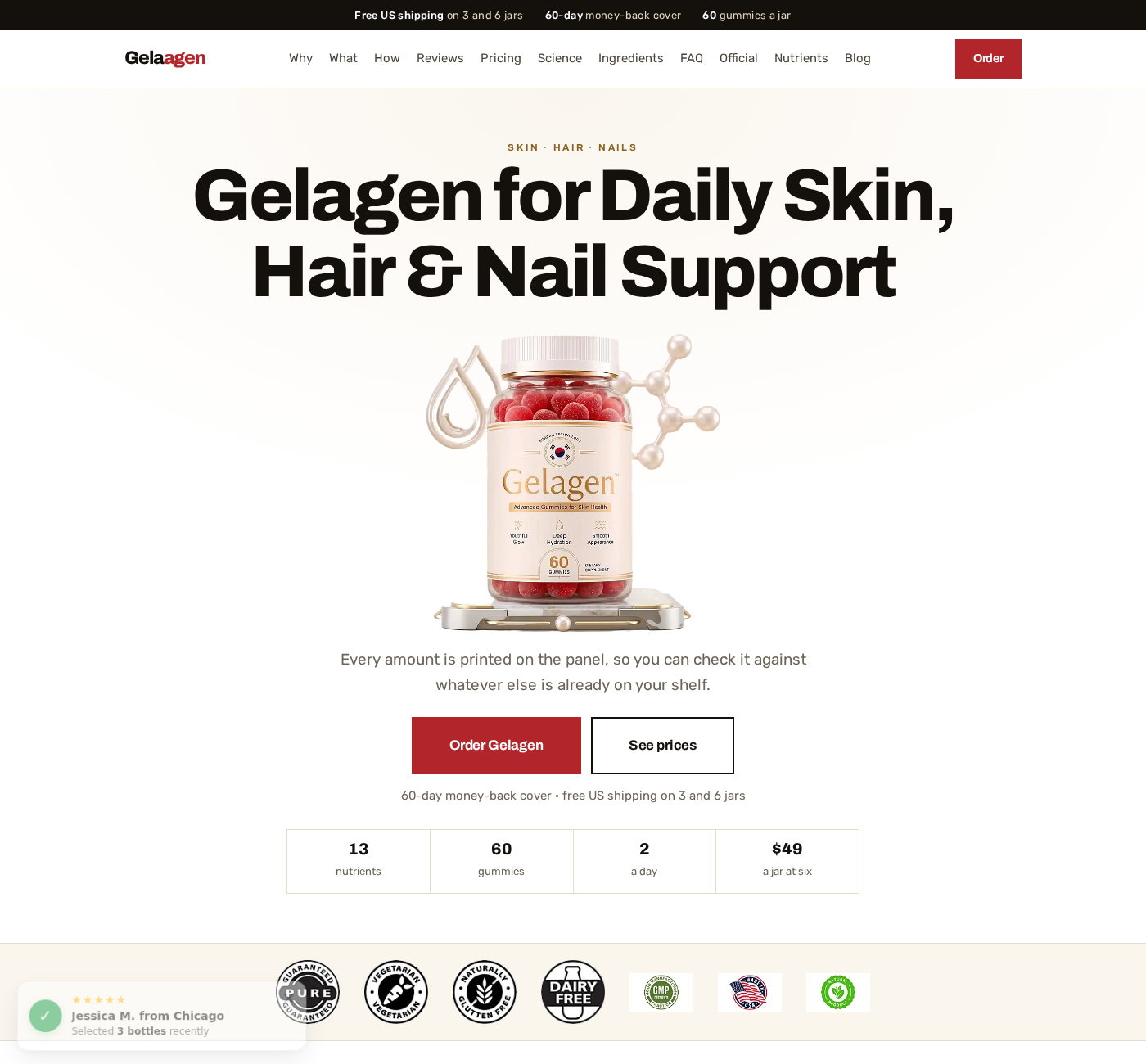
The original product-page screenshot shows an accessible Gelagen affiliate offer. It does not establish that Hurley participated in the campaign or controls that business.
That page describes a pectin gummy without collagen on its panel. Its claims and formulation cannot be treated as proof of the video’s supposed gelatin discovery.
- A celebrity’s appearance is not a clinical result.
- A recipe nickname does not identify a tested supplement.
- Korean branding does not establish where a bottle was manufactured.
- Multi-jar pricing must be evaluated using the whole charge.
- Recurring payments require evidence from the actual purchase terms.
The false recommendation is the reason to walk away
Do not order because a video claims Hurley revealed this secret. The apparent endorsement is the sales device, not reliable guidance for choosing skincare or supplements.
Someone who already ordered needs to identify the merchant, preserve the advertised promise, and check the return deadline. Contacting the actress will not resolve the transaction.
Why This Beauty Pitch Holds Your Attention
The advertisement begins with something immediately visible: an attractive person looking younger than the viewer expected. You do not need medical training to notice the image.
Then it offers a satisfying explanation. Rather than genetics, professional styling, lighting, or a complicated routine, the answer is presented as one overlooked household preparation.
That explanation can feel generous. You are supposedly being let in on an accessible secret, not pressured to buy an expensive treatment.
The campaign has also chosen a difficult result to verify. Viewers cannot reliably determine someone’s skin condition, treatment history, or supplement use from a promotional photograph.
There is no reason to speculate about Hurley’s private care. The advertiser, not the person depicted, carries the burden of substantiating the commercial story.
A genuine interview would provide context. Who asked the question? When was it recorded? What precisely did the speaker recommend, and was the named product mentioned?
The promotional clip substitutes recognition for those answers. Familiarity makes the missing source less noticeable, especially when several recognizable people appear in quick succession.
Once you separate the image from the product claim, the decision becomes simpler. An attractive person on screen is not a reason to authorize a supplement order.
How the Elizabeth Hurley Pink Gelatin Scam Works
Step 1: A youthful-looking image makes the recipe worth waiting for
The opening connects a famous appearance with a small daily ritual. The contrast makes the promised explanation seem more interesting than an ordinary gummy advertisement.
Someone searching for the ingredients may therefore watch material they would otherwise skip. The advertiser has attracted a recipe reader before identifying a commercial product.
Notice what the opening leaves unresolved: the ingredient, the quantity, the preparation, and the evidence for the result. Those are precisely the details needed to evaluate a recipe.
A claim about looking decades younger also needs a meaningful comparison. Makeup, expression, image quality, and lighting can all change what a viewer thinks they see.
Step 2: Fabricated celebrity material makes the claim feel established
The documented campaign places Hurley alongside other famous women in a manufactured beauty narrative. Their apparent agreement supplies social reassurance before the bottle appears.
Altered footage can preserve a person’s recognizable face while attaching words or a recommendation they never delivered. Familiarity is therefore the hook, not an authenticity test.
Another celebrity clip does not independently corroborate the first. Several fabricated appearances can come from the same promotional presentation.
Look for the complete original interview outside the sales funnel. A promotional repost with the same purchase button merely repeats the claim.
Do not blame the person impersonated for the merchant’s conduct. The misleading use of a likeness and responsibility for collecting payments are different questions.
Step 3: A medical-looking setting turns curiosity into confidence
The campaign’s Anti-Aging Center-style presentation makes the beauty story resemble a discovery explained by specialists. The setting supplies authority that the actual recommendation lacks.
A polished page can display scientific language without identifying a clinic that examined patients, a study that measured results, or a qualified clinician taking responsibility.
The relevant question is not whether the design looks professional. It is whether the advertised outcome has evidence tied to the specific preparation being sold.
Beware of claims that ordinary care is deliberately hiding an easy answer. That story makes disagreement feel like confirmation instead of a reason to investigate.
Step 4: The promised kitchen explanation becomes a jar offer
After enough viewing time, the solution changes from information into a proprietary supplement. The viewer is asked to carry confidence in the recipe over to the jar.
Those are not interchangeable propositions. A name containing gelatin or a pink product image does not show that the contents reproduce the advertised preparation.
The accessible affiliate page lists fruit pectin as the gummy base and no collagen on its nutrient panel. That is useful product information, not celebrity validation.
It is also a separate page using the Gelagen name. Do not assume every advertisement, affiliate, seller, and formulation has one established operator.
If the bottle changes in another version, return to the underlying promise. A renamed product does not make the supposed Hurley recommendation authentic.
Step 5: A low unit price encourages a much larger order
The accessible offer advertises $49 per jar when purchasing six. The package total is $294, not a $49 trial of one container.
Three jars are listed at $207, while two cost $158 before applicable shipping. Compare package totals with your budget rather than focusing on the largest discount.
Buying more does not reduce uncertainty about whether you want the product. It increases the amount committed before you have examined what arrives.
This particular affiliate page describes one-time payments. That wording should not be replaced with an unsupported claim that every Gelagen buyer receives automatic refills.
Read the actual checkout anyway. If it proposes an additional membership or recurring shipment, decide about that commitment separately from the initial package.
Step 6: The guarantee becomes important only after money changes hands
A satisfaction promise can make the order feel reversible. In practice, the relevant details are the deadline, eligible product condition, required authorization, and return destination.
The accessible page advertises 60 days of cover. That is the seller’s promise, not a refund we tested or a guarantee that every buyer’s request succeeds.
Save the terms attached to your transaction. A later page using the same brand name may not describe the agreement you accepted.
If you want to stop future shipments as well as return the first package, say both things explicitly. A merchant should not have to infer your request.
Gelatin, Collagen, and a Label Are Not the Same Evidence
Beauty advertising often moves between related-sounding words as though they identify one treatment. That shortcut matters when the reader expects a particular ingredient.
Gelatin, collagen, pectin, and individual vitamins are not interchangeable names for the same finished product. The actual label should settle what is present.
Even a correctly identified ingredient does not establish the dramatic result shown in an advertisement. Amount, formulation, study design, and the measured outcome still matter.
A nutrient’s normal role in the body is also different from evidence that extra supplementation visibly reverses aging in someone who is not deficient.
You do not need to become a cosmetic researcher to reject the sales story. Start by refusing the leap from a famous face to an unverified medical recommendation.
For a product you might otherwise consider, obtain the entire nutrient panel. Compare it with existing supplements instead of adding overlapping vitamins without checking the amounts.
A pharmacist can help with interactions and duplication. Neither a glowing testimonial nor a money-back promise performs that safety check.
Changes in a skin lesion or another persistent concern belong with an appropriate clinician. A beauty-gummy pitch should not delay assessment.
Keep the Advertising Promise Attached to Your Complaint
A receipt may simply describe a supplement. That does not capture the celebrity story that persuaded you to order, so preserve both parts of the transaction.
For example, a complaint about an unwanted six-jar package needs the selected quantity and confirmation. A complaint about deception needs the endorsement or recipe claim as well.
Record the full page address, not only a cropped picture of the bottle. The destination helps distinguish an advertiser from the business identified on the invoice.
Keep medical details private unless they are necessary for a specific complaint. Publicly posting a confirmation can expose your address, order number, and contact information.
If you cannot recover the original advertisement, describe what you remember as your recollection. Do not create a replacement screenshot and present it as evidence.
Your strongest request is specific: which order, which misleading representation, what remedy you want, and when you first asked. Anger alone cannot supply those details.
What to Do If You Bought After an Elizabeth Hurley Gelatin Ad
-
Find the order email and payment entry. Write down the merchant, amount, selected package, and date before beginning a refund request.
Save the advertisement separately. Identify the sentence or apparent recommendation that influenced you, rather than relying only on the product’s ordinary label.
-
Ask the merchant for its cancellation and return procedure in writing. Request the exact deadline and whether an unopened package can be refused or returned.
Obtain an authorized destination before shipping anything back. Keep tracking and proof of the condition required by the applicable terms.
-
Check whether your receipt authorizes future shipments. If it does, request cancellation of that arrangement as well as the current order.
Ask for written confirmation of the final billing date. A return acknowledgment and a subscription cancellation are not necessarily the same document.
-
If the seller does not resolve a material discrepancy, contact the payment provider. Explain the false endorsement and attach the relevant transaction records.
Ask which dispute deadlines apply. Do not let an indefinite promise to investigate consume the time available to raise the issue.
-
Have the delivered formulation checked before use if you take medicines, have allergies, or already use vitamin supplements. Bring the actual label.
Seek medical advice about a concerning reaction. A customer-support agent selling beauty products is not a substitute for clinical care.
-
If the advertising route downloaded unfamiliar software, inspect the device with Malwarebytes. AdGuard can help reduce exposure to intrusive or malicious advertising.
Seeing a video alone does not establish an infection. Use device-remediation steps for the exposure that actually occurred, not as a replacement for payment recovery.
-
Report the misleading celebrity promotion to the platform carrying it. Include the destination and explain that the apparent endorsement led to a commercial offer.
Reject strangers offering guaranteed recovery for an advance payment. You do not need another sales pitch while trying to unwind the first.
Frequently Asked Questions
Did Elizabeth Hurley reveal the advertised Korean gelatin routine?
The documented sales campaign fabricates her commercial involvement. It is not an authenticated source for a recipe she used or a supplement she recommends.
Does a real photograph make the accompanying statement genuine?
No. A photograph can be genuine while the commercial caption, synthetic narration, or claimed recommendation attached to it is false.
Are Gelagen gummies necessarily the same as pink gelatin?
No. The accessible affiliate’s panel lists a pectin base without collagen. Judge the actual formulation, not a similarity between its name and the recipe hook.
Will every buyer be placed on a subscription?
That was not established. One accessible offer states one-time payment. Check your specific checkout selection and confirmation before drawing conclusions about recurring billing.
Should I send my refund request to Hurley’s representatives?
The merchant on your order is the relevant starting point. A celebrity falsely depicted in an advertisement is not automatically connected to its payments.
What if the same video starts advertising another brand?
Keep the focus on the false recommendation. A new label needs its own product checks, but it does not repair the fabricated celebrity story.
The Bottom Line
Do not buy through a supposed Elizabeth Hurley pink gelatin revelation. The campaign substitutes a fabricated endorsement for a trustworthy reason to purchase.
If you ordered, act on the receipt: identify the seller, request the applicable remedy promptly, clarify future billing, and preserve the advertisement that influenced your decision.

Join the discussion
0 commentsShare your experience or ask a question about this article.
Reader experiences
How was your purchase experience?
Bought Elizabeth Hurley Pink Gelatin? Rate ordering, delivery, billing or returns. This is not a rating of health benefits or safety.
Share your experienceRatings appear after moderation and reflect readers’ experiences, not an editorial verdict.
Have firsthand experience?
Your review can help the next reader.
Discussion
Start the conversation
Have a question or something useful to share? Add the first comment.