

A Halsted Financial text arrives about a balance you cannot place. You start mentally checking old accounts, wondering whether something slipped through the cracks.
Then you notice the deadline. Before that message becomes another bill to pay, there are two separate questions worth answering.
Overview
A real collector’s name can appear in a fake message
The Halsted Financial text scam involves someone borrowing a debt collector’s identity to obtain money or personal information. The accusation belongs to the impersonation, not the company.
Halsted Financial Services is a real collection business. Its fraud guidance warns about people claiming its name and recommends contacting the company independently.
That distinction matters when searching for an unfamiliar balance. Finding a genuine business with the same name does not establish who sent your particular message.
Text delivery alone does not settle the question
Halsted also publishes SMS program terms describing genuine notifications. It would be misleading to label every text bearing its name fraudulent.
A convincing impersonator can combine an ordinary-looking reminder with a dishonest payment destination. Conversely, an unexpected collection message may concern an account that needs proper investigation.
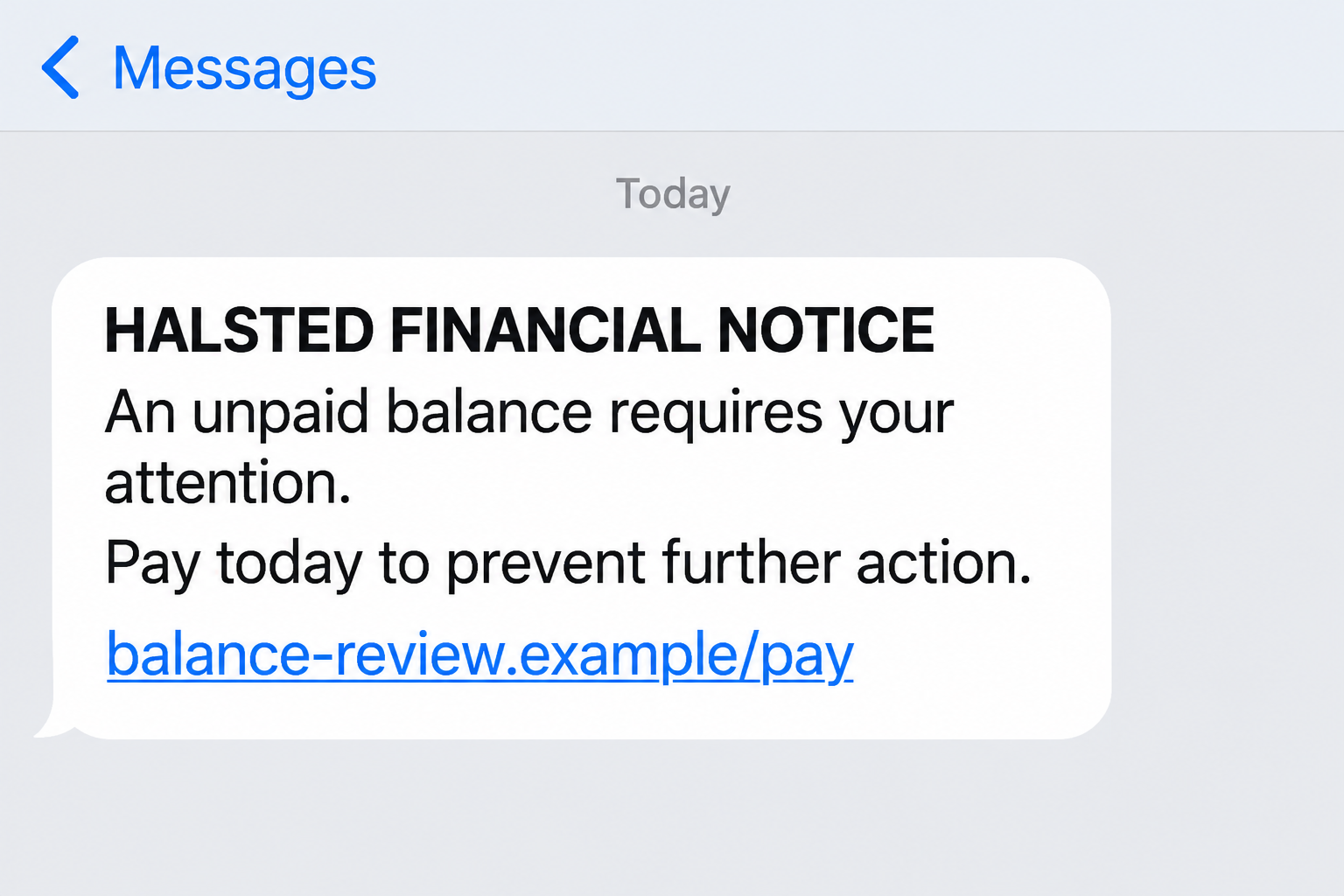
The image above is an illustrative message with a nonfunctional address. It is not an authenticated customer text or evidence of a particular debt.
Check the sender and the alleged account separately
One check concerns identity: are you communicating with the actual collector? The other concerns the claim: is this your debt, with an accurate balance?
- Locate the collector without using the incoming message.
- Ask for information that identifies the creditor and account.
- Compare the claim with records you already have.
- Use the appropriate dispute process for an incorrect or unrecognized debt.
Neither question requires paying an unknown website first. Keep the text outside your verification process until you have established a trustworthy contact route.
Why an Unfamiliar Debt Can Feel So Believable
You do not need to remember every account immediately
A collection notice can send you searching through years of bills. Medical appointments, closed credit accounts, and moves between addresses can make the uncertainty feel plausible.
That uncertainty is exactly why an impostor does not need an elaborate opening. A brief balance warning can make you do the work of imagining its explanation.
Do not turn a hazy memory into an admission. Write down what the sender actually alleges before filling in the missing details yourself.
Equally, failing to recognize an account is not proof of a scam. You need documentation rather than a choice between immediate payment and ignoring everything.
Personal details are not a substitute for authentication
A message may include your name, an old address, or a partial reference number. Those details can make an otherwise vague demand feel tailored to you.
Ask the real company whether it can connect those details to a documented account. That is more useful than guessing how the texter found your address.
Do not supply missing identity information to help an unknown sender improve its story. A request to confirm sensitive details deserves a verified channel first.
If a family member receives the text, avoid forwarding the live link around for opinions. Share a screenshot with personal details covered instead.
How the Halsted Financial Text Scam Works
Step 1: An unexpected balance interrupts your day
The opening presents an alleged debt as something already established. Your task supposedly is to respond, resolve the account, or prevent the next collection step.
There may be little information about the original creditor. A link or callback instruction is offered as the quickest way to learn more.
This creates a trap for careful people: checking the claim appears to require using the very channel whose identity has not been established.
Keep that distinction visible. You can investigate an allegation without allowing its sender to choose the website or person who confirms it.
Step 2: The borrowed company name makes the demand sound established
The Halsted name supplies familiarity once you search it. A real website, business listing, and payment portal can make the text seem connected to an actual operation.
Those genuine resources authenticate the business, not the message. An impostor can mention a real company just as easily as an actual employee can.
Some messages may imitate administrative language rather than obvious threats. A calm tone is no more reliable than a frightening one when the sender remains unknown.
Avoid a simple spelling test. Correct grammar and a recognizable business name are not enough to authorize a financial transaction.
Step 3: Urgency replaces the missing account details
The sender may pressure you to settle immediately, suggest escalating consequences, or offer a short-lived resolution. The deadline becomes more prominent than the evidence.
Arrest threats are especially alarming. Halsted’s own fraud page identifies jail and physical-harm threats as conduct that should raise concern.
Do not assume every reference to legal action proves impersonation, however. Real disputes can involve legal proceedings, and actual collectors can also behave improperly.
The response is to verify and document, not to let a stranger’s countdown decide whether you disclose a bank account or make a payment.
Step 4: The sender directs you toward information or money
A text link may open a form asking for identifying or payment details. A callback can instead move the demand into a conversation with an alleged representative.
The precise destination matters. A company name printed above a form does not identify the person receiving the submitted information.
Be particularly cautious if the conversation switches to gift cards, cryptocurrency, or another unfamiliar payment arrangement. Do not make a small transfer merely to test it.
A second person on the same call is not independent confirmation. Neither is a verification page supplied by the person asking for your money.
Step 5: A supposed resolution can create a second problem
After responding, you might receive a receipt, another fee request, or a promise that the balance is cleared. None independently proves a genuine account was paid.
If the original demand was fraudulent, the payment may leave any separate legitimate debt untouched. Financial exposure and account verification then become two different tasks.
Do not send another payment because the first one allegedly failed. Check your financial records directly and tell your provider how the transaction originated.
These are possible stages of debt-collection impersonation, not findings that every Halsted-branded message uses the same page, script, or payment method.
A Safer Way to Check a Halsted Message
Start a fresh conversation outside the text
Open the company’s website yourself, rather than selecting a link in the message. Use contact information published there to ask whether it recognizes the communication.
Explain that you received a message claiming its identity. Ask how to obtain account information securely before discussing any payment arrangement.
Legitimate collectors may need to establish whom they are speaking with before discussing private records. That is different from giving sensitive information to an unverified incoming contact.
Find the organization first, then ask about its verification procedure. Do not use the text’s insistence that verification is required as proof of its identity.
Get enough information to recognize the claim
The CFPB’s validation-information guidance explains the account details collectors generally must provide, including creditor, amount, itemization, and dispute instructions.
It also describes a 30-day dispute period. A timely written dispute can require the collector to pause collection of the disputed amount until it adequately responds.
Read the actual notice and preserve its stated deadline. This process concerns your rights with a collector; it does not make an impostor obey the law.
Compare the named creditor and account with statements, payment confirmations, or correspondence you already trust. Keep unrelated account numbers out of the conversation.
Separate an error from an impersonation
A wrong-person message, an incorrect balance, and a fabricated debt are different problems. So is a genuine collector using improper pressure.
The FTC’s collector guidance addresses both fake collectors and abusive practices. An established company’s involvement does not remove your right to challenge its conduct.
Record what was said, including payment demands and threats. A complaint is more useful when it distinguishes facts you confirmed from claims made by the sender.
For an old account, obtain qualified advice before agreeing to a settlement. The age and legal treatment of debts can depend on circumstances and state law.
What to Do if You Have Fallen Victim to This Scam
-
Stop the exchange and list what you provided. Note whether you only replied, disclosed identity information, submitted a card, or authorized a transfer.
Save the message, visible address, call history, and any receipt already available. Do not reopen the destination or send another message to collect better evidence.
Include the time and the name the sender used. Keep the original records privately rather than posting financial or identity details in public comments.
-
Contact the relevant financial provider promptly. Use your bank’s established app, a trusted statement, or the number on your payment card.
Describe the suspected collector impersonation accurately. If you approved a transfer under false pretenses, say so rather than describing it as a transaction you never made.
Ask about card replacement, account protection, disputes, or transfer recall as appropriate. Available remedies vary, and a refund is not guaranteed.
Review pending activity as well as completed charges. An empty transaction list does not prove that information entered into a dishonest form was discarded.
-
Secure any exposed account credentials. Change a disclosed password at the genuine service, then check recovery details and unfamiliar sessions.
If the same password protects other accounts, replace it there too. Do not follow a later text offering to repair the supposed mistake.
Contact your provider about any verification code you shared. Tell it which service sent the code and what the message said it would authorize.
-
Respond to identity exposure proportionately. Sharing only your first name calls for different action than sending a Social Security number or identity-document image.
Use IdentityTheft.gov for a recovery plan when sensitive information was exposed or misused. Consider credit freezes where relevant to the information involved.
Keep watching for applications, accounts, or correspondence you do not recognize. A later message mentioning your original incident is not automatically from a genuine recovery team.
-
Check the underlying debt without the suspected impostor. Reach Halsted independently and ask whether it holds an account connected to the notice.
If it does, request the documentation needed to evaluate or dispute that account. A fraudulent contact does not automatically erase a separate legitimate obligation.
If genuine court papers also arrive, seek appropriate legal help promptly. Blocking a scam number is not a response to an independently verified lawsuit.
-
Report the conduct, then block the unwanted contact. Give the real company the impersonation details through its independently located reporting or contact channel.
For collection issues, use the CFPB’s debt-collection resources. Report suspected fraud through ReportFraud.ftc.gov and your state consumer-protection office where appropriate.
Preserve complaint references alongside your financial-provider records. Anyone promising guaranteed recovery or debt deletion for another upfront payment deserves fresh scrutiny.
If You Recognize the Creditor but Not the Balance
Recognizing a business name can create a false sense that the rest must be correct. Look at the account and amount separately.
Compare the alleged balance with your last reliable statement. Note payments, adjustments, or a prior dispute you can document without guessing what happened.
Ask the verified collector to explain discrepancies through its established process. Do not send original documents to an address taken solely from the incoming text.
If the account belongs to someone else in your household, do not impersonate them to obtain private records. Let that person use the verified contact route.
A helper can sit with you while you organize documents. They do not need your banking password or a live link to the suspicious page.
Before paying a verified settlement, obtain its terms in writing and retain the confirmation. Keep this legitimate transaction separate from any payment sent to an impostor.
If records conflict or the legal consequences are unclear, consult a qualified adviser. Do not let an unknown texter become your source of debt or court advice.
Frequently Asked Questions
Is Halsted Financial Services itself a scam?
It is a real collection business. This warning concerns people impersonating it. A particular account or complaint still needs its own factual review.
Can a genuine Halsted message arrive by text?
Yes. The company publishes SMS terms. Text delivery alone cannot distinguish an authentic notification from someone copying the business’s name.
Does an unfamiliar balance mean someone invented the debt?
No. It could involve an error, an account you need to investigate, or fraud. Request documentation through an independently verified channel before deciding.
Should I reply STOP to a suspicious debt message?
Do not engage with an unverified sender. A genuine program’s opt-out instructions are a separate matter, best checked through the real company’s published terms.
What if the sender knows my previous address?
An old address does not authenticate a collector. Verify the company and account independently without supplying additional sensitive details to the incoming contact.
Will paying the alleged collector remove the debt?
A payment to an impostor does not resolve a real account. Confirm the payee and written terms first; ask your financial provider about money already sent.
The Bottom Line
A Halsted Financial text scam borrows a real name to make an unverified demand feel payable. Do not let that name replace account evidence.
Leave the message’s payment route alone. Reach the collector independently, check the debt, and contact your financial provider promptly if the sender already obtained money or payment details.

Join the discussion
0 commentsShare your experience or ask a question about this article.
Discussion
Start the conversation
Have a question or something useful to share? Add the first comment.