

Mark Wahlberg appears to speak directly to people whose prayers feel unanswered. A forgotten chant, the video suggests, could explain what has been missing.
It is a deeply personal invitation, especially if you already know the actor talks openly about faith. That familiarity deserves a closer look.
Overview
The warning concerns a fabricated endorsement, not prayer
The Mark Wahlberg Four Archangels scam uses a manipulated portrayal of the actor to promote a paid spiritual-audio offer.
In the recorded campaign, the apparent Wahlberg narrator tells a dramatic story about a hidden chant, a Vatican archivist, and a promise to reveal suppressed knowledge.
This is not an authenticated statement from Wahlberg. His public faith does not validate words placed into a commercial portrayal of him.
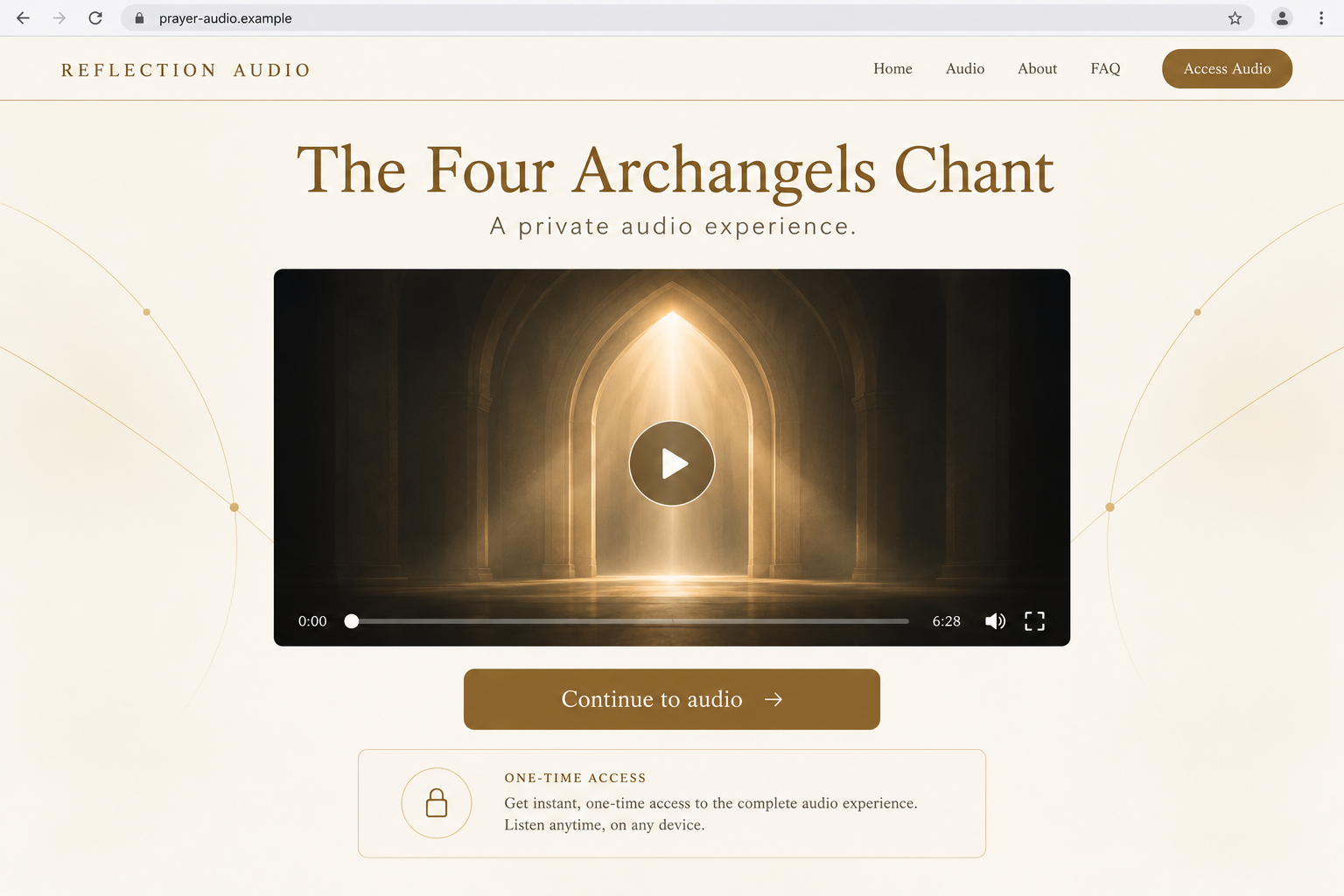
The image illustrates the sales interface with fictional details. It does not reproduce the original impersonation or document a particular transaction.
A real prayer collaboration makes the false story more convincing
Wahlberg has genuine prayer-related work. Hallow’s own Pray40 page identifies him among its contributors.
That authentic association is separate from the Four Archangels pitch. It does not endorse this chant or its claims of hidden spiritual access.
Recognizing an actor from a legitimate devotional project can make a different advertisement feel familiar. The scam exploits that shortcut.
The actor and the genuine prayer service are not the targets of this warning. The deceptive commercial portrayal is.
The practical answer is to avoid the impersonating offer
Do not pay because the video appears to feature Wahlberg. A fabricated recommendation cannot establish what the recording delivers or whether its promises are credible.
- The campaign turns private spiritual concerns into a purchase decision.
- A supposed secret archive and personal testimony provide the emotional storyline.
- The celebrity portrayal is not proof of authorization.
- A payment and any renewal terms must be checked from the actual order.
The available recording establishes the advertising mechanism. It does not establish every seller’s current price, refund performance, or subscription arrangement.
The Story Borrows a Relationship the Viewer Already Trusts
Most advertisements have to introduce their spokesperson. This one starts with a face many viewers already associate with public expressions of Christian faith.
That changes the viewer’s question. Instead of asking who is selling the offer, they may ask why someone they recognize seems so concerned.
The script addresses quiet worries: disappointment, difficult nights, and the feeling that an answer has not arrived. It is designed to feel understood.
Then it supplies an explanation for that pain. Something has supposedly been placed between the person and the spiritual help they seek.
The proposed commercial answer is a chant or audio program. The emotional problem is real to the reader; the sales explanation has not earned their trust.
You do not need to debate religion to recognize the problem. A seller is falsely borrowing a person’s identity to persuade someone to buy.
Ordinary prayer, sacred music, paid recordings, and genuine devotional subscriptions are not automatically scams. The fabrication and unsupported guarantee distinguish this campaign.
What the Recorded Wahlberg Portrayal Actually Claims
The apparent narrator describes an old chant associated with the Knights Templar and an archive beneath Vatican City.
He then invokes a man identified as Thomas Riley, supposedly an archivist whose final request was to make the information public.
These details give the advertisement a plot: a secret, a trusted messenger, a death, and a responsibility to pass the knowledge along.
That is storytelling, not documentation. The presentation does not provide an independently verifiable archive record proving the commercial claims.
Nor does the existence of genuine historic chants authenticate this product’s version. Familiar religious words can be attached to a completely unrelated sales script.
The campaign also includes a manipulated depiction of Pope Leo XIV. That adds apparent institutional authority beside the celebrity’s supposed personal experience.
Two fabricated endorsements do not corroborate each other. They make the same commercial message look as though it has independent support.
Our separate papal-impersonation article addresses that role. This report focuses on the actor’s borrowed credibility and the personal testimony attributed to him.
How the Mark Wahlberg Four Archangels Scam Works
Step 1: A familiar face stops the scroll
A social advertisement or shared video introduces the apparent actor in a spiritual context. The viewer recognizes him before assessing the seller.
The material may arrive from a page with devotional imagery rather than an account controlled by Wahlberg. Page styling does not establish who authorized it.
Before following the link, distinguish the account posting the advertisement from the person depicted in it. They may have no legitimate connection.
A large audience, paid placement, or many comments cannot repair that missing authorization. Those features show distribution, not authenticity.
Step 2: The fabricated narrator makes the pitch intimate
The manipulated portrayal uses first-person language and an apparent personal history. The effect is closer to a confession than a product demonstration.
Synthetic speech and edited lip movement can make borrowed footage appear to contain a new message. Recognizing the face is no longer enough.
Do not rely on one visual glitch as a universal detection method. Some edits look convincing, while genuine video can also contain compression artifacts.
The stronger check is authorization and context: a genuine source publishing the same statement, about the same offer, with an accountable destination.
Step 3: A hidden obstacle makes the purchase feel important
The story suggests the viewer’s unanswered prayers have an explanation beyond everyday hardship. The chant is positioned as a way around that obstacle.
That creates pressure different from an ordinary music purchase. Walking away may feel like walking away from a chance of relief.
But declining an advertisement is not rejecting faith. You can continue praying, seek support, and speak with trusted people without buying access from an unknown seller.
A commercial pitch should never make you feel spiritually responsible for accepting its payment request.
Step 4: Vatican imagery lends the story official weight
A secret archive and a papal portrayal imply an important religious discovery. Neither element supplies permission from an actual institution.
The promise of suppressed knowledge also explains away missing confirmation. If the story is supposedly hidden, a lack of reliable sources can be made to sound expected.
That is a circular argument. The seller asks the audience to accept missing evidence as further evidence that the story must be true.
Independent verification should become easier before money changes hands, not something the viewer is encouraged to treat as disloyal or impossible.
Step 5: The spiritual explanation becomes a paid program
The paid offer is called The Chant of the Four Archangels. Some advertisements shorten the spelling to 4 Archangels.
The offered material may be described as audio, private access, or a program. The description alone does not guarantee a supernatural result.
A working download would prove that a file was delivered. It would not prove the archive story, celebrity recommendation, or claimed special access.
Keep those questions distinct when requesting help. A seller might defend delivery while leaving the advertising misrepresentation unanswered.
Step 6: The transaction creates a separate set of risks
Before payment, any actual seller should identify the complete charge, product, support process, and whether further charges are optional or recurring.
The recorded impersonation does not establish that every buyer receives a subscription. A real billing dispute needs the buyer’s checkout and statement.
Additional activations, upgrades, or memberships can complicate a purchase if accepted. Their terms must be assessed individually rather than inferred from a headline.
If you already paid, stop treating the narrator as your point of contact. The retailer on the receipt is the route for locating the transaction.
How to Separate Genuine Faith Content From This Impersonation
Start with the destination, not the face. An authentic Hallow contribution can be checked through Hallow’s own service and published program information.
The Four Archangels advertisement is a different claim. It needs separate authorization, even if it borrows a person associated with legitimate prayer work.
Do not ask the genuine service to refund an unrelated transaction it did not process. Check the receipt before deciding whom to contact.
Similarly, an unrelated parish, charity, or religious publisher should not become the target of complaints because the advertisement uses familiar symbols.
If a friend shared the video, ask where the recommendation was originally published. A forwarded copy cannot establish its origin.
A useful response is simple: the actor does real devotional work, but this specific sales message is not authenticated by that fact.
There is no need to challenge the friend’s beliefs or mock the hope behind the click. Focus on the false commercial recommendation.
A Refund Should Not Require Another Leap of Faith
After a misleading purchase, a sympathetic message promising to fix everything may feel welcome. That is precisely why recovery approaches deserve a separate check.
Someone claiming to represent the actor, a religious office, or a payment department should not receive trust merely for knowing the product name.
An order reference may have been exposed or shared. Possessing it does not authorize a stranger to access your accounts.
Use contact details you independently obtain from the retailer or payment provider. Do not continue through a number sent by an unsolicited account.
A legitimate discussion about a refund does not require a banking password, a remote-control session, or a payment to release the money.
If someone asks for a verification code, stop. Read the code’s message and contact the relevant institution through a trusted route.
Keep disputed charges and recovery offers in separate records. That makes it easier to explain which party took which action.
The priority is preventing a second loss while addressing the first one. You do not have to solve the whole impersonation to secure your payment.
Keep Support Available Without the Sales Pressure
These advertisements can reach people during grief, illness, loneliness, or financial worry. Their timing may make an invented personal message feel especially powerful.
If someone close to you has paid, begin with the practical problem rather than an accusation. Ask what was purchased and find the confirmation together.
You might say that the video’s identity claims are unreliable and that you want to help check the payment. Keep the conversation concrete.
Do not demand that the person admit they were foolish. Shame can make them hide later charges or trust a stranger offering discreet recovery.
For spiritual guidance, use someone accountable whom you already know or can independently identify. Financial and healthcare concerns also deserve appropriate professional support.
None of that support requires accepting a commercial claim that a secret recording is the missing answer to your life.
What to Do if You Have Fallen Victim to This Scam
-
Stop buying upgrades or additional access. Keep what you already received, but do not pay again to unlock the promised result.
A follow-up claim that the first purchase needs another activation should be checked against the original order, not accepted under pressure.
-
Build a small transaction file. Save receipts, statement entries, seller details, support correspondence, and the advertisement’s full address if available.
Include screenshots showing the claimed Wahlberg recommendation. Do not rely on a video link remaining active indefinitely.
-
Request a refund from the responsible seller or retailer. Identify the specific transaction and explain the fabricated endorsement that influenced the purchase.
Keep written confirmation of cancellation. If there are several orders, list each separately so one refund does not conceal another unresolved charge.
-
Contact the payment provider when necessary. Ask about dispute deadlines, unrecognized payments, and preventing unwanted recurring charges.
Describe events accurately. Do not call a knowingly authorized purchase an unauthorized payment merely because its advertising was deceptive.
-
Match device precautions to what happened. Viewing the advertisement alone does not establish an infected computer or compromised bank account.
If you installed unfamiliar software, Malwarebytes can help check the device. AdGuard can reduce intrusive advertising, but neither tool reverses a payment.
-
Report the impersonation and avoid recovery offers. Send the platform the ad location, account, and details identifying the false recommendation.
Use the FTC’s fraud-reporting service where appropriate. Refuse anyone demanding an advance payment, remote access, or banking credentials to recover the money.
Frequently Asked Questions
Did Mark Wahlberg endorse the Four Archangels chant?
The recorded campaign uses a manipulated portrayal, not an authenticated recommendation. His genuine faith-related work does not authorize this separate commercial message.
Is this the same as Wahlberg’s work with Hallow?
No. Hallow publicly identifies its own contributors and programs. The impersonating chant promotion should not be confused with that documented relationship.
Does the warning say that prayer or religious audio is fraudulent?
No. It addresses fabricated endorsements and unsupported commercial promises. Prayer, sacred music, and legitimate devotional services are separate from this sales deception.
Would receiving an audio file make the advertisement genuine?
Delivery would only establish receipt of a file. It would not validate Wahlberg’s supposed statement, the archivist story, or the promised spiritual outcome.
Does every version automatically charge a monthly fee?
That has not been established. Check the exact purchase agreement and each statement entry, then challenge any payment that exceeds what you authorized.
What if a relative still believes the video?
Discuss the missing authorization calmly and help check the transaction. Avoid ridicule. Keeping communication open makes it easier to address further charges or recovery approaches.
The Bottom Line
Do not purchase the chant because a video appears to feature Mark Wahlberg. This campaign borrows his identity, not his genuine permission.
If you paid, gather the order records, request a refund, and check for additional charges. Seek spiritual support from accountable people, not an impersonating sales presentation.

Join the discussion
0 commentsShare your experience or ask a question about this article.
Discussion
Start the conversation
Have a question or something useful to share? Add the first comment.