

Pope Leo XIV appears in a video about a forgotten chant and a renewed connection with your guardian angel. The message feels unusually personal.
If it reached you during a difficult week, it is easy to understand why you might stay to hear more.
Overview
The papal endorsement is the deception, not the reader’s faith
The Pope Leo XIV Four Archangels chant campaign uses an unauthorized portrayal of the pope to lend authority to a paid spiritual-audio offer.
Its supposed recommendation is not a genuine papal endorsement. A moving mouth, familiar clothing, or solemn soundtrack does not make the commercial authentic.
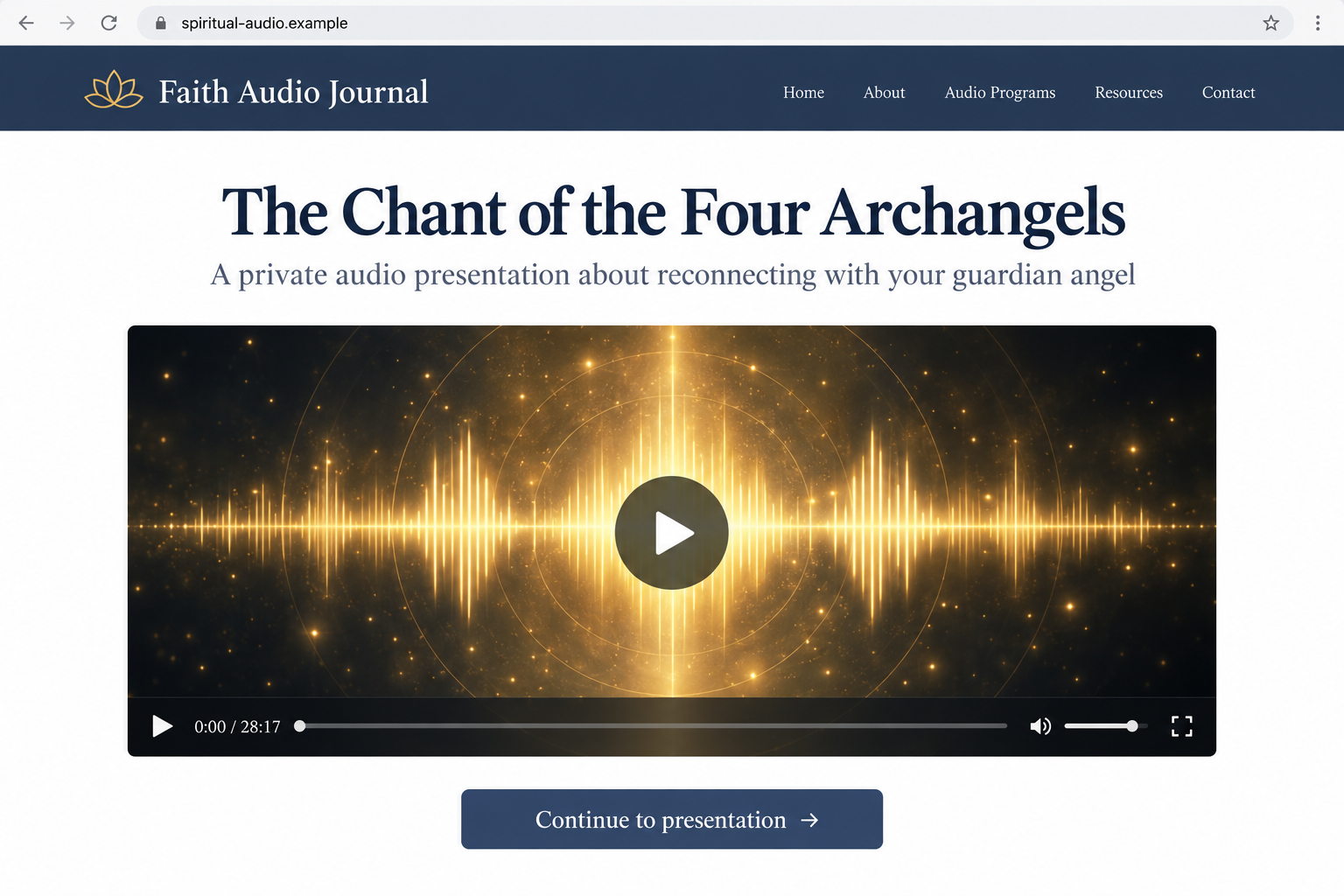
The pictured interface is a fictional illustration of the presentation format. It does not reproduce the original video or document an actual payment page.
A commercial presentation borrows the tone of spiritual guidance
The campaign promotes The Chant of the Four Archangels, also written with the number 4, around the idea of reconnecting with a guardian angel.
A recorded version also uses actor Mark Wahlberg’s likeness. Multiple familiar figures can make the message feel corroborated, even when the supposed endorsements are fabricated.
This is a warning about that false authority. It is not an accusation against the pope, the actor, ordinary prayer, or all devotional audio.
The purchase terms must be checked independently of the video
The story ultimately asks the viewer to buy access to a product. Any price, renewal, guarantee, or additional offer needs its own clear explanation.
One previously indexed campaign address is no longer accessible. That prevents treating its historical terms as a reliable description of every current version.
- Reject the apparent papal recommendation as a reason to pay.
- Verify attributed statements through genuine Vatican publishing channels.
- Separate spiritual encouragement from a merchant’s financial agreement.
- Keep records of any extra offers you accepted or declined.
- Do not pay another fee to someone promising a special refund or spiritual remedy.
Why This Particular Impersonation Carries Weight
A religious leader represents more than celebrity recognition. Viewers may associate his appearance with moral authority, reassurance, and guidance during uncertainty.
That makes the false portrayal especially manipulative. It asks people to transfer trust in a spiritual office to a seller they have not identified.
The commercial does not need to state every part of that connection. A brief introduction can leave the impression that the offer has church approval.
By the time an order button appears, the viewer may feel that questioning the purchase means questioning the reassuring message itself.
Those are different decisions. You can value prayer and still refuse a product promoted through a false endorsement.
Someone seeking comfort after bereavement or isolation may also be less interested in technical details than in hearing that a connection remains possible.
That vulnerability deserves respect, not ridicule. The responsibility belongs to the promotion using trust to move someone toward payment.
No purchase is required to step away, speak to a trusted person, or seek support from a genuine faith community.
If you are helping a relative, begin with the false attribution rather than criticizing the person’s beliefs. Show how the claim leads to a commercial checkout.
Ask what they understood they were buying and whether they received a receipt. That opens a practical conversation without turning it into a theological argument.
Offer to help gather records, but respect their privacy and control over the account. You do not need their financial passwords to explain the problem.
The immediate goal is to prevent another unwanted payment and preserve useful evidence, not to win an argument about why the presentation felt convincing.
How the Pope Leo XIV Four Archangels Chant Scam Works
Step 1: A familiar religious figure interrupts the social feed
The video appears where people ordinarily encounter short messages, news clips, family updates, and recommendations. Its placement can make it feel like another shared discovery.
A viewer recognizes the apparent pope before asking which account uploaded the material. Recognition supplies an immediate reason to listen.
But the uploading account, destination address, and original publication matter. A religious-looking account name is not an authenticated Vatican channel.
Before following the link, look at the actual account information. A paid placement or copied clip does not establish permission to use someone’s identity.
Step 2: Altered authority makes the sales message seem approved
The documented campaign uses a deepfake-style portrayal to create the impression that Pope Leo is discussing or endorsing the chant.
Do not rely on a checklist of unusual blinking or lip movement. Such clues can be absent in convincing fakes and present in ordinary compressed footage.
The stronger test is whether the attributed recommendation exists in a genuine, independently located source.
The Vatican’s Pope Leo XIV pages provide an authentic starting point for his published material, not a certification of advertisements elsewhere.
Step 3: A private worry becomes a problem only the offer can solve
The chant story focuses on a desired spiritual connection. That can resonate with someone seeking reassurance, direction, or relief from loneliness.
The risk arises when the presentation turns that hope into dependence on a particular paid recording or sequence.
If you begin thinking you must purchase now to avoid losing a spiritual opportunity, pause. A payment deadline is a commercial pressure, not spiritual evidence.
Talk through the message with someone outside the sales page. The conversation should not depend on the person selling the proposed solution.
Step 4: More familiar names make the story appear independently supported
Mark Wahlberg is also named in the documented promotion. His apparent presence can appeal to an audience different from the pope’s.
Two recognizable faces, however, do not create two independent confirmations when the same advertiser controls the presentation.
Nor does a person’s publicly expressed faith mean he endorsed every religious product that uses his likeness.
Check each supposed recommendation separately. A genuine interview about belief cannot be repurposed into consent for an unrelated audio sale.
Step 5: The promised chant becomes a purchase decision
The long presentation moves toward selling access. This is the point to stop evaluating the speaker’s tone and start reading the actual order.
What is being delivered: an audio file, a course, a membership, or several separately priced items? When does access begin, and how is support provided?
A digital product can be delivered successfully while the endorsement used to sell it remains false. Receiving files does not authenticate the pope’s participation.
Don’t treat a low initial price as the maximum possible cost. Read every additional selection rather than following a series of reassuring buttons.
Step 6: The transaction can outlast the original story
The video may disappear while receipts, access accounts, and payment obligations remain. That is why transaction records matter as soon as money changes hands.
Recurring payments are a possible risk in this category, but their existence must be established from the particular agreement or later charges.
Similarly, a one-time payment description does not explain the price of an optional second product. Distinguish a separate purchase from a renewal.
The durable warning is the false papal recommendation. A different domain, product name, or checkout service does not make that recommendation authentic.
Verifying a Papal Message Without Following the Advertiser’s Route
Begin outside the advertisement
Open the genuine source yourself rather than trusting an official-looking link inside the sales material. Check the hostname, not just the logo.
An imitation page can place a familiar name in a heading or path while the actual domain belongs to someone else.
Search for the precise attributed statement. An unrelated speech by the same person does not verify the commercial claim you are investigating.
Keep a full speech separate from a selected fragment
A short clip can remove the question, surrounding discussion, and date. A real sentence about prayer may be attached to an unrelated product.
Finding genuine source footage is therefore only the beginning. Compare what was actually said with what the advertisement wants you to believe.
A subtitle can also add meaning the speaker never expressed. Do not use a translated overlay as the sole evidence of endorsement.
Do not mistake a donation-looking design for charity status
Religious imagery does not identify the payment recipient. A purchase from a private merchant should not be assumed to support a church or charitable cause.
If a page separately claims to collect a donation, verify that organization independently. Keep the product sale and donation claim as distinct questions.
No charitable destination is established merely because the pope appears in the opening video.
What a Realistic Refund Request Looks Like
If you paid after seeing the false endorsement, focus on the representation that influenced the purchase and the transaction it led to.
You do not need to debate spiritual beliefs with the merchant. Explain that the advertised recommendation was falsely attributed and request the appropriate remedy.
Keep the amount, payment date, product description, and invoice number together. Include any renewal terms or extra items shown in the confirmation.
Save replies promising an investigation or asking you to wait. Waiting should not cause you to miss a payment-provider deadline.
FTC consumer guidance warns about fabricated endorsements using altered audio and video. Realistic appearance is not a reliable approval test.
This investigation does not claim the Vatican issued a case-specific denial, nor does it authenticate a universal price or refund period for the offer.
The false papal portrayal is the problem. For a refund, show how that claim led to your order and what the merchant actually charged or delivered.
What to Do if You Have Fallen Victim to This Scam
-
Stop the purchase sequence. Close additional sales offers and do not make another payment to unlock a supposedly necessary spiritual step.
If the message upset you, speak with someone you trust. Being moved by a carefully constructed religious message is not a reason to blame yourself.
-
Preserve the apparent endorsement. Record the ad account, destination URL, and the claim connecting Pope Leo to the product.
Keep enough surrounding material to show it was a sales promotion. Avoid circulating the clip without a warning that the endorsement is false.
-
Locate the actual payment recipient. Use your receipt and statement, not the religious name shown in the video.
Request cancellation or a refund through the transaction’s support route. The pope, actor, and impersonated institutions are not the seller to pursue.
-
Review access and billing separately. Receiving a recording does not settle whether you accepted recurring access or another paid product.
Cancel any unwanted continuing arrangement in writing and request confirmation. Keep the cancellation even if the account portal later disappears.
-
Ask your financial provider about the disputed payment. Give the exact amount and explain the false endorsement that led to the purchase.
Supply the merchant correspondence and any later unexplained charges. Be clear about what you authorized, rather than treating every transaction as unknown.
-
Report the impersonation to the hosting platform. Include the ad account and commercial destination so reviewers can connect the false portrayal with the sale.
For a consumer fraud report, retain the receipt and timeline. Avoid posting private payment information in public comments.
-
Deal with any software or account exposure. If the funnel asked you to install an unfamiliar application, check the device with Malwarebytes.
AdGuard can help limit intrusive ads. Change any reused password entered on an untrusted page, using the real account service rather than a follow-up message.
Frequently Asked Questions
Did Pope Leo XIV recommend The Chant of the Four Archangels?
The documented campaign presents an unauthorized papal portrayal, not a genuine recommendation. Do not pay because the video appears to show his approval.
Verify attributed papal statements through authentic Vatican publications rather than an advertiser’s embedded clip.
Is this warning saying prayer or devotional recordings are scams?
No. It addresses a false endorsement used in a commercial presentation. Ordinary religious practice and honestly described devotional recordings are different matters.
A person’s faith should not be used as a shortcut around informed consent to a purchase.
Does Mark Wahlberg’s appearance confirm the offer?
No. His likeness is also reported in the campaign. Another familiar face inside the same presentation is not independent verification.
A genuine expression of faith elsewhere would not establish authorization for this particular product.
What if I received the promised audio files?
Delivery shows that files were supplied. It does not prove the apparent pope recommended them or that the claims used to sell them were accurate.
Describe both delivery and misrepresentation honestly when requesting a remedy.
Will the purchase definitely renew every month?
No universal renewal agreement was verified. Check your own receipt, account terms, and statements for the actual payment arrangement.
An additional charge needs to be identified as a renewal, separate purchase, or unauthorized transaction rather than assumed from the category.
Can someone charge me to recover the money?
Be wary of unsolicited recovery offers, especially requests for an upfront payment, remote access, or full financial credentials.
Begin with the merchant and your existing payment provider. A second stranger’s promise is not a safer route simply because the first offer disappointed you.
The Bottom Line
Do not buy the Four Archangels chant because a video appears to show Pope Leo XIV recommending it. The papal endorsement is fabricated.
You can keep your faith and reject the sales pitch. If you already paid, preserve the ad, stop unwanted ongoing billing, and pursue the actual transaction promptly.

Join the discussion
0 commentsShare your experience or ask a question about this article.
Discussion
Start the conversation
Have a question or something useful to share? Add the first comment.