

You search for a train, recognize the route, and find a fare lower than expected. The page even offers the class of travel you wanted.
When you’re arranging a journey, those details can feel reassuring. Before paying for the ticket, check what they actually tell you about the website.
Overview
A cloned ticket shop can get the train details right
The fake SBB ticket website scam doesn’t rely on an obviously impossible journey. Its most convincing feature is that the travel information looks believable.
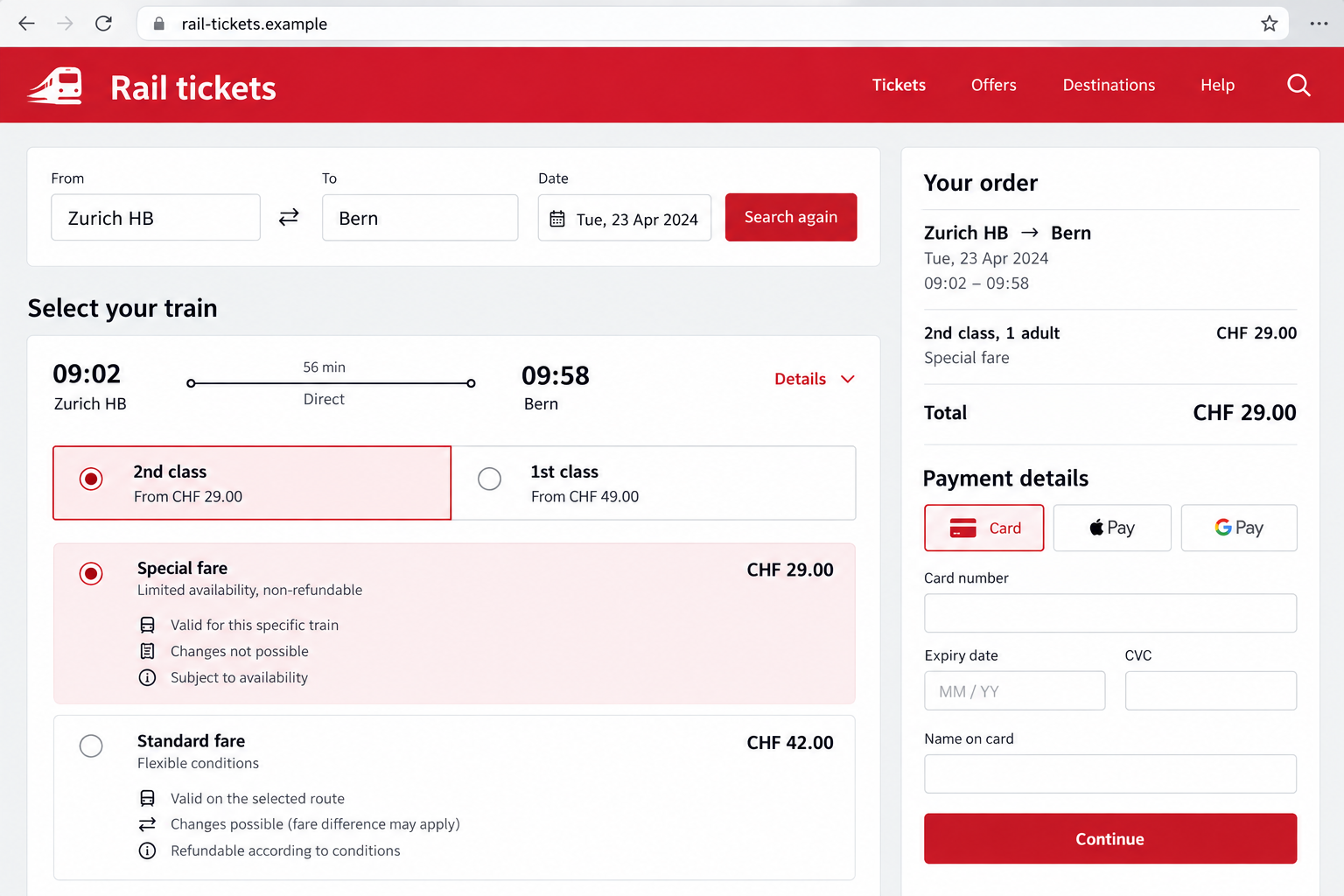
Police describe copied SBB-style booking pages with plausible routes, departure times, platform details, and a choice between first and second class.
Lower fares make the imitation attractive. The danger appears when the convincing shopping experience sends you toward a fraudulent payment page.
SBB, the Swiss Federal Railways, is the legitimate operator being impersonated. A copied ticket website is not evidence that the real railway runs a scam.
The checkout is collecting sensitive payment information
The police warning identifies card details, including expiry and security code, and TWINT-related information among the data requested.
The reported entry routes include a Google search or a phishing link in an email. Neither route guarantees you reached the genuine booking service.
The illustration above uses fictional booking details and a reserved example domain. It is not a screenshot of the criminal site or a genuine fare quote.
Verify the seller, not just the schedule
A correct departure time answers a travel question. It doesn’t establish who operates the form asking you to pay.
- Start your purchase from SBB’s independently opened website or official app.
- Don’t treat a familiar layout as proof of the operator’s identity.
- Be alert when the booking hands you to a payment page you haven’t verified.
- Keep actual bank activity separate from what the ticket page claims happened.
- Ask the genuine operator about a questionable booking before relying on it for travel.
If you entered financial information, contact the relevant bank or payment provider promptly. Waiting for a train isn’t a test of whether the card remains safe.
Real Timetable Information Can Become False Reassurance
Travel planning involves many small checks. You compare departure times, station names, journey lengths, and the price that fits your budget.
When those pieces agree, you’re more likely to stop looking for a problem. The page has answered the questions you were concentrating on.
But accurate information about a real train doesn’t establish a commercial relationship with the railway. An impersonator can reproduce information that travelers already recognize.
That’s why this scam can feel different from a clumsy email promising free travel. You’re doing an ordinary purchase task, not necessarily chasing a giveaway.
Even the extra choice of travel class can help. A working-looking selector makes the page feel like a real booking tool rather than a static advertisement.
It’s still the same unverified website controlling the display. A menu responding to your click doesn’t authenticate the party receiving your payment details.
Keep your confidence attached to the right fact. A plausible itinerary supports the possibility of that journey, not the legitimacy of every site offering it.
You don’t need to identify how the timetable was copied. You need a trustworthy route to the organization selling your ticket.
How the Fake SBB Ticket Website Scam Works
Step 1: A search result or email brings you to the imitation
A traveler may arrive while searching for tickets, or follow a link in a message. The destination resembles the railway’s own service.
A search result isn’t an identity guarantee. Read the actual address rather than deciding from a title, logo, or the position where the result appears.
If you’re unsure, leave the result and open the operator’s known address yourself. Don’t keep following suggested alternatives until one looks familiar enough.
The same applies to an email link. A message about a trip doesn’t establish that its button leads to your actual transport provider.
Step 2: Copied design makes the journey feel familiar
The page imitates the real SBB website’s appearance and navigation. You can recognize the general booking experience without examining who controls the address.
That recognition is useful to the impersonator. It encourages you to apply trust earned by the real railway to an unrelated website.
Don’t type a SwissPass password into a page simply because it looks right. Start from the genuine service when account access is needed.
If you are helping another traveler, verify the route together. Don’t let a shared assumption about the logo stand in for checking the destination.
Step 3: Believable trains are paired with attractive fares
The documented clone offers tickets at substantially lower prices while showing plausible travel details. That makes the bargain look usable rather than imaginary.
Cheapness alone isn’t the evidence of fraud. Real operators can offer discounted tickets, and legitimate fares can vary with the journey and purchase conditions.
The concern is the identified impersonating platform and its payment collection. Don’t label every different fare a scam just because this clone uses low prices.
Compare offers through the genuine operator instead of using the suspicious page as both the advertisement and the proof that the deal exists.
Step 4: Class selection adds another layer of credibility
The fake platform lets travelers choose first or second class. The choice makes the site appear to handle a normal purchase decision.
Consider what that interaction proves: the page can change a selection. It doesn’t establish that an authorized ticket will be issued for it.
Don’t supply extra personal information to see whether a later screen looks more convincing. You can stop without completing the booking.
If you’re arranging travel for a group, don’t enter everyone’s details while the seller remains uncertain. One person’s doubt can prevent a wider disclosure.
Step 5: The purchase reaches a fraudulent payment page
The traveler is redirected into a payment request for sensitive card or TWINT information. This is the financial turning point identified by police.
A payment provider can legitimately appear during a real purchase, so a redirect alone isn’t the whole test. The documented fake journey is the problem here.
Read the destination and any payment instructions rather than trusting the booking page’s earlier appearance. Decline unfamiliar requests and contact the genuine operator when uncertain.
If a card has already been entered, report that exposure. A missing ticket email doesn’t need to be the first sign that prompts a call.
Check a Questionable Booking Before It Becomes a Travel Problem
Don’t assume a confirmation from the suspected site proves the railway has your booking. A confirmation is information supplied by the same operator you’re trying to verify.
Open the genuine SBB service and ask how to check the document or reference you received. Avoid sending card details in that inquiry.
If you’re already at a station, seek help through official staff or the operator’s established support. Explain that the purchase route may have been fraudulent.
Don’t board on the assumption that a convincing PDF or email is valid. Have its status clarified before relying on it for the journey.
That isn’t a claim that every recipient receives a fake ticket document. The advisory establishes the false platform, not one universal confirmation format.
For a group trip, tell the other travelers promptly. They may need to reconsider arrangements, but they don’t need your full bank details to understand the problem.
Keep any genuine replacement purchase separate from the fraudulent payment report. A valid ticket bought afterward doesn’t resolve the earlier financial exposure.
Likewise, don’t postpone the issuer call while arranging transport. Someone else may be able to help with travel while you secure the affected payment method.
What SBB Says About Protecting Account and Payment Details
SBB’s phishing guidance recommends independently typed addresses and official app-store downloads, and warns that its identity is regularly misused.
The operator also warns about messages seeking passwords or payment information. That is different from entering card details during a purchase you initiated on a verified service.
Use the genuine account’s security options if account credentials were exposed. Don’t let the counterfeit shop’s sign-in page guide that recovery.
Payment exposure should go to the bank or provider responsible for the method involved. Describe whether you supplied card information, TWINT details, or an approval.
Don’t assume every payment method has the same response. Follow the genuine provider’s directions for the specific service rather than a general instruction from the suspicious site.
If a later contact promises to refund the fare, verify it independently. Knowing the route or purchase amount doesn’t prove that the person represents SBB.
The same rule protects your recovery: don’t give another code, password, or payment simply to make the earlier booking disappear.
Save the Booking Route, Not Just the Ticket Price
When reporting the incident, include how you reached the shop. A search result, forwarded email, and direct website visit can leave different records.
Keep the website address alongside any confirmation already received. A screenshot of the itinerary alone may show a real journey without identifying the false seller.
If you booked for other people, explain which passenger information was entered. Don’t copy all their personal details into a public complaint.
These records help separate the genuine transport service from the page taking the payment. They also reduce confusion when your bank asks what you intended to buy.
What to Do if You Have Fallen Victim to This Scam
-
Stop using the cloned booking site. Don’t try a second card, retry a failed checkout, or follow a cancellation link it supplies.
Preserve the address from your existing records if you can do so safely. Don’t revisit the site just to explore more screens.
-
Call your bank about disclosed card information. Explain that a fake rail-ticket website requested the card during a supposed booking.
Explain which cards you entered and ask the issuer how to secure them. Include any card the checkout appeared to reject.
If you approved a request, describe the action, merchant, amount, and time as accurately as you can. Don’t omit the approval from the report.
-
Report any TWINT-related disclosure to its genuine provider. Use the bank or support route associated with your actual payment service.
Explain what the form requested and what you supplied. Let the provider decide which security measures and transaction checks fit that exposure.
-
Check the travel document through SBB. Reach the railway independently and ask how to establish whether the purchase produced a valid ticket.
If the journey is imminent, make the timing clear. Don’t keep asking the fake shop to reassure you while departure approaches.
-
Protect any account password you entered. Change it through the genuine service and replace that password elsewhere if it was reused.
Review account information with official support if you notice unfamiliar changes. A card form alone doesn’t establish that a SwissPass account was taken over.
-
Collect booking and payment records. Keep the search or email route, suspicious address, confirmation, bank notices, and relevant transaction references.
When warning others, remove passenger details and financial information. Share the pattern without circulating a usable invitation to the counterfeit shop.
Ask the issuer about dispute deadlines and evidence requirements. The price on the fake page isn’t a reliable statement of what ultimately happened financially.
-
Assess extra device exposure if there was any. If the page pushed a file, software installation, or notification permission, record that as a separate concern.
Malwarebytes can help examine suspicious downloads or software. AdGuard may block some dangerous destinations and ads, but neither authenticates a train ticket or reverses a payment.
A normal-looking device doesn’t establish that disclosed financial details are safe. Complete the bank report regardless of whether cleanup is necessary.
-
Report the impersonation. Notify SBB through its official security or support route and contact local police about loss.
A Cybercrimepolice incident tip is not itself a formal criminal complaint. Use the responsible police service when a complaint needs to be filed.
Refuse unsolicited recovery offers demanding another fee. Keep the discussion with the operator and financial provider you’ve independently reached.
Frequently Asked Questions
Can a fake SBB website show the correct train times?
Yes. The police warning describes plausible timetable and route information. Correct travel details don’t authenticate the website collecting payment information.
Does a first-class option make the site genuine?
No. A copied interface can include working-looking class choices. The ability to change a selection doesn’t prove the seller can issue an authorized ticket.
Are all low-priced SBB tickets scams?
No. This warning concerns a documented cloned platform. Check discounted offers through the real operator rather than treating price alone as the verdict.
What if the website appeared in a Google search?
A search result doesn’t guarantee the seller’s identity. Open the operator’s known address or official app independently before paying.
Should I trust the ticket confirmation it emailed me?
Ask SBB how to verify it through a genuine channel. An email from the suspected site isn’t independent proof that the railway recognizes the booking.
Do I need to act if no charge appears yet?
If you supplied payment information, yes. Tell the relevant provider about the disclosure rather than waiting for an unfamiliar transaction or travel problem.
The Bottom Line
Don’t buy through a fake SBB ticket website because its timetable looks right. Reach the genuine railway independently before entering account or payment details.
If you’ve already responded, protect the payment method and have the booking checked separately. A plausible train and a safe purchase are different things.

Join the discussion
0 commentsShare your experience or ask a question about this article.
Discussion
Start the conversation
Have a question or something useful to share? Add the first comment.