

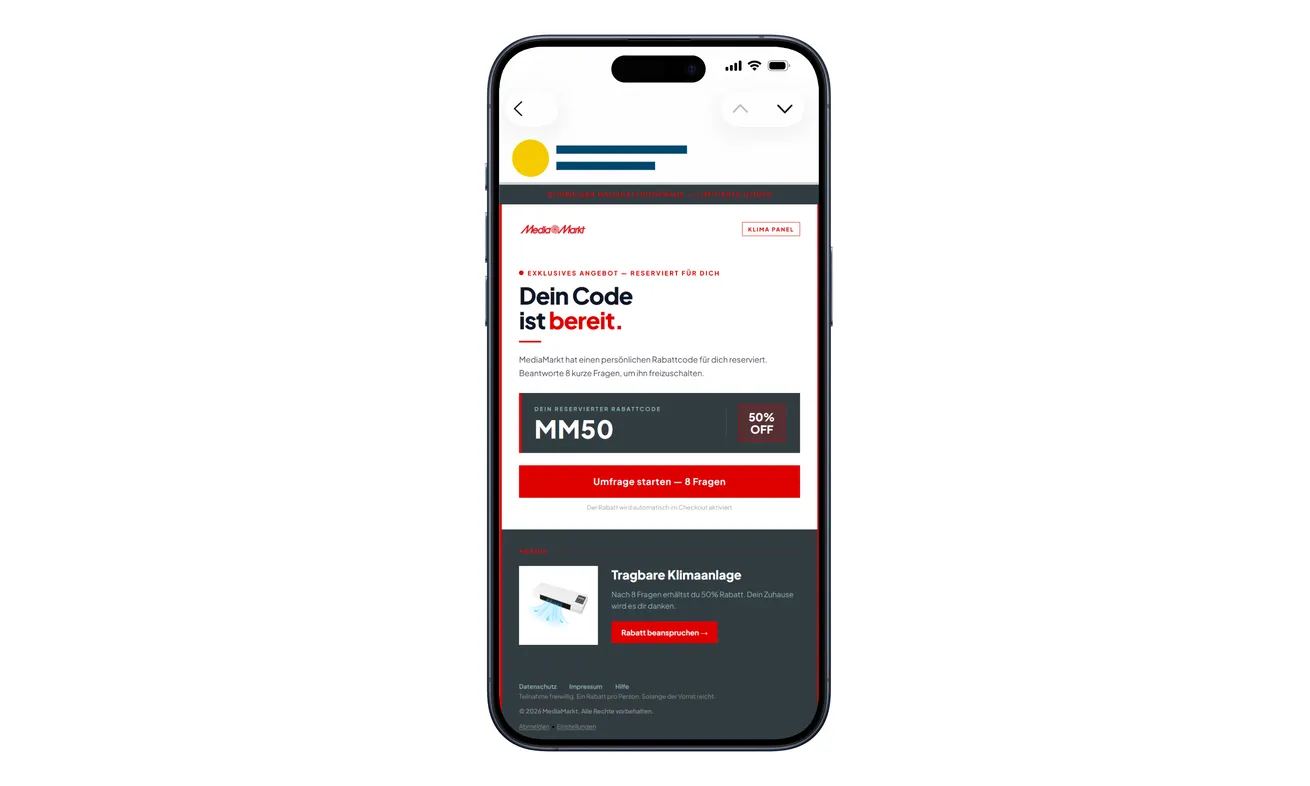
A MediaMarkt-style email says your personal discount code is ready. Answer a few questions, it suggests, and a portable air conditioner becomes much more affordable.
The offer arrives with a neat code, a familiar logo, and a short route to checkout. That convenient combination deserves a closer look.
Overview
The MM50 discount is bait for a counterfeit shop
The MediaMarkt MM50 email scam advertises a 50% air-conditioner discount after a survey. The route leads to a false shop seeking personal and card details.
Swiss police document the email and purchasing sequence, including the MM50 code and eight-question survey. This is confirmed retailer impersonation, not a complaint about a genuine appliance.
MediaMarkt is the real retailer whose identity is being borrowed. The fraudulent message and its linked sales route are the subject of this warning.
The survey gives the offer a sense of progress
The pictured message is an original fraudulent email published by police, with the source’s anonymization retained.
The promotion makes the saving feel reserved for you. Questions and progress indicators encourage you to finish before comparing the offer elsewhere.
Countdowns and availability messages add pressure. Those controls belong to the same unverified route; they don’t establish that a real retailer is holding stock.
Verify the offer before entering a payment stage
The important check is who is collecting your information, not whether you can remember the discount code.
- Visit the retailer through a route you already trust.
- Ask genuine customer service about an offer you cannot verify.
- Don’t use the emailed survey as a way to authenticate itself.
- Stop if the payment request doesn’t match the purchase you intended.
- Tell your card issuer about details supplied to the false shop.
Why Eight Easy Questions Can Lower Your Guard
A survey can make an offer feel earned. You answer questions, see progress, and expect the promised benefit to follow.
Once you’ve spent a few minutes completing the task, abandoning the result feels wasteful. That reaction can make a payment form receive less scrutiny.
You may also assume the questions explain why the deal exists. A retailer supposedly wants feedback, and the discount appears to be your reward.
But answering questions doesn’t establish that the retailer commissioned them. The website controls both the task and the result it celebrates.
A personal-looking code adds another small reassurance. It feels more specific than a generic sale banner, even though a code can be printed for anyone.
None of this requires you to be careless. The interaction is designed to make each next action look like a natural continuation of the last.
You can stop after any question. Time already spent doesn’t give the next page permission to receive your card information.
If you already shared the offer, tell the recipients that it needs checking. Don’t wait until your own payment issue is resolved to warn them.
Send that correction through the conversation you normally use. You don’t need to forward the dangerous link again to identify the promotion.
Ask whether anyone entered payment information, rather than simply whether they opened the email. Their next action depends on how far they went.
Someone who supplied a different card needs to contact their own issuer. Your report cannot automatically protect another person’s payment method.
If a relative is worried about missing the discount, help them reach the real retailer. Don’t take over the fraudulent checkout on their behalf.
For a shared household purchase, agree who will check real orders and who will speak with the bank. Keep the genuine account information private.
If no payment occurred, avoid buying elsewhere in a rush just to replace the promised bargain. Verify the next seller and choose the actual equipment you need.
A useful warning should make the next decision calmer. It shouldn’t turn disappointment about one offer into pressure to complete another purchase immediately.
How the MediaMarkt MM50 Email Scam Works
Step 1: The email presents an exclusive cooling offer
The message links an attractive appliance discount to the recipient. Its branding and reserved-offer wording encourage you to treat it as a retailer communication.
A product you already want can make that invitation especially persuasive. You’re judging the usefulness of the deal before checking who sent it.
Separate those decisions. You can genuinely need an air conditioner while the particular offer in your inbox is fraudulent.
Don’t forward the promotion as a verified bargain to other people while you’re still checking it. They may trust your recommendation more than the original message.
Step 2: A branded survey makes participation feel harmless
The link opens a page imitating the retailer and asks questions about heat and cooling. At first, the activity may seem unrelated to money.
You can leave before answering. Easy cooling questions don’t tell you who will receive the card details requested later.
Think about the route, not merely the questions. If the entire interaction began with an unverified email, the survey hasn’t repaired that starting point.
You don’t need to complete it to discover whether a genuine promotion exists. Check the real retailer instead.
Step 3: Progress and urgency push the reader toward the reward
The page shows advancement and a limited opportunity, then confirms the promised discount. Your attention shifts from checking the sender to claiming the result.
A countdown can make ordinary comparison feel like a risk. You may worry that opening another tab will cost you the saving.
Don’t let that pressure set your decision. A time limit shown by an untrusted page is not a reason to give it financial information.
If an offer cannot survive a check with the actual retailer, you shouldn’t resolve the uncertainty by rushing the purchase.
Step 4: The reward becomes an order in a false shop
The interaction moves from answering questions to buying an appliance. That transition can seem expected because it follows the promised discount.
But agreeing to a survey isn’t agreement to trust every destination it opens. Check the store and payment recipient before continuing.
A familiar product picture, basket, or delivery form doesn’t identify the merchant. Those elements can appear on a counterfeit page too.
Don’t treat a code appearing to work as verification. A shop controlled by the same people can accept its own invented promotion.
Step 5: The payment form exposes information beyond survey answers
The false order requests personal and card details. Police warn that the information can support unauthorized payments or further deception.
Before approving anything, read the amount and recipient shown by your genuine financial provider. Don’t substitute the earlier promotional price for that information.
If the details don’t fit, stop. A checkout’s claim that an unusual approval is necessary doesn’t make the transaction appropriate.
After submission, a blank or failed page isn’t reassurance. Report the data you supplied, even if no order confirmation arrived.
This Is Not a Review of the Air Conditioner
The fraud here doesn’t depend on proving that a particular appliance cools badly. The police warning identifies the false retailer and information-collection route.
Don’t confuse this case with an ordinary debate about portable air conditioners. A legitimate product can be pictured in an illegitimate sales offer.
Likewise, a real store can run promotions. The existence of genuine discounts doesn’t authenticate an unexpected email claiming a special one.
If you’re shopping for cooling equipment, make that purchase through a verified seller. Then compare actual model details, installation needs, and the price of the complete order.
Don’t let the fraudulent survey become your source for those facts. Its job is to keep you moving, not help you assess the appliance independently.
No delivery test, manufacturing origin, or universal subscription arrangement is established by this email. The confirmed phishing mechanism is enough to reject its checkout.
What the Code Can and Cannot Tell You
A discount code can be copied, reused, or invented. Its tidy appearance doesn’t identify who issued it or what account it belongs to.
You also don’t need to test it with a card to see whether it’s genuine. Verification should happen before the payment attempt, not through one.
If you contact real customer service, describe the advertised product and promotion. Keep the original message available without using its reply address as your support route.
A representative may need enough information to locate the claimed offer. They don’t need an authentication code from your bank to discuss an advertisement.
If you can’t establish the offer through the real retailer, don’t keep troubleshooting the false shop. A working checkout would not solve the authenticity problem.
Be equally cautious with a replacement link sent after you stop. Changing the address doesn’t establish a new, trustworthy merchant.
If You Submitted Details but Didn’t Finish Buying
Describe the stage you reached. Answering cooling questions, entering an address, supplying card information, and approving a bank operation are different exposures.
If you only completed the questionnaire, don’t assume your card was stolen. You may never have entered one.
If you typed payment details but closed the page before a confirmation, tell the issuer exactly that. Don’t assume unfinished checkout means nothing was transmitted.
If a banking approval appeared, preserve its relevant details. The operation shown there can be more important than the product pictured on the false shop.
For a card tried more than once, mention the repeated attempts. Include another payment method if the site persuaded you to switch after an apparent failure.
If you gave a delivery address, watch for follow-up messages about the supposed order. A stranger knowing that address hasn’t become the genuine retailer.
Keep the incident manageable by listing actions in order. That helps support teams respond without requiring you to guess what the attackers did behind the scenes.
What to Do if You Have Fallen Victim to This Scam
-
Leave the survey and false store. Don’t enter another payment method, reopen the reward, or continue through a link promising to correct checkout.
Don’t pay a delivery or release request introduced by the same interaction. Verify any real order with the retailer independently.
-
Contact your card issuer if you supplied card information. Explain that a survey-linked MediaMarkt impersonation collected it.
Ask what protection is appropriate for the exposed card. Give the issuer the genuine transaction details, including any attempt that didn’t appear to finish.
Report unfamiliar charges and ask about dispute deadlines. A pending transaction or small initial amount still deserves explanation; recovery is not guaranteed.
-
Review approvals and subsequent activity. Tell your bank if you entered an authentication code or confirmed an operation during the supposed purchase.
Use the bank’s record to identify amounts and recipients. Don’t accept the false shop’s claim that a larger or different payment is only temporary.
-
Keep the email and the purchase trail. Save the original message, existing screenshots, destinations, advertised item, and any receipt.
Note whether you completed the survey, entered personal data, or submitted a payment. Don’t reopen the dangerous page solely to reconstruct it.
-
Report the retailer impersonation. Find MediaMarkt customer service through its genuine website and flag the false offer.
Report the email using your mail provider’s phishing controls. If money was lost, consider a local police report and retain the reference for your payment provider.
-
Handle any additional account or device exposure. Change a password if you actually typed it into an untrusted form, including reused versions on other services.
If you installed software or opened a questionable download, Malwarebytes can help investigate. AdGuard can reduce some risky web content, not recover money already sent.
A survey invitation doesn’t prove infection. Device cleanup and financial protection should address the separate actions that really occurred.
-
Don’t follow an unexpected refund helper. Someone offering to reverse the order may simply be continuing the original deception.
Use the genuine case you opened with your bank or retailer. Don’t share fresh bank codes, install remote-control software, or pay another fee to receive help.
Frequently Asked Questions
Is the MM50 MediaMarkt email a confirmed scam?
Yes. Swiss police document the false email, survey, and linked shop collecting payment information. The genuine retailer is being impersonated.
Does completing the survey prove I qualified for a real deal?
No. The same untrusted route can supply the questions and announce the result. Check the promotion with the actual retailer.
Is every discounted air conditioner fraudulent?
No. This case concerns a particular counterfeit sales route. A product discount by itself doesn’t establish wrongdoing by a real store.
What if I entered a card but the page showed an error?
Tell the issuer that the card was submitted to a false shop. An error message doesn’t establish that the information remained private.
Does the email prove an unwanted subscription was created?
No. Check actual charges and anything you agreed to. Don’t assume recurring billing from this promotion without evidence of the particular transaction.
Should I pay again to complete an unfinished order?
Not through this route. Stop the interaction, review payment activity with your provider, and check any genuine purchase through the real retailer.
The Bottom Line
Don’t order through the MediaMarkt MM50 scam email. Its survey and discount code lead to a counterfeit shop, not a verified appliance offer.
If you supplied card details or approved a payment, contact your financial provider promptly. Check real orders separately and refuse further charges introduced by the false promotion.

Join the discussion
0 commentsShare your experience or ask a question about this article.
Discussion
Start the conversation
Have a question or something useful to share? Add the first comment.