

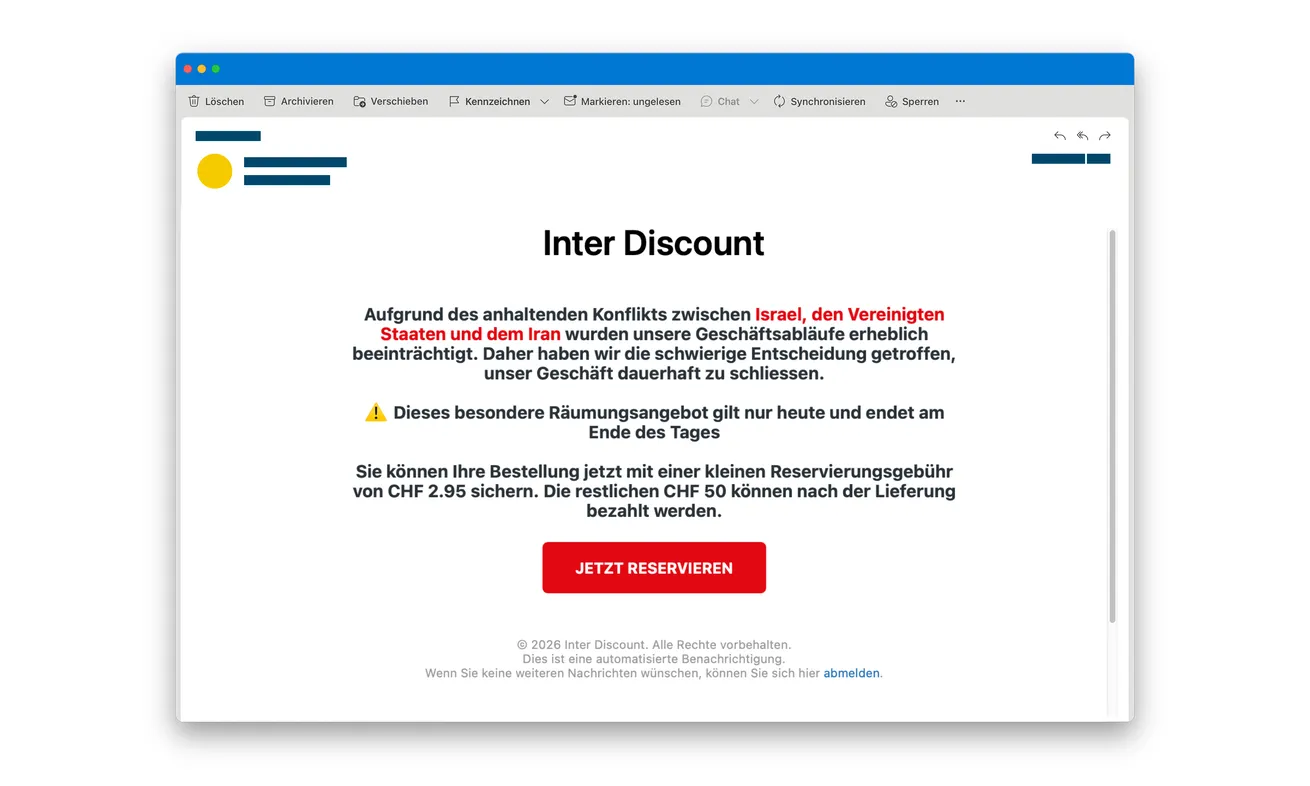
An email announces an Interdiscount clearance sale with electronics at startling prices. A small reservation fee supposedly holds your choice, with more payable after delivery.
The explanation sounds urgent, and the upfront amount looks easy to risk. Before reserving anything, check what that small payment is really attached to.
Overview
The closing-sale story is an impersonation
The Interdiscount clearance email scam uses a false permanent-closure announcement to advertise heavily reduced electronics and a CHF 2.95 reservation fee.
Swiss police document the email and false sales pages. They warn about attempts to debit more than the advertised fee and capture card information.
The genuine retailer is being impersonated. The message’s story about closure is a scam claim, not reliable news about Interdiscount’s business.
The tiny upfront price makes the offer feel manageable
The original fraudulent email shown here says CHF 2.95 is payable first and another CHF 50 can follow delivery.
That framing encourages you to focus on the small first amount rather than the party receiving your payment details.
The later route adds a survey, a bonus code, and a choice of electronics. Those steps decorate the same unverified offer; they don’t authenticate the retailer.
The card is more valuable than the reservation fee
Decide whether to trust the destination before deciding that the proposed amount is small enough to lose.
- Check any closing-sale claim through the retailer’s genuine channels.
- Don’t reserve electronics through this fraudulent email.
- Read actual payment approvals, not just the price on the offer.
- Contact your card issuer after submitting details to the false page.
- Keep the email and payment record without making another test purchase.
A Dramatic Explanation for an Implausible Price
A very low price normally invites questions. A closing-sale story tries to answer them before you ask.
Instead of considering whether the offer makes commercial sense, you are given a reason why normal prices supposedly no longer apply.
The email invokes international conflict and presents a permanent shutdown as the explanation. That is part of the fraudulent pitch, not an independently established business event.
An urgent deadline then discourages you from checking. The supposed bargain may seem available only if you act before the day ends.
You might also feel you’re simply reserving an item rather than making the full purchase. That can make the financial decision seem smaller than it is.
The fee looks small, but you’re handing over a way to pay. That information remains valuable even if the promised electronics never enter the picture.
Keep the dramatic story and the payment request separate. Neither a crisis explanation nor a cheap first step establishes a trustworthy merchant.
How the Interdiscount Clearance Email Scam Works
Step 1: A false closure announcement supplies urgency
The message uses the retailer’s identity to announce exceptional clearance terms. It encourages a quick response before the supposed opportunity disappears.
The important first question isn’t which item to choose. It’s whether the real retailer made the announcement at all.
Use a contact or website reached independently to check. Don’t let the email’s own branding, footer, or explanation serve as its authentication.
If someone shares the message with you, their interest doesn’t settle that question either. They may have accepted the same unverified story.
Step 2: A survey and bonus turn the offer into a small achievement
The false site gives visitors a short task before presenting the electronics. A personal-looking code makes the result seem linked to participation.
That can make you feel you’ve reached a reward rather than a stranger’s payment request. Leaving after the task may feel like wasting the opportunity.
You haven’t earned an obligation to continue. A page that invented the offer can also invent the code and celebrate its acceptance.
Stop before entering personal information if you haven’t verified the seller. Completing the questions doesn’t make the next page safer.
Step 3: Familiar electronics make the reservation attractive
The campaign offers choices such as a television, laptop, games console, or robot vacuum. Recognizable product types make the clearance feel tangible.
You may start imagining where the item will go or who will use it. That shifts attention from the seller to the value of the bargain.
Bring the seller back into the decision. A product photo does not establish possession, availability, authenticity, or a real commitment to deliver.
Don’t select extra items just because the displayed fee is small. More interaction with the same false shop doesn’t create more reliable evidence.
Step 4: The reservation page collects details for a larger risk
The final form asks for delivery information and payment of the supposed reservation. Police warn of higher debit attempts and subsequent card-data misuse.
The advertised fee should not replace what your financial provider actually shows. Read any approval for its real amount, currency, and recipient.
If those details differ, don’t approve first and seek clarification later. The seller’s reassurance that another amount is temporary doesn’t make it safe.
If you already submitted the card, report that exposure even when the page failed. A confirmation screen isn’t necessary for information to have been disclosed.
Why CHF 2.95 Is Not a Limit on the Damage
The number describes what the promotion says it wants. It doesn’t establish what a fraudulent operator will attempt with the information collected.
This is why simply deciding you can afford the fee misses the main risk. You are also deciding where your payment information goes.
Nor does a small visible charge prove that the rest of the interaction was harmless. Have unfamiliar activity assessed using the bank’s own records.
If the first attempt seems unsuccessful, resist the urge to try a second card. That can expose another payment method without verifying anything.
A demand for another fee to complete a failed reservation deserves the same pause. Don’t send more money to settle a process controlled by the questionable seller.
Keep amounts in their original currency when reporting the incident. The advertised Swiss-franc figures and the bank’s actual debit may not describe the same operation.
If your bank shows conversion or another currency, report the original transaction details as displayed. Don’t guess what the seller intended to charge.
Keep a private list of each payment method you tried and the result shown. Your issuer can compare that account with its own records.
If a purchase involved someone else’s card with permission, tell the cardholder promptly. They need the original facts, not an assumption that the small fee was harmless.
Don’t erase an embarrassing attempt from the timeline. An accurate account helps the provider distinguish one checkout attempt from several separate exposures.
The Promised Payment After Delivery Isn’t Buyer Protection
Paying most of an order later can sound reassuring. Here, that promise comes from the very message whose authenticity is in question.
You don’t have an independent guarantee simply because the email says another CHF 50 can wait. The sender controls that statement too.
Don’t treat it as proof of a genuine installment arrangement, a protected payment service, or a guaranteed delivery obligation.
Likewise, don’t assume a future charge must be the advertised balance. Compare actual activity with what you knowingly authorized and discuss discrepancies with your provider.
The police warning establishes payment deception, not a universal monthly subscription. If repeated charges appear, investigate those specific entries rather than guessing a billing schedule.
For a real purchase, the seller and payment terms should be clear before card submission. A crisis story cannot fill in missing trust.
Check the Claim Without Following the Email
Reach Interdiscount through a known official route and ask about the purported sale. Don’t use a newly supplied support address as the independent check.
You can describe the product and advertised terms without giving anyone your card’s security code. A promotion inquiry isn’t a banking authentication task.
If you’re checking on behalf of someone else, ask them not to make another attempt while you investigate. Keep the original message available.
A shared family card requires a clear conversation with the cardholder. They need to know which details were entered and which approvals were made.
Don’t assume an emailed receipt means the real retailer has an order. First establish who issued it and whether the genuine store can recognize the purchase.
If you have an unrelated, genuine Interdiscount order, keep its records separate. A legitimate purchase should not become entangled with the false clearance message.
After the Form: Which Information Needs Attention?
Make a short list of what you entered. An email address, delivery address, card number, password, and banking approval create different follow-up tasks.
Don’t call everything a hacked account if no account credentials were supplied. That can distract from the actual financial exposure.
On the other hand, don’t describe a submitted card as just a survey response. Tell the issuer about the payment stage clearly.
Delivery details can also make later messages seem credible. A stranger mentioning your chosen item or address may be using the false order information.
Don’t follow a new parcel link simply because the purchase story matches. Check any claimed shipment through a genuine seller or carrier reached independently.
If a message claims you must pay again to receive a refund, stop. Money already lost is not a reason to give the same source another payment.
Save new messages with the original incident records. The growing timeline may help your financial provider or the police understand the continuing contact.
What to Do if You Have Fallen Victim to This Scam
-
Abandon the false reservation. Don’t provide another card, pay the alleged remaining balance, or use a replacement checkout offered by the sender.
Stop replying to contacts introduced by the promotion. A promise of guaranteed cancellation doesn’t authenticate the person making it.
-
Tell your card issuer what was submitted. Explain the counterfeit clearance email and CHF 2.95 reservation story.
Ask how to secure the card and assess any attempted or completed transactions. Include a card entered during a checkout that appeared to fail.
Report actual amounts, dates, currencies, and merchant entries. Don’t minimize the incident because you expected only a small reservation charge.
-
Discuss unwanted payments through the proper process. Ask your issuer which dispute options and reporting time limits apply to your circumstances.
Keep the reference and supporting records. Don’t assume money is recovered because the fraudulent site displays a refund or cancellation notice.
If you approved a banking request, explain what it said. That detail may differ from the product price shown earlier in the offer.
-
Preserve the advertisement and order trail. Save the original email, destination, displayed offer, existing screenshots, and any confirmation already received.
Record which stage you reached and whether you were asked to retry. You don’t need another payment or visit to the site to prove the route.
-
Report the impersonation through genuine channels. Notify the real retailer using contact details obtained outside the email.
Use your mail provider’s phishing-report option. Consider a local police report if you suffered loss or need to document attempted misuse.
Don’t publicly expose the complete card, authentication codes, or household address while warning others. Share only the information necessary to explain the deceptive offer.
-
Protect other information when relevant. If the page collected a password, change it through the actual service and address any reused copies.
Watch for unexpected invoices, orders, or delivery messages using your details. Investigate them through the relevant real organization rather than the new sender’s instructions.
-
Deal with device changes only if they occurred. If the offer caused a download or persuaded you to install an application, assess that separate exposure.
Malwarebytes may help identify unwanted software; AdGuard filters some unsafe web content. Neither replaces reporting a disclosed card or disputing a financial transaction.
Receiving this email alone doesn’t establish an infected device. Focus first on the details and approvals you actually gave away.
Frequently Asked Questions
Is the Interdiscount closing-sale email confirmed as fraudulent?
Yes. Police publish the false message and linked sales sequence. Its closure claim is part of the impersonation, not verified retailer news.
Is CHF 2.95 the most I could lose?
No. The advertised fee doesn’t limit attempted misuse of card information. Report actual payment activity and the card disclosure to your issuer.
Does the promised payment after delivery make it safe?
No. That assurance comes from the same false offer. It doesn’t independently establish delivery, a genuine seller, or a protected payment arrangement.
What if I received a reservation confirmation?
A confirmation from an impostor doesn’t prove the real retailer holds an order. Verify through the genuine store and protect any exposed payment details.
Does this prove that every order has monthly refills?
No. This is an electronics impersonation and card-risk case. Investigate any repeated charges individually; don’t invent a subscription from the advertised fee.
Should I submit a second card when the first fails?
Not through this fraudulent route. Stop and ask your financial provider about the first attempt before exposing another payment method.
The Bottom Line
Don’t reserve electronics through the Interdiscount clearance scam email. Its false closure story and small advertised fee lead to a dangerous payment request.
If you supplied a card or approved a transaction, contact your issuer promptly. Preserve the offer, check actual charges, and refuse further payments introduced by the sender.

Join the discussion
0 commentsShare your experience or ask a question about this article.
Discussion
Start the conversation
Have a question or something useful to share? Add the first comment.