

A familiar voice can make a health video feel unusually personal. When the subject is breathing, even a short clip can be difficult to ignore.
If the Sam Elliott COPD video brought you here, pause before following the offer. Several details deserve a closer look.
Overview
What the Sam Elliott COPD Video Claims
The Sam Elliott COPD scam presents an invented recovery story as a television interview. It promotes a supposed mullein-and-Vicks method, with supplement offers attached.
The actor’s identity supplies the emotional connection. A recognizable face and voice make the sales message feel like someone sharing a difficult personal experience.
That does not make the account genuine. The examined campaign uses manipulated or generated material, not a verified medical disclosure from Elliott.
Do not repeat its statements about his health as biographical facts. They belong to the advertisement’s script, including claims about oxygen and severe breathing limitations.
Why This Is More Than Overenthusiastic Advertising
The recorded presentation imitates a Fox News interview and gives the impression that established medical treatment can become unnecessary after a quick home routine.
It also uses a disappearing-video story. Viewers are pushed to keep watching before the supposed discovery is suppressed, rather than check its source.
- A celebrity recovery narrative is presented without a genuine interview establishing it.
- News-style branding substitutes for a report on the broadcaster’s own website.
- A household-ingredient promise draws attention toward a commercial supplement funnel.
- The pitch makes dangerous implications about abandoning prescribed breathing treatment.
The deception is the endorsement and medical story. Recognizing it does not require proving where a bottle was manufactured or identifying every advertiser involved.
The Practical Verdict
Do not buy through the Sam Elliott lung-remedy advertisement. It is not reliable evidence that the actor recommends a COPD supplement or a homemade treatment.
BreatheEaseX is one name associated with this recorded pitch. Another label, bottle, or website would not authenticate the same fabricated interview.
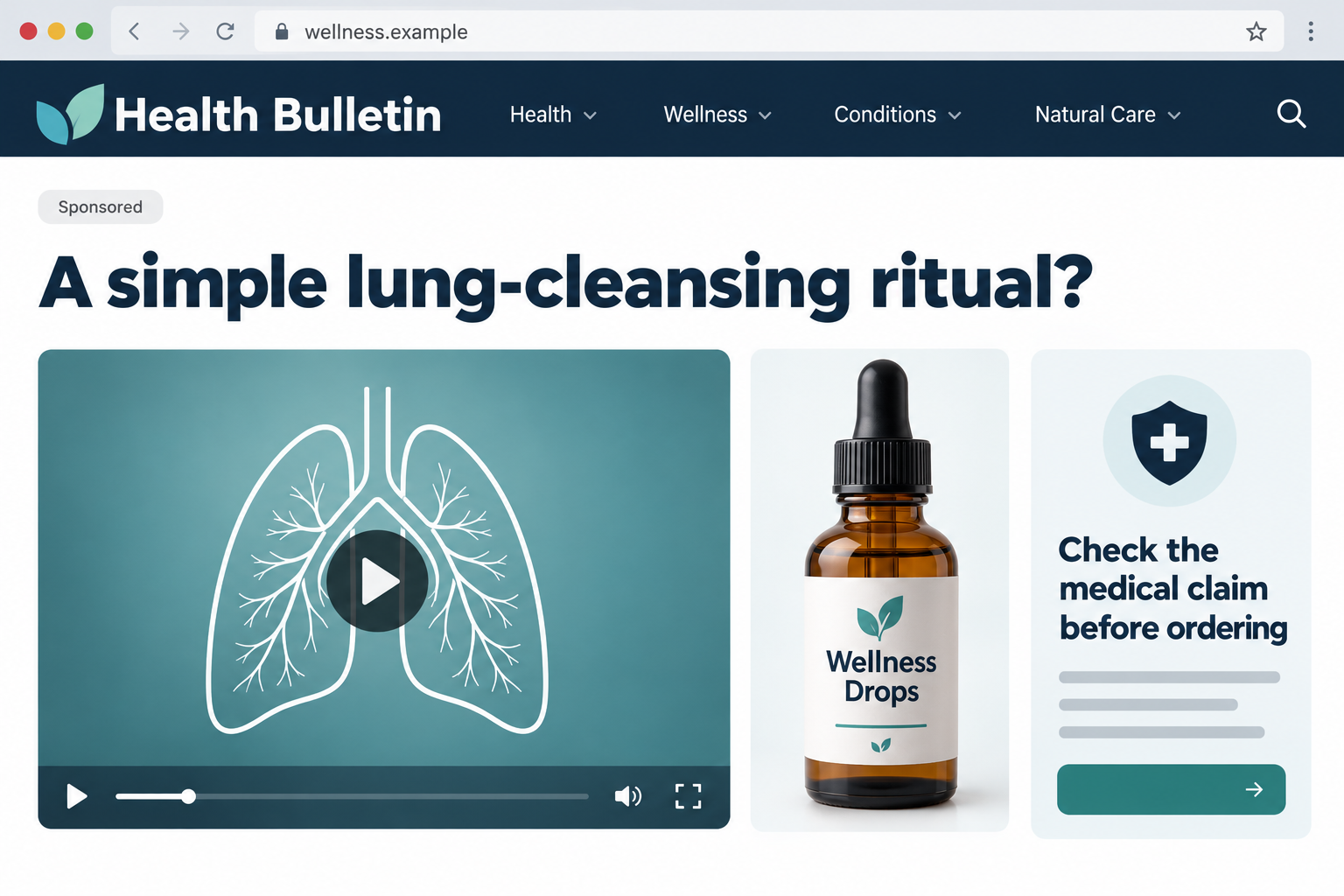
The illustration above explains the sales-page format. It is not a screenshot of Elliott, a real endorsement, or proof of a particular checkout charge.
For anyone living with COPD, the immediate priority is preserving a safe treatment plan. A convincing video should never decide whether an inhaler is needed.
How the Scam Works
Step 1: A Familiar Actor Makes the Message Feel Trustworthy
The opening relies on recognition before evidence. Someone who knows Elliott from films or interviews may stop scrolling long enough to hear the health claim.
The apparent confession feels different from a conventional product advertisement. Instead of beginning with a bottle, the video begins with vulnerability, fear, and family life.
Those themes are carefully suited to the audience. Breathlessness can affect sleep, mobility, independence, and confidence, making a recovery story especially powerful.
None of that establishes authenticity. A public figure’s face can be copied, and a familiar-sounding voice can be manufactured or placed over unrelated footage.
The useful question is not whether the performance feels moving. It is whether the complete interview exists through a source independent of the seller.
Step 2: A Fake Broadcast Supplies Borrowed Authority
The recorded campaign places the story inside television-style packaging. It suggests that a recognizable presenter is conducting a serious conversation about an extraordinary discovery.
A broadcaster’s appearance can be reproduced on an unrelated website. The masthead, colors, player, and presenter imagery do not establish who published the page.
Check the address rather than the logo. A page outside the broadcaster’s real domain is not transformed into its reporting by displaying its name.
A legitimate report should also have a traceable title, publication context, and original location. An isolated advertising page provides none of those assurances by itself.
This distinction matters because the supposed interview is doing the selling. Without that borrowed credibility, the visitor would be evaluating an unfamiliar supplement advertisement.
Step 3: A Frightening Illness Story Creates Urgency
The script describes severe deterioration followed by an unusually dramatic improvement. It invokes familiar treatments and suggests that ordinary medical care had reached a dead end.
These are claims within the deceptive presentation, not established facts about Elliott’s condition, doctors, prescriptions, or family.
The narrative offers a simple contrast: conventional care supposedly failed, while an overlooked household method restored a normal life.
That contrast leaves out the questions a real medical assessment would require. What was diagnosed? Which measurements changed? Who documented the outcome?
A video can invent answers faster than a viewer can verify them. Emotional detail is therefore not a substitute for a genuine clinical record.
Pressure increases when the presentation says the information may disappear. Closing a sales page is framed as losing a rare chance, rather than making a sensible pause.
Step 4: The Home-Remedy Promise Keeps People Watching
Mullein and Vicks are familiar enough to make the offer sound accessible. The viewer expects an inexpensive explanation rather than a substantial purchase.
The supposed recipe is also a reason to stay through a lengthy video. Each new testimonial can delay the promised practical instructions.
Eventually, attention shifts from ingredients already at home to a prepared product. The emotional investment in the story carries over to the offer.
Do not interpret household familiarity as a safety assessment. A topical product, an herbal ingredient, and an oral supplement are not interchangeable treatments.
This article does not provide the advertised mixture. Reproducing an unverified respiratory remedy would turn a warning into instructions readers might mistakenly follow.
Step 5: A Supplement Order Replaces the Promised Answer
Once a bottle appears, evaluate a different transaction: an unfamiliar merchant asking for money and personal details, not an actor offering medical help.
Separate the per-bottle price from the total payment. A multi-bottle package may cost much more than the headline amount suggests.
Save the selected quantity, delivery fee, final total, refund terms, and any renewal wording before entering payment information.
The campaign record does not establish one universal subscription arrangement. Automatic refills must be checked against the actual order and authorization, not assumed from the advertisement.
A single purchase can still be a bad decision when the endorsement driving it is fabricated. A one-time label does not repair a false medical story.
Step 6: The Relationship Can Continue After the First Payment
An order can create opportunities for follow-up selling. A caller may present additional products as necessary to complete the routine or improve the original purchase.
Treat that as a new sales request, not personalized medical care. Knowing your name and order number does not qualify someone to change your treatment.
If more parcels or charges appear, compare them with the receipt. Distinguish an agreed bundle, an unrequested addition, and a recurring order.
Those distinctions help a payment provider investigate the correct problem. Keep the description factual, with dates and amounts, rather than guessing the operator’s location.
Why the Inhaler Message Is the Most Dangerous Part
The financial loss is only one concern. The pitch encourages distrust of the treatment a person may depend on to manage breathing problems.
The NHLBI explains that COPD has no cure yet, although treatment and lifestyle changes can help people manage it.
That is very different from a short video promising restored lungs. A supplement testimonial cannot establish that prescribed medicine or oxygen is no longer needed.
If treatment feels ineffective, discuss that with the clinician managing it. Questions about technique, side effects, or alternatives deserve real answers, not a sales script.
For caregivers, avoid turning the conversation into an argument about gullibility. Ask to review the original page together and separate the actor from the seller.
A useful opening is to acknowledge why the story sounded hopeful. Then explain that stopping treatment would be a medical decision, not a shopping decision.
Helping a Relative Who Believes the Recovery Story
Start With the Hope, Not the Mistake
Someone struggling to walk across a room may hear this advertisement differently from a healthy person scrolling past it. The promise addresses an immediate fear.
Beginning with ridicule can make the person defend the video instead of examining it. Acknowledge that an easier breathing routine would understandably sound appealing.
Then narrow the question. You are not asking them to abandon hope; you are checking whether this particular interview and seller deserve their trust.
Ask what convinced them most. If the answer is Elliott’s voice, focus on the original recording. If it is the guarantee, review the written policy together.
Separate Four Different Questions
First, is the interview authentic? Second, is the treatment claim supported? Third, who is selling the product? Fourth, what payment was authorized?
These questions can have different answers. A real delivery does not authenticate the interview, and a recognizable payment company does not validate the medical claim.
Write the answers down rather than moving between them during a conversation. That makes the weak link easier to see without another argument.
If the person has already purchased, concentrate on the next useful action. Protecting their care and documenting the order matter more than winning a disagreement.
Make the Next Medical Conversation Easier
Bring the product label and a short description of the promise to an appointment. Ask about the specific concern the advertisement seemed to solve.
For example, difficulty using an inhaler is a practical issue worth discussing. It should not force a choice between struggling alone and trusting an online remedy.
Likewise, treatment cost deserves a direct conversation about available support. A cheaper-looking product is not necessarily a safe or effective alternative.
A caregiver can help keep receipts and organize correspondence, with the buyer’s permission. Avoid sharing their diagnosis or financial details in public comment threads.
The aim is a calmer decision with better information. There is no need to diagnose the actor, identify a foreign factory, or investigate every lookalike bottle.
What to Do If You Responded to the Sam Elliott COPD Scam
-
Keep prescribed care in place while getting advice. Contact your regular clinician before changing inhalers, oxygen, or another part of your treatment plan.
If breathing is severely difficult or rapidly worsening, seek urgent medical assistance. Do not wait for an online seller to answer a message.
-
Record the advertisement and the order separately. Save the page address, video description, merchant name, receipt, and payment confirmation.
Capture the promised outcome and the selected package. This connects the advertising claim with the transaction without relying on memory.
-
Ask for cancellation or a refund in writing. Identify your order and explain the misleading endorsement or other specific problem.
If a recurring plan exists, explicitly withdraw permission for future renewals. Ask for confirmation of cancellation and any return requirements.
-
Contact the payment provider promptly. Describe whether the issue concerns misleading goods, non-delivery, an unauthorized amount, or an unwanted renewal.
Ask about applicable dispute deadlines and evidence. Do not assume that blocking a card automatically ends every payment agreement.
-
Keep the product and packaging if it arrives. Photograph the label, ingredients, lot details, return address, and quantity.
Do not start taking an unfamiliar product to satisfy a sales promise. A pharmacist or clinician can review the actual label and medication concerns.
-
Reject follow-up pressure. You do not need an extra bottle, a paid recovery agent, or a special verification payment to request help.
Use contact details from your payment provider’s own app or card. Do not let an unsolicited caller guide your banking session.
-
Report the impersonating advertisement. Include the advertiser account and landing-page address when reporting it to the platform.
For financial harm, also consider your local consumer-protection agency or fraud-reporting service. Remove private payment information from anything shared publicly.
Frequently Asked Questions
Did Sam Elliott Endorse a COPD Cure?
The examined advertising does not establish a genuine endorsement. It uses an invented interview and recovery narrative to promote a respiratory supplement offer.
Do not treat the video’s supposed medical history as a statement from Elliott or his representatives.
Was the Lung-Remedy Interview Really on Fox News?
The campaign borrows television-style presentation. Branding on an unrelated sales page is not proof that the broadcaster aired the interview.
Look for the original report through the broadcaster itself, rather than through links supplied by the advertiser.
Does the Mullein-and-Vicks Story Prove the Drops Work?
No. Naming familiar ingredients does not validate a finished supplement, establish a safe route of use, or demonstrate reversal of COPD.
A dramatic testimonial is not enough to replace evidence about the actual product and its risks.
Is BreatheEaseX the Only Name Used?
BreatheEaseX appears in the recorded campaign. The durable warning is the false celebrity recovery story, not a claim about every similarly named product.
Changing a label cannot make the same invented interview authentic.
Does Every Order Create an Automatic Refill?
That cannot be assumed. Review the checkout, receipt, account settings, and subsequent transactions to establish what was authorized.
Request cancellation of any actual recurring arrangement and ask your payment provider about unapproved charges.
Is Watching the Video Enough to Compromise My Device?
Watching alone does not establish a malware infection. The immediate risks here concern misleading health advice and purchases.
If you also downloaded software, shared passwords, or granted remote access, address that separate exposure with appropriate security assistance.
The Bottom Line
The Sam Elliott COPD scam sells a fabricated recovery story, not a trustworthy medical breakthrough. Avoid the offer and keep health decisions with qualified care.
If you paid, preserve the evidence, stop any unwanted billing, and pursue a factual dispute promptly. A different bottle name does not change the warning.

Join the discussion
0 commentsShare your experience or ask a question about this article.
Discussion
Start the conversation
Have a question or something useful to share? Add the first comment.