

When a familiar doctor appears beside a weight-loss promise, it is easy to assume the difficult checking has already been done.
A baking soda video featuring Dr. Jason Fung deserves a slower look. What matters is not simply who appears, but what the offer asks you to believe.
Overview
The Recipe Story Behind the Promotion
The Dr. Jason Fung baking soda scam places his identity inside a misleading weight-loss presentation. It should not be treated as his verified product recommendation.
The examined campaign connects a household-ingredient story with dramatic weight-loss promises, apparent celebrity support, and an eventual supplement package.
SodaFit capsules appear in this recorded version. The lasting issue is the supposed baking soda breakthrough, which can be reused with a different sales label.
We are not identifying Fung as the seller or suggesting that his legitimate publications are the scam. His appearance is part of the borrowed authority.
Why Recognition Is Not Enough
Fung is a real author with an independently accessible official website. Familiarity with his work can make a related-looking promotion feel credible.
But an appearance in a commercial montage does not establish that he approved its script, tested its supplement, or recommended its checkout.
- Verify the precise endorsement rather than recognizing the person.
- Separate general discussion of weight management from a recommendation for a particular bottle.
- Check whether an advertised recipe is actually delivered before a payment request appears.
- Keep claims about a hormone separate from evidence about the product being sold.
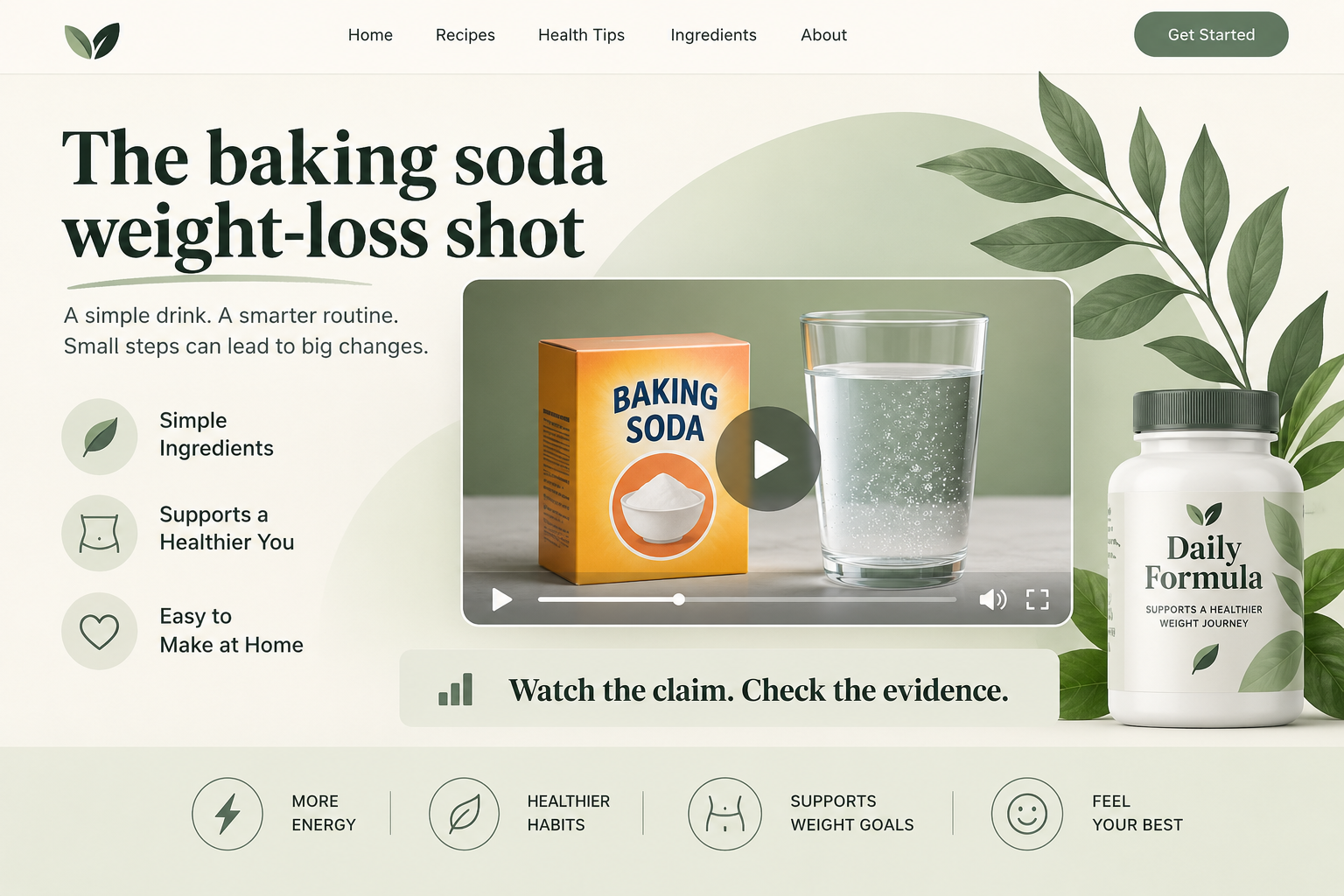
The picture above is a fictional interface example. It explains the recipe-to-product transition without presenting a fabricated image as an authentic advertisement.
The Buying Decision
Do not order through the purported Fung baking soda recommendation. The campaign’s implied medical endorsement is not reliable evidence for its weight-loss claims.
A refund badge, familiar ingredient, or apparently scientific explanation does not fix that problem. Neither does a different product name at the end.
This finding concerns the deceptive advertising route. It does not prove that every website using SodaFit has the same owner, formulation, or subscription arrangement.
If you have already paid, identify the actual seller and terms. Your receipt is more useful for resolving billing than the face used in the video.
How the Scam Works
Step 1: A Pantry Ingredient Makes an Extreme Promise Feel Accessible
Baking soda is ordinary and inexpensive. That familiarity makes an extraordinary weight-loss claim feel less like a new drug and more like a missed household tip.
The examined presentation compares the supposed routine with established weight-loss medicines. It implies that something already at home can provide an easier alternative.
That comparison creates interest before supplying meaningful evidence. A familiar ingredient does not establish an effective dose, a safe method, or a sustained result.
Look at the promised outcome, not just the ingredient. Rapid losses without meaningful changes to eating or activity demand scrutiny even when the recipe sounds simple.
There is no need to experiment to evaluate the advertisement. Its burden is to support what it promises before asking the audience to use or purchase anything.
Step 2: A Chain of Famous Appearances Replaces Independent Verification
The video brings recognizable personalities and doctors into the same weight-loss narrative. Fung’s identity appears as another apparent source of medical support.
This creates the impression of agreement. In practice, several faces inside one advertiser-controlled presentation are not several independent recommendations.
A real clip may also be placed beside invented claims. The result can imply approval even when the original speaker was discussing something else.
Do not try to settle authenticity solely from a facial expression or a smooth voice. Compare the exact words with an independently published original.
If the advertiser cannot identify that source, you have no reason to treat the montage as a medical endorsement.
Step 3: Scientific Vocabulary Makes the Story Sound Like a Mechanism
The presentation invokes weight-related hormones and contrasts a household routine with injections. This makes the pitch sound more precise than a generic slimming advertisement.
However, mentioning GLP-1 or GIP is not evidence that a prepared supplement produces a clinically meaningful effect, let alone the advertised outcome.
A biological pathway, a food ingredient, and a tested treatment are different things. The missing connection cannot be supplied by a doctor’s picture.
Ask for evidence about the finished product at its actual serving size. A discussion of an ingredient does not establish the combined formula’s performance.
Also distinguish temporary scale changes from sustained fat loss. A testimonial cannot tell you which outcome occurred or whether the result is typical.
Step 4: The Promised Instructions Give Way to a Supplement
A viewer may stay because the practical recipe is supposedly coming next. The video can build anticipation through testimonials and explanations before revealing a commercial product.
In the recorded campaign, the offer ultimately includes bottles of SodaFit capsules. That is a purchase decision, not simply access to kitchen instructions.
The change matters. The viewer arrived expecting an inexpensive method, but is now comparing packages after spending considerable time inside a persuasive story.
Pause before accepting that transition. Why does a supposedly ordinary recipe require a prepared supplement, and where is the product-specific evidence?
Do not let time already spent watching become a reason to spend money. Leaving costs less than buying an offer you have not independently evaluated.
Step 5: A Bundle and Bonuses Make Spending More Look Sensible
The examined sales presentation promotes a larger supply with savings and additional material. The package is framed as a complete program rather than a single bottle.
That framing can change the comparison. A shopper may weigh the bundle against expensive treatment instead of asking whether any purchase is justified.
A lower per-bottle figure can still require a much larger upfront payment. Read the total, selected quantity, shipping, and optional extras together.
Discounts do not validate health claims. Nor does the stated value of a digital bonus establish what that material is actually worth to you.
Do not assume the selected package reflects your intention. Check the final confirmation before paying, especially after returning from an upsell page.
Step 6: The Customer Must Untangle the Actual Billing
The source record raises concerns about additional selling and possible recurring charges. It does not establish one universal renewal schedule for every campaign destination.
That distinction matters when asking for help. A one-time six-bottle order is not the same transaction as a monthly refill you never approved.
Use your confirmation and statements to identify which occurred. If terms are unclear, ask the merchant to explain the billing frequency in writing.
Someone contacting you after checkout may simply be a salesperson. Their knowledge of the order does not connect them to Fung or qualify them to advise you.
Decline additions you did not request. There is no reason to buy another package merely to make the original formula supposedly effective.
Dr. Jason Fung’s Work Versus an Advertiser’s Claim
A Familiar Theme Is Not Permission to Sell a Product
A scam can borrow topics associated with a public figure because the connection sounds plausible. That does not make the resulting endorsement authentic.
Someone familiar with Fung’s books may recognize discussions of weight, food, or metabolic health. Those broad themes do not validate an unrelated baking soda supplement.
Verify the exact product relationship. A legitimate source should make it possible to understand what was recommended, by whom, and in which context.
Prescription Comparisons Need More Than a Video
Claims that a cheap routine outperforms medication are designed to attract attention. They require reliable comparative evidence, not a collage of testimonials.
Do not stop a prescribed medicine because an advertisement says a natural process makes it unnecessary. Discuss concerns and alternatives with the professional prescribing it.
The FTC’s guide to weight-loss advertising warns about promises of effortless or exceptionally rapid results.
You can reject such an offer without solving every detail about its operator. A false endorsement and unsupported outcome are already sufficient reasons not to buy.
What to Check When the Pitch Borrows Familiar Health Ideas
A Book Topic Is Not a Supplement Recommendation
Public figures can discuss many approaches to weight management. Advertisers may exploit that breadth by making an unrelated offer sound like a natural extension.
Do not fill in the missing connection yourself. Familiar vocabulary, an author’s photograph, and a plausible theme still do not establish a partnership.
Look for the exact product in the original material. If the name appears only on a seller’s page, treat the implied connection as unverified.
Be equally careful with summaries created by other promotional sites. Repeating a claim gives it visibility, not independent support.
Do Not Turn a Warning Into a Home Experiment
Searching for the missing ingredients can keep someone inside the same misleading story. Another page may promise the answer while leading to a different checkout.
This article deliberately does not supply a baking soda weight-loss recipe. A warning should not become an instruction sheet for an unsupported method.
Do not combine online fasting instructions, supplements, and medication changes because the themes seem related. Those choices can require individualized medical guidance.
If your goal is a realistic weight-management plan, start by discussing the barriers you actually face, including treatment cost, appetite, mobility, or previous side effects.
Use the Label to Identify the Purchase
When a parcel arrives, compare its product format with the order. Capsules, liquid drops, and powders should not be treated as interchangeable because the branding resembles.
Photograph the entire ingredient panel and responsible supplier information. Marketing phrases on the front are not enough to identify a formulation.
Keep the shipping label as well. It may help resolve delivery and return questions, although it does not necessarily identify the factory or legal seller.
A parcel’s origin is not proof of contamination or fraud. The relevant complaint should remain tied to the misleading endorsement and any documented order problem.
That approach gives the bank or merchant something specific to address. It also avoids replacing the advertiser’s unsupported certainty with another unsupported claim.
What to Do If You Acted on the Baking Soda Offer
-
Stop treating the video as personalized advice. If you changed prescribed treatment or tried an unusual mixture, explain that to a qualified healthcare professional.
If you feel unwell, seek appropriate medical help rather than adjusting the recipe yourself. Keep any product label available for review.
-
Save the commercial trail before it changes. Keep the landing address, apparent endorsement, package selection, receipt, and seller contact details.
Record which information came from the video and which appeared at checkout. They may make different promises.
-
Verify the amount and number of bottles. Compare the charge with the final confirmation, including delivery costs and added items.
If the quantity differs from what you approved, identify that specific mismatch in your cancellation or refund request.
-
Ask whether any recurring plan exists. Check the confirmation and account settings, then request a written answer if necessary.
Where a plan is active, cancel future renewals explicitly. Do not assume returning a parcel cancels a separate billing agreement.
-
Escalate unresolved payments through the issuer. Use its official app or a contact number you already trust.
Explain the actual problem and ask about time limits. Keep support exchanges and tracking information available for the dispute.
-
Do not buy your way out of the problem. Refuse extra supplements, paid verification, or a fee to release a promised refund.
A genuine complaint does not require handing an unknown caller remote access to your phone or banking account.
-
Report the impersonating advertisement. Supply the platform with the original ad identifier and destination rather than merely naming the doctor.
If you warn others publicly, redact payment details and distinguish the real professional from the unauthenticated offer using his identity.
Frequently Asked Questions
Did Dr. Jason Fung Recommend a Baking Soda Weight-Loss Shot?
The examined campaign does not establish an authentic recommendation. His appearance inside its promotional montage should not be treated as approval of the offer.
Check any purported endorsement against an independently located original source.
Is This an Investigation of Fung’s Books?
No. This article examines a misleading advertising story that uses his identity. It does not classify his publications or legitimate website as the scam.
The distinction protects readers from confusing an impersonated professional with the merchant.
Is SodaFit the Same Thing as the Promised Recipe?
The recorded presentation moves from a recipe promise to a capsule offer. That transition does not establish that the product delivers the advertised effects.
Other websites may use the name differently, so do not assume identical formulations.
Can Baking Soda Replace a Prescribed Weight-Loss Medicine?
This advertisement provides no reliable basis for that substitution. Familiarity with a kitchen ingredient is not evidence of comparable treatment effects.
Medication decisions require qualified advice about your particular situation.
Will Every Buyer Receive Unwanted Refills?
The available record does not prove that. Read the actual billing terms and compare them with subsequent transactions.
Document and challenge any renewal that you did not authorize.
What Should I Do If the Seller Keeps Calling?
Decline further purchases and request written communication about the original order. Do not debate medical promises with a salesperson.
Block unwanted calls if needed while keeping the records required for a payment dispute.
The Bottom Line
The Dr. Jason Fung baking soda scam uses recognition to make an unsupported weight-loss offer feel medically endorsed. That is not a reason to trust the purchase.
Walk away from this funnel. Existing buyers should verify the order, stop any unwanted renewal, and seek help with misleading or unapproved charges.

Join the discussion
0 commentsShare your experience or ask a question about this article.
Discussion
Start the conversation
Have a question or something useful to share? Add the first comment.