

A doctor explaining an urgent health discovery can look reassuringly familiar. Add a television-style headline, and the message becomes harder to dismiss at a glance.
If a video featuring Dr. Isaac Bogoch brought you to a diabetes offer, check the details before taking its next step.
Overview
The Claim Behind the Dr. Isaac Bogoch Diabetes Scam
This campaign misuses Dr. Isaac Bogoch’s identity in a supposed diabetes breakthrough video. It is not a verified treatment recommendation from the physician.
The recorded advertisement promotes a rapid pancreas-reset story, attacks ordinary care, and directs attention toward pills or drops after promising household instructions.
Versions examined in the campaign lead to Sugarix GlucoBalance Complex capsules or Glyco Reset drops. Neither product name authenticates the medical endorsement.
The deception should not be confused with Bogoch’s real professional work. The doctor is being impersonated, not identified here as the operator of the promotion.
What Makes the Presentation Deceptive
The video is packaged as news while appearing on an unrelated website. It also supplies an elaborate professional and personal story to strengthen the sales message.
Those details are advertising assertions. Do not circulate the script’s supposed family emergency, institutional position, or threats as verified facts about Bogoch.
- A recognizable physician is made to appear to deliver an unverified product recommendation.
- The presentation borrows NBC-style authority without establishing an original NBC report.
- A short treatment timeline is used to make serious complications sound easily reversible.
- A promised kitchen remedy becomes a reason to remain inside a supplement sales funnel.
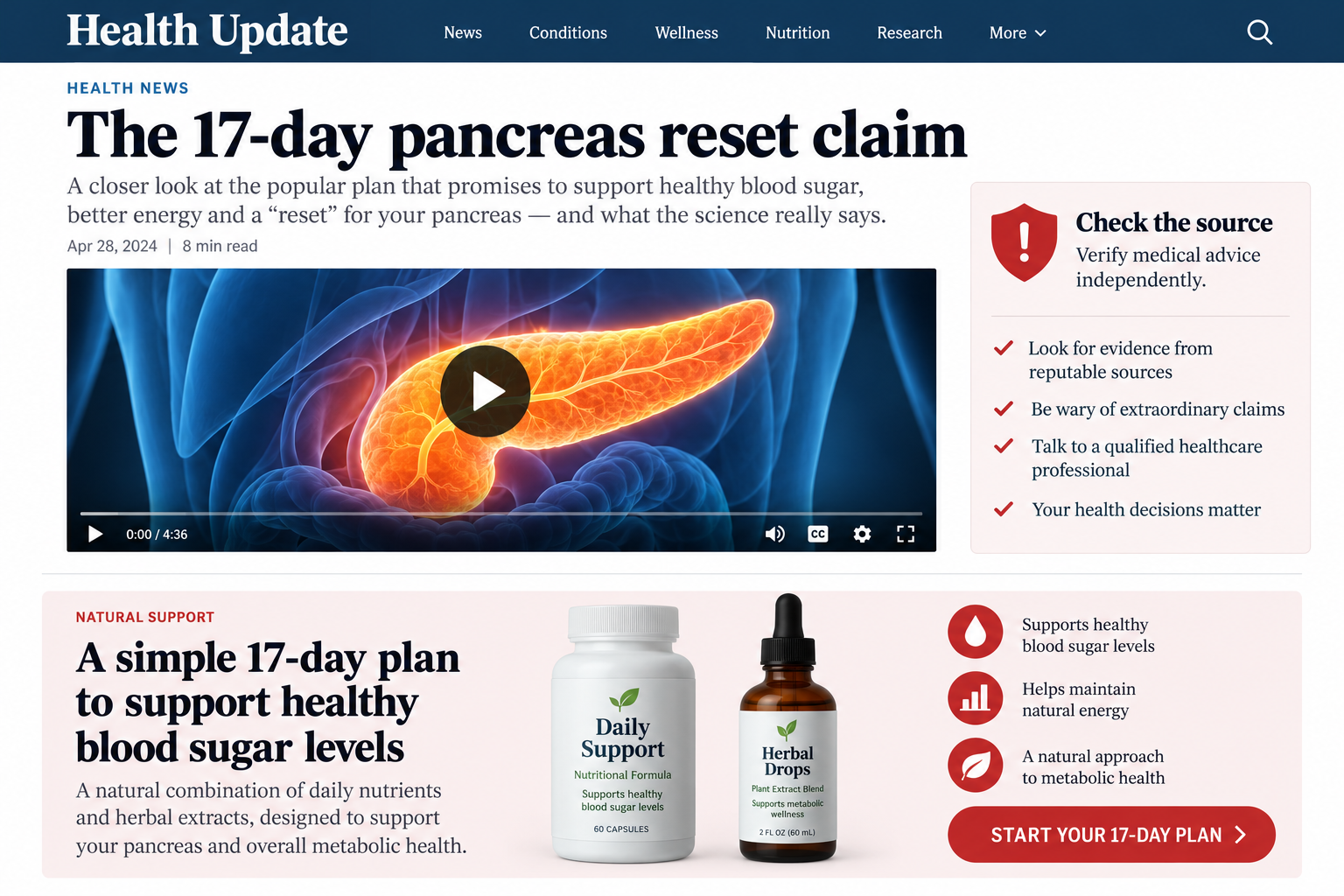
The image above is an explanatory interface illustration. It is not an original news screenshot, a genuine medical statement, or a record of a consumer’s order.
Our Conclusion for Readers
Reject the fake Bogoch diabetes offer. A manipulated physician endorsement is not a safe basis for buying a supplement or changing diabetes treatment.
The underlying advertising is deceptive even if a parcel arrives. Delivery would show that something was shipped, not that the medical story was true.
There is no need to establish a manufacturing country to reach that conclusion. The evidence concerns the impersonation and the unsupported treatment narrative.
Billing is a separate question. Confirm any bundle, renewal, or extra charge against the actual checkout and receipt rather than assuming all offers operate identically.
How the Scam Works
Step 1: Another Familiar Personality Opens the Door
The documented route begins with a promotional clip using Dr. Phil’s identity. A familiar presenter introduces a supposedly simple answer to blood-sugar problems.
That first appearance matters even when Bogoch becomes the central figure later. Recognition earns the click before the visitor has evaluated the destination.
The script combines a household ingredient with a startling explanation of disease. A viewer may follow the link expecting clarification, not an immediate sale.
An advertisement can change presenters between stages. Do not interpret several recognizable people as several independent sources when one funnel controls all their appearances.
Step 2: A News-Style Page Gives the Next Video Apparent Legitimacy
The landing page adopts the look of a trusted broadcaster. The actual address in the recorded example uses an unrelated domain, not the broadcaster’s website.
A news logo, headline, and embedded player are easy to reproduce. They tell you how a page is designed, not who investigated or published its claims.
Check whether the alleged report exists through the outlet’s independently located site. A replay hosted by the advertiser is not independent verification.
Do not infer the scammers’ nationality from a domain ending, language fragment, or hosting location. Those details can identify a page without identifying its operator.
The meaningful finding is simpler: the seller’s environment is being presented with authority that the address and original publication do not establish.
Step 3: Bogoch’s Identity Is Attached to an Invented Medical Narrative
The next presentation uses Bogoch’s name and likeness as the center of a dramatic breakthrough account. It supplies credentials and a personal emergency.
These details encourage the viewer to trust a character in the script. A real physician’s public reputation gives that character a borrowed foundation.
The University of Toronto’s faculty profile identifies Bogoch’s work in infectious diseases, global health, and related clinical research.
That independently verifiable profile is not a diabetes-supplement endorsement. The advertisement cannot convert his real medical career into approval by adding a different title.
Use the discrepancy to question the sales story. Do not contact the physician’s clinical team seeking an order refund; they are not identified as the seller.
Step 4: Fear of Complications Is Used to Undermine Ordinary Care
The script invokes severe outcomes and presents established treatment as the wrong path. That places viewers under pressure while they are already worried about their health.
A supposed quick reset is then offered as the escape. The contrast is designed to feel urgent, personal, and easier than a continuing treatment plan.
This is not an assessment of your condition. A video cannot review your glucose history, current medicines, symptoms, or reasons for a particular prescription.
Never treat its reference to a parasite as a diagnosis. Nor should a dramatic promise about the pancreas persuade you to stop monitoring glucose.
Questions about treatment are legitimate. A clinician should answer them with your actual records and circumstances, rather than a commercial script aimed at everyone.
Step 5: The Recipe Promise Turns Into Two Possible Product Offers
The audience is told that a practical household method is coming. Staying until the end becomes the condition for learning an apparently valuable secret.
The recorded routes instead connect the story with a capsule product or a dropper bottle. This is the point where the visitor should stop and reassess.
A claim about one kind of preparation does not prove another product’s effects. Capsules and drops also cannot be assumed to share the same formulation.
Look for a complete label, identified manufacturer, precise serving information, and product-specific evidence. A familiar doctor’s image supplies none of those details.
Even a detailed label would not repair an invented endorsement. The ingredients and the truthfulness of the advertising are separate parts of the decision.
Step 6: Checkout Reassurances Push the Medical Question Aside
Once packages appear, the page may emphasize savings, supply length, shipping, and a guarantee. The question becomes which option to choose rather than whether to buy.
Read the selected quantity and total payment together. A low unit price can depend on buying several bottles at once.
Check recurring terms explicitly. The campaign material does not establish the same renewal amount or cancellation procedure for every destination using these names.
A money-back badge is not a clinical safeguard. It does not prevent a medication interaction or undo time spent following unsuitable advice.
If the merchant cannot clearly explain the transaction before payment, leave. There is no medical reason to rush through an unfamiliar checkout.
What the Fake Story Does Not Establish
A Recognizable Face Does Not Verify a Voice
A convincing face and plausible lip movements are no longer enough to establish that someone made a statement. Both can be manipulated.
Appearance alone is also an unreliable AI detector. Use the original source, the actual words, the destination, and independent context to assess the endorsement.
The FTC’s warning about fabricated celebrity endorsements describes how doctored audio and video can make an invented recommendation seem real.
A Rapid Change Is Not Proof of a Lasting Cure
The advertisement treats short timelines and precise figures as proof. Numbers can make a story sound measured even when the underlying evidence is missing.
A genuine treatment claim requires much more than a testimonial. The tested product, participant selection, comparison, outcomes, and adverse effects all matter.
Do not use the video’s promised target as a personal glucose goal. Your care team can explain appropriate monitoring and what your own readings mean.
The Small Details That Make the False Report Convincing
Precise Numbers Can Create False Confidence
The script uses glucose figures, timelines, and percentages to sound exact. Precision in a sentence is not proof that the underlying statement is true.
A number without a reliable source, defined population, and clear measurement can mislead more effectively than a vague promise.
Glucose units also vary between countries. A reader should not copy a value from an advertisement without understanding its units and clinical context.
The appropriate interpretation depends on circumstances such as timing, symptoms, and the treatment plan. A video aimed at everyone cannot make that individualized assessment.
Institution Names Are Checkable, Not Decorative
A script can attach an impressive institute or senior position to a real doctor. Do not assume those extra details follow from recognizing the name.
Compare the claimed role with a current institutional biography. Check the precise organization rather than treating every diabetes-related name as the same authority.
A real university affiliation does not authorize a different commercial page to speak for the doctor. It is a reference for checking identity, not a purchasing shortcut.
Where a biography and advertisement conflict, keep the discrepancy in your notes. Avoid inventing an explanation that makes the sales story work.
A Personal Emergency Is Not Independent Evidence
The supposed family rescue gives the speaker an emotional reason to share the method. It can make a product pitch feel like a moral obligation.
But an invented personal story can be as persuasive as an authentic one. Viewers need an original source before repeating it as fact.
Do not demand private medical records from the real doctor or relatives. The advertiser bears responsibility for supporting the commercial claim it makes.
Keep your own response proportionate. You can reject the recommendation and report the impersonation without investigating someone’s family or publishing private contact details.
The useful evidence is the false attribution, its destination, and the offer. Those elements connect the warning directly to the decision readers face.
What to Do If This Fake Diabetes Report Reached You
-
Tell your diabetes clinician about any change you made. Include skipped medication, altered monitoring, supplements taken, and the dates involved.
Seek urgent help for severe symptoms or a rapidly worsening condition. An online product seller is not an emergency medical service.
-
Preserve the exact version of the offer. Save its address, screenshots, advertiser identity, and the product name shown at checkout.
A renamed bottle can make later searches confusing. Your contemporaneous records identify the offer that influenced your decision.
-
Compare the receipt with your payment. Note the ordered quantity, amount, delivery charge, and merchant descriptor.
For an unexpected renewal, record the separate transaction date and amount. Avoid combining several different problems into one vague complaint.
-
Write to the merchant requesting a clear remedy. Ask for cancellation, a corrected quantity, or a refund according to the actual issue.
Cancel any confirmed recurring arrangement separately. Keep the request and response, including instructions about unopened or returned items.
-
Consult your issuer if the issue remains unresolved. Use the official banking app or the number on your card.
Ask about deadlines, required documents, and blocking unapproved renewals. Do not wait indefinitely because a support agent keeps promising another review.
-
Keep the label available for a health review. A pharmacist or clinician needs the actual ingredients and amounts, not the video’s general description.
If you feel unwell after using a product, seek medical advice and report the suspected reaction through the relevant health authority.
-
Report the impersonation without amplifying the offer. Provide the platform with the original ad link and destination address.
When warning relatives, explain that Bogoch is the person being misrepresented. Do not repost the sales link as though it were his recommendation.
Frequently Asked Questions
Is Dr. Isaac Bogoch Really Promoting These Diabetes Products?
The documented campaign uses his identity in a deceptive presentation. It does not establish his approval of Sugarix GlucoBalance Complex or Glyco Reset.
The physician should not be confused with the party taking orders.
Did NBC Publish the Pancreas-Reset Video?
The examined route uses broadcaster-style packaging on an unrelated domain. That is not evidence of an original NBC broadcast.
Confirm any alleged report through the outlet’s own publication channels.
Why Are There Both Capsules and Drops?
The recorded campaign connects a similar medical story with different product formats. The story is the durable hook, while the purchase destination can vary.
Do not assume the formulations, sellers, or billing rules are identical.
Can the Claimed Home Method Replace Diabetes Medicine?
No reliable evidence in this promotion supports replacing prescribed care. A promised short reset does not establish a safe treatment for an individual.
Discuss medication concerns with your own healthcare professional.
Are Automatic Refills Confirmed for Every Version?
No. Establish recurring billing from the specific order terms and transactions. The deceptive endorsement alone does not reveal every checkout condition.
Challenge charges you did not approve using the relevant records.
Should I Pay Someone Who Offers to Recover My Money?
Be especially cautious about unsolicited recovery offers demanding an advance fee, banking access, or a verification code.
Your issuer and official reporting channels are safer starting points than another unknown caller.
The Bottom Line
The Dr. Isaac Bogoch diabetes scam borrows a real doctor’s identity to sell an invented breakthrough. Do not trust its endorsement, diagnosis, or treatment promises.
If you acted on it, address health changes first, then document the order and pursue the appropriate financial remedy. A new bottle cannot authenticate the same false story.

Join the discussion
0 commentsShare your experience or ask a question about this article.
Discussion
Start the conversation
Have a question or something useful to share? Add the first comment.