

Diabetes advertising becomes especially persuasive when it sounds like a doctor is finally saying what a worried patient hoped to hear. A short video promises a hidden gut-glucose connection, and a chewable supplement appears to offer a simpler answer than medication, appointments, and daily uncertainty.
The current product page is more restrained than the ad, but that contrast is part of this investigation. We followed the Fake Gut-Glucose Doctor Scam into the Beomma offer and checked its ingredients, companies, payment trail, addresses, support routes, returns, and claims.
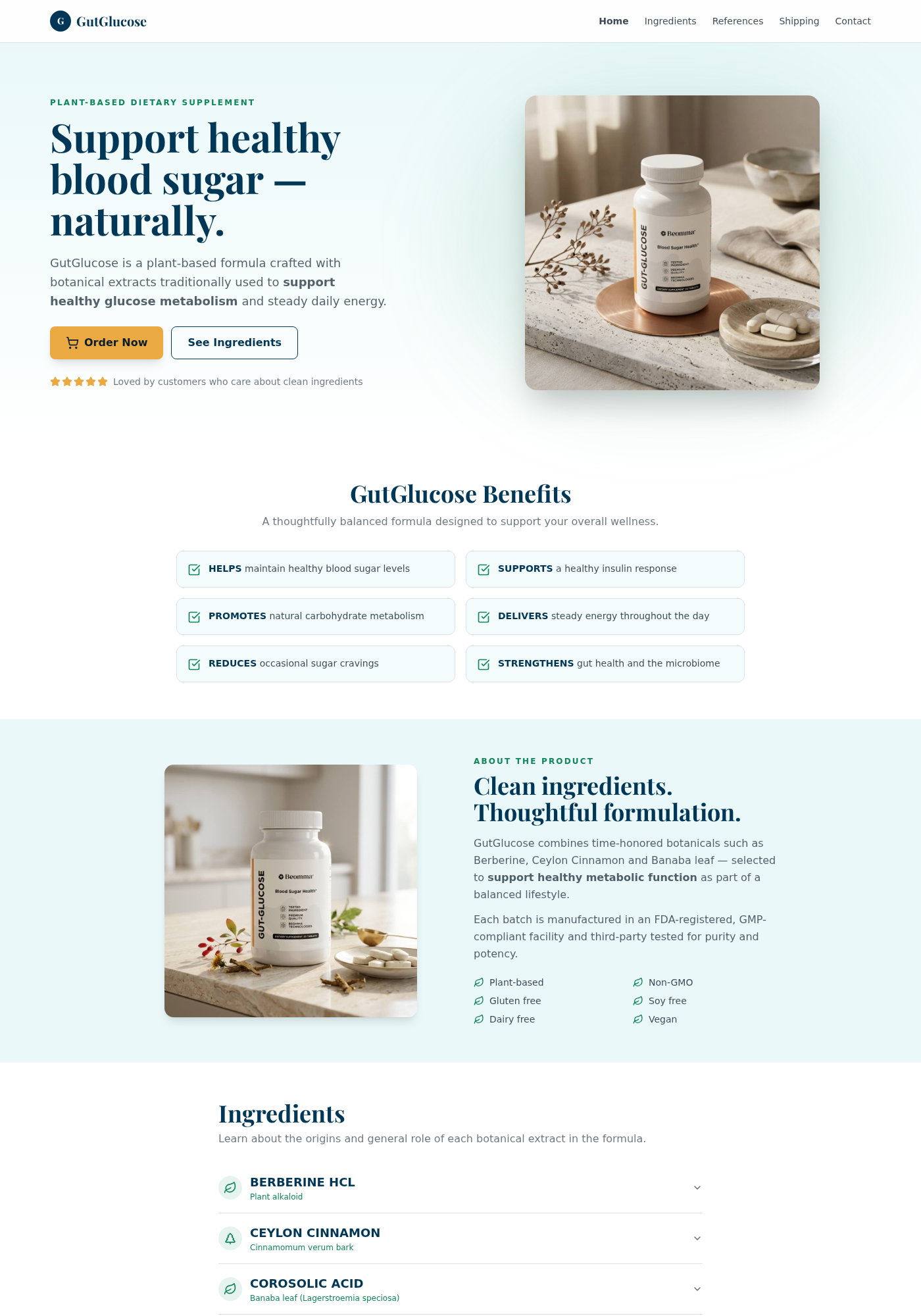
The current GutGlucose page calls the product a plant-based dietary supplement for healthy blood sugar, insulin response, carbohydrate metabolism, steady energy, cravings, and gut health. Its polished photography and gentle language look very different from the dramatic cure-style ads used to attract viewers.
The site says the formula is manufactured in an FDA-registered, GMP-compliant facility and third-party tested. Those statements do not mean the finished product is FDA approved, and the public page does not display a batch-specific certificate of analysis that lets a buyer verify the bottle they receive.
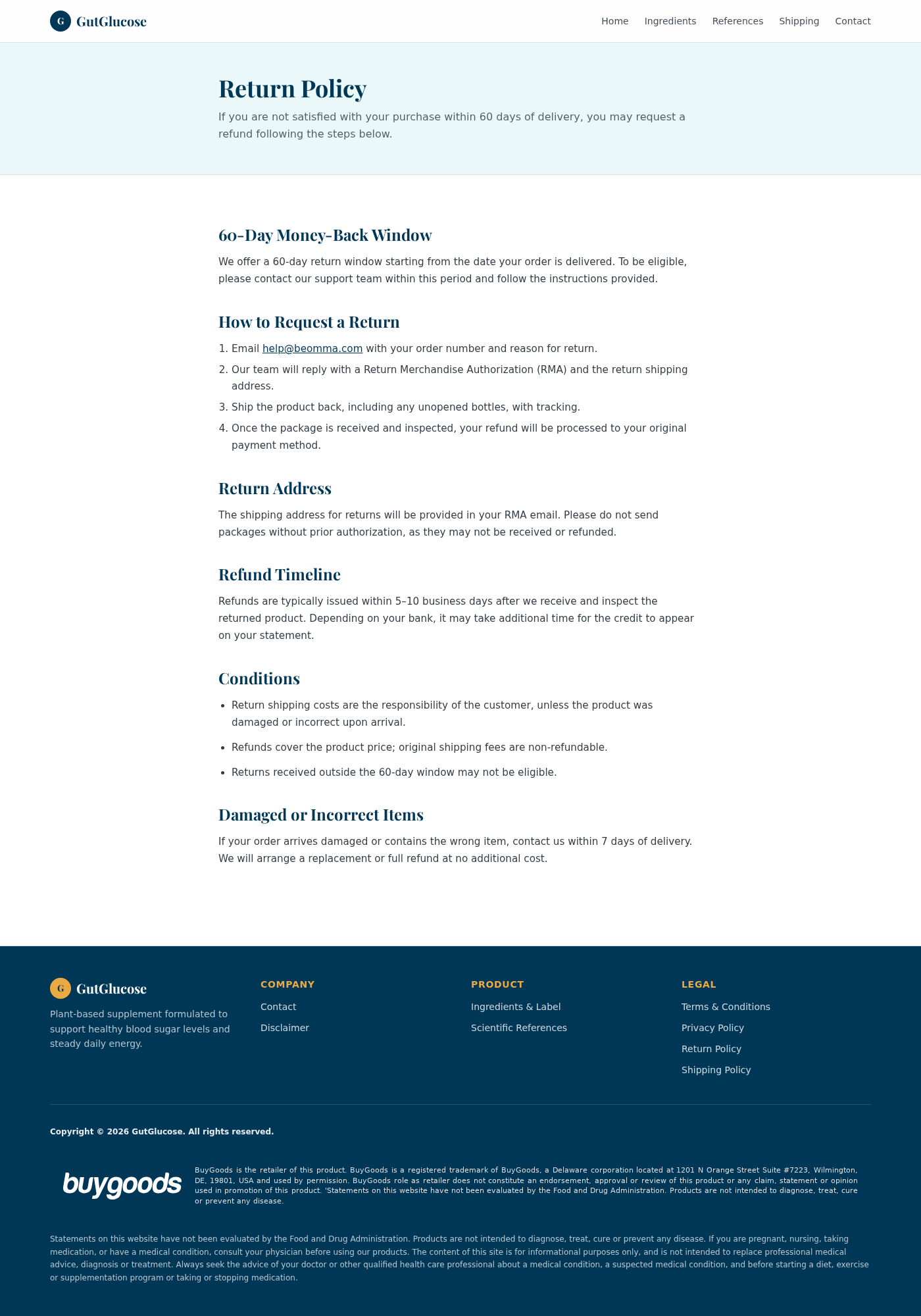
The return page makes the customer request authorization first, wait for an RMA and return address, send unopened bottles with tracking, pay return postage, and wait for inspection. That process deserves attention before anyone accepts a six-bottle package costing $294.
Overview
The advertisement and product page make different impressions
Promotional videos associated with the funnel used medical-story personas such as Dr. Brian Karaan and Dr. Eva Harper and implied that a hidden discovery could reverse type 2 diabetes. We could not verify those personas as the authorities presented in the ads or confirm the claimed institutional story.
The live GutGlucose page avoids a direct cure statement. It says the product supports healthy glucose metabolism and includes the standard disclaimer that it is not intended to diagnose, treat, cure, or prevent disease. The disclaimer does not erase a misleading ad that brought the buyer there.
Beomma sells a real supplement with unproven outcome claims
The bottle and ingredient list are concrete. The formula names berberine HCL, Ceylon cinnamon, corosolic acid from banaba, saffron, fucoxanthin or fucoidan, kudzu flower, olive-leaf compounds, citrus extract, and xylitol.
Some individual ingredients have been studied, but a list of studied ingredients does not prove that this exact combination, dose, chewable form, or finished batch reverses diabetes. NCCIH says evidence for supplements such as berberine and cinnamon remains limited and inconsistent.
The merchant and support trail is unusually fragmented
The live order buttons point to BuyGoods, while the site’s terms say orders are processed by Mundpay through MUND USA LLC. The contact page sends customer questions to help@beomma.com, technical questions to Eagle Labs, and billing or refunds to a Mundpay support portal.
Separate manufacturers, retailers, and processors can be legitimate, but consumers should not have to guess which party owns the sale. The final checkout, receipt, terms, support email, and card descriptor should identify the same commercial chain clearly.
- The ad used unverified doctor personas and diabetes-reversal storytelling.
- The current site uses softer support claims and a disease disclaimer.
- The product is branded GutGlucose by Beomma.
- The six-bottle package costs $294, or $49 per bottle.
- The displayed regular-price anchor is $1,188, producing a claimed $894 saving.
- Current order links use BuyGoods while the terms name Mundpay.
- Returns require an RMA and an address supplied after contact.
- An automatic refill subscription was not confirmed on the live product page.
What the Fake Diabetes Doctor Story Promises
The ad begins with frustration that feels real. A person monitors glucose, watches carbohydrates, takes medication, and still worries about fatigue, cravings, or long-term complications. The narrator then suggests conventional care has missed the true cause.
A doctor-like presenter introduces a gut-glucose discovery and a natural formula supposedly capable of addressing the problem at its source. References to respected medical institutions, celebrity diabetes stories, and research language give the impression of an established breakthrough.
Names such as Dr. Brian Karaan and Dr. Eva Harper provide a human authority the viewer can remember. Yet a white coat, medical title, and professional video are not credentials. A real clinician should have a verifiable license, specialty, employer, publications, and disclosure of any financial relationship to the product.
The video has also invoked public figures who have discussed diabetes, including Tom Hanks and Randy Jackson. Mentioning a celebrity’s real diagnosis can make the story feel grounded while implying a product connection that was never confirmed.
The sales page then changes tone. Strong disease language gives way to phrases such as supports healthy blood sugar and promotes natural carbohydrate metabolism. This separation allows the emotionally forceful ad to create expectations that the formal product page does not state directly.
For someone living with diabetes, that distinction is not academic. Replacing prescribed treatment with an unproven supplement can allow glucose to remain dangerously uncontrolled. Never stop or change medication because an advertisement claims doctors hid a natural cure.
What Our Beomma GutGlucose Investigation Found
The live site describes GutGlucose as a chewable, plant-based dietary supplement. It markets broad metabolic support rather than a prescription treatment and includes an FDA disclaimer in the footer.
The ingredient page names berberine HCL, Ceylon cinnamon, banaba-derived corosolic acid, saffron, marine compounds, kudzu flower, oleuropein, citrus extract, and xylitol. Consumers need the Supplement Facts panel and exact amounts, not only ingredient names and general descriptions.
The package selector showed two bottles at $89 each, three at $69 each, and six at $49 each. The six-bottle order totaled $294 and claimed an $894 saving against a $1,188 regular-price anchor.
Large package discounts encourage a first-time buyer to commit before learning whether the product is tolerated, useful, or easy to return. An anchor price is not proof that meaningful sales occurred at that higher amount.
The current Buy Now links resolve to a BuyGoods checkout. However, the GutGlucose terms state that orders are processed by Mundpay, identified as MUND USA LLC. That inconsistency should be explained before payment, not discovered during a dispute.
MUND USA LLC is an active Florida company filed in June 2025 with a principal address at 1160 Heron Sound Drive, Suite 50, Apopka, Florida. A valid registration proves a legal entity exists, not that every advertising claim is accurate or that it manufactures the product.
The contact page refers formulation questions to Eagle Labs Inc. Eagle Labs is a real private-label and contract supplement manufacturer with an address in Oldsmar, Florida and multiple listed manufacturing locations. Its role does not verify the ad’s fake-doctor narrative.
The return policy offers 60 days from delivery but requires contact, an RMA, and a return address sent by email. Customers pay return postage, original shipping is nonrefundable, unopened bottles should be included, and inspection may take five to ten business days.
The live site did not show automatic monthly refills in the product selector we examined. We therefore cannot call the current offer a confirmed subscription trap. Buyers must still inspect the final BuyGoods or Mundpay checkout because the destination and terms can change.
How the Fake Gut-Glucose Doctor Scam Works
Step 1: A medical-style social video identifies a frightening hidden cause
The ad speaks to people already worried about glucose readings, medication, weight, fatigue, or future complications. It suggests that a gut-related trigger, not the understood complexity of diabetes, explains why ordinary treatment has failed.
The claim is emotionally efficient. It offers both a villain and relief from self-blame, then promises that one overlooked mechanism can be corrected with a product sold in the same presentation.
Step 2: An unverified doctor supplies borrowed authority
A presenter is given a medical title, an impressive biography, or a connection to a respected institution. Viewers are expected to accept the costume, narration, and on-screen labels instead of checking a licensing board or employer directory.
The personas and institutional claims associated with this campaign could not be verified as presented. A fabricated expert can be regenerated with a new name as soon as the original version is challenged.
Step 3: The advertorial promises reversal while the store says support
The video can use language about reversing diabetes or fixing its root cause. The product page then retreats to structure-and-function wording such as supporting healthy blood sugar and insulin response.
Read the strongest promise and the formal disclaimer together. If the checkout says the product does not treat disease, the buyer should not rely on a video that implied it could replace or outperform medical care.
Step 4: Ingredient science is stretched to cover the finished formula
The page cites studies involving berberine, cinnamon, or other botanicals. Research on an ingredient at a particular dose does not automatically validate a proprietary mixture, chewable delivery system, manufacturing batch, or claim made in an advertisement.
NCCIH notes that some diabetes-supplement research suggests possible benefit but often has limitations, variable results, and no clear conclusion. Berberine can also cause gastrointestinal effects and interact with medicines.
Step 5: The price ladder pushes the six-bottle package
The one-bottle path is made comparatively expensive while the six-bottle package receives the best-value label, free shipping, and the largest claimed discount. The buyer is encouraged to spend $294 before trying a single serving.
The $1,188 anchor and $894 saving create a sense that refusing the largest package wastes money. The relevant comparison is not the crossed-out number. It is the total cost, evidence, return burden, and price of transparent alternatives.
Step 6: Different names appear at payment and support
The shopper begins with GutGlucose and Beomma, may pay through BuyGoods, reads terms naming Mundpay and MUND USA LLC, and sees Eagle Labs for product questions. Each name may control a different part of the transaction.
Fragmentation becomes a practical problem when a shipment is late, a card descriptor is unfamiliar, or a refund is refused. Save every page and note which entity made each promise.
Step 7: Returns require authorization and a hidden destination
A customer must email support, obtain an RMA, wait for the return address, pay tracked postage, and preserve unopened bottles. Sending the package without authorization may prevent processing.
The delay can consume part of the 60-day window. Contact support as soon as the decision is made and document the request date, even if the return address has not yet been provided.
Company, Address, and Fulfillment Checks
The brand name does not identify the seller
GutGlucose is the product identity and Beomma appears on the bottle, but the terms name MUND USA LLC as the authorized retailer while current buttons lead to BuyGoods. The party accepting payment must be clear before purchase.
If checkout names have changed, the site should update its terms and contact instructions. A consumer should not need to choose between two processors when requesting a refund or explaining a card charge.
The addresses identify offices and facilities, not the whole operation
MUND USA LLC lists an Apopka, Florida principal address. Eagle Labs lists an Oldsmar address and other Florida manufacturing locations. Neither address alone proves where a particular GutGlucose batch was made, tested, stored, or returned.
The consumer-facing return address is withheld until an RMA is approved. That is a major practical fact, because a corporate office or manufacturing address found online may reject unsolicited returns.
The support trail is email-heavy and divided
The page directs general customers to help@beomma.com, technical questions to info@eaglelabsinc.com, and order matters to Mundpay’s portal. It does not present one prominent consumer phone number on the main contact page.
Test support before buying. Ask which company will appear on the statement, whether BuyGoods or Mundpay controls the order, whether refills are automatic, and where unopened returns go. Vague replies are a warning.
Private-label manufacturing does not prove the marketing claims
Contract manufacturers can produce formulas for many brands. A GMP facility registration concerns manufacturing controls; it does not mean the FDA approved the product, tested the finished bottle, or endorsed a diabetes claim.
Demand a readable Supplement Facts panel, lot number, manufacturer or distributor identity, contaminant testing, and a finished-product certificate of analysis. Without batch evidence, phrases such as third-party tested remain difficult for a buyer to verify.
Ingredients, Diabetes Safety, and the Subscription Question
Berberine is not imaginary, and research has explored its metabolic effects. NCCIH says some evidence suggests potential benefit, particularly as adjunctive therapy, but study quality and results vary. That is very different from proving a branded chewable reverses diabetes.
Berberine commonly causes nausea, diarrhea, bloating, or constipation and can interact with medication. People who are pregnant or breastfeeding and infants face specific warnings. Diabetes drugs already lower glucose, so combining products without clinical guidance can create additional risk.
Cinnamon and other botanicals also have formulation and dose questions. A promotional ingredient page cannot show whether each active amount matches studied doses or whether the mixture remains stable and accurately labeled through its shelf life.
The FDA does not approve dietary supplements for safety and effectiveness before marketing. A facility being FDA registered does not convert the bottle into an FDA-approved diabetes treatment. The seller remains responsible for lawful labeling and substantiated claims.
No automatic refill was visible in the live package selector, and the terms we reviewed did not establish a recurring subscription for every order. We will not state otherwise. The BuyGoods destination and Mundpay language still make the saved checkout essential evidence.
The core warning is the gap between the ad and the formal product. If the advertisement needs an invented doctor and a diabetes-reversal story while the bottle is legally sold only for general support, the customer is being asked to buy an expectation the seller’s own disclaimer does not defend.
Warning Signs to Watch For
- A doctor persona cannot be verified through licensing or institutional records.
- The video implies diabetes reversal while the site disclaims disease treatment.
- Celebrity diabetes stories appear without product endorsements.
- Ingredient studies are presented as proof of the finished formula.
- FDA-registered facility language is easy to mistake for product approval.
- The six-bottle package is pushed through a dramatic anchor price.
- Current order links and written terms name different processors.
- The consumer-facing contact page lacks one clear accountable merchant.
- The return address is supplied only after RMA approval.
- Unopened bottles and customer-paid postage can limit practical refunds.
A real ingredient and a registered manufacturer cannot rescue a fake doctor story. When the ad promises a medical breakthrough but the formal page retreats to general wellness support, judge the product by the disclaimer, the evidence, and the company trail, not the video.
What to Do if You Have Fallen Victim to This Scam
- Do not stop prescribed diabetes treatment. Continue the plan agreed with your clinician unless that clinician changes it. If you stopped medication or your readings are unusually high or low, contact a medical professional promptly. Seek emergency care for severe symptoms.
- Stop using the supplement if you have a concerning reaction. Record the product name, lot, serving, timing, symptoms, and other medications. Contact a clinician or poison-control service as appropriate and report serious supplement adverse events to the FDA.
- Request an RMA immediately. Email help@beomma.com within 60 days of delivery and ask for the return authorization and destination. Include the order number, reason, unopened bottle count, and a clear request for the exact refundable amount.
- Preserve the product and sales evidence. Save the fake-doctor ad, product page, ingredient panel, checkout, receipt, package label, lot number, terms, return policy, and card descriptor. Photograph every bottle before shipping it back.
- Use tracked shipping and retain proof. The policy places return postage on the customer and requires inspection. Keep the RMA, tracking, delivery confirmation, package weight, photos, and correspondence until the refund appears.
- Dispute unresolved or unauthorized billing. If the seller ignores a timely return, the order was materially misrepresented, or another charge appears without permission, contact the card issuer. Provide accurate evidence and identify the processor shown on the statement.
- Run Malwarebytes if the advertising path caused device changes. If the funnel opened downloads, notification prompts, fake alerts, or unknown extensions, run a full Malwarebytes scan. Remove detections and review browser permissions before reusing saved payment information.
- Use AdGuard to reduce deceptive health ads. AdGuard can block many tracking links, pop-ups, and rotating supplement ads. It cannot assess a formula or replace medical advice, but it reduces exposure to aggressive versions of the same fake-doctor campaign.
Frequently Asked Questions
Is GutGlucose a real supplement?
A physical Beomma GutGlucose supplement and ingredient list are marketed on a live site. That does not validate the fake-doctor story or prove that the finished product reverses or treats diabetes.
Can GutGlucose reverse type 2 diabetes?
No reliable evidence reviewed here establishes that the branded formula reverses diabetes. The current site itself says the product is not intended to diagnose, treat, cure, or prevent disease.
Are the GutGlucose doctors real?
We could not verify the ad personas and institutional stories as presented. A genuine clinician should have independently verifiable credentials, employment, publications, and a disclosed product relationship.
Who sells and manufactures GutGlucose?
The site uses Beomma branding, its terms name MUND USA LLC and Mundpay, current order links point to BuyGoods, and product questions are referred to Eagle Labs. Those roles should be confirmed on the final receipt.
Does GutGlucose automatically renew?
No automatic refill was confirmed on the live offer examined. Check the final checkout, receipt, and statements because processors and offers can change, and do not assume one-time billing without saved proof.
How do GutGlucose returns work?
Contact support within 60 days of delivery, obtain an RMA and return address, send eligible bottles with tracking, pay return shipping, and allow five to ten business days after inspection for processing.
The Bottom Line
The Fake Gut-Glucose Doctor Scam takes a serious medical condition and turns uncertainty into a supplement sale. The personas and reversal story create expectations that the current Beomma product page does not formally support.
GutGlucose may be a real bottle with real botanical ingredients, but that is not the same as a proven diabetes treatment. The fragmented trail through Beomma, BuyGoods, Mundpay, MUND USA LLC, and Eagle Labs demands more transparency, not more trust.
Discuss supplements with a clinician, never replace prescribed care because of an ad, and buy only when the dose, batch testing, merchant, total price, billing schedule, and return destination are clear before payment.








