

Your flight has changed, the hotel can’t find your reservation, or the rental desk needs another confirmation. You search for a support number and start dialing.
When the trip is already going wrong, finding someone who answers quickly feels like progress. That first reassuring conversation deserves a moment of attention.
Overview
The search is genuine, but the support number may not be
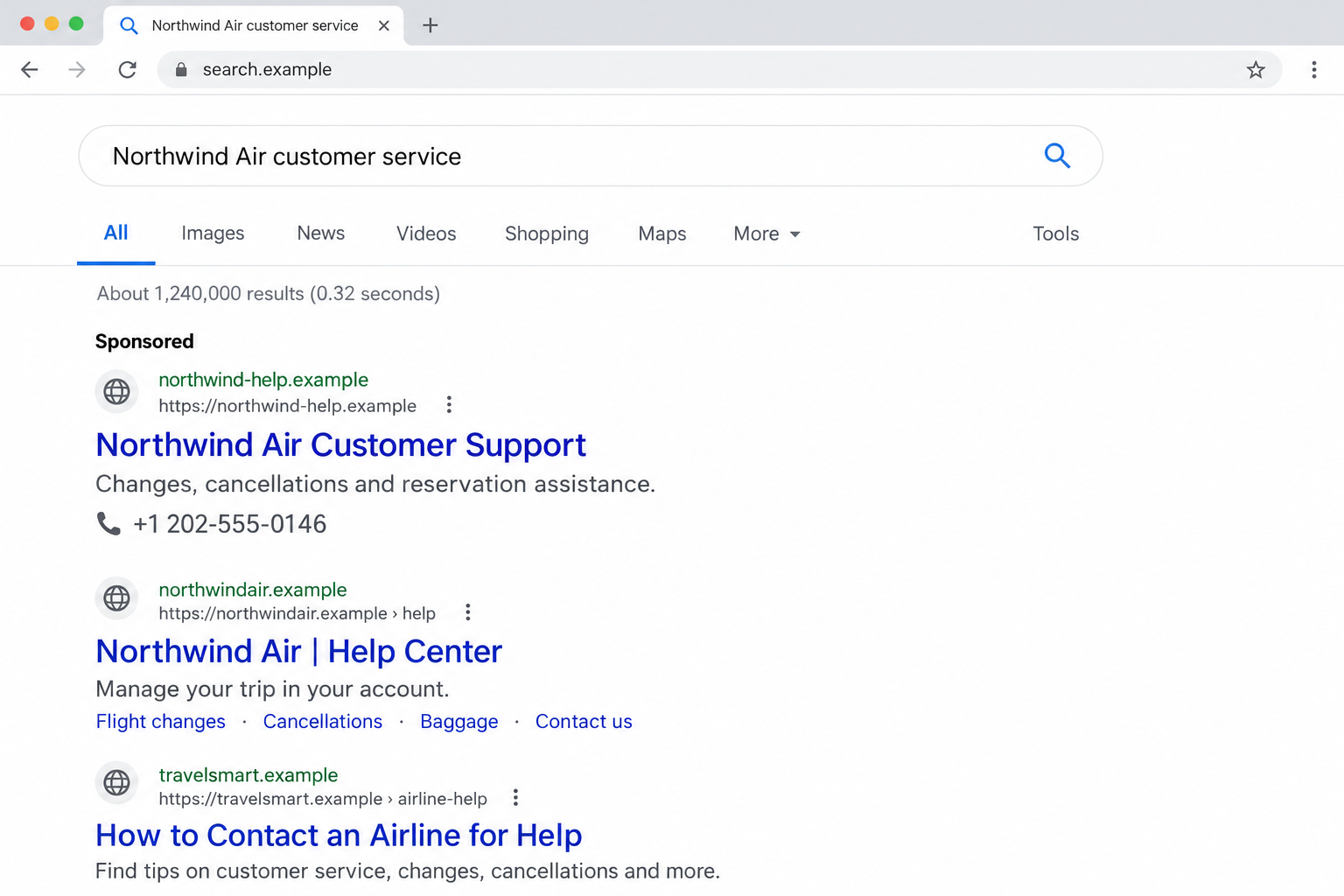
The fake travel support scam intercepts people trying to reach an airline, hotel, booking service, or car-rental company. Paid search placement can put an impersonator first.
A familiar business name beside a phone number doesn’t establish who answers it. A lookalike help page can create the same false impression.
The FTC specifically warns that scammers place numbers beside recognized travel brands or link to websites resembling their real pages. This is an established impersonation method.
A real travel problem gives the caller credibility
You may genuinely need rebooking, a cancellation, an explanation of a charge, or help with an absent reservation. The fraud doesn’t require inventing that initial difficulty.
The person answering can borrow the details you supply and turn them into a plausible service conversation. Your booking reference doesn’t prove their affiliation.
The risk begins when the supposed assistance demands money, account access, or sensitive information before you have independently established who is helping.
The airline or hotel is being impersonated
This is not a claim that the real travel provider is fraudulent. Nor does every sponsored result or independent travel agent represent a scam.
The warning concerns a contact falsely presenting itself as a particular provider’s support. Search placement and logos don’t authenticate that relationship.
The illustration above uses invented businesses, reserved example domains, and a fictional number. It explains the search trap without pretending to reproduce a captured live advertisement.
- Use your existing booking confirmation or official account to find help.
- Check the actual website address before calling or entering details.
- Don’t give a phone agent passwords or account verification codes.
- Confirm a proposed charge through a separate, trusted contact route.
- If you already paid, secure the payment and booking independently.
Why Searching for Help Can Take You to the Wrong Desk
Most people understand that an email can impersonate an airline. A search feels different because you initiated it and chose what to type.
That sense of control doesn’t authenticate the result. Someone else still controls the advertisement, destination page, and phone number placed in front of you.
A sponsored label means placement was paid for. It isn’t a certificate that the advertiser represents the brand whose name appears in the headline.
Organic results aren’t automatically safe either. A copied page or misleading directory entry may appear outside the advertising area.
The safest distinction isn’t simply paid versus unpaid. It’s whether you’ve independently reached a contact route belonging to the company you actually need.
The FTC’s travel warning recommends checking the real destination and using a known website rather than trusting the first convenient result.
At an airport or hotel, a staffed desk can provide another verification route. For a work trip, your approved travel-management service may already have the correct contacts.
How the Fake Travel Support Search Scam Works
Step 1: A traveler searches during a real disruption
You type the provider’s name followed by customer service, cancellation, refund, or rebooking. The need is immediate, so a prominently displayed number is attractive.
You may be standing in a noisy terminal, switching between apps, or watching a departure time approach. Reading a small website address feels secondary.
That isn’t carelessness. It’s the setting the impersonator is exploiting: a legitimate problem, limited time, and a strong reason to accept practical help.
Keep one simple rule available under pressure. Before giving information, establish the contact through your existing booking, official app, or a separately verified company website.
Step 2: A familiar name disguises a different destination
The result can use the right airline or hotel name while directing the call elsewhere. A landing page may repeat logos and ordinary support language.
Some misleading contacts may be unrelated businesses selling their own services. Others are outright impersonators seeking payments or account information.
Ask which legal business you are speaking with and whether it is the travel provider or an independent agency. Then verify the answer separately.
A clear independent agent can have legitimate fees and services. Pretending to be the airline while concealing that distinction is a different matter.
Don’t settle the question by asking the same person to confirm they are genuine. A false representative can simply repeat the claim.
Step 3: The conversation borrows your booking details
The agent asks for your name, destination, reference, travel date, and problem. Those questions resemble an ordinary support workflow.
Once you supply them, the response can become highly specific. Repeating your itinerary is no longer independent proof that the agent has accessed the booking system.
A reservation reference may also help someone attempt changes or obtain more information through other channels. Don’t publish it while asking strangers for help.
Give only what a verified provider needs. Full payment-card details, account passwords, and bank codes are not interchangeable with a booking reference.
If the conversation becomes confusing, end it and contact the real provider. You don’t owe an unverified agent a completed verification exercise.
Step 4: Help becomes a payment or access demand
The caller may describe a required rebooking payment, cancellation fee, refund procedure, or urgent amount needed to preserve the reservation.
Some genuine changes do cost money. That makes the claim plausible, but the existence of real fees doesn’t authenticate this particular demand.
Ask for a written explanation and verify it in your account or with the actual provider. Confirm both the recipient and what the payment will accomplish.
Stop if you are told to send gift-card codes, cryptocurrency, or a transfer to a personal account to unlock ordinary customer support.
A request to read out a banking code deserves special caution. Read the bank’s message yourself; it may authorize a transaction or account action.
A refund shouldn’t require surrendering control of your online banking. If remote access is requested, don’t install software or share your screen for the unverified caller.
Step 5: The original problem remains while a second one grows
A payment receipt from the impersonator doesn’t establish that the airline changed the flight, that the hotel received money, or that a refund exists.
You can be left with the original travel disruption and a separate payment dispute. The promised fix may simply have kept you talking.
The same operator may follow up claiming that another fee, verification step, or recovery service will finish the process. Don’t continue funding an unverified solution.
Reconnect with the genuine provider and establish the booking’s current status. Then deal with the payment and exposed information through the appropriate trusted channels.
The Checks That Matter Before You Pay
Match the destination, not just the headline
Look at the real domain rather than the page’s logo. Brand words in a longer address don’t make it the brand’s own site.
When you know the provider’s address, type it yourself or use the app already installed. Avoid a fresh installation offered by the person being checked.
If you don’t know the address, use a genuine earlier confirmation or ask staff at the venue. Don’t solve uncertainty by trusting another unverified number.
Ask the real provider to confirm the proposed change
Before paying, ask whether a change is needed, whether the stated fee applies, and which payment route belongs to that booking.
For agency bookings, confirm which organization can make changes. The airline and the issuing agency may have different responsibilities without either being fraudulent.
If a reservation cannot immediately be found, check names and reference formats first. A lookup error alone doesn’t prove a ticket is fake.
Keep account authentication separate from phone assistance
Enter passwords only in the genuine service you intended to use. Don’t dictate them to an agent or place them into a form supplied by an unverified caller.
If a verification message names an action you didn’t initiate, stop. A person saying the code is needed for a refund doesn’t override that warning.
Payment authorization and customer identity are different things. Don’t approve one just because someone describes it as the other.
What to Do If You Responded to Fake Travel Support
-
Stop the unverified conversation. End the call and don’t use the caller’s replacement number, payment link, or supposed supervisor to check the story.
You don’t need to argue or explain your suspicion. Move to a contact route established independently.
-
Protect the actual trip. Open the genuine provider’s app or use a trusted confirmation to contact support. Ask whether the booking was changed or canceled.
Explain what details you gave the other person. Ask what account or reservation protections are available and check passengers, dates, contact information, and ticket status.
-
Tell the payment provider what happened. If you paid or supplied card details, contact the issuer through the number on your card or official app.
Describe the impersonation, amount, recipient, and payment method. Ask about stopping pending activity, replacing exposed credentials, and the relevant dispute deadline.
Don’t assume an approved payment and an unauthorized transaction follow the same procedure. Give an accurate account so the provider can assess the right route.
-
Act on any code or login you disclosed. Contact the institution named in the message immediately if you shared a code or approved an unexpected prompt.
Change exposed passwords through the real service, review account sessions and recovery details, and secure reused passwords elsewhere. Don’t use the impersonator’s recovery instructions.
-
Assess device access only if it happened. Tell the bank if the caller viewed your screen, controlled the device, or watched you sign into accounts.
Disconnect an active remote session. Obtain trustworthy cleanup assistance and use a separate trusted device for urgent banking or password changes when compromise is suspected.
A telephone conversation alone doesn’t prove malware infection. Scanning cannot reverse a payment or correct an altered reservation.
-
Preserve a compact record. Save the search result or destination if available, callback number, messages, receipts, transaction references, and the time of contact.
Keep original files privately. Redact passports, booking codes, payment details, and personal information before sharing evidence publicly.
-
Handle identity information according to what was exposed. If you supplied passport or identity documents, ask the issuing authority about the appropriate protective steps.
For suspected identity theft in the US, use IdentityTheft.gov for a recovery plan. Don’t automatically cancel travel documents without advice from the responsible authority.
-
Report the impersonation and ignore paid recovery promises. Report the misleading search ad to the platform and notify the real travel provider.
US readers can also submit the evidence at ReportFraud.ftc.gov. If money was lost, ask the payment provider about reporting requirements for that method.
A stranger promising guaranteed recovery for another fee adds risk. Keep the recovery process with your bank, the genuine provider, and appropriate authorities.
Helping Someone Who Is Stranded and Already on the Phone
If a relative calls while an agent is pressuring them, give them a practical alternative. Find the real reservation and a known support route together.
Don’t make the conversation about blame. Shame can make someone hide details that the bank or airline needs to limit the damage.
Ask three short questions: Where did the number come from? Who has received money? Was a password, code, or remote session involved?
Those answers separate an unresolved travel problem from urgent financial or account exposure. They also prevent wasting time on irrelevant cleanup advice.
Once the immediate risk is contained, establish the next real travel step. That might be a staffed desk, the ticketing agency, or an official booking-management page.
Frequently Asked Questions
Can the first search result for an airline be a scam?
Yes. An impersonator can buy a prominent ad or create a convincing help page. Position in search doesn’t establish a relationship with the airline.
Does a sponsored label automatically mean the result is fraudulent?
No. Real companies advertise too. Verify the business, destination, and contact route rather than assuming either paid or unpaid placement guarantees legitimacy.
What if the agent knows my itinerary?
Knowledge isn’t authentication, especially after you supplied the details. Confirm the agent’s role by independently contacting the provider through a trusted booking or account.
Are all rebooking or cancellation fees suspicious?
No. Genuine fees depend on the booking and rules. Verify the particular fee and payment recipient with the real provider before authorizing anything.
Should I cancel my bank card after only calling the number?
A call alone doesn’t expose card data. Tell your bank exactly what you shared or approved so it can recommend proportionate action.
What should I do immediately if I paid?
Stop contact, reach your payment provider through a trusted route, and verify the real booking separately. Keep the transaction and communications for the dispute.
The Bottom Line
Do not pay or share account access with travel support found through an unverified result. Get the number from your genuine booking, official app, or known company website.
If you’ve already responded, protect the actual reservation and contact your payment provider promptly. Resolve the trip through the real provider, not the person selling another urgent fix.

Join the discussion
0 commentsShare your experience or ask a question about this article.
Discussion
Start the conversation
Have a question or something useful to share? Add the first comment.