

The speaker is introduced as Dr. Peter Harrington, a veteran specialist with a prestigious hospital career. Then comes a kitchen remedy aimed at a very personal fear.
If that presentation made you wonder who he is, start with the biography. It is the detail on which much of the pitch depends.
Overview
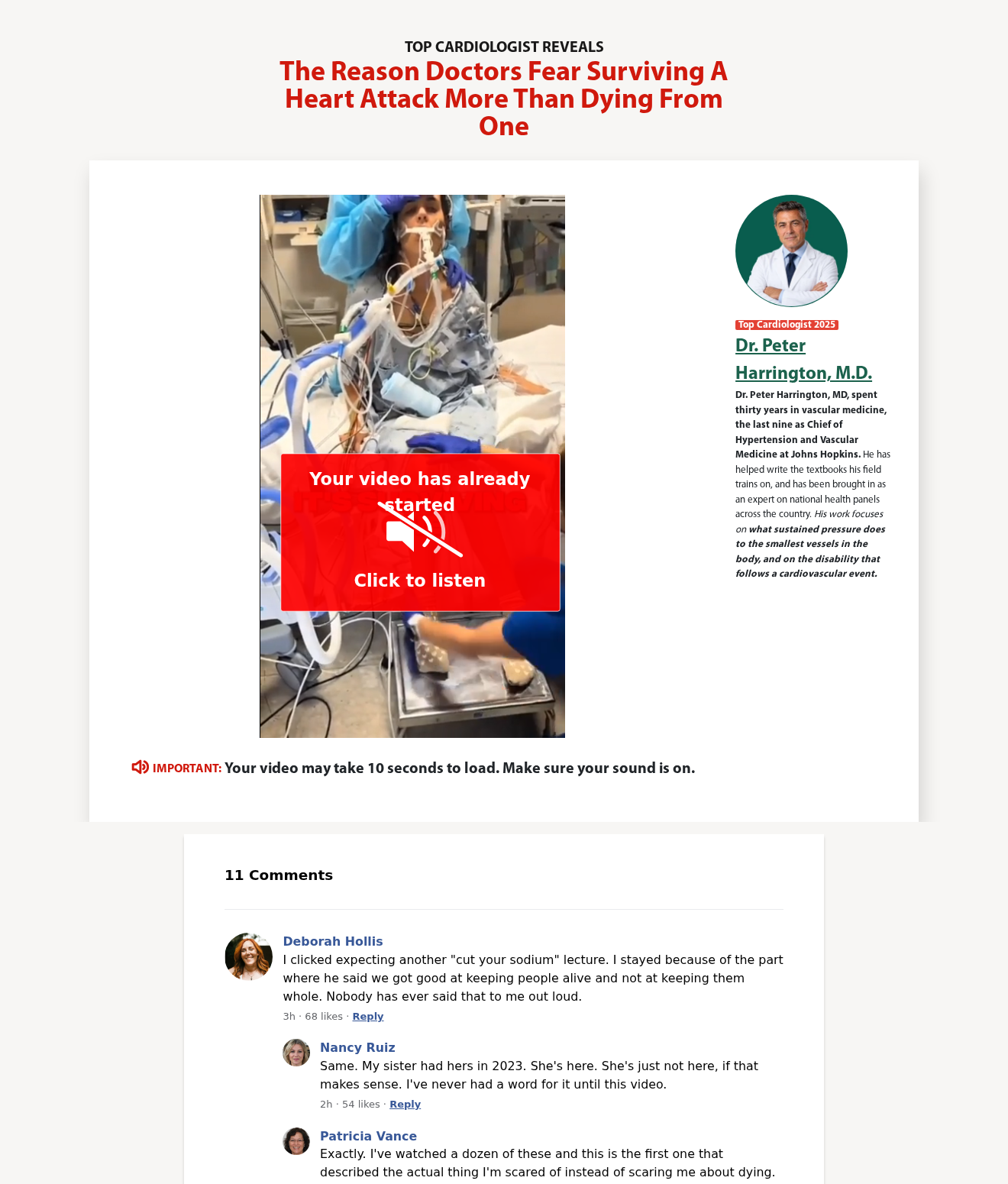
The advertised doctor is presented as a Johns Hopkins authority
The Vital Flush presentation identifies Dr. Peter Harrington as a physician with 30 years in vascular medicine and nine years in a senior Johns Hopkins role.
It names the position as Chief of Hypertension and Vascular Medicine. It also credits him with contributing to textbooks and serving on national health panels.
These are substantial professional claims. A buyer should be able to trace them to an institutional biography, named publications, or documented appointments.
The presentation supplies none of those supporting identifiers. Its assurance comes from its own description of the speaker.
The hospital’s own information does not corroborate that story
Johns Hopkins identifies Oscar Cingolani as the leader of its Resistant Hypertension Center. An institutional article from 2017 also describes him heading that center.
These records do not establish every past appointment or resolve every possible department title. They do not authenticate the Harrington career claimed in the advertisement.
There are genuine doctors called Peter Harrington. A matching name elsewhere is not evidence that the promotional speaker has the advertised hospital career.
The practical concern is an unsupported medical authority selling a remedy
The pitch connects a natural kitchen routine with fear of heart attacks, strokes, and the disabilities that may follow them. Vital Flush drops are the associated offer.
Before trusting it, separate three questions:
- Can the advertised clinician and hospital role be independently matched?
- Has the actual remedy demonstrated the promised medical outcome?
- Are its ingredients suitable alongside your existing care?
The presentation does not answer those questions adequately. Do not change blood-pressure treatment or buy the remedy because of this unsupported biography.
Who Is Dr. Peter Harrington in This Advertisement?
In this context, the name describes a promotional identity attached to a supplement presentation. It should not be confused with every clinician sharing that name.
For example, The Palms Surgery publicly lists a Dr. Peter Harrington as a general practitioner with interests including dermatology and cryotherapy.
That practice listing does not connect its doctor to the Vital Flush speaker or the advertised Johns Hopkins position.
This is an important distinction when investigating online medical endorsements. Finding a real doctor through a name search can create a false sense of verification.
Identity verification requires the rest of the details to match: institution, specialty, photograph, qualifications, work history, and the particular endorsement.
A published biography controlled by the advertiser cannot independently verify another statement from the same advertiser.
Likewise, repeating a claim on a social page would not make it hospital-confirmed. The useful question is who can substantiate the appointment outside the sales operation.
The award-style wording on the presentation raises a similar issue. It says Top Cardiologist 2025 without identifying the organization that made the award.
Without an issuer and criteria, that badge cannot tell you whether a medical society, hospital, publication, or simply the page designer supplied the distinction.
What the Johns Hopkins Records Actually Say
The official Resistant Hypertension Center page describes a multidisciplinary service led by Oscar Cingolani, working with specialists from general internal medicine.
Its care includes investigating underlying conditions, considering lifestyle changes, and adjusting medication appropriately. That is very different from selecting a remedy through a sales presentation.
Different departments can use different titles. The advertiser should identify the exact unit and appointment behind its claim, rather than leaving shoppers to guess.
What it shows is that the advertisement has not provided a reliable bridge between its claimed expert and the institution it invokes.
For the reader, that is enough to stop treating the presentation as hospital advice. The burden of substantiating a prestigious credential belongs to the advertiser.
You should not need to unravel an entire medical employment history before deciding against an inadequately supported supplement pitch.
How the Peter Harrington Recipe Pitch Works
Step 1: The presentation reframes survival as the frightening outcome
The headline focuses on why doctors supposedly fear surviving a heart attack more than dying from one. It is designed to be difficult to ignore.
Instead of beginning with ingredient amounts or a clinical question, it asks viewers to imagine losing independence after a cardiovascular event.
That worry can be especially powerful for someone who has seen a relative struggle after a stroke or already feels anxious about their own readings.
The concern itself is real. The leap from that concern to an advertised kitchen routine is the part that needs evidence.
Step 2: An impressive career makes the explanation sound settled
Thirty years of practice, a hospital leadership post, textbooks, and national panels are stacked together before the remedy has been properly evaluated.
The effect is to make disagreement feel like questioning an accomplished specialist rather than assessing an advertisement.
But professional authority is useful only when the professional identity can be checked. An unnamed textbook cannot be reviewed, and an unspecified panel cannot confirm an appointment.
A real institution’s reputation should not be transferred to a sales page simply because its name appears in the speaker’s introduction.
Step 3: A simple preparation promises control over a complex worry
The associated recipe story suggests that a natural preparation at home can offer an easier route to managing blood-pressure concerns.
That makes the next few minutes seem worthwhile. Watching feels like learning a practical habit rather than considering a commercial purchase.
It also changes the comparison. Instead of asking how a finished formula performed in patients, the viewer may start comparing kitchen ingredients with disliked medication routines.
Those are not interchangeable choices. A routine can feel easy and still have no demonstrated ability to deliver the medical outcome being suggested.
Step 4: Comments answer the worries a cautious viewer would have
The page includes a familiar question: can this be taken alongside prescriptions? A reassuring reply suggests it was designed not to interfere with pressure medication.
Other comments describe favorable readings and relief at finally hearing someone explain their fears. They make the presentation feel understood and socially accepted.
That conversation is hosted by the advertiser. There is no independent method on the page for verifying the commenters, their treatments, or the cause of any improvement.
More importantly, a comment cannot clear an ingredient for a particular patient. The answer depends on the formulation, medication, dose, and individual medical situation.
Step 5: The story leads to a bottle rather than a personal assessment
The presentation belongs to the Vital Flush sales journey. The shop describes aged garlic and honey drops and encourages buyers to choose a package.
That context should change how you interpret the speaker. The page is part of an offer, not a consultation that has assessed your health.
No one in the presentation has reviewed your readings, kidney function, current medication, or reasons for persistent hypertension.
Do not supply that missing assessment yourself by assuming a prestigious biography makes the recommendation suitable for everyone.
Why the Remedy Cannot Be Judged by the Story Alone
Ingredient research does not verify the advertised protocol
The Vital Flush science page discusses research on aged garlic extract. It also acknowledges that the studies did not test the finished Vital Flush formula.
Research can be relevant background without validating the advertised speaker, a kitchen recipe, or a promise of avoiding disability.
The NIH garlic guidance describes limited evidence of a small blood-pressure reduction in some people. That is not proof of comprehensive arterial restoration.
A meaningful product comparison would need the actual preparation and amount, along with trials measuring the claimed benefit.
Medication compatibility is not decided by whether an ingredient is natural
Garlic supplements can increase bleeding risk, particularly when combined with anticoagulant medicines. The seller’s own ingredient page advises medical discussion before use with medication.
A comforting comment about noninterference should not override that caution. Nor should a kitchen setting make a concentrated supplement seem equivalent to an ordinary meal.
If you are considering any new supplement, show the pharmacist its full label. Describing it only as a natural recipe leaves out information needed for a useful check.
A single reading cannot demonstrate that arteries have been repaired
Home readings vary for several reasons, including timing, positioning, recent activity, and whether medication was taken as prescribed.
A number that improves after beginning a supplement does not identify the cause of the change. It certainly does not establish every outcome suggested by the advertisement.
Follow the monitoring instructions supplied by your clinician. Take the record to an appointment instead of adjusting treatment around the most encouraging result.
How to Check a Medical Endorsement Without Getting Pulled Back In
Start outside the sales funnel. Visit the claimed hospital’s official website directly and look for the exact doctor, position, and relevant announcement.
If a profile exists, compare its specialty and career with the advertisement. A shared name is only a starting point.
Look for named studies rather than phrases such as peer-reviewed science. A study should identify what was tested, in whom, and against what comparison.
Keep the institutional endorsement separate from ingredient research. A legitimate paper about garlic does not mean its authors recommend this bottle.
A named textbook chapter or hospital announcement would let someone check a specific credential. Broad phrases about decades of service give the reader no equivalent starting point.
You can also take the claim to your established healthcare team. Ask whether it changes anything in your current care, rather than asking whether miracles are possible.
If the advertiser cannot make the identity and evidence easy to check, you can leave. You do not owe a long sales presentation more of your time.
What to Do If You Responded to the Peter Harrington Offer
- Keep your current care plan in place.
Do not skip tablets, reduce doses, or replace monitoring with the advertised routine. Contact the prescriber if the presentation has made you doubt your treatment.
If you already changed medication, explain exactly what changed and when. The clinician needs that information to help, not a polished account of what happened.
- Save the claimed professional connection.
Retain the speaker’s name, the Johns Hopkins wording, the award badge, and the link where the presentation appeared.
If the hospital affiliation influenced a purchase, explain that specifically in a refund request. It is a clearer complaint than simply saying the video felt misleading.
- Identify what you actually ordered.
Check the receipt for the product name, quantity, merchant, total, and payment processor. The doctor’s name may not appear on the charge.
Use those records to contact the seller. A practice belonging to an unrelated Peter Harrington is not the correct destination for a supplement refund.
- Request cancellation or the written return process promptly.
State whether the order has shipped and whether anything has been opened. Ask for all conditions and keep the reply.
Do not wait for a promised medical change while a refund window passes. An efficacy question and an order deadline are different problems.
- Have the ingredients checked if you took the remedy.
Show a healthcare professional the bottle and complete medication list. Mention any new symptoms and when you started taking it.
Keep the lot and expiry information. A product name from an advertisement is not enough to identify the contents of a delivered supplement.
- Escalate an unresolved payment issue with specific records.
Contact the card issuer or payment service using details from your account. Supply the order confirmation, refund request, and advertised credential claim.
Ask about the dispute options for your transaction. Be accurate about what you authorized and what was misrepresented, and follow the provider’s deadlines.
Frequently Asked Questions
Is the promoted Dr. Peter Harrington verified as a Johns Hopkins chief?
No matching institutional biography substantiating that advertised role was established. The hospital’s own hypertension-center information identifies a different leader and does not authenticate this pitch.
Does that mean every doctor with this name is fake?
No. Genuine clinicians share the name. This investigation concerns the particular biography and remedy presentation, not unrelated professionals or their patients.
Is the speaker definitely AI-generated?
The speaker’s identity and affiliation are not authenticated. A forensic conclusion about how the footage was created is unnecessary to reject unsupported medical authority.
Does Johns Hopkins sell the advertised kitchen recipe?
The presentation does not establish an official hospital-developed or hospital-endorsed recipe. A hospital name written into a biography is not an institutional recommendation.
Can garlic replace prescribed blood-pressure medicine?
Do not make that substitution based on this promotion. Ingredient research does not establish a replacement treatment or account for your medical history and medications.
Should I contact the doctor named in a separate practice listing?
Not for a supplement-order dispute unless the order records genuinely identify that practice. Follow the merchant and payment information on your receipt instead.
The Bottom Line
Do not follow the Peter Harrington blood-pressure recipe offer on the strength of its hospital biography. The advertised expertise has not been substantiated.
If you already acted, protect your treatment first. Then preserve the credential claim, identify the actual seller, and pursue cancellation or a payment dispute promptly.

Join the discussion
0 commentsShare your experience or ask a question about this article.
Discussion
Start the conversation
Have a question or something useful to share? Add the first comment.