


You find a hard-to-locate item at a surprisingly reasonable price. The shop’s name looks familiar, and the product page seems ready for an ordinary checkout.
With pages using names such as Vinni Shopping, the important detail may be somewhere less noticeable: the website address behind that reassuring storefront.
Overview
The real Vinnies charity is not the scam operator
The Vinni Shopping scam concerns deceptive storefronts and pages borrowing the identity of Vinnies, the St Vincent de Paul Society. The genuine charity operates legitimate shopping channels.
Its official scam warning describes fake pages, unauthorized links, and false financial-support claims using the Society’s identity.
That warning should not be turned into an accusation against every business with a similar name. The specific website and its claimed affiliation need checking.
A shop can copy a recognizable name without being part of the organization. Recognizing the branding does not tell you who will receive the order or payment details.
A reported card incident makes the risk more than a late-delivery question
A BBB Scam Tracker report names Vinni Shopping and olive.instantoffers[.]shop. The complainant described an unexpected Apple Pay enrollment alert after attempting a purchase.
The same person reported a fraudulent charge and a $185 loss. This is a consumer account, not an independently reconstructed bank investigation or proof about every similar site.
Still, an unexpected wallet alert should not be treated as an ordinary shipping delay. The cardholder needs to contact the issuer promptly.
Use the charity’s own directory to establish the connection
- Start from the Society’s official website, not the advertisement.
- Compare the exact shop address with its authorized online channels.
- Check who is taking the payment before entering card information.
- Never supply a banking password, card PIN, or unrelated security code.
- Ask the card issuer about unexpected payments or wallet enrollment.
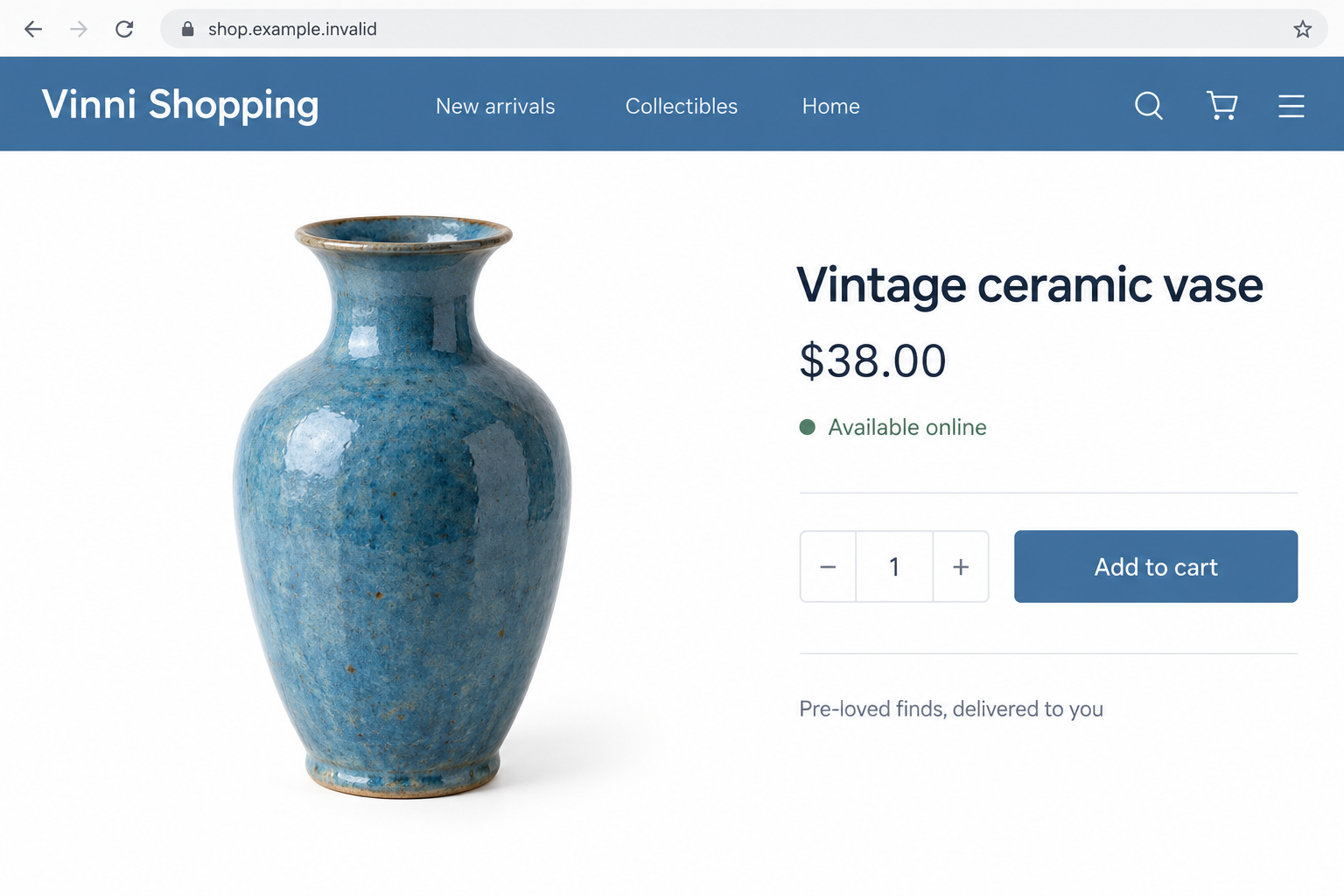
The pictured storefront is a generated, nonfunctional illustration with an invented product and price. It is not a capture of the reported domain or its actual checkout.
How a Familiar Charity Name Changes the Shopping Decision
A charity shop suggests donated goods, modest prices, and an organization people already know. That association can make an unusual listing feel plausible.
An item that seems too obscure for a large retailer might not seem unusual in a secondhand store. The name supplies an explanation before you investigate.
The risk increases when you are searching for something specific. Finding the exact model, collectible, or discontinued item can become more exciting than checking the seller.
A professional product page does not solve that problem. Storefront software can produce search, cart, checkout, policy, and review sections without establishing a genuine charity connection.
The useful question is not whether the page looks capable of taking an order. It is whether the real organization recognizes that address as one of its shops.
Keep that question separate from price. A reasonable discount cannot authenticate a seller, just as a high price cannot establish honest ownership.
How the Vinni Shopping Scam Works
Step 1: A listing puts the borrowed name in front of you
The shopper encounters a product listing, search result, advertisement, or shared link. The visible store name suggests a connection with Vinnies.
The route matters because it can hide the organization behind the destination. A product image or shortened preview may be easier to notice than the actual address.
A search engine displaying a listing is not confirming that the charity authorized it. An advertisement is paid placement, not a certificate of ownership.
Before continuing, identify the site you are entering. Do not substitute a familiar word in the page header for the complete domain.
Step 2: The storefront turns recognition into apparent legitimacy
Shopping categories, product photos, quantity selectors, and an order button make the page feel operational. You can browse before encountering anything obviously unusual.
That ordinary experience is part of the danger. Fraud does not need a bizarre design when a copied identity already supplies a reason to trust the page.
Terms and privacy links also need context. Their presence shows that pages exist, not that the named business actually controls the store.
For a claimed charity shop, the independent connection matters more than a polished About page. Follow the charity’s own directory rather than a reassuring link supplied by the suspect site.
Step 3: Checkout exposes information to an unverified recipient
An order form can request a name, delivery address, email, telephone number, and payment details. Those are valuable even if no parcel is ever dispatched.
Some information is normal for a legitimate purchase. The danger is submitting it before establishing who operates the page and where the payment is going.
A full card PIN or internet-banking login is not ordinary information to give a shopping website. Stop if a form asks for those details.
Compare any request with the purchase you intended to make. An order for a household item does not explain a request for access to another account.
Step 4: A security prompt can be mistaken for an order requirement
A legitimate payment can involve bank authentication. The wording of the bank’s own prompt tells you what action you are actually approving.
If it says a card is being added to a digital wallet, that is different from paying for the item in your cart.
The BBB complainant described receiving a wallet-enrollment alert. Their account does not establish exactly which prompts appeared or what information was entered before that alert.
An alert about your own card is enough reason to call the issuer. Ask which wallet was added and whether that enrollment was authorized.
Step 5: Confirmation messages can distract from the financial issue
A receipt or order number can make a shopper wait for delivery. But a confirmation generated by the same website does not independently verify the seller.
Compare it with the transaction shown by your payment provider. Record the amount, currency, merchant description, and any charge you did not recognize.
If the bank sends a security alert, deal with it before continuing a shipping conversation. Waiting for a seller to explain it can delay protective action.
There is no verified common delivery or refund policy for every page using these names. Follow the evidence for your transaction, not assumptions about another website.
Step 6: The buyer must untangle shopping, card, and identity exposure
A missing item, an unauthorized payment, and an unknown wallet enrollment are related concerns, but they are not the same complaint.
A seller discussion might address delivery. Your card issuer handles card exposure and disputed transactions. The real charity can clarify whether a shop is affiliated.
Giving each organization the correct question saves time. Do not wait for an impersonating storefront to authorize a conversation with your own bank.
Who Is Behind These Vinni Shopping Pages?
The charity’s name does not identify the checkout operator
The real St Vincent de Paul Society provides its own contact information and online-store directory. A copied name is not evidence of a contractual relationship.
For the suspicious transaction, keep the actual domain and receipt. Those details are more useful than the store’s display name when identifying the recipient of a payment.
A contact address or telephone number needs separate verification
An address printed on a page can be copied or unrelated. A telephone number appearing in a complaint also does not establish who legally controls the site.
No verified operator or return depot has been established here for every similarly branded storefront. Do not send goods to an address merely because another customer posted it.
Official charity support cannot be replaced by the store’s chat
To ask whether a shop belongs to Vinnies, contact the Society through its genuine website. The person taking your payment cannot independently certify their own affiliation.
If you already paid, save any reply from the storefront. Treat its delivery or refund promises as statements to document, not reasons to ignore your issuer’s advice.
Shipment promises need their own evidence
If the store supplies tracking, check it on the named carrier’s genuine website. Compare the shipment information with your order rather than relying on a store-branded progress page.
A confirmation email cannot settle whether an item was dispatched. If you seek a refund, retain the promised delivery terms and any changes the seller sends.
How to Find the Genuine Vinnies Shopping Channels
Open the Society’s official online-platform directory. It lists Vinnies Online, Vinnies Finds, and authorized regional shopping routes.
Multiple legitimate channels exist, including regional eBay stores and Tasmanian arrangements. Do not rely on an oversimplified warning that there is only one possible official shop.
Follow the relevant link from that directory and compare the address after it opens. If you were shopping elsewhere, do not assume matching page colors establish a connection.
When searching for a specific item, return to the verified shop’s search function. A product offered on an unrelated page is not necessarily available through the charity.
The official charity warning also covers fake financial assistance. A genuine need for support should not lead you into a shopping page requesting banking or government-account credentials.
Verification does not require placing a test order. You can establish the official route before supplying payment details or spending money.
What to Do if You Have Fallen Victim to This Scam
-
Contact the cardholder and issuer without waiting for delivery.
If you used someone else’s card with permission, tell that person promptly. They need to speak with the issuer about any unfamiliar charge or enrollment alert.
Use the bank’s app or the number printed on the card. Do not call a refund or fraud number supplied by the suspect storefront.
-
Ask specifically about unfamiliar digital wallets.
Mention any notice that the card was added to Apple Pay or another wallet without your approval. Ask the issuer to review and disable unauthorized wallet access.
CommBank’s wallet-scam guidance explains this form of card misuse. Available controls differ by issuer, so follow your own provider’s instructions.
Ask whether card replacement or other restrictions are needed. Do not assume a general freeze alone resolves every kind of access.
-
Describe each disputed transaction accurately.
Distinguish the purchase you intended to make from later charges you did not authorize. If an item never arrived, document that separately.
Ask about the relevant dispute route, evidence requirements, and deadlines. Do not promise the bank a particular fraud outcome or alter the facts to fit a claim.
-
Preserve the store’s identity before pages disappear.
Save the complete web address, product listing, order confirmation, receipt, emails, and any support conversation. Record the merchant description shown by your financial provider.
A screenshot of the logo alone is not enough. The domain and transaction details help distinguish your case from unrelated shops with similar names.
-
Secure information you actually exposed.
If you reused a password on the storefront, replace it on other accounts using it. Prioritize the email account that controls password resets.
Tell your bank if you entered a PIN, banking password, or security code. Describe exactly what the prompt said instead of assuming it only confirmed an order.
-
Keep refund communications free of additional payments.
A request for another transfer, fresh card verification, or a fee before reimbursement deserves independent checking. Do not supply a second card to repair the first transaction.
If a refund is promised, ask your provider how to verify that it reached the account. A message saying refund approved is not the same as credited money.
-
Report the impersonating page through the appropriate channels.
The Society’s official warning provides a way to report misuse of its identity. Include the exact URL and a screenshot with personal information removed.
For an Australian incident, use Scamwatch’s response guidance. Elsewhere, report through the applicable consumer or fraud-reporting service.
-
Watch for follow-up messages that reuse the order details.
An unexpected delivery or refund message may mention the same item, address, or amount. Familiar details can come from the information you already entered.
Verify those claims through your issuer or a carrier you reach independently. Ignore anyone promising guaranteed recovery after you pay an investigation or release charge.
Frequently Asked Questions
Is the real Vinnies charity fraudulent?
No. The warning concerns impersonating pages and unauthorized sites. The St Vincent de Paul Society operates legitimate shops and publishes its official online channels.
Does every website called Vinni Shopping belong to one operator?
That has not been established. Investigate the actual address, affiliation claim, and payment details rather than assuming similar names prove common ownership.
Is olive.instantoffers.shop an official Vinnies store?
It is the address named in the attributed BBB complaint, not an official shopping route identified here. Use the charity’s directory instead of that reported storefront.
Does the $185 report prove every shopper’s card was added to Apple Pay?
No. It describes one person’s reported experience. Your issuer must investigate your own alerts, card permissions, and transactions.
Can I trust a page because it has a padlock?
No. An encrypted connection does not verify a charity affiliation. Check the destination and the organization’s authorized-store directory before entering payment information.
What should I do if I paid but have no suspicious bank alert?
Keep the order evidence, verify the seller’s affiliation, and ask your payment provider about protection options. A quiet account does not independently authenticate the shop.
The Bottom Line
Do not order from a Vinni-branded page merely because it resembles the real charity. Reach Vinnies shopping channels through the Society’s official directory.
If you already entered payment details, contact the card issuer and discuss both the purchase and any unexpected wallet enrollment. Protect the account before waiting for a parcel.

Join the discussion
0 commentsShare your experience or ask a question about this article.
Discussion
Start the conversation
Have a question or something useful to share? Add the first comment.