


You find a Sugar Reset page, look through its supplement pitch, and follow the link it calls the official website. So far, everything feels straightforward.
But a purchase involves more than the first product name you remember. The bottle waiting at the next stage deserves a second look.
Overview
The Sugar Reset page sends buyers elsewhere
The Facebook page at trysugarreset promotes a supplement for blood-sugar and metabolic support. Its purchase link points to bestfitmart.com/sugar-reset-buy/.
That link redirects to a Sugar Defender order page. Its heading, bottles, ingredient presentation, and package names identify Sugar Defender rather than Sugar Reset.
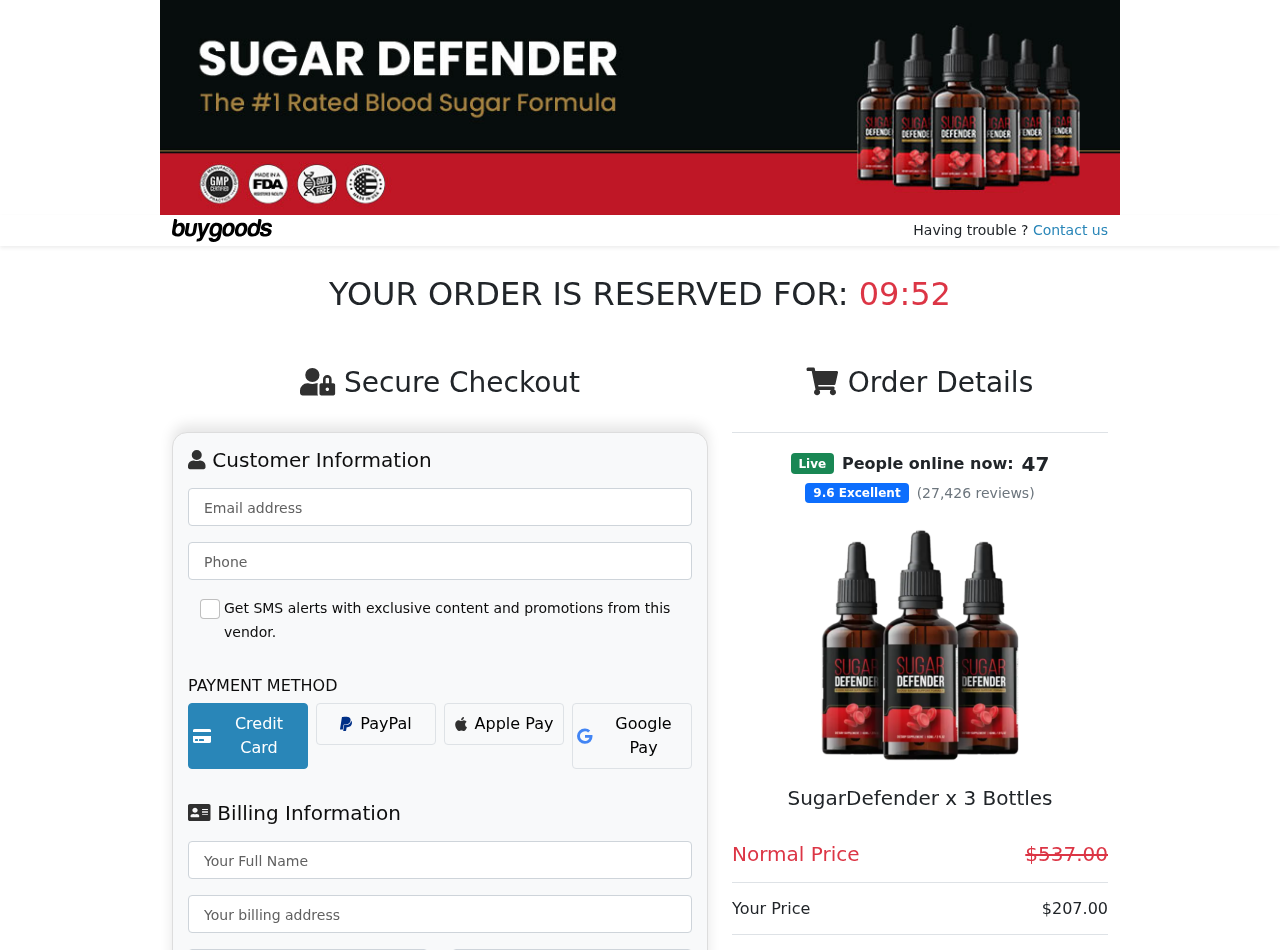
The distinction continues into the selected BuyGoods order. A three-bottle option is displayed as SugarDefender, with a $207 product price.
The change is material, not just a new payment address
A payment provider can legitimately have a different name from a supplement. Here, however, the product itself changes before payment.
The pages don’t clearly explain whether Sugar Reset is an earlier name, an affiliate label, a different formula, or an unrelated promotion.
- The Facebook pitch names Sugar Reset.
- The advertised ordering address also uses Sugar Reset.
- The destination and purchase item instead name Sugar Defender.
- The destination’s policies govern another named offer, not a clearly identified Sugar Reset order.
The current warning concerns substitution and unclear consent
This route doesn’t establish that the two products are identical. It also doesn’t establish a secret refill plan or prove what any delivered bottle contains.
The destination describes one-time payment. The practical concern is whether a buyer understands the different product, price, and return conditions being accepted.
Don’t buy through this unexplained brand switch. A supplement order should begin with a clear identity, not a guess about what the seller intended.
Why Sugar Reset and Sugar Defender Cannot Be Assumed Equivalent
Similar promises don’t identify the same formula
Blood-sugar products often use overlapping language: natural ingredients, metabolic support, daily energy, and a convenient dropper. Those descriptions can fit many different formulas.
They don’t establish matching ingredients, quantities, extraction methods, allergens, or manufacturing controls. A similar bottle shape doesn’t establish equivalence either.
The Sugar Defender destination highlights eight ingredients, including guarana, gymnema, ginseng, and chromium. That information belongs to the product on that page.
It shouldn’t be presented as a verified Sugar Reset label merely because an advertising link sends visitors there.
A review can become irrelevant halfway through a sales route
Suppose you spent time checking Sugar Reset reviews before clicking. Even a genuine review could concern a different bottle from the one being ordered.
The same applies to a favorable return experience, serving recommendation, or ingredient warning. Those details must match the actual merchant and item.
This is why the final checkout is worth reading from the beginning. Don’t let familiarity with the first brand replace checking the second.
The receipt is the starting point after payment
If you already ordered, the confirmation provides a firmer reference than a remembered Facebook title. Look for the product, package code, quantity, retailer, and total.
That doesn’t mean the earlier promotion stops mattering. Keep it alongside the receipt to explain why the order may not match what you expected.
How the Sugar Reset Ordering Route Works
Step 1: The social page introduces a blood-sugar supplement
The trysugarreset Facebook page uses Sugar Reset branding and describes nutritional support for adults interested in blood-sugar control.
It labels a bestfitmart.com purchase link as the official website. For a shopper, that can suggest a direct route to the named product.
But a page’s own official label isn’t independent authentication. The actual item and responsible seller still need to be established further along.
Step 2: A Sugar Reset address redirects to Sugar Defender
The ordering address retains the Sugar Reset wording, while the loaded destination appears on sugardefender24.com with Sugar Defender bottles.
The referral information also preserves the SugarReset text. That connects the observed promotion to this destination, without proving common ownership of the brands.
Tracking links aren’t inherently deceptive. The problem is asking the shopper to proceed without explaining the change in what is being sold.
Step 3: Package prices become the focus
The destination offers two bottles for $158, three for $207, or six for $294. The largest package emphasizes $49 per bottle.
Those figures can draw attention away from the name change. A shopper may start comparing savings instead of asking why Sugar Reset has disappeared.
Stop before choosing quantity. Establish the product first, then evaluate its formula, seller, price, and policies as a fresh purchase decision.
Step 4: The retailer confirms Sugar Defender as the item
The three-bottle link opens a BuyGoods checkout whose order details identify SugarDefender. It isn’t simply a Sugar Reset purchase processed under a retailer’s name.
The displayed product amount is $207. The complete payable total depends on the loaded shipping and tax information for the selected destination.
No card, address, or contact information was supplied during this check. No test purchase was made, and nothing was learned about actual fulfillment from payment.
Step 5: The destination supplies the return conditions
The order page advertises a 60-day guarantee. Its linked return policy excludes sale items even though the packages are presented as discounted offers.
Its refund instructions also need reconciling with a shipping page that requires returned bottles to arrive within 60 days of the original purchase.
Someone buying because of a Sugar Reset promise should not assume that promise automatically binds this different product’s seller or retailer.
Before proceeding, the seller needs to explain both the substitution and which guarantee covers the exact package. Without that explanation, walk away.
What the Health Pitch Leaves Unanswered
Matching ingredients matters before evaluating benefits
Online searches produce multiple pages using variations of the Sugar Reset name. Their ingredient descriptions should not be combined into one imaginary product.
For this route, the immediate missing connection is between the advertised Sugar Reset and the Sugar Defender item actually offered.
A readable current label would help establish serving size, ingredient amounts, cautions, and the distributor responsible for the specific bottle.
Until those details are connected, a discussion of how Sugar Reset supposedly works can distract from the more basic question of what you’re purchasing.
A condition involving glucose isn’t a good place for guesses
People managing diabetes may already be balancing meals, medication, testing, and appointments. A simple daily supplement can sound like welcome relief.
That appeal doesn’t make the advertised outcome reliable. Ingredient descriptions and customer stories cannot establish that this changing offer safely manages an individual’s condition.
NCCIH advises against replacing diabetes treatment with unproven products. Take the actual received label to your healthcare professional instead of relying on the promotion.
Reviews and quality badges need a matching product
A quality claim about Sugar Reset doesn’t automatically apply to Sugar Defender. The same goes for customer counts, testimonials, and statements about manufacturing facilities.
Useful supporting documentation should identify the product and, where relevant, its lot. A general certificate with no clear connection to the purchase cannot settle that issue.
No product-quality test or support-response test was conducted here. The warning is based on the observable purchase route and the conditions it presents.
The Promoter, Retailer, and Return Destination
The Facebook identity doesn’t explain the brand switch
The Facebook page publishes Sugar Reset branding and a promotional link. It doesn’t provide a clear explanation of why the destination sells another named supplement.
It lists the same support email and number as the Maxentra and Sugar Defender Facebook pages. That doesn’t identify the manufacturer of all three products.
A useful seller answer would name the contracting business and explain its relationship to both product names, rather than repeat that the site is official.
BuyGoods is the retailer named at checkout
The payment page identifies BuyGoods and directs customers to its order-support route. That provides a practical place to locate the actual transaction.
It doesn’t make BuyGoods an independent medical reviewer of the promotion. The Sugar Defender page expressly separates retailing from endorsement of its claims.
For an existing order, use the retailer information on the confirmation rather than sending payment details to a page claiming it can look everything up.
The destination lists an Aurora return address
Sugar Defender’s policy gives a return destination in Aurora, Colorado, and requires authorization. That address is not a verified Sugar Reset manufacturing site.
Obtain the full current instructions before posting a parcel. Keep all bottles, since the shipping policy requires the complete order for its stated full-refund procedure.
The customer is expected to cover return shipping. That expense is another reason not to treat a guarantee as a cost-free substitute for clear ordering information.
Support needs to resolve the exact transaction
The destination publishes +1-866-994-8188. Its listed contact information was read, but no call was placed and no response was tested.
Ask support to identify the purchased item and explain why the original promotion used Sugar Reset. Request the answer in writing.
If different teams give different instructions, send the retailer a concise timeline with the receipt and saved offer. Keep the issue tied to your order.
A Clear Product-Switch Complaint Gets to the Point
Start with the sequence rather than an accusation: the page named Sugar Reset, its order link opened Sugar Defender, and the receipt identified the purchased item.
Then explain what you want: cancellation before shipping, return of an unintended product, or clarification of an order you haven’t yet approved.
Keep the message short enough for support to follow, but include the reference number privately. Attach the captures that connect the two names.
This approach avoids debating unrelated supplements or social-media rumors. It gives the seller and payment provider a specific mismatch to address.
What to Do If You Ordered Through Sugar Reset
-
Identify the supplement you actually bought. Open the confirmation and compare its item name with the Facebook promotion you followed.
Record any difference in product, number of bottles, or charged amount. Don’t assume similar branding means an equivalent formula.
-
Preserve the path between the names. Save the Sugar Reset page, its ordering address, and the Sugar Defender destination.
A few clear captures can explain the issue more effectively than a long complaint describing only that the offer felt suspicious.
-
Ask to stop an unintended order immediately. Tell support you followed a Sugar Reset promotion but the confirmation identifies a different item.
Request written cancellation before processing or dispatch. If cancellation is no longer possible, ask for the applicable return procedure.
-
Resolve guarantee eligibility before returning anything. Provide the discounted offer and ask whether the sale-item exclusion applies to your package.
Ask for the return authorization, amount due back, complete destination, and arrival deadline. Keep the earliest stated deadline in mind while waiting.
-
Keep the bottles and documents together. Retain the outer packaging, packing slip, labels, and any promotional material that arrived.
For a return, use a service with tracking and photograph the package contents. Preserve delivery confirmation until the money has reached your account.
-
Use the retailer’s support channel for unresolved issues. Locate the order through the details in your BuyGoods receipt.
Explain whether you want an unwanted product canceled, a missing parcel traced, or an agreed refund completed. Attach the relevant records.
-
Separate a product dispute from an unauthorized payment. If you approved the purchase but received misleading information, describe that accurately to your payment provider.
If another debit was never authorized, explain that separately and request help. A changed product name alone doesn’t establish every later billing allegation.
-
Pause before using an unexpected supplement. Compare its full label with what you intended to take and discuss it with a pharmacist or clinician.
Don’t change prescribed diabetes care because either product’s advertising suggests an easier solution. A refund discussion is not medical advice.
Frequently Asked Questions
Does the Sugar Reset link sell Sugar Defender?
Yes. That particular ordering route currently leads to a Sugar Defender package page, and the selected retailer order also identifies SugarDefender.
Are Sugar Reset and Sugar Defender the same supplement?
The inspected route doesn’t establish that. An unexplained redirect is not enough to confirm identical ingredients, dosing, manufacturers, or responsible sellers.
Is the three-bottle package a $69 purchase?
No. $69 is its per-bottle figure. Three bottles cost $207 for the product, with the final order also subject to the displayed shipping and tax information.
Was an automatic Sugar Reset refill verified?
No such agreement was established through this route. The Sugar Defender destination describes a single payment, so any unexpected renewal needs its own transaction evidence.
Why is a Sugar Defender checkout shown in this article?
It is the actual purchasing stage reached through the Sugar Reset promotion. Showing it makes the product change visible rather than illustrating an invented checkout.
What should someone do after buying the wrong product?
Contact the seller and retailer promptly, document the mismatch, and request cancellation or authorized return instructions. Escalate an unresolved transaction with those records.
The Bottom Line
Do not purchase through this Sugar Reset link. It delivers a Sugar Defender offer without clearly explaining the product change or how the original promises apply.
If the order is already placed, check the receipt now and request cancellation or a documented return. Preserve both brand names when seeking a resolution.

Join the discussion
0 commentsShare your experience or ask a question about this article.
Discussion
Start the conversation
Have a question or something useful to share? Add the first comment.