

Have you seen those tempting ads promising easy money testing ALDI products and writing reviews? Before you get swept up in visions of effortless earnings from home, STOP. This fairy tale ALDI job opportunity is an elaborate fraud designed to scam you out of your hard-earned cash and steal your personal data.
Don’t become the victim of a nefarious scheme preying on ALDI’s trusted reputation. In this comprehensive guide, I’ll reveal the shocking truth behind fake ALDI Product Reviewer jobs, expose exactly how these online vipers operate, and equip you with the knowledge to avoid becoming just another statistic tricked out of their identity and bank account balance.
By the end, you’ll be able to spot ALDI job scams from a mile away. Let’s dive in and shed light on this increasingly common Internet fraud. You work too hard for your money to let an ALDI-themed get-rich-quick sham steal it away.
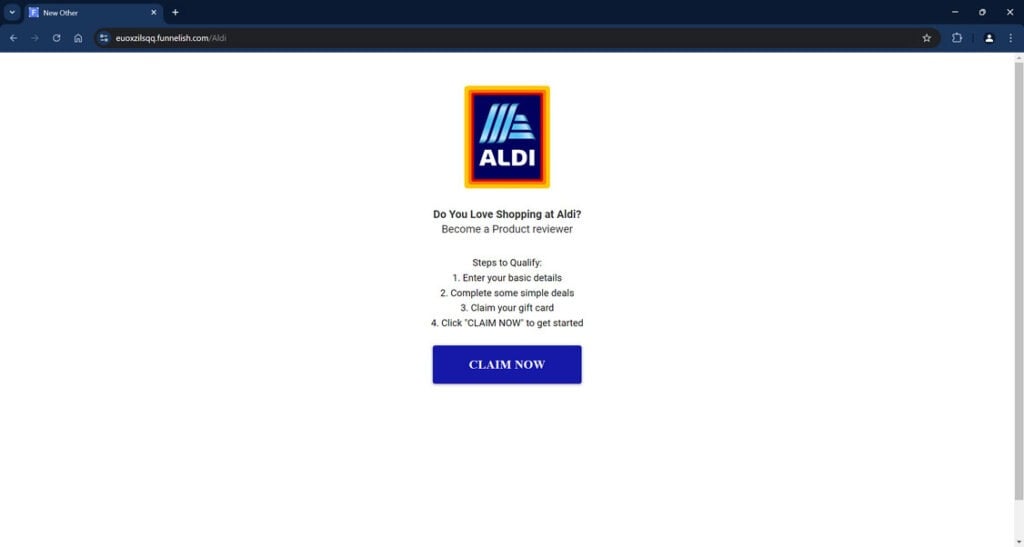
The ALDI Product Reviewer Scam – An Overview
The ALDI Product Reviewer scam operates by directing victims to fake websites using ALDI branding. These scam sites promise easy earnings in the form of gift cards for testing and reviewing ALDI food products.
To apply, victims enter personal details which are captured by scammers. You then get redirected to shady websites and asked to complete offers involving subscriptions, downloads, and purchases.
Despite claims of getting paid to sample ALDI products, no such opportunity exists. Scammers profit from your data and any subscriptions you sign up for, while you receive nothing in return.
Recognizing Fake ALDI Product Reviewer Offers
While scam sites try to appear legitimate with ALDI logos and product photos, there are telltale signs they are fraudulent:
- Domain name does not match ALDI’s official site (aldi.com)
- Poor grammar, spelling, and awkward phrasing
- Unbelievable claims about high earnings for easy tasks
- Stock photos instead of real ALDI employees
- Links to unfamiliar domains rather than aldi.com
- No company registration or business details on the site
Any site offering payments for testing ALDI goods is a scam. ALDI does not hire random online applicants for these made-up roles.
How the ALDI Product Reviewer Scam Works
Though scammers may tweak their domains and sites, the overall scam process follows a familiar sequence:
Step 1: Encountering Scam Ads and Messages
Scam ads appear on Facebook, Instagram, YouTube, TikTok and more, using ALDI logos and gift card imagery. The ads tout an application to become an ALDI product tester and provide a link.
Scammers also spam SMS, WhatsApp, Telegram and other platforms with messages stating ALDI needs home product testers. The message includes a URL to the fraudulent site.
Step 2: Submitting Your Personal Information
After clicking the link, victims land on the convincing fake ALDI site showcasing reviewer jobs. To “apply”, they are prompted to click a button like “Claim Yours Now” or “Get Started” which leads to a registration form.
Applicants must submit personal details including name, email address, phone number, home address and more. Victims hand over this info believing they’re signing up for an ALDI opportunity.
Step 3: Redirecting to Offer Sites
With your details captured, you get redirected from the fake ALDI domain to various survey, offer, and download sites the scammers are paid to send traffic to.
These legitimate sites generate revenue through signups for free trials, paid survey takers, app downloads, purchases and more. Scammers earn commissions promoting these offers.
Step 4: Completing Various Offers
To unlock your promised ALDI rewards, gift cards or cash, victims must first complete a set of “tasks” or offers such as:
- Paid surveys
- Subscription signups with free trials
- Downloading specific mobile apps
- Purchasing products, services, or gift cards
- Watching videos or clicking affiliate links
- Providing more personal data
Scammers and offer sites earn money with each completed task. Victims forget to cancel subscriptions or make purchases in hopes of getting the fictional ALDI payout.
Step 5: Never Receiving Promised Rewards
Despite fully completing offers, you’ll eventually realize no ALDI rewards, gift cards or tester job exists. Any attempt to collect will be met with demands to complete more and more offers.
Ultimately, scammers profit from your data, downloads, purchases and referrals, while victims are left empty-handed.
What to Do if You Fell For the ALDI Product Reviewer Scam
If you submitted information or completed questionable offers tied to a fake ALDI job, take these steps right away:
Cancel Recurring Subscriptions and Trials
Quickly cancel any ongoing subscriptions, trials, or monthly memberships activated during the scam to halt further charges. Check for hidden pre-checked boxes re-enabling billing.
Scan Devices for Malware
Run anti-malware tools to check for viruses, adware, spyware or other threats that may have been installed from downloaded files or apps. Remove any suspicious programs detected.
Monitor Financial Accounts
Watch for fraudulent charges or any misuse of stolen personal info. Sign up for credit monitoring if concerned about identity theft risks.
Change Passwords
Reset passwords on online accounts, especially if you reused the same passwords during the scam process. Enable two-factor login authentication for banking and email.
Contact Banks About Suspicious Activity
Notify your bank if you notice suspicious charges or believe your card details were compromised. Consider requesting a new card number to be safe.
Report the Scam
File reports about fradulent ALDI Product Reviewer offers with the FTC and ActionFraud to help warn others. Include site and offer details.
Frequently Asked Questions about the ALDI Product Reviewer Scam
1. What exactly is the ALDI Product Reviewer scam?
The ALDI Product Reviewer scam is a fraudulent scheme using fake ALDI-branded websites and ads to steal personal information and money. Scammers falsely claim to offer product testing jobs with gift card earnings, but no such roles exist. Victims attempting to “apply” end up paying more in unwanted subscriptions and purchases than any promised rewards.
2. How does the ALDI Product Reviewer scam work?
Scam ads and messages drive traffic to convincing fake ALDI sites advertising home product tester jobs. Victims input personal details thinking they’re applying, allowing scammers to capture their information. Victims get redirected to various offer sites and told to complete subscriptions and purchases to receive “rewards” that never come.
3. What are some telltale signs of a fake ALDI Product Reviewer site?
Non-ALDI domains, grammatical errors, unbelievable earnings claims, stock photos instead of real employees, and links away from aldi.com are red flags. ALDI does not partner with outside websites for product testing roles. Avoid any site asking for registration fees or personal information.
4. What should I do if I was scammed?
Act quickly to cancel any monthly subscriptions activated during the scam. Scan devices for malware if you downloaded anything suspicious. Watch for fraudulent charges and monitor your credit. Change passwords and notify banks about any concerns. Report the scam to help warn others.
5. How can I avoid ALDI Product Reviewer scams?
Don’t click unsolicited links or provide personal information to unfamiliar websites. Research companies before applying for jobs or promotions. Be wary of offers requiring upfront fees or urgent action. Enable two-factor authentication and credit monitoring to protect your accounts and identity.
6. Does ALDI really hire product testers online?
No, ALDI does not hire random people who apply on third party websites for at-home product testing, reviewing, or survey-taking jobs. Any site offering payments related to ALDI goods and services are scams. ALDI does not partner with outside companies for this type of work.
7. Where can I report fake ALDI job scams?
You can report fraudulent ALDI Product Reviewer offers to the FTC and ActionFraud. Provide as many details as possible like scam website names, screenshots of ads, offer instructions, and more so they can warn others not to fall for these scams.
Don’t Become a Victim of the ALDI Product Reviewer Scam
The ALDI Product Reviewer scam preys on job seekers and shoppers who trust the established ALDI brand name. Scammers falsely claim to offer lucrative tester roles, when in reality they just want to steal your money and data.
Remember, ALDI does NOT hire random online applicants for at-home product testing or review writing jobs. Any offer requiring an upfront “registration fee” or asking for personal details like bank account numbers is surely a scam.
Protect yourself by learning the warning signs of employment scams:
- Easy money or guaranteed income promises
- Requests for sensitive information upfront
- Poor grammar and spelling mistakes
- Links to outside websites
- Limited details about the hiring company
- High-pressure tactics urging you to act quickly
If an opportunity seems too good to be true, approach with extreme caution. Search for reviews and complaints about a company before providing personal or financial information. Avoid clicking links or downloading anything from unrecognized sites or senders.
Stay vigilant, and don’t let a trusted brand like ALDI make you a victim. Only apply for roles on the company’s official career site, and verify job offers before providing any private details. Don’t give scammers what they want.

Join the discussion
0 commentsShare your experience or ask a question about this article.
Discussion
Start the conversation
Have a question or something useful to share? Add the first comment.