

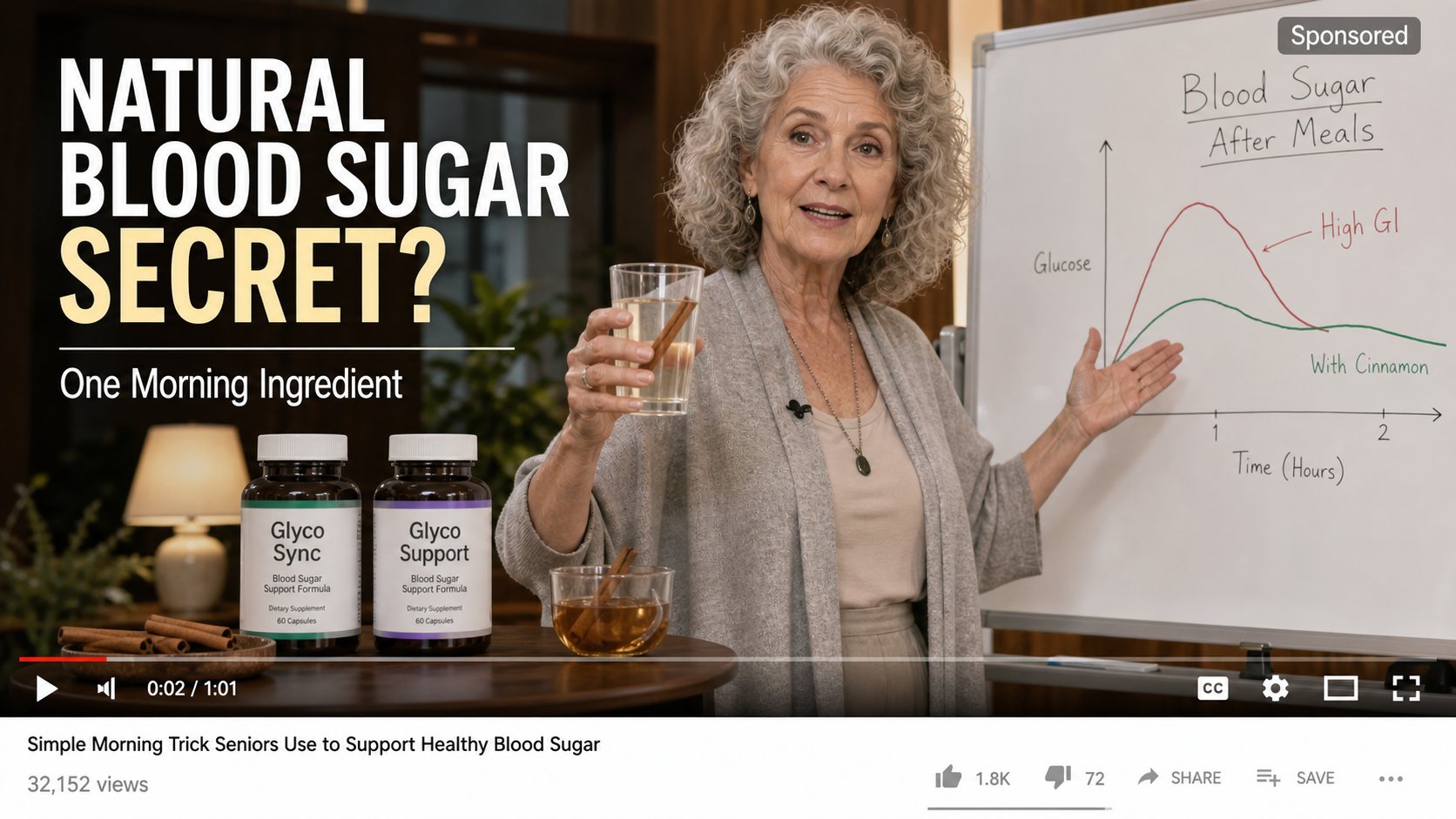
A calm natural-health lecturer stands beside a whiteboard and explains that one kitchen ingredient can flatten blood sugar after meals. The style feels familiar, practical, and far removed from an aggressive supplement commercial.
In the Barbara O’Neill blood sugar secret scam, that reassuring appearance is manufactured. AI and repurposed footage make her seem to recommend a diabetes remedy, then the supposedly homemade answer becomes a rotating bottle offer.
Overview
The natural-health endorsement is not real
Barbara O’Neill has been falsely presented in advertising for Glyco Sync and related blood-sugar claims. The campaign uses her public profile to make an anonymous offer appear like advice from a trusted speaker.
No verified statement connects her to Glyco Sync or to the dramatic reversal promises in the funnel. The safest rule is simple: an endorsement exists only when it can be found on the person’s official property in full context.
The kitchen ingredient is a trust-building device
Cinnamon water, a seed, or another familiar ingredient makes the proposal feel gentle and inexpensive. The viewer is invited to believe the remedy belongs in a kitchen, even though the destination is a proprietary commercial blend.
The script presents natural and medical as opposites. That is a false choice. Natural compounds can affect the body, interact with medicine, vary in dose, and cause harm, while evidence and supervision remain important regardless of origin.
The same speech can sell several labels
Glyco Sync has been one endpoint, but the advertiser can substitute Glyco Support, Glyco Boost, drops, tea, or another formula. Most of the video is about the speaker and the secret, not the bottle.
A story-first investigation remains useful after the label changes. Viewers can recognize the recipe bait, AI voice, fake news bridge, package grid, and unclear merchant even when a new brand appears.
- A sponsored video imitates a familiar natural-health speaker.
- A household ingredient creates a low-risk impression.
- The script claims doctors ignore a simple cause.
- Fake testimonials make the result appear widespread.
- A supplement replaces the promised home instructions.
- The seller can rotate labels and continuity options.
Why Natural Language Can Disarm Healthy Skepticism
Words such as ancient, plant-based, traditional, and chemical-free sound comforting, especially to people who have struggled with side effects or the cost of long-term care. Scam marketers use that emotional contrast deliberately.
A glass of cinnamon water also looks easy to understand. It gives the viewer something concrete to picture while complex claims about insulin, liver function, and pancreatic repair pass without close examination.
The video may suggest that asking for evidence is closed-minded. In reality, evidence protects consumers from both ineffective synthetic products and ineffective natural ones.
A responsible health educator acknowledges uncertainty, individual differences, medication interactions, and the limits of available research. The scam voice promises a dramatic result for nearly everyone because nuance would weaken the sale.
A calm delivery is not proof of honesty. Tone can make a claim easier to hear, but it cannot establish authorship, clinical evidence, or the identity of the merchant waiting behind the order button.
Our Glyco Sync product review addresses the formula. This article isolates the fake natural-health endorsement so it remains useful after a label change.
Natural Does Not Mean Proven or Risk Free
Cinnamon is a food and has been studied in relation to glucose, but study results about an ingredient do not prove a branded supplement reverses diabetes. Form, dose, population, duration, and the finished combination all matter.
People taking insulin, sulfonylureas, or other glucose-lowering medicine can experience dangerous lows if another substance changes glucose unexpectedly. Liver conditions and other medications can also affect whether a supplement is appropriate.
The product funnel does not establish a diagnosis. A person with high readings may have type 1 diabetes, type 2 diabetes, medication-related changes, infection, or another condition requiring individualized care.
Stopping treatment because an AI video promises a natural cure can allow serious complications to progress. The immediate task is not choosing between nature and medicine; it is getting reliable assessment and monitoring.
Testimonials rarely show complete glucose logs, laboratory history, medication changes, diet, or follow-up. Without that context, a smiling customer and one meter display cannot establish what changed, whether the result lasted, or whether the advertised product caused it.
How the Barbara O’Neill Blood Sugar Secret Scam Works
Step 1: A calm lecture clip enters the feed
The sponsored video looks like an educational seminar rather than an ad. A speaker stands by a whiteboard or kitchen table and begins with a familiar problem, such as glucose rising after breakfast.
The ad account may have no history related to the speaker. Its name can sound like a wellness community while hiding who paid for distribution.
Step 2: AI places new words into a familiar style
A cloned voice can imitate pace and tone, while lip-sync editing makes old footage appear to match a new script. Captions cover small visual errors and help the claim work without sound.
Compare the clip with material on the speaker’s official channels. Different audio quality, unnatural mouth shapes, and an endorsement found nowhere else are strong warning signs.
Step 3: A trusted-looking article repeats the claim
The click may open a counterfeit news story or a health advertorial that treats the video as a verified interview. The domain is unrelated to the organization copied in the page design.
Seller-controlled comments add praise from people who claim to have stopped medication. These accounts cannot be treated as medical evidence or verified customer experience.
Step 4: The recipe remains incomplete
The narrator promises exact measurements after a story about toxins, a hidden hormone, or a remote community with perfect health. Each section delays the practical instructions.
This withholding keeps viewers engaged. If the full recipe appeared at the start, people could leave without being exposed to the product pitch.
Step 5: The campaign makes conventional care the enemy
The script says doctors manage symptoms while natural experts address the real cause. It uses real problems in health care to imply that an anonymous supplement seller is automatically honest.
A seller still has to identify itself, disclose risks, prove the finished formula, and explain billing. Distrust of one institution is not evidence for another.
Step 6: A branded formula replaces the pantry item
Glyco Sync or another blood-sugar supplement appears as the concentrated version of the secret. The transition is presented as convenience, even though it changes a free educational promise into a commercial transaction.
The largest package receives the strongest discount language. Buyers should ignore savings claims until they know the full amount, bottle count, shipping charge, and whether any box activates future deliveries.
Step 7: Labels and billing arrangements can rotate
The merchant’s terms allow private-label substitution and describe an optional VIP refill program. The consumer may therefore encounter a bottle or future shipment that does not match the name remembered from the video.
Photographs, receipts, policy screenshots, and card descriptors matter more than the ad headline when trying to cancel, return, or dispute the order.
Company, Address, and Fulfillment Red Flags
The commercial identity is hidden behind a template
The GlucoSynq terms leave {domain} placeholders throughout the page and introduce Elite White Ltd only inside legal language. That is not the transparent presentation expected from a health seller seeking recurring access to a customer’s card.
The brand, legal merchant, advertiser, payment processor, and private-label supplier may all be different. Each role should be disclosed clearly before an order is placed.
The listed address is a PO box, not manufacturing proof
The terms use 7780 49th St North, PO Box 513, Pinellas Park, Florida. A mailable address is useful, but it does not establish offices, laboratories, inventory, or manufacturing at that location.
Returns may travel to a separate warehouse. Consumers should obtain the exact authorized return address for their transaction rather than mailing bottles to an address copied from a promotional page.
Support controls both cancellation and the paper trail
The terms display +1-888-704-1133 and explain that VIP orders can recur after an opt-in. A consumer should test support before buying and ask for a written answer about one-time versus continuing billing.
After ordering, keep the confirmation and cancellation number. If calls go unanswered, send email, preserve delivery records, and contact the card issuer before another scheduled charge.
The supply chain remains more important than the word natural
A natural label says nothing about identity, purity, microbes, heavy metals, prescription-drug adulteration, or whether the amounts match the label. Those questions require traceable manufacturing and testing.
Contract supplements can be mass-produced in America, China, or elsewhere. The red flag is a seller that cannot identify the responsible manufacturer, importer, lot, and batch test while making claims about long-term disease.
Warning Signs to Check Before You Order
- The speaker’s official channels contain no matching endorsement.
- The footage looks like a lecture but ends at a checkout.
- Natural is treated as a guarantee of safety and effectiveness.
- The page says a pantry ingredient repairs complex organs.
- Seller testimonials claim customers stopped medicine.
- The terms contain placeholders and an unexplained company name.
- A private-label clause permits a different bottle.
- The refill program is explained far from the main package cards.
The calm lecture style is what makes this version distinctive. Once the supposed lesson becomes an opaque sale with reusable labels and hidden continuity language, the educational appearance no longer deserves trust. Read the checkout as a contract, not as the final slide of a lecture.
What to Do if You Have Fallen Victim to This Scam
- Write a clear cancellation notice. Identify the order generated by the fake Barbara O’Neill video and ask the merchant to stop pending bottles and any future VIP shipments. Tell it to confirm the account is closed and retain the sent email and response.
- Review the charge with the card issuer. Call the number on the back of the card and explain that the natural-health lecture was an impersonation. Compare the amount shown at checkout with the amount posted and ask how to dispute anything you did not knowingly authorize.
- Photograph the complete sales and delivery record. Keep images of the lecturer ad, the promised ingredient, package cards, opt-in language, receipt, shipping label, and the Glyco Sync or substitute bottle. These details can show where the free recipe became a commercial offer.
- Look for future shipment notices. Search email and text messages for membership, VIP, autoship, and refill wording. Check card activity for several months because a renewed order may use a billing name that does not resemble the label.
- Discuss the formula with a healthcare professional. Show a doctor or pharmacist the Supplement Facts panel and explain any change in glucose or medication. Keep monitoring as instructed and obtain urgent help for severe symptoms or readings outside your emergency plan.
- Remove permissions granted to the ad page. Turn off suspicious browser notifications and uninstall anything the page requested. A full Malwarebytes scan can help find malicious or potentially unwanted programs connected with the redirect.
- Use filtering as an additional safeguard. AdGuard can prevent many malicious ads and tracking links from loading again. It does not prove that a natural remedy is effective, so treat it as protection from distribution, not a medical fact-checker.
- Report both the seller and the fake speaker. Flag the advertisement on the social platform and report the transaction to the FTC at ReportFraud.ftc.gov. Include the exact domain and merchant descriptor, and use FDA MedWatch for a serious adverse event.
- Do not let a second scam follow the first. People offering a guaranteed refund, compensation fund, or class-action payout may demand money or banking details. Verify any organization independently and begin recovery through the card issuer.
Frequently Asked Questions
Did Barbara O’Neill endorse Glyco Sync?
No verified endorsement was found. The advertising uses manipulated material to make her appear connected to a product and diabetes claims she did not officially support.
Can cinnamon water cure diabetes?
No. Cinnamon water is not a cure for type 1 or type 2 diabetes. Ingredient research does not establish the dramatic result promised by the ad.
Is a natural supplement automatically safer?
No. Natural substances can cause side effects, interact with medication, vary in dose, or be contaminated. Traceability and medical context still matter.
Could the seller send a differently labeled bottle?
Yes. The published terms allow private-label substitution. Photograph what arrives and compare the ingredients and merchant details with the order confirmation.
How do I know whether I joined the VIP program?
Review the final checkout, confirmation, and terms saved on the order date. Look for an opt-in, future shipment schedule, and cancellation instructions.
Why separate this story from the Dr. Gundry version?
Each fake endorsement targets a different kind of trust. One borrows a doctor’s authority, while this version borrows the credibility of a natural-health lecturer. The product can be the same.
The Bottom Line
The Barbara O’Neill blood sugar secret scam disguises a supplement sale as calm natural-health education. The familiar lecture style and kitchen ingredient make the unsupported medical claim feel safer than it is.
Glyco Sync is an example inside the funnel. Private-label language and rotating ads mean the same voice and recipe can point to another bottle without warning.
Verify the speaker from an official source, never treat natural as proof, and inspect the legal seller, total charge, refill option, manufacturer, and medical evidence before acting on any social-media health claim.

Join the discussion
0 commentsShare your experience or ask a question about this article.
Discussion
Start the conversation
Have a question or something useful to share? Add the first comment.