Beware of the Us-Discountstamp.com Stamp Scam

Online scams targeting hobbyists and collectors are prevalent, with counterfeit goods sold through convincing websites. One such scam site is Us-Discountstamp.com, which promotes fake discounted USPS postage to unwitting stamp buyers. This article will examine how this scam operates, how to avoid it, and what to do if victimized.
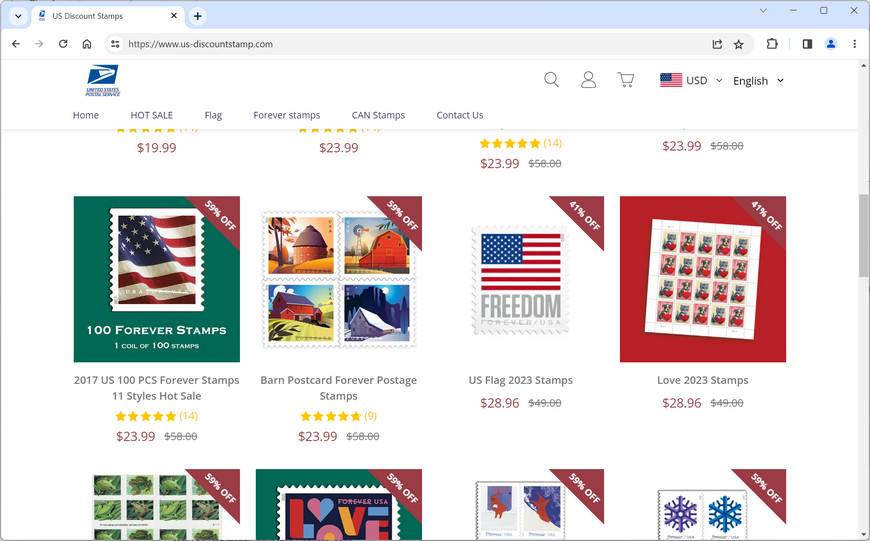
us-discountstamp.com scam

What is Us-Discountstamp.com?

Us-Discountstamp.com is a fraudulent website that claims to sell legitimate US postage stamps and rare philatelic items at extraordinarily low prices, up to 90% off face value. However, the site is not associated with or authorized by the United States Postal Service in any way.

How Does the Us-Discountstamp.com Scam Work?

The site lists stamps like the Inverted Jenny and rarities from the early 1900s available for a fraction of real market prices. Images are stolen from genuine dealers to appear credible.

When victims purchase from the site, they either receive cheap counterfeits far less valuable than described or no stamps at all. Their money is pocketed by scammers who vanish.

Other deceitful tactics include using a domain name one letter off from the real USPS and promoting unbelievable deals. Fake positive reviews posted by the scam operators boost legitimacy.

In essence, the site relies on deceiving collectors with phony discounts on stolen images of high-value stamps that are never fulfilled. Victims lose money while the scammers profit.

How to Avoid the Us-Discountstamp.com Scam

While enticing, these red flags can help identify and avoid this scam:

  • Prices massively below any feasible market rate
  • Lack of company details, verifiable address, or contact information
  • Fake reviews and endorsements using stock images
  • No sales proofs or stamp authenticity certifications
  • Domain name resembling USPS but slightly altered

Carefully researching sellers, verifying endorsements, and avoiding unbelievable deals can help prevent falling victim.

What to Do if Scammed by Us-Discountstamp.com

If you paid this fraudulent site and never received your stamps, take these steps:

  • Immediately report unauthorized charges to your payment provider to reverse if possible
  • File detailed fraud reports with the FBI, FTC, and U.S. Postal Inspection Service
  • Warn other collectors by leaving online reviews detailing the scam
  • Consult a lawyer regarding any potential legal action against the scammers

Though damage may be done, acting quickly can potentially help recover losses and prevent the site from victimizing others.

Conclusion

Us-Discountstamp.com exemplifies how scammers exploit passions like philately to fraudulently profit from counterfeit goods and ignorance of unbelievable deals. But consumers can mind red flags and verify sellers to avoid such deception. Spreading awareness of these scams helps the collector community while hampering these criminal enterprises.

10 Rules to Avoid Online Scams

Here are 10 practical safety rules to help you avoid malware, online shopping scams, crypto scams, and other online fraud. Each tip includes a quick “if you already got hit” action.

  1. Stop and verify before you click, log in, download, or pay.

    warning sign

    Most scams win by creating urgency. Verify using a trusted method: type the website address yourself, use the official app, or call a known number (not the one in the message).

    If you already clicked: close the page, do not enter passwords, and run a malware scan.

  2. Keep your operating system, browser, and apps updated.

    updates guide

    Updates patch security holes used by malware and malicious ads. Turn on automatic updates where possible.

    If you saw a scary “update now” pop-up: close it and update only through your device settings or the official app store.

  3. Use layered protection: antivirus plus an ad blocker.

    shield guide

    Antivirus helps block malware. An ad blocker reduces scam redirects, phishing pages, and malvertising.

    If your browser is acting weird: remove unknown extensions, reset the browser, then run a full scan.

  4. Install apps, software, and extensions only from official sources.

    install guide

    Avoid cracked software, “keygens,” and random downloads. During installs, choose Custom/Advanced and decline bundled offers you do not recognize.

    If you already installed something suspicious: uninstall it, restart, and scan again.

  5. Treat links and attachments as untrusted by default.

    cursor sign

    Phishing often impersonates delivery services, banks, and popular brands. If it is unexpected, do not open attachments or log in through the message.

    If you entered credentials: change the password immediately and enable 2FA.

  6. Shop safely: research the store, then pay with protection.

    trojan horse

    Be cautious with brand-new stores, “closing sale” stories, and prices that make no sense. Prefer credit cards or PayPal for dispute options. Avoid wire transfers, gift cards, and crypto payments.

    If you already paid: contact your card issuer or PayPal quickly to dispute the transaction.

  7. Crypto rule: never pay a “fee” to withdraw or recover money.

    lock sign

    Common patterns include fake profits, then “tax,” “gas,” or “verification” fees. Another is a “recovery agent” who demands upfront crypto.

    If you already sent crypto: stop paying, save evidence (wallet addresses, TXIDs, chats), and report the scam to the platform used.

  8. Secure your accounts with unique passwords and 2FA (start with email).

    lock sign

    Use a password manager and unique passwords for every account. Enable 2FA using an authenticator app when possible.

    If you suspect an account takeover: change passwords, sign out of all devices, and review recent logins and recovery settings.

  9. Back up important files and keep one backup offline.

    backup sign

    Backups protect you from ransomware and device failure. Keep at least one backup on an external drive that is not always connected.

    If you suspect infection: do not connect backup drives until the system is clean.

  10. If you think you are a victim: stop losses, document evidence, and escalate fast.

    warning sign

    Move quickly. Speed matters for disputes, account recovery, and limiting damage.

    • Stop payments and contact: do not send more money or respond to the scammer.
    • Call your bank or card issuer: block transactions, replace the card if needed, and start a dispute or chargeback.
    • Secure your email first: change the email password, enable 2FA, and remove unfamiliar recovery options.
    • Secure other accounts: change passwords, enable 2FA, and log out of all sessions.
    • Scan your device: remove suspicious apps or extensions, then run a full malware scan.
    • Save evidence: screenshots, emails, order pages, tracking pages, wallet addresses, TXIDs, and chat logs.
    • Report it: to the payment provider, marketplace, social platform, exchange, or wallet service involved.

These rules are intentionally simple. Most online losses happen when decisions are rushed. Slow down, verify independently, and use payment methods and account controls that give you recourse.

Next

Querwd.com Is A Scam – Here Is What You Need To Know!