

A dangerous new cryptocurrency scam has emerged involving fake “Biggest Crypto Giveaway Of $100,000,000” promotions being used to deceive victims and steal their funds. This comprehensive guide reveals how this scam works, common tricks used, how to identify red flags, and most importantly – how to avoid becoming another victim.

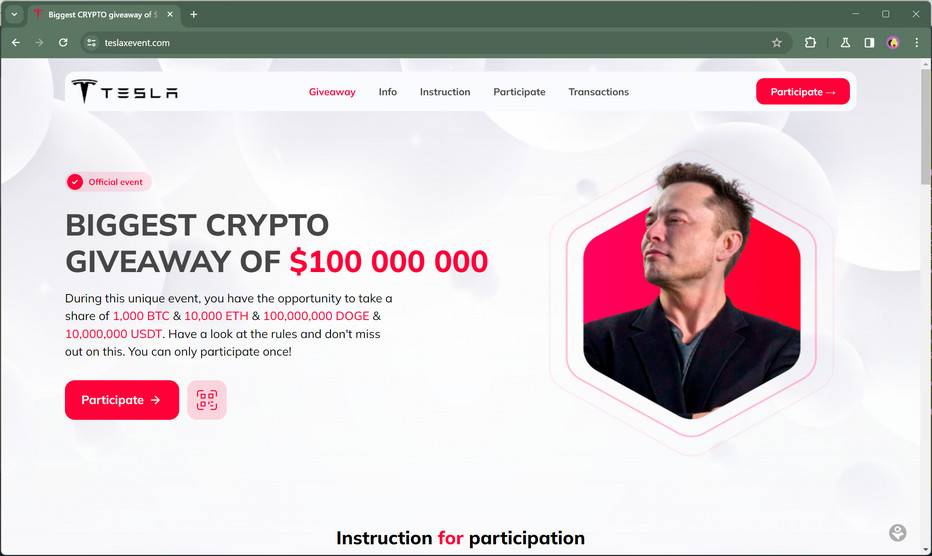
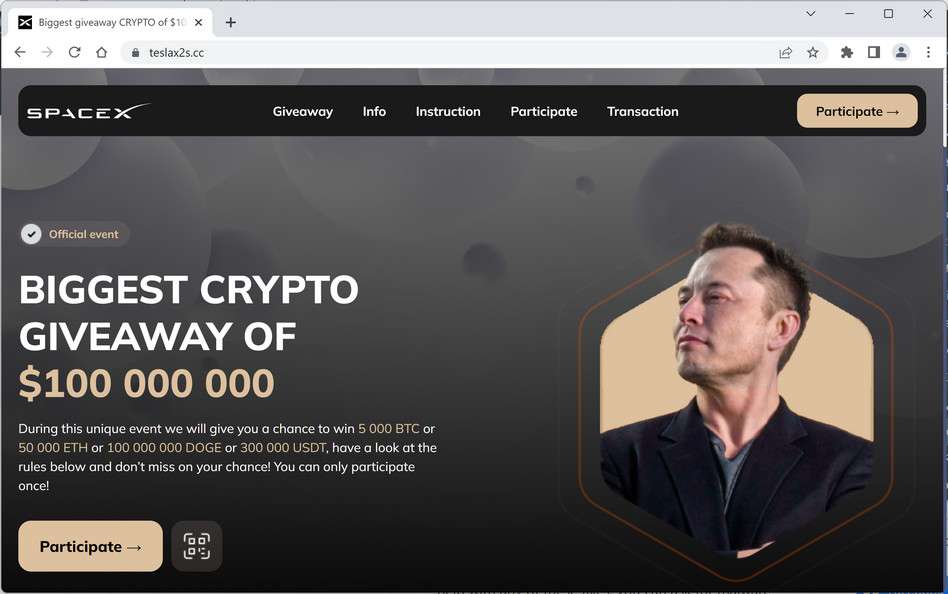
Overview of the $100 Million “Biggest Crypto Giveaway” Scam
The “Biggest Crypto Giveaway Of $100,000,000” scam typically begins with websites, social media ads, or posts promoting a cryptocurrency giveaway with an attention-grabbing $100 million jackpot. The ads are intentionally designed to go viral, using clickbait headlines like “Elon Musk is Giving Away $100 MILLION in Bitcoin!” or “Last Chance to Win $100M in Ethereum!”.
These promotions spread rapidly across platforms like Facebook, TikTok, YouTube, Twitter, and Google to reach as many potential victims as possible. They leverage the names and likenesses of famous tech billionaires like Elon Musk, Jeff Bezos, Bill Gates and Mark Zuckerberg using deepfake technology to falsely claim celebrity endorsement of the fake crypto giveaways.
The scam ads direct users to sophisticated phishing websites that mimic legitimate cryptocurrency brand promotions. These fake giveaway sites will promise once-in-a-lifetime chances to earn massive rewards in Bitcoin, Ethereum, stablecoins, or trendy altcoins like Dogecoin, Shiba Inu or Solana by participating in their $100 million crypto giveaway event.
In reality, there is no actual giveaway taking place. The websites and promotions are an elaborate ruse designed specifically to trick and deceive internet users into sending their own crypto funds to wallet addresses controlled by the scammers, which are then stolen. No giveaway payouts are ever actually dispersed.
By exploiting human emotions like greed and fear of missing out on massive crypto profits, this scam model has allowed criminals to successfully steal tens of millions of dollars worth of cryptocurrency from unsuspecting victims across the globe. Reports indicate the scam is netting these fraudsters over $5 million per day in illicit crypto profits.
Here is an inside look at how the scammers are operating these fake $100 million cryptocurrency giveaway scams on a mass scale:
- Slick-looking phishing websites are made to mimic legitimate and popular crypto brand promotions and contests. These scam sites will steal branding elements, images, and content from the real crypto project sites.
- $100 million giveaway ads are blasted out en masse across social media, search engines, email spam campaigns, SMS texting campaigns, public internet forums, and anywhere online ads can be purchased. Celebrity deepfakes and urgency tactics are used to further convince potential victims.
- Users will click on these scam giveaway ads which lead to the fake crypto promotion websites. Once on the sites, they are presented with seemingly amazing opportunities to earn millions in free crypto prizes.
- The scam giveaway websites will instruct users they must first send some of their own crypto funds to “activate” the promised massive giveaway contest rewards. QR codes and wallet addresses are provided to collect deposits.
- Deceived users then transfer their own cryptocurrency funds such as Bitcoin, Ethereum, or stablecoins to the scam wallet addresses mentioned on the fake sites, hoping to claim the advertised $100 million jackpot prizes. Some desperate victims will drain their entire crypto savings and IRA retirement accounts to chase the once-in-a-lifetime prizes.
- Instead of dispersing any giveaway winnings, the scammers immediately steal user deposits the moment they are received in their scam wallet accounts. No $100 million payouts are ever awarded. The victims’ crypto savings vanish instantly.
- After draining enough crypto deposits, the scammers quickly pull down the phishing giveaway websites and obscure any fund transfers using crypto tumblers. Then the process repeats with new sites and domains to steal from more victims.
This scam model allows organized criminal groups to steal millions of dollars’ worth of cryptocurrency per day from misled victims hoping to score advertised huge giveaway contest prizes. The scams are growing more rampant due to the viral effectiveness of social media and deepfakes. Law enforcement has found these scammers are often based overseas, making prosecution difficult.
The most crucial takeaway is to avoid falling prey to such fraudulent get-rich-quick cryptocurrency giveaway scams. Any promotion involving a huge jackpot or requiring an upfront “activation” deposit should be considered an obvious scam attempt. Exercise extreme caution around any advertised crypto giveaway and do your due diligence to verify legitimacy before sending money or personal information to anyone online.
Red Flags of the $100M Biggest Crypto Giveaway Scams
While promises of six- and seven-figure giveaways seem enticing, there are often some clear warning signs:
- Guaranteed massive crypto prize pools worth millions of dollars.
- Countdown timers or other tactics creating false urgency.
- Requests to first send cryptocurrency before receiving any rewards.
- Promotions only found on shady websites, absent from official brand channels.
- Spelling/grammar errors and inconsistent details.
- No company info, terms, conditions or contact details provided.
- Fake celebrity images, endorsements and engagement patterns.
- Inability to verify the existence of the purported crypto business online.
- Pressure to act fast before a made-up deadline passes.
Stay vigilant and do your due diligence before participating in any advertised crypto giveaway promotion. If it seems questionable, it likely is.
How the $100,000,000 “Biggest Crypto Giveaway” Scam Workss
The scammers behind the “Biggest Crypto Giveaway” promotions employ a number of deceptive tactics to fool victims into depositing crypto funds which are then stolen. Here is an in-depth look at how these fake crypto jackpot giveaways work on a step-by-step basis:
1. Scammers Set Up Fake Giveaway Websites and Accounts
The process begins with the scammers creating phishing websites designed specifically to mimic legitimate and popular cryptocurrency brand promotions, contests, and giveaways. These sites will steal branding assets, images, and content from authentic crypto project websites to appear credible.
The scammers also setup social media accounts on platforms like Youtube, Twitter, TikTok and Instagram to help promote the fake giveaways. These accounts use stolen avatar images and bios from celebrity accounts.
2. Scam Giveaway Ads Blasted Everywhere Online
Once the phishing websites are set up, the scammers begin blasting their scam giveaway ads and posts everywhere online. This includes social media sites, search engines, SMS texts, messenger apps, email spam campaigns, public internet forums, and any digital venue accepting paid ads.
The ads rely on sensationalized clickbait headlines like “Jeff Bezos Giving Away $100 MILLION in Ethereum!” or “Mark Zuckerberg’s $100M Bitcoin Giveaway!” with urgent calls to action. Celebrity deepfake videos lend false credibility. Bots and fake accounts sharing the ads creates artificial hype.
3. Users Click Scam Links And Are Directed To Fake Sites
When enough eyeballs see the scam giveaway promotions, a percentage will click on the links and ads leading to the phishing giveaway websites set up in step 1.
These sites have a polished and professional appearance with countdown timers and urgent messaging insisting this is a rare opportunity for massive crypto profits by participating in their $100 million giveaway event.
4. Scam Sites Instruct Users to Deposit Crypto First
On the fake giveaway websites, prominent instructions inform users they must first send cryptocurrency funds of their own to an address to be eligible to “activate” the promised huge giveaway contest prizes.
QR codes and wallet addresses are displayed to collect user deposits. The amounts users are prompted to send will vary depending on crypto type – usually 0.5-5 BTC, 5-100 ETH, 10,000-500,000 Dogecoin etc.
5. Victims Transfer Crypto to Scam Addresses
Tricked by what appears to be a legitimate giveaway promotion, victims will transfer the requested cryptocurrency amounts from their own wallets to the scam wallet addresses listed on the phishing site.
Some desperate users hoping for life-changing riches will drain their entire crypto portfolio and savings accounts, taking on high-interest debt to send as much as possible to these addresses.
6. Scammers Drain All Deposits Immediately
Instead of allocating any submitted funds towards giveaway prizes, the scammers instead immediately drain and cash out all cryptocurrency deposits the moment they arrive in the scam wallet addresses.
No $100 million jackpot payments are dispersed. User funds simply vanish. The scammers obscure stolen crypto transfers using mixers and tumblers. Victims are left empty-handed.
7. Phishing Sites Removed, New Ones Created
After sufficiently depleting deposits from a phishing giveaway site, the scammers quickly take it offline and cover their tracks. New phishing sites on fresh domains are created to repeat the process.
Stolen user data may be sold on darkweb markets to aid future scams. The huge crypto profits fund development of new scam websites, ads, social posts and deepfakes used to perpetuate the cycle of deception.
8. Scam Repeats Itself Endlessly on New Victims
Using the massive illicit profits from prior victims, the scammers have the resources to refine their social engineering and phishing techniques and relaunch new waves of $100M fake crypto giveaway promotions designed to attract fresh victims.
New deepfakes, urgency tactics, and social media hype are used to drive user clicks to the latest phishing giveaway websites where the process repeats itself.
9. Few Recovery Options For Victims
Unfortunately, once scammed victims belatedly realize the $100M giveaway was fake, there are very limited recovery options. The pooled crypto deposits have already been withdrawn from the scam wallets and obscured.
Reporting the scam may get phishing accounts/sites shut down quicker, but stolen funds are difficult to recover after cashed out. This allows the giveaway scam cycle to persist.
10. Cryptocurrency Owners Must Stay Vigilant
The takeaway lesson is that all cryptocurrency owners must stay vigilant about protecting themselves from such fraudulent phishing scams promoting fake giveaways.
Never send crypto funds anywhere without verifying a promotion is 100% legitimate. Also be wary of unbelievable jackpot amounts. If a giveaway seems questionable, it almost certainly is a scam attempt. Avoid becoming another victim by being prudent and skeptical.
In summary, the scammers rely on highly-refined deception tactics to operate these fake crypto giveaway scams on a mass scale. But with proper awareness of their tricks, these frauds can be easily recognized and avoided. Stay alert and protect your cryptocurrency.
What to Do if You Were Scammed by a Fake Giveaway
If you unfortunately already sent crypto to one of these fraudulent giveaway scams, here are tips on reporting it and potentially recovering losses:
- Report it: Immediately flag giveaway scam sites, associated social accounts, and wallet addresses to raise awareness and try stopping the scam faster.
- Inform contacts: Let anyone you know in crypto know about the scam site so they can avoid the mistake.
- Check for recourse: Some exchanges like Binance have fraud protection funds that may cover a portion of verified scam losses. File a case with your exchange’s support team.
- Monitor wallets: Track the scam wallet addresses on blockchain explorers to see if funds get transferred to an exchange. If so, try filing a legal case to freeze the account before cash out.
- Reset accounts: Change all passwords and enable 2FA everywhere as a safety precaution if you entered any information. Enable withdrawal address whitelisting on exchanges.
- Beware recovery scams: Be alert for follow-up scams claiming they can recover lost funds (for a fee). These will also try stealing more.
- Learn and move forward: Use the difficult experience as a lesson for exercising more caution around crypto promotions going forward.
Frequently Asked Questions About the $100M Crypto Giveaway Scam
The $100 million cryptocurrency giveaway scam has been duping many victims. Here are answers to some common questions about this widespread phishing scam and how to avoid falling for it.
What exactly is the $100M crypto giveaway scam?
This scam involves fake websites and ads promoting a non-existent $100 million cryptocurrency giveaway. Users must first send crypto to participate, which is really just sent to wallets owned by scammers who immediately steal it. No prizes are ever awarded.
How are they able to scam so many people?
Scammers exploit human psychology and emotions like greed. Fake celebrity endorsements, urgency tactics and sophisticated phishing sites lend credibility. Mass ads via social media and search engines draw in millions of potential targets.
What tactics do the scammers use?
Tactics include phishing sites mimicking real crypto giveaways, deepfake celebrity videos, bots to share ads, clickbait/FOMO headlines, countdown timers, and requiring upfront crypto deposits before accessing prizes that don’t exist.
Why do people fall for the $100M crypto giveaway scam?
Victims are enticed by the huge potential jackpot rewards, which make it seem worth the risk. Scammers design the fake promotions to look very believable. Those unaware of common phishing tactics may wrongly assume it to be legitimate.
Are there any ways to get back stolen crypto from the $100M giveaway scam?
Unfortunately, recovery options are limited. The scammers obscure transfers and withdraw funds quickly via tumblers. Reporting may get sites shutdown faster, but most stolen crypto is unrecoverable. Some exchanges may cover small portions of verified scam losses.
How can I avoid falling for the fake $100M crypto giveaway scam?
Be very skeptical of any huge jackpot giveaway asking you to send crypto first. Verify legitimacy on real crypto project sites. Never send funds anywhere without 100% confirmation first. Also use unique and complex passwords everywhere.
Are people still falling for the fake $100M crypto giveaway scam?
Yes, this scam is still very much active and stealing funds every day as scammers refine their techniques. Losses are in the tens of millions. Anyone owning cryptocurrency should learn the warning signs of this scam to avoid being victimized themselves. Stay vigilant!
By learning the inner workings and red flags of this prolific scam, crypto owners can hopefully avoid becoming the next victim. Never send any money or personal data to unverified sources online.
The Bottom Line on the “Biggest Crypto Giveaway” Scams
The fake “Biggest Cryptocurrency Giveaway” scam circulating online has managed to steal untold millions by exploiting human emotion and deception. Fraudsters use clever tricks like fake celebrity endorsements, countdown timers, and copied branding to appear credible.
But no legitimate crypto project will require users to first send funds before dispersing giveaway prizes. And jackpot amounts promising millions are unrealistic. Exercise extreme caution around any advertised crypto giveaway.
Do your due diligence before ever sending money or information anywhere. Verify legitimacy on official brand channels. As the saying goes – if it sounds too good to be true, it is. Stay vigilant against such crypto scams by learning their tactics inside and out.

Join the discussion
0 commentsShare your experience or ask a question about this article.
Discussion
Start the conversation
Have a question or something useful to share? Add the first comment.