


BloodPril arrives with the visual language of a serious health product: a white coat, scientific-sounding ingredients, reassuring seals, and a promise of better blood pressure.
The bottle packages make the next step look straightforward. Before spending anything, look closely at what those assurances actually mean and what happens if you want out.
Overview
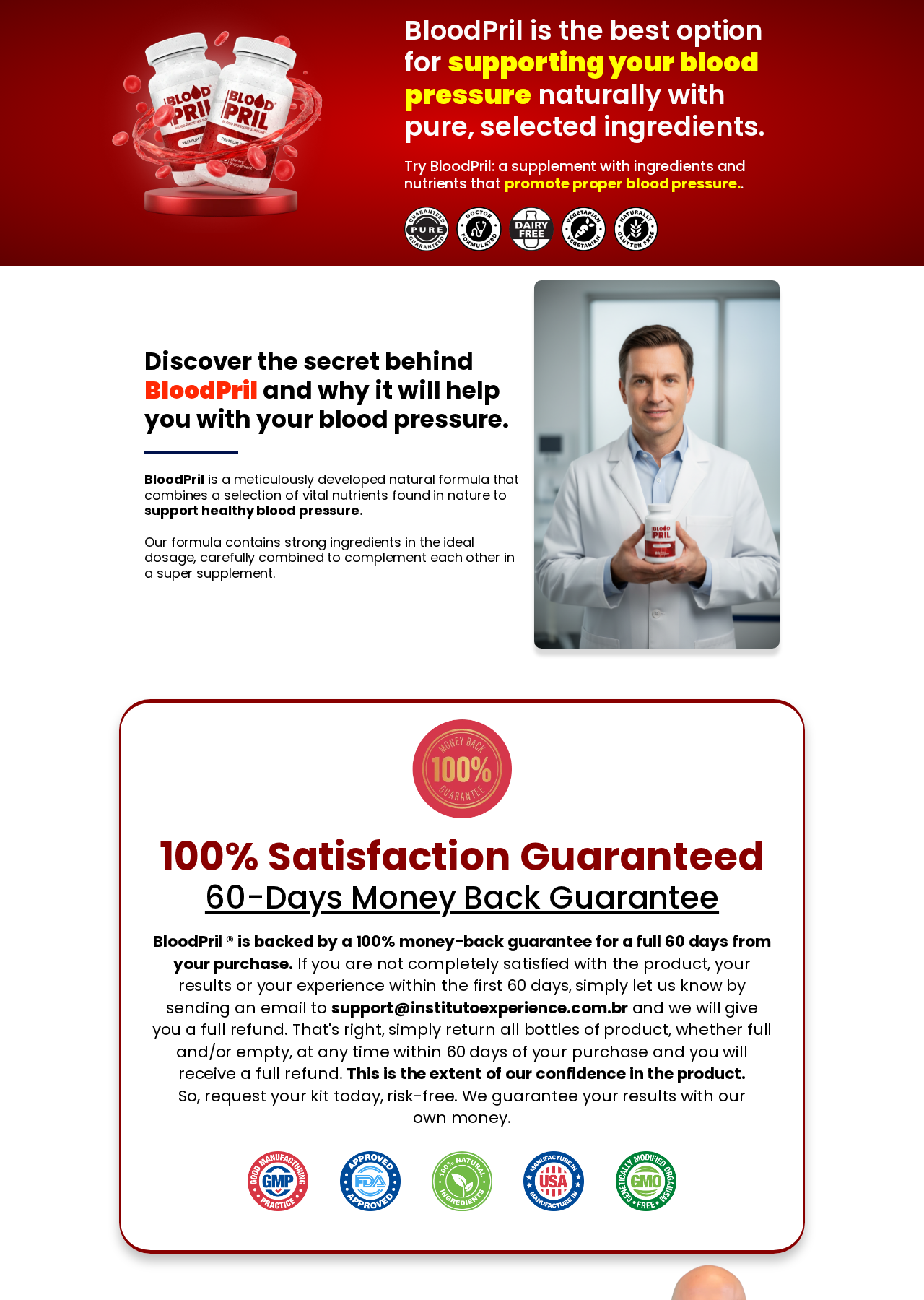
The FDA approval badge is false reassurance
The BloodPril homepage on mybloodpril.online displays a blue FDA Approved seal. It appears alongside manufacturing badges inside the money-back-guarantee section.
BloodPril is marketed as a dietary supplement. FDA does not approve supplements for safety or effectiveness before marketing, so the seal misrepresents the authority behind this offer.
The page’s separate statement about an FDA-registered facility cannot repair that claim. Registering a facility and approving a product are entirely different things.
The label discloses a blend, not the dose of each ingredient
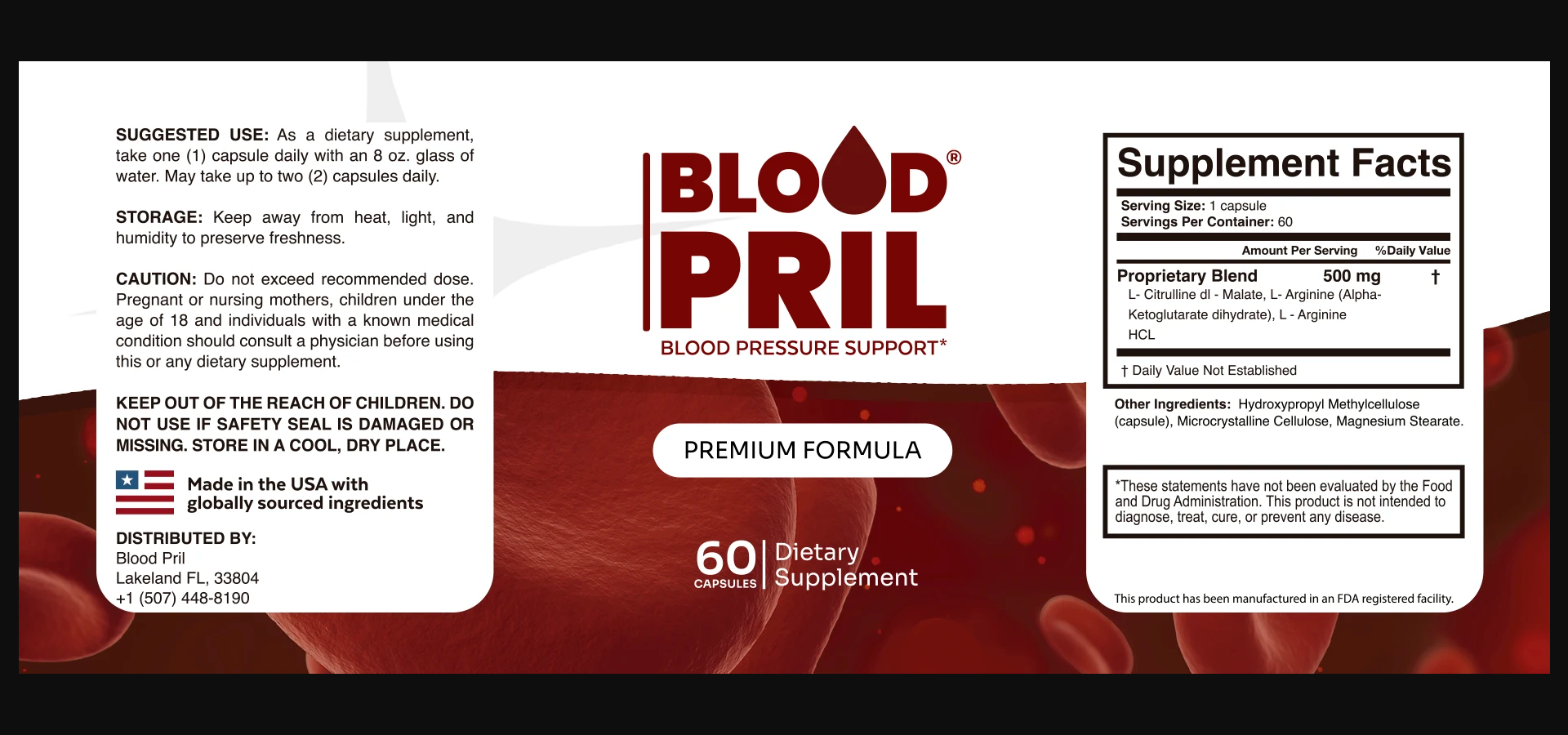
The label image linked from the homepage lists 60 capsules and a 500 mg proprietary blend per capsule. It names citrulline malate and two arginine compounds.
It does not disclose the individual quantities. That prevents a meaningful match between the advertised ideal dosage and research involving specific amounts of individual amino acids.
The label supplies useful information, but publishing a panel is not the same as proving a formula treats hypertension or produces stable readings all day.
The purchase has several separate points of exposure
- Two bottles cost $158 before the inspected $9.99 shipping charge.
- Three bottles appear at $177 on the homepage, but $207 on the affiliate order route.
- The $49 bottle price requires a six-bottle commitment totaling $294.
- The advertised long supply outlasts a guarantee measured from the purchase date.
- Refund instructions require the bottles back and leave return postage to the buyer.
Do not buy through this promotion. The fabricated approval cue is a concrete deception, and the formula and purchase details do not justify the health gamble.
Bundle and refill warning
Six bottles cost $294 upfront. The $49 headline is a unit price, and the smaller two-bottle option reached $167.99 including listed shipping.
An active refill selector was not shown in the captured payment form. Still, inspect every optional offer and the receipt for recurring authorization.
If the package or payment differs from your intention, contact the retailer promptly. Keep renewal cancellation separate from a refund for the original order.
The Badge Says Approved. The Product Label Says Otherwise.
The approval graphic is not an interpretation of fine print. The asset itself spells out FDA Approved around the agency’s initials.
Meanwhile, the product’s own label contains the familiar disclaimer that its statements have not been evaluated by FDA. Both messages sit within the same sales ecosystem.
FDA’s explanation of dietary supplements makes the regulatory position clear: these products are not preapproved like prescription medicines.
A registered-facility statement also needs a named factory before a shopper can investigate it. The inspected label does not identify the manufacturing plant or its registration details.
Likewise, a GMP graphic does not supply a certificate, inspecting organization, or batch-specific analysis. Those assurances cannot be checked merely by looking at a colorful emblem.
The false approval cue is enough to reject the promotion. This finding concerns the marketing; it is not a laboratory verdict about every capsule ever sold under this name.
The Doctor Image Does Not Establish a Medical Endorsement
The homepage places a doctor-style portrait beside statements about an ideal formula. A white coat and a bottle in someone’s hands create an immediate impression of professional confidence.
The original image filename includes a Freepik-style prefix followed by text describing a photorealistic portrait of a male doctor. That is an AI-production clue, not a credential.
The section does not provide a named clinician, license identifier, practice, or verifiable clinical assessment attached to that portrait.
Elsewhere, an expert-style quotation recommends BloodPril. The linked terms say actors or voice actors may present products, without establishing who supplied any particular medical endorsement.
An actor disclosure does not authenticate clinical expertise. Before allowing a portrait to influence a health decision, there must be a real professional and a verifiable statement.
Nor does a plausible product photograph prove the contents were independently tested. Bottle artwork, promotional portraits, and actual testing records answer different questions.
What the 500 mg Label Actually Tells You
The primary label image identifies three ingredients inside one blend: L-citrulline DL-malate, L-arginine alpha-ketoglutarate dihydrate, and L-arginine HCl.
The 500 mg figure applies to their combined weight. It is not 500 mg of each ingredient, and it is not a separate disclosed dose of citrulline.
The other ingredients are hydroxypropyl methylcellulose, microcrystalline cellulose, and magnesium stearate. The directions start at one capsule with water and allow up to two daily.
That panel differs from an ingredients page on bloodprilbuy.com, which describes gelatin and rice flour. A product name alone cannot settle which label applies to your shipment.
Differences can reflect versions or inaccurate promotional copy. For an allergy, dietary restriction, or medication check, use the actual current bottle rather than whichever review appears first.
The source page’s alternative text even retains another product name, Gluco Control, while the linked artwork says BloodPril. That is a trace of reused page content.
It does not establish that two products contain the same formula. It shows why a polished website should not be treated as an independently checked manufacturing record.
The Ingredient Research Does Not Validate This Capsule
Arginine and citrulline are real compounds involved in nitric oxide pathways. That biological explanation does not establish the result of taking this particular blend.
The 2019 citrulline meta-analysis examined trials using 3–11 g daily. Those studies involved particular preparations, participants, durations, and blood-pressure measurements.
BloodPril’s entire declared blend is 0.5 g per capsule, shared among three compounds. Even two capsules supply only 1 g of the combined blend.
That comparison does not prove every lower dose is ineffective. It does show why those trials cannot substantiate this promotion’s claim of an ideal dosage.
Different chemical forms also are not automatically equivalent weights of free citrulline or arginine. A meaningful clinical comparison needs the exact formulation and measured outcome.
Do not increase the number of capsules to reproduce a study amount. That would be a different exposure, not a shortcut to a proven BloodPril treatment.
Mayo Clinic’s arginine guidance warns about interactions with blood-pressure drugs and nitrates. It also advises against arginine after a recent heart attack.
The sales page’s broad reassurance about natural ingredients does not clear those issues for an individual reader. A pharmacist needs the label and your medication list.
How the BloodPril Approval-Badge Scam Works
Step 1: A legitimate health concern becomes a supplement pitch
The homepage associates BloodPril with arterial flexibility, circulation, and steadier pressure. It describes symptoms and presents amino acids as a way to address the underlying problem.
But a sales page cannot establish why your readings are high. Its account should not displace diagnosis, monitoring, or a treatment plan agreed with your clinician.
Step 2: Medical-looking visuals supply borrowed authority
The portrait, ideal-dosage language, and approval graphic make the purchase appear medically grounded. The missing pieces are a verifiable endorsement and evidence matching the finished formula.
The FDA graphic crosses a clear line: it implies an approval the dietary supplement has not obtained through the process suggested by the badge.
Step 3: The lowest unit price favors the largest order
The six-bottle option is highlighted as recommended. Its $49 figure sounds smaller than $79, but the required upfront payment is $294 rather than $158.
The page also claims 96% of customers choose six bottles. No independently inspectable sales dataset accompanies that assertion, so it should not determine your purchase.
Step 4: The route determines the actual price
The homepage displays three bottles for $177. The affiliate package page shows $207, and its loaded BuyGoods checkout confirms a $207 subtotal before address-dependent adjustments.
The affiliate page’s crossed-out reference is $537; the three-bottle checkout instead uses $690. A displayed saving is not independent evidence of previous selling prices.
The loaded form does not offer an active subscription choice. A large one-time charge still deserves attention, even without a renewal agreement.
Step 5: The long supply meets a shorter refund clock
The bottle contains 60 capsules. At the label’s starting one-capsule schedule, two bottles would last 120 days; at two daily, they last 60.
The package’s supply estimate therefore depends on use. It should not encourage taking more or buying six bottles before establishing whether the product suits you.
The homepage recommends a long course while advertising 60 days from purchase for a refund. That protection cannot cover evaluating an entire 180-day advertised supply.
The Refund Requires More Than Sending an Email
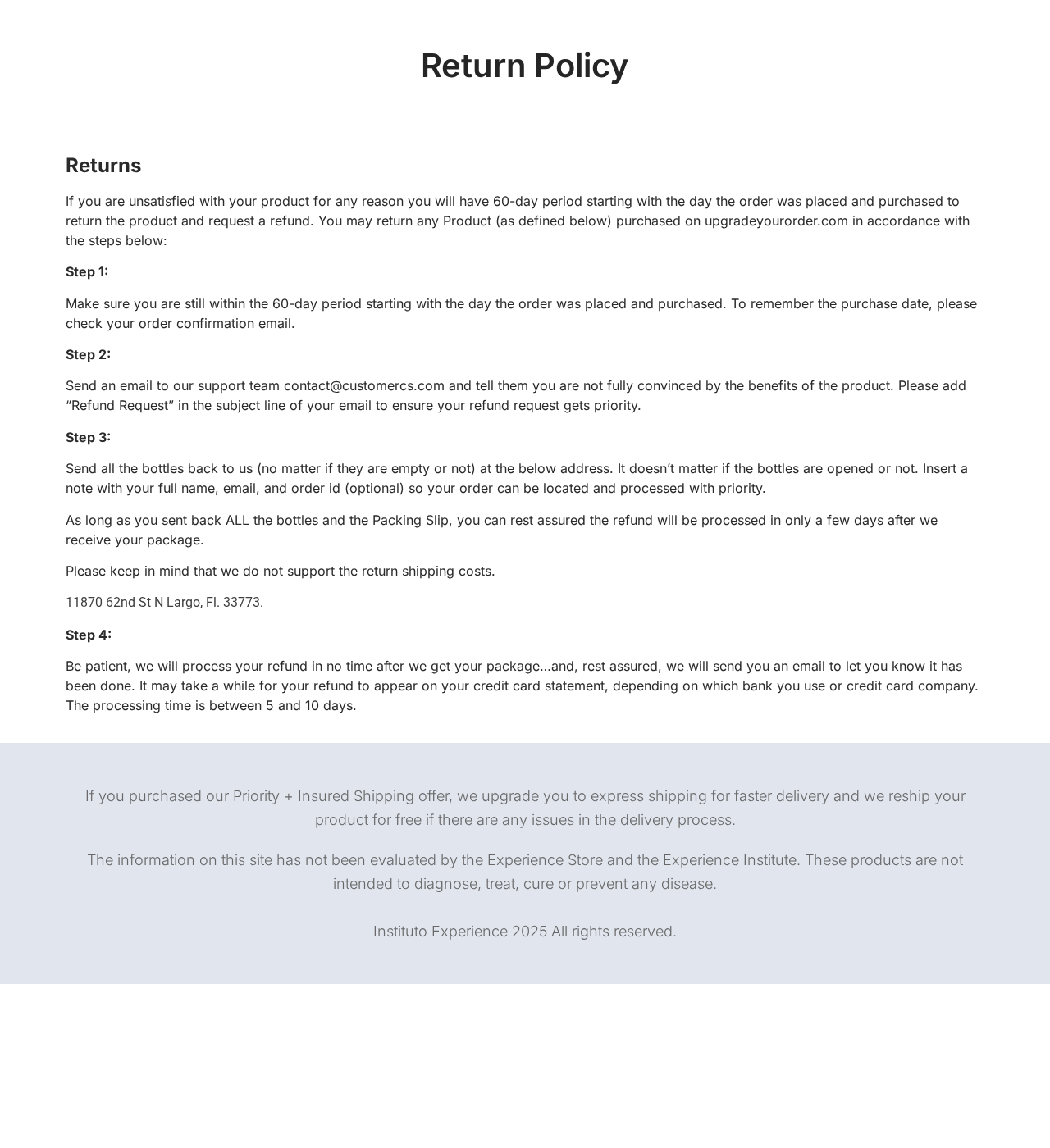
The linked returns page asks customers to contact support, return every bottle, and include the packing slip. Empty bottles are explicitly included in the process.
It names a Florida return destination and says the buyer pays postage. Keep the containers instead of discarding empties while considering a refund.
The return page starts its clock on purchase. The linked terms elsewhere describe 60 days from delivery, creating a practical disagreement about the deadline.
The homepage adds a request to use the product for at least 30 days before raising dissatisfaction. Delivery time and that waiting period can consume much of the window.
Do not wait for the most generous interpretation to become enforceable. Ask promptly which deadline covers your transaction and retain the response.
These are published conditions, not proof that every refund is refused. They do contradict the idea that the order is financially risk-free.
Who Handles the Bottle, Payment, Support, and Return?
The label names a distributor, not a factory
The primary wrap identifies Blood Pril in Lakeland, Florida 33804, with +1 (507) 448-8190. It does not name a production plant or a batch-testing laboratory.
The wording about US manufacture and globally sourced ingredients stops short of a traceable factory. There is no identified production address or lot-specific test report to inspect.
BuyGoods identifies itself as the retailer
The affiliate offer and checkout name BuyGoods as retailer and explicitly separate that role from endorsement of the promotion. It is not described there as the manufacturer.
Keep the retailer’s confirmation and card descriptor. The organization taking the payment and the page making the medical promise need not be the same operator.
The contact trail crosses several pages
The homepage gives support@institutoexperience.com.br for its guarantee. Other linked pages use contact@customercs.com, with differing support numbers.
The primary label and linked contact page share +1 (507) 448-8190. The separately linked Instituto Experience contact page instead lists SMS support at +1 (855) 889-3137.
No call, message, or refund test was performed. Use the contact tied to your actual receipt and retain a written record of the request.
The policy identity is not a complete ownership map
The linked yourorderwasconfirmed.com terms name GEX CORPORATION LLP. A matching UK partnership appears in Companies House, but the terms do not supply its registration number.
The return document also refers to upgradeyourorder.com and carries an Instituto Experience footer. These connections establish reused infrastructure, not ownership of every BloodPril-branded website.
What to Do If You Ordered BloodPril
-
Save the version you purchased. Preserve the advertisement, FDA badge, package card, total, checkout product name, guarantee, and confirmation.
Note whether your route showed three bottles at $177 or $207. Keep any discrepancy specific rather than treating all versions as one transaction.
-
Check quantities and future commitments. Compare the receipt with the number of bottles intended. Look for any separately accepted subscription, add-on, or later order.
If you did not want an ongoing arrangement, request cancellation and written confirmation. Do not assume that a one-time multi-bottle package automatically renews.
-
Request the return procedure early. Ask the retailer for the applicable start date, authorization, complete destination, packing-slip requirements, and treatment of opened bottles.
Keep every container until the claim is settled. Use tracked shipping where a return is required, and retain dispatch and delivery evidence.
-
Have your actual bottle checked before use. Photograph both label panels, lot, expiry, seal, and packaging. Bring those details to a pharmacist with your medicines.
Do not change prescribed blood-pressure care because of a badge or portrait. Obtain medical advice about symptoms or a suspected reaction.
-
Escalate an unresolved payment problem accurately. Approach your card issuer or payment service with the amount, disputed representation, correspondence, and return record.
Ask about deadlines while support discussions continue. A promised future refund is not equivalent to money already credited.
-
Report the deceptive approval claim. Include the original promotion and its badge when reporting to the advertising platform or an appropriate consumer authority.
Keep health concerns separate from billing recovery. A stranger demanding a recovery fee does not gain authority by repeating the name on your receipt.
Frequently Asked Questions
Is BloodPril FDA approved?
No approval is established for this dietary supplement. The displayed FDA Approved graphic misrepresents its status; manufacturing-facility registration does not make the capsule an approved treatment.
How much citrulline does one capsule contain?
The linked label does not disclose that amount. It gives 500 mg for the entire three-compound blend, not a separate quantity for each component.
Why are three bottles advertised at different totals?
The inspected homepage shows $177, while the affiliate route and its checkout show $207. Evaluate the exact summary attached to your own order.
Does purchasing BloodPril start automatic refills?
No active refill selector appeared on the inspected form. A multi-bottle purchase is not automatically a subscription; check the receipt for any separate agreement or later offer.
Must empty bottles be returned for a refund?
The linked return instructions request all bottles, including empties, plus the packing slip. They also assign postage to the buyer; confirm the requirements for your transaction.
Can BloodPril replace blood-pressure medication?
No. The advertising does not establish a substitute for prescribed care. Have a qualified professional assess the actual formula, interactions, and your treatment needs.
The Bottom Line
Avoid this BloodPril promotion. The FDA approval claim is deceptive, individual ingredient doses remain undisclosed, and the package and refund details deserve more scrutiny than the seals suggest.
If you have ordered, preserve the offer, check the receipt, and act within the relevant return and dispute deadlines. Put medical decisions back with your treating professional.

Join the discussion
0 commentsShare your experience or ask a question about this article.
Discussion
Start the conversation
Have a question or something useful to share? Add the first comment.