

Getting an email supposedly from your bank asking you to verify personal information can be alarming. But when that message is actually from scammers trying to steal your data, failing to recognize it can have disastrous effects.
This in-depth guide will reveal the sinister workings of fake Bank of America account verification emails, how to spot them, and steps to take if you received one. Don’t let scammers fool you into handing over the keys to your sensitive information.

An Overview of the Fake Bank of America Verification Email Scam
This scam starts with an email appearing to come from Bank of America. It claims there is an issue with your account that requires immediate action to avoid consequences like suspension or closure.
The email prompts you to download an attached document or form to “verify” your identity and account ownership. But in reality, it is a phishing attempt to infect devices with malware or capture personal details for identity theft.
Here are some subject lines these scam emails use:
- URGENT: Please verify Bank of America account ownership
- BofA Account Alert: Identity confirmation required
- Continue uninterrupted access to your Bank of America accounts – Confirm account holder information NOW
- IMPORTANT: Account access will be terminated – Download update form attached
The emails are made to look like legitimate messages from BofA. They use logos, colors, and language mimicking real notifications. This tricks people into trusting the email enough to open the attachment.
Once downloaded, the “verification form” can unleash malware onto your device or prompt you to input information that scammers can use to infiltrate accounts and steal identities.
How Scammers Carry Out the Fake Account Verification Email Scam
Here is a step-by-step explanation of how scammers execute this scam:
Step 1: Obtain a List of Target Email Addresses
Scammers first need a batch of emails to spam their scam message to. They get these through:
- Buying stolen email lists on the dark web
- Phishing sites that collect entered emails
- Breached databases containing usernames and emails
- Guessing common email conventions like name@gmail.com
Step 2: Create a Convincing Email Appearing to be From Bank of America
Next, scammers need to draft an email that looks like it’s from BofA. They copy:
- Bank of America’s logo, colors, and font
- Standard email layout and sections
- Signature with employee name, department, contact info
- Professional tone and language
This makes the email appear 100% legitimate to recipients.
Step 3: Attach a Malicious “Verification” Document
A key part of the scam is the attached document that victims are prompted to download. It is displayed as a:
- PDF verification form
- Word doc account update questionnaire
- Text file new account holder agreement
But it actually contains embedded malware, viruses, or ransomware. Once downloaded, it infects the recipient’s device.
Step 4: Blast Emails En Masse to Recipients
Using email spoofing tools and bot networks, scammers send their scam messages to tens of thousands of recipients at once.
The more people who receive it, the more potential victims they entrap in their scam.
Step 5: Gather Data Entered by Victims
When recipients open the email attachment, it either:
- Installs spyware that logs keystrokes to steal login credentials
- Opens a fake BofA form asking for personal/account details
- Redirects them to a phishing site to enter info
Either way, unsuspecting users end up handing their sensitive information directly to scammers.
What to Do If You Get a Fake Bank of America Verification Email
If you receive an email claiming to be from BofA requesting account verification, here are the steps to take:
Check the Email Address of the Sender
Don’t go by the displayed sender name. Go into the email header and look at the actual address it was sent from.
Legitimate BofA emails will only come from addresses ending in @bankofamerica.com or @bofa.com. Anything else is an immediate red flag of a scam.
Do Not Open Attachments or Click Links
Whether it’s an attachment or embedded link, opening anything in a suspicious email risks infecting your device or entering your information on a phishing site.
Delete the email immediately without opening the contents. Then empty your Trash folder completely.
Contact Bank of America to Notify Them
Forward the scam email in its original form to phish@bankofamerica.com. This allows BofA to monitor emerging scams impersonating their alerts.
You can also call 800-432-1000 to notify them and have any account alerts or unusual activity investigated just in case.
Scan Your Device for Malware
If there’s any chance you downloaded an attachment from the email already, run a full system scan using Malwarebytes.
Also check for signs like sudden sluggish performance that may indicate malware infection from the fake verification document.
Monitor Accounts Closely for Suspicious Activity
Carefully review all account statements and transactions over the following weeks for any activity you don’t recognize. Verification emails are frequently a precursor to account infiltration attempts.
Enable transaction notifications as well to stay on top of all account activity in real time. Report any fraud to Bank of America immediately.
Reset Passwords on All Accounts
If you entered any account information into the phishing email content, change your passwords, PINs and security questions immediately.
Make the new passwords completely different and highly complex. Enable two-factor authentication for an extra layer of security.
Watch for Signs of Identity Theft
Keep an eye out for any suspicious communication referencing your SSN, new accounts or credit cards opened in your name, and other indicators your identity was compromised.
Check your credit reports regularly and place credit freezes if needed to protect your data.
How to Spot Fake Bank of America Verification Emails
Armed with inside knowledge of how scammers operate, you can spot their tricks in fake verification emails:
Grammatical or Spelling Errors
Legitimate companies proofread official emails. Scam emails often contain typos, awkward phrasing, or formatting issues.
Requests for Sensitive Personal Information
BofA would never ask for your full SSN, account logins, or other private data over email. Requests for such info are a red flag.
Threatening Account Suspension or Closure
Real BofA emails don’t threaten account access. Scams use fear of losing access to panic recipients into acting hastily.
Attachments from Unknown Senders
Think twice before downloading any attachments from unsolicited or unverified emails, no matter how official they look.
Email Address Spoofing
Even if the sender name says Bank of America, the actual email address is from somewhere else when spoofed.
Requests to Download Software
BofA will never tell you to download software from an email. Attachments with .exe or .zip files are signs of malware.
Staying vigilant against these types of scam indicators will help you avoid compromising your sensitive personal and financial data.
Preventing Future Fake Bank of America Emails
Once you have a handle on spotting and dealing with fake BofA emails, you can apply some best practices to avoid future threats:
- Use a spam call blocker and software that detects and quarantines scam emails before they reach your inbox.
- Never send sensitive information over email period. Legitimate companies will securely message you within their official apps.
- Hover over links to see the actual URL before clicking, which reveals mismatched or suspicious destinations.
- Keep software patched, updated and running real-time antivirus scans to block malware.
- Only communicate with Bank of America through known, verified channels like their official website or app.
- Set up paperless banking statements to avoid sensitive mail interception.
Staying proactive is key to avoiding the endless schemes scammers dream up to pilfer people’s personal data through emails.
Is Your Device Infected? Run a Free Malware Scan
Slow performance, constant pop-ups, or strange behavior? These are classic signs of a malware infection. The fastest way to find out is to scan your device with Malwarebytes Free — one of the most trusted malware removal tools available.
The free version detects and removes the most common threats, including:
- Adware — the cause of those annoying pop-ups
- Browser hijackers — unwanted redirects and changed homepages
- Trojans and spyware — hidden programs stealing your data
- Potentially unwanted programs (PUPs) — software you never asked for
👉 Select your device below — Windows, Mac, or Android — then follow the simple steps to download Malwarebytes, scan your system, and remove any threats it finds. The scan usually takes 5 to 20 minutes.
Run a Malware Scan with Malwarebytes for Windows
Malwarebytes is one of the most popular and trusted anti-malware tools for Windows — and it’s completely free for removing infections. It catches threats that many antivirus programs miss, including adware, browser hijackers, and trojans. Follow the steps below to scan and clean your PC in just a few minutes.
Download Malwarebytes
Click the button below to download the latest version of Malwarebytes for Windows from the official source. The free version is all you need — it will scan your computer and remove adware, browser hijackers, and other malicious software at no cost.
Download MalwarebytesOfficial installer for Windows 11 and 10. Your download starts right away.Want real-time protection? See Malwarebytes Premium Malwarebytes Free for WindowsScans and removes malware at no cost
-
Install Malwarebytes
When the download finishes, open your Downloads folder and double-click the MBSetup file. If Windows shows a User Account Control pop-up, click “Yes” to allow the installation.
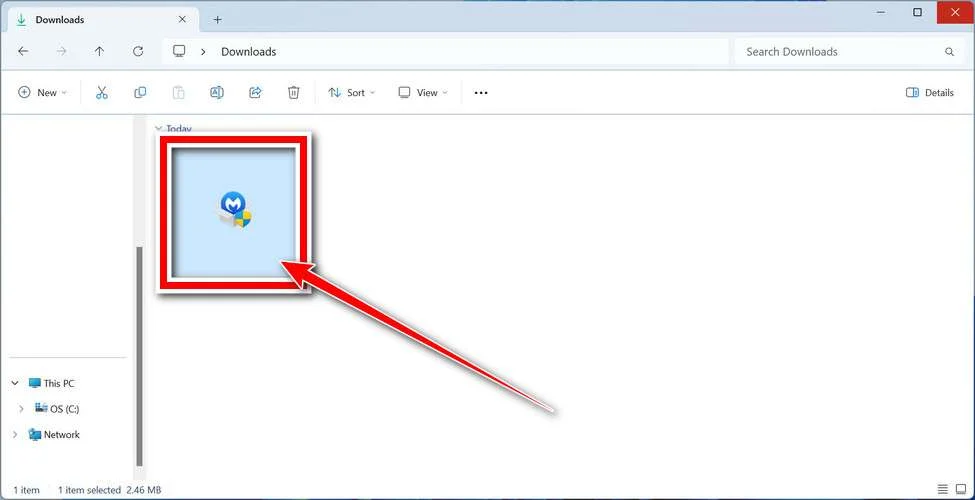
Follow the On-Screen Prompts to Install Malwarebytes
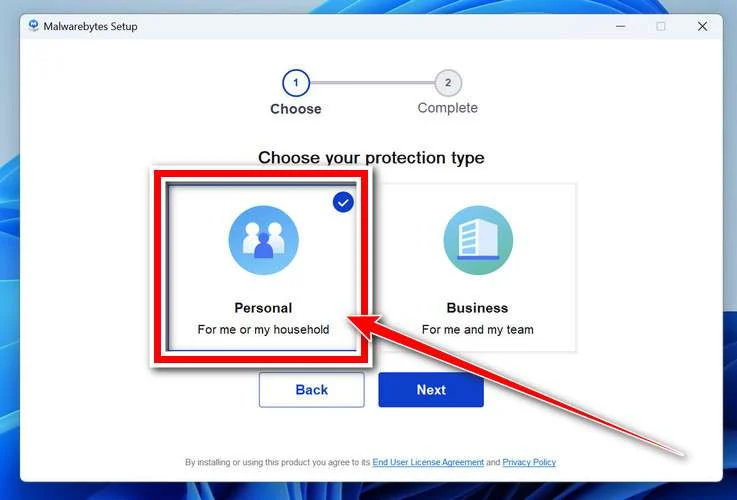
The setup wizard will walk you through a few quick screens:
-
Choose where you’re installing the program — “Personal Computer” or “Work Computer” — then click Next.
-
Malwarebytes will now install on your device. This usually takes under a minute.

-
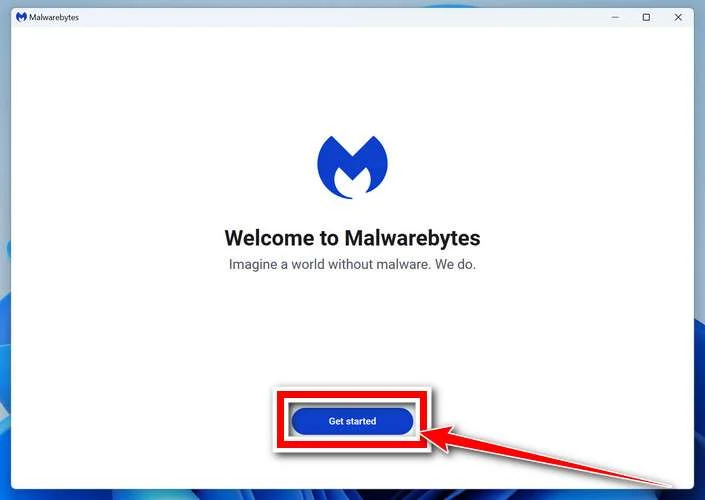
When installation is complete, the “Welcome to Malwarebytes” screen will open automatically.
-
On the final screen, click Open Malwarebytes to launch the program.

-
Enable “Scan for Rootkits”
Before scanning, turn on rootkit detection so Malwarebytes can find even the most hidden threats. Click the Settings gear icon on the left side of the screen.
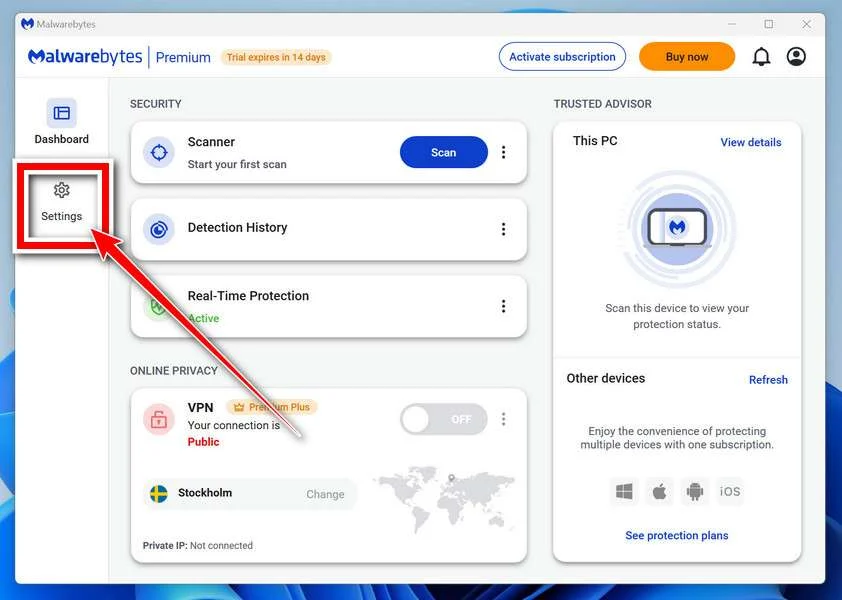
In the settings menu, find “Scan for rootkits” and click the toggle so it turns blue.

Done? Click “Dashboard” in the left pane to return to the main screen.
Start the Scan
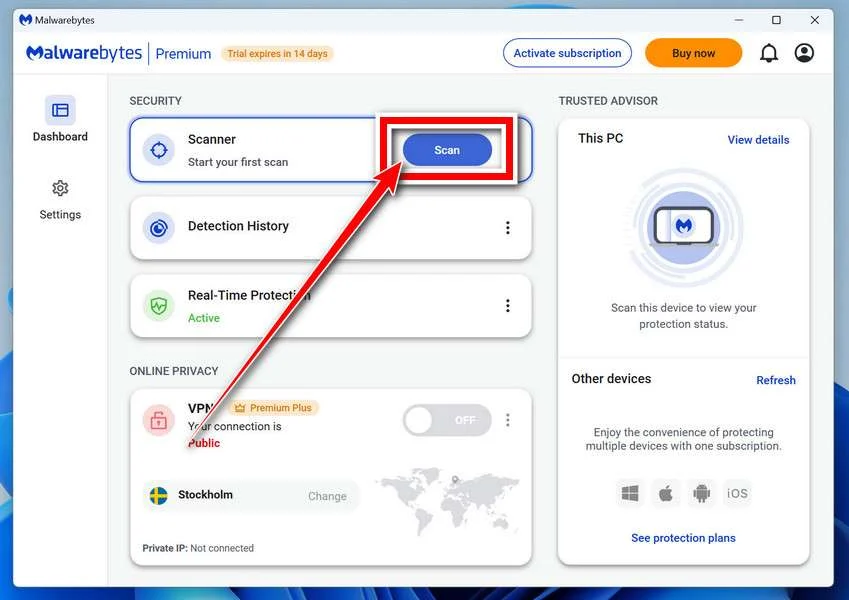
Click the blue Scan button. Malwarebytes will automatically update its virus database and start checking your computer for malware.
-
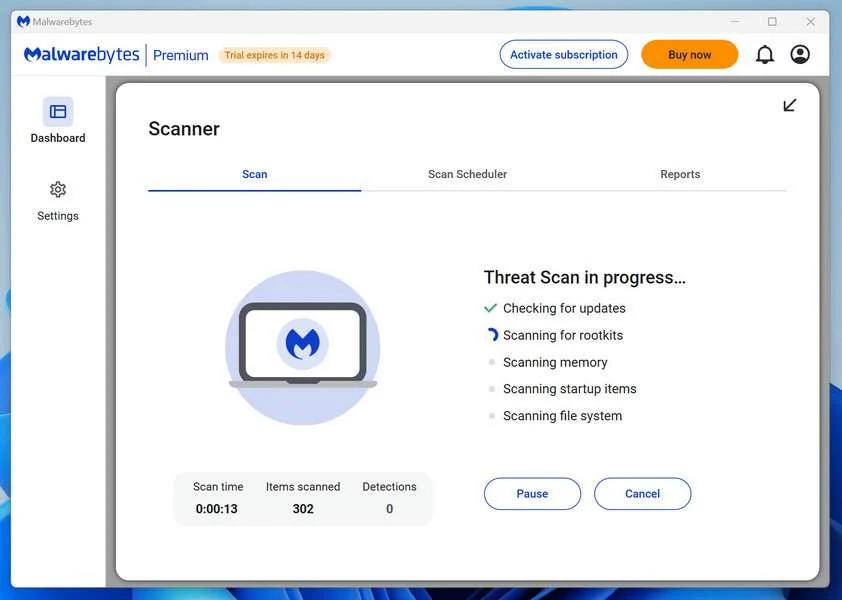
Wait for the Scan to Finish
The scan checks your entire system for browser hijackers and other malicious programs, so it can take 5 to 20 minutes depending on your computer. Feel free to do something else — just check back occasionally to see the progress.
-
Quarantine the Detected Threats
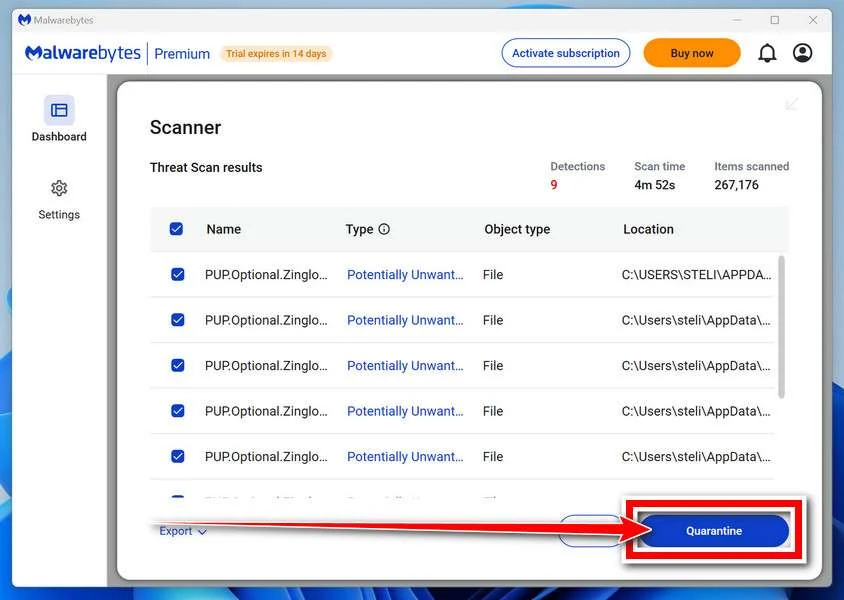
When the scan is done, you’ll see a list of everything Malwarebytes found — malware, adware, and potentially unwanted programs. Click the “Quarantine” button to remove all of them at once.
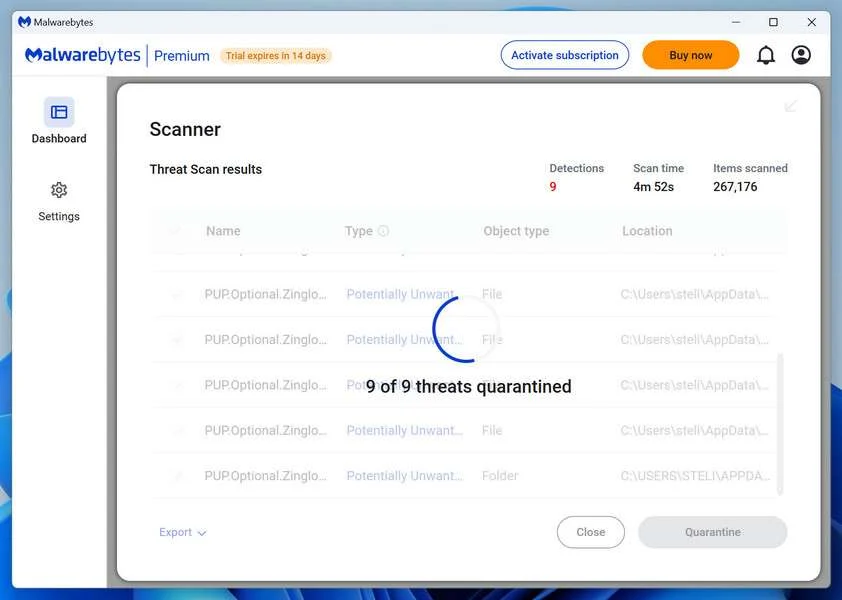
Malwarebytes will now remove the malicious files and registry entries and move them safely into quarantine.
-
Restart Your Computer
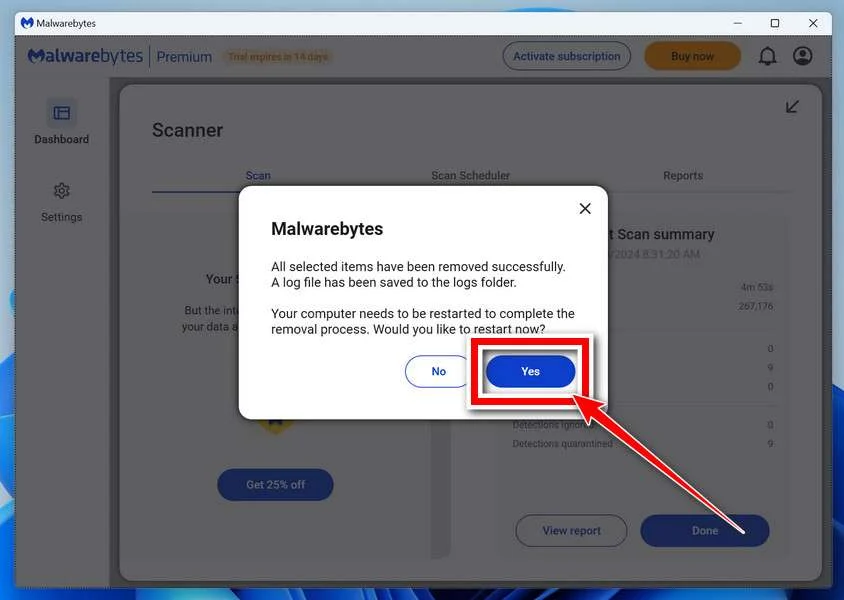
Some threats can only be fully removed after a reboot. If Malwarebytes asks you to restart, click Yes. Once you’re logged back in, Malwarebytes has finished removing the threats it found.
That’s it — your Windows PC is now clean of trojans, adware, and other malware, and should be back to running smoothly.
If you are still having problems with your computer after completing these instructions, then please follow one of the steps:
- Run a computer scan with ESET Online Scanner
- Ask for help in our Windows Malware Removal Help & Support forum.
Run a Malware Scan with Malwarebytes for Mac
Malwarebytes for Mac is a free on-demand scanner that removes the malware other security software tends to miss — adware, browser hijackers, and unwanted programs included. Cleaning an infected Mac with Malwarebytes has always been completely free, and it’s our go-to recommendation. Follow the steps below to scan and clean your Mac in just a few minutes.
-
Download Malwarebytes for Mac
Click the button below to download the latest version of Malwarebytes for Mac.
Download MalwarebytesOfficial installer for macOS. Your download starts right away.Want real-time protection? See Malwarebytes PremiumMalwarebytes Free for MacScans and removes malware at no cost -
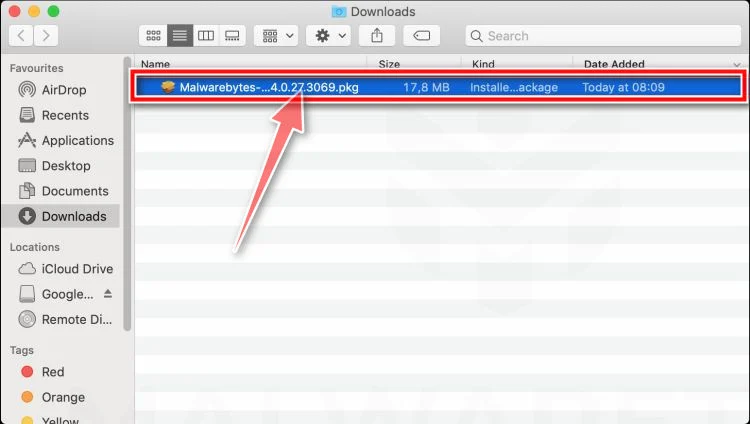
Open the Malwarebytes setup file
When the download finishes, open your Downloads folder and double-click the setup file to begin the installation.
-
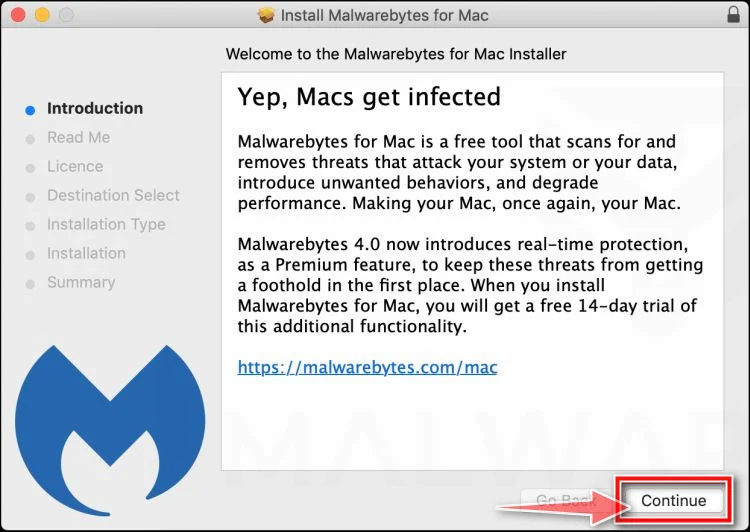
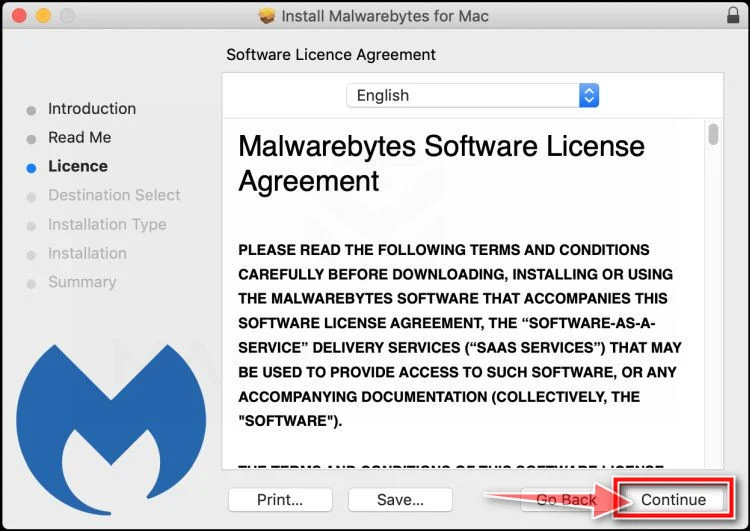
Follow the On-Screen Prompts to Install Malwarebytes
The Malwarebytes for Mac Installer will guide you through a few quick screens. Click “Continue” and keep following the prompts until the installation completes.
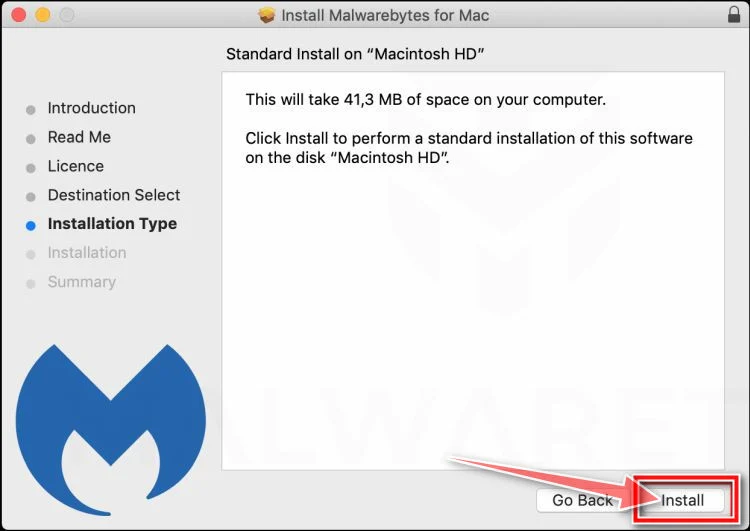
When the installation is complete, Malwarebytes opens to the Welcome to Malwarebytes screen. Click “Get started“.
-
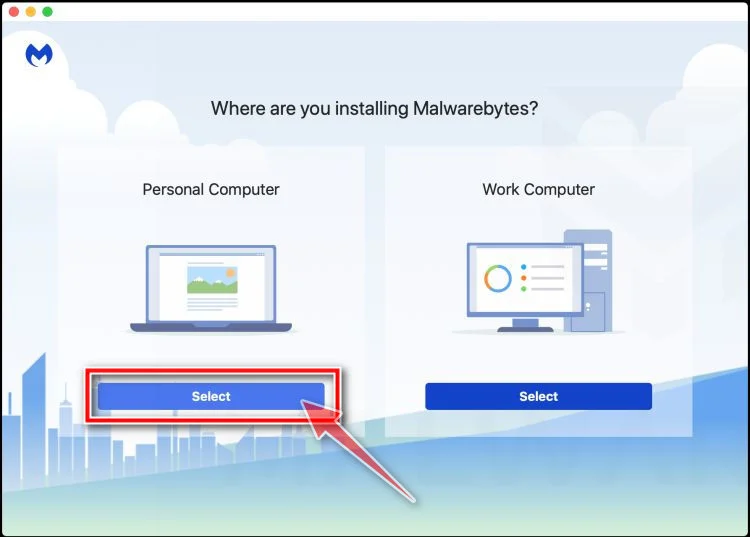
Select “Personal Computer” or “Work Computer”
Malwarebytes will ask what type of computer you’re installing it on. Click either Personal Computer or Work Computer, whichever applies.
-
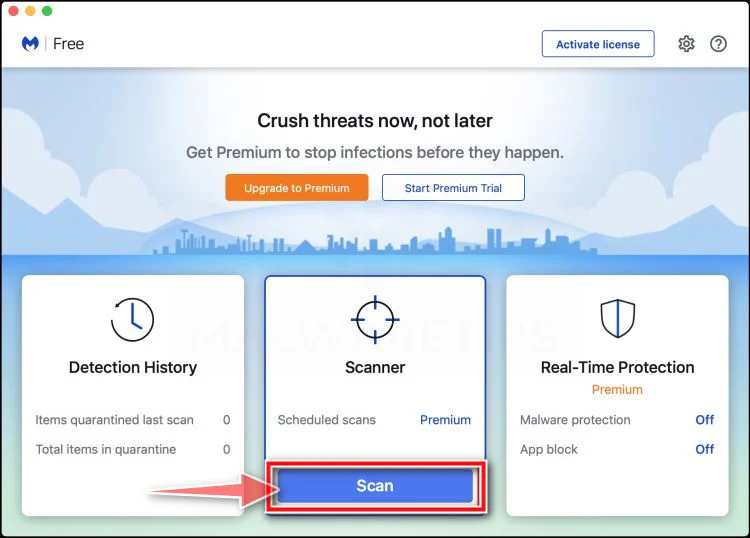
Start the Scan
Click the “Scan” button. Malwarebytes will automatically update its detection database and begin checking your Mac for malware.
-
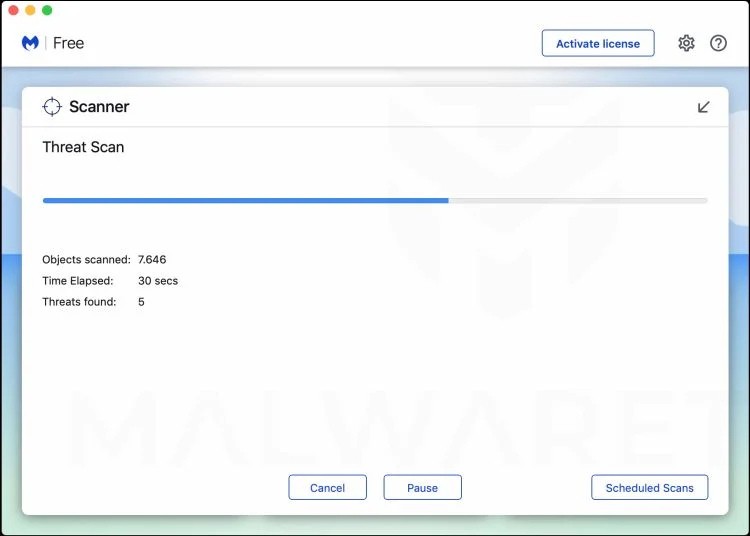
Wait for the Scan to Finish
Malwarebytes will scan your Mac for adware, browser hijackers, and other malicious programs. This can take a few minutes, so feel free to do something else — just check back occasionally to see the progress.
-
Quarantine the Detected Threats
When the scan is done, you’ll see a list of everything Malwarebytes found. Click the “Quarantine” button to remove all the threats at once.
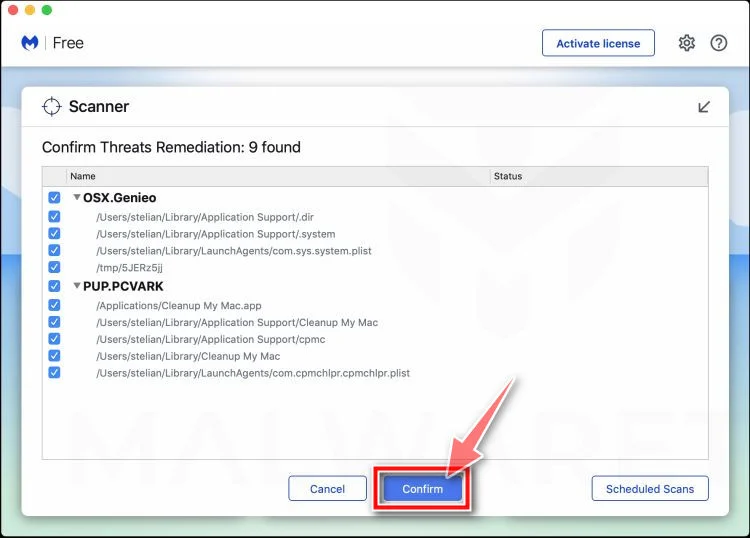
-
Restart Your Mac
Malwarebytes will now remove all the malicious files it found. Some threats can only be fully removed after a reboot — if Malwarebytes asks you to restart, allow it. Once you’re logged back in, your Mac is clean.
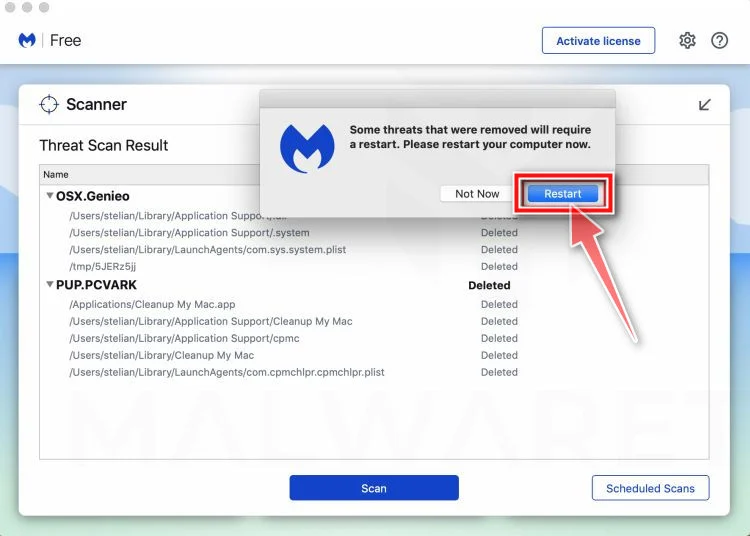
That’s it — your Mac is now free of adware, rogue browser extensions, and other potentially harmful software.
If you are still experiencing problems while trying to remove a malicious program from your computer, please ask for help in our Mac Malware Removal Help & Support forum.
Run a Malware Scan with Malwarebytes for Android
Malwarebytes for Android automatically detects and removes dangerous threats like malware and ransomware so you don’t have to worry about your most-used device being compromised. Aggressive detection of adware and potentially unwanted programs keeps your Android phone or tablet running smooth.
-
Download Malwarebytes for Android.
You can download Malwarebytes for Android by clicking the link below.
Get Malwarebytes for AndroidOpens Google Play in a new tab.Want real-time protection? See Malwarebytes Premium for AndroidMalwarebytes for AndroidScans your phone and removes malware at no cost -
Install Malwarebytes for Android on your phone.
In the Google Play Store, tap “Install” to install Malwarebytes for Android on your device.

When the installation process has finished, tap “Open” to begin using Malwarebytes for Android. You can also open Malwarebytes by tapping on its icon in your phone menu or home screen.

-
Follow the on-screen prompts to complete the setup process
When Malwarebytes will open, you will see the Malwarebytes Setup Wizard which will guide you through a series of permissions and other setup options.
This is the first of two screens that explain the difference between the Premium and Free versions. Swipe this screen to continue.
Tap on “Got it” to proceed to the next step.
Malwarebytes for Android will now ask for a set of permissions that are required to scan your device and protect it from malware. Tap on “Give permission” to continue.
Tap on “Allow” to permit Malwarebytes to access the files on your phone.
-
Update database and run a scan with Malwarebytes for Android
You will now be prompted to update the Malwarebytes database and run a full system scan.

Click on “Update database” to update the Malwarebytes for Android definitions to the latest version, then click on “Run full scan” to perform a system scan.

-
Wait for the Malwarebytes scan to complete.
Malwarebytes will now start scanning your phone for adware and other malicious apps. This process can take a few minutes, so we suggest you do something else and periodically check on the status of the scan to see when it is finished.

-
Click on “Remove Selected”.
When the scan has been completed, you will be presented with a screen showing the malware infections that Malwarebytes for Android has detected. To remove the malicious apps that Malwarebytes has found, tap on the “Remove Selected” button.

-
Restart your phone.
Malwarebytes for Android will now remove all the malicious apps that it has found. To complete the malware removal process, Malwarebytes may ask you to restart your device.
That’s it — your Android phone is now clean — no more malicious apps, adware, or browser redirects.
If you are still having problems with your phone after completing these instructions, then please follow one of the steps:
- Restore your phone to factory settings by going to Settings > General management > Reset > Factory data reset.
- Ask for help in our Mobile Malware Removal Help & Support forum.
Stay Protected: Block Ads and Malicious Sites
Now that your device is clean, keep it that way. Most infections start with a malicious ad or a fake download button — so blocking them at the source is your best defense.
We recommend AdGuard, which blocks malicious ads, phishing pages, and dangerous redirects before they can reach you.
👉 Download AdGuard and browse safely
Frequently Asked Questions About Fake BofA Verification Emails
How can I tell if a BofA account verification email is fake?
Check that the sender email address ends in @bankofamerica.com or @bofa.com. Any other address is a sign of spoofing. Legit emails won’t have typos, threats, or attachments.
What should I do if I clicked the link or attachment in the email?
Contact BofA to block potential fraudulent account access. Run antivirus scans to remove any malware. Monitor your credit and accounts closely for suspicious activity.
Is it possible my account or information was compromised?
Possibly, if you entered account details on a phishing site or downloaded malware. Change all passwords immediately and enable fraud alerts and two-factor authentication.
What information do scammers want from the fake verification emails?
They want account logins, SSNs, IDs, or anything else they can use to infiltrate accounts or commit identity theft. Legitimate BofA emails will never ask for sensitive data.
Can I stop getting these fake Bank of America emails?
While difficult to stop completely, using spam filters and being cautious about opening emails can reduce them. Never reply or engage as it confirms your email is active.
What other types of fake emails could Bank of America send?
Watch for additional phishing attempts mentioning account verification, temporary account suspension, required account updates, unauthorized logins, and other urgent matters.
If my account seems fine, do I need to do anything after getting the email?
Still contact BofA to alert them of the scam. Monitor your accounts closely for a few weeks for even delayed signs of unauthorized access.
Who can I contact about these fake Bank of America emails?
Forward any suspicious emails to BofA at phish@bankofamerica.com. You can also report scam emails using the Report Phishing feature in your email provider.
Is it possible my device is infected with malware from the email?
Yes, if you downloaded and opened an attachment. Run a full system antivirus scan immediately. Look for signs of malware like sudden performance issues.
Conclusion
Fraudsters rely on convincing victims to take immediate action to avoid account suspension or closure in order to slip by security defenses. But any real bank would never operate this way.
Now that this scam has been completely dissected and exposed, you have the insight to recognize fake Bank of America verification emails on sight and handle them appropriately.
Trust your instincts if an email just doesn’t look right or makes requests that set off alarm bells. Stop and independently verify through official channels anytime you receive alarming demands out of the blue regarding your accounts or data.
With increased awareness and vigilance, we can reduce the power these phishing scams have to illegally capture people’s personal information and identities. Share this knowledge with family and friends to help spread awareness on how to take down these scammers.

Join the discussion
0 commentsShare your experience or ask a question about this article.
Discussion
Start the conversation
Have a question or something useful to share? Add the first comment.