CareUplift Metabolic Nano Microneedle Patch is marketed as the kind of product people want to be real. A simple patch you apply to your skin, paired with “nano” technology and familiar supplement buzzwords like moringa, berberine, and NAD+, promising fast metabolic results with almost no effort.
The problem is not that people want support with weight, cravings, or blood sugar. The problem is how CareUplift sells the idea. The marketing leans heavily on sweeping health claims, “clinically validated” language, official-sounding badges, and before-and-after style testimonials that are difficult to verify.
If you are asking “Scam or legit?” you are already noticing the gap between the promise and what a responsible health product normally provides: transparent evidence, clear ingredient dosing, realistic expectations, and support policies that do not feel like a trap.
This article breaks down the biggest red flags, how the operation typically works from ad to checkout to refund, and what to do if you already paid.
Scam Overview
What CareUplift claims to be
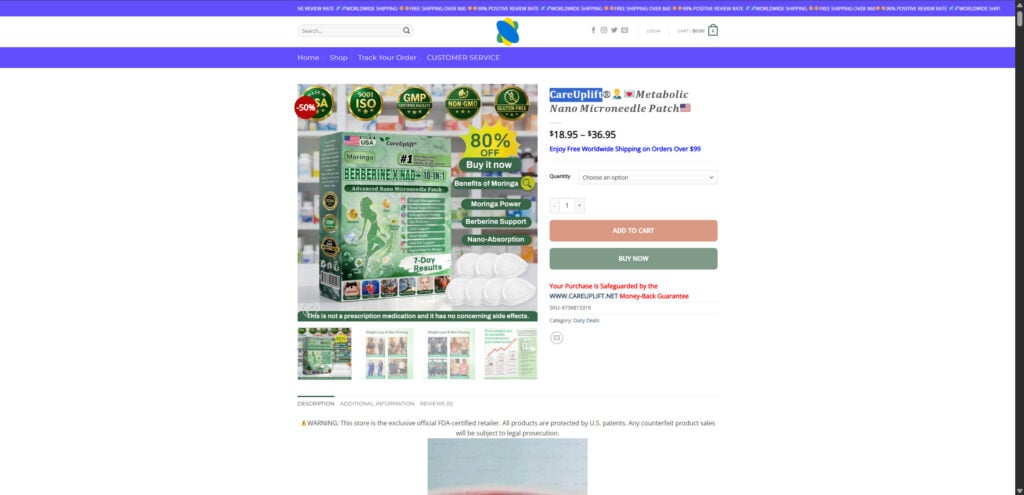
CareUplift is presented as an “advanced nano microneedle patch” designed for metabolic support and weight management. The product branding frequently combines multiple credibility triggers at once:
- “Nano microneedle” delivery
- “Metabolic” and “AMPK-style” pathway language (even when AMPK is not explicitly listed, the framing is similar)
- “10-in-1” positioning
- Ingredient names that sound research-backed (moringa, berberine, NAD+)
- Strong visual badges like “ISO 9001,” “GMP certified facility,” “Non-GMO,” “Gluten-free,” and “Made in USA”
- Dramatic timeline promises like “7-day results”
- Safety language implying minimal risk, including claims such as “no concerning side effects”
On its face, it is meant to look like a modern clinical solution, not a typical online supplement.
The first red flag: the claim list is too broad to be credible
One of the clearest warning signs is the scope of what the patch claims to do.
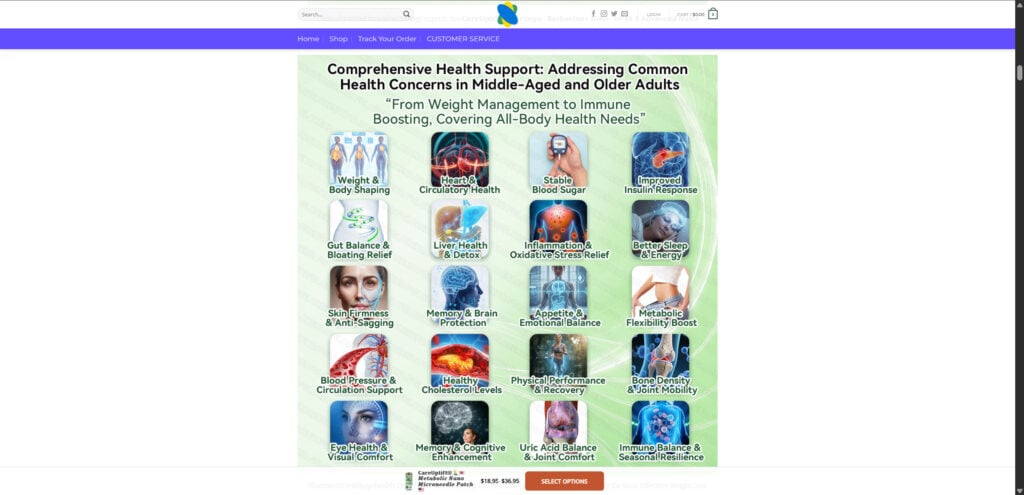
CareUplift is not marketed as a narrow, targeted aid. Instead, it is framed as a multi-system fix that touches:
- Weight management
- Blood sugar balance
- Gut wellness
- Heart health
- Joint support
- Liver fat support
- Anti-aging and firming
- Even “detox” style language in some benefit lists
Legitimate products can have multiple effects, but responsible claims are specific, measurable, and supported by evidence you can verify. When a single patch claims to cover almost every major health concern, it usually means the marketing is built to catch as many search queries as possible, not to reflect proven outcomes.
The “nano microneedle” angle is a credibility shortcut
The patch format is doing a lot of persuasive work.
Transdermal patches and microneedle technologies are real in medicine, but that does not mean every consumer “microneedle patch” delivers meaningful amounts of active ingredients into the bloodstream, especially in a way that reliably changes metabolism in days.
A simple reality check helps here:
If a patch could produce fast, consistent weight loss and metabolic improvements with minimal effort, it would be backed by easily identifiable clinical evidence, regulated claims, and transparent medical scrutiny.
Instead, what you usually see is marketing language that sounds scientific but stays vague when it matters most.
“10-in-1” is marketing, not proof
When a product is branded “10-in-1,” it is rarely describing a clinically validated formula with ten independently verified outcomes.
It is describing a marketing strategy.
The goal is to create the feeling that you are getting a complete system, so the price feels justified and the decision feels smart. It also makes it easier to add more claims without adding more proof.
Ingredient name-dropping without dosing is a major problem
Moringa and berberine are real substances. They appear in legitimate supplement discussions.
But here is the critical point most shoppers never get:
Ingredient names are not enough.
To evaluate any supplement claim, you need at least:
- The exact dosage
- The delivery method’s ability to deliver that dosage
- The time frame in which effects were observed
- The study quality (and whether it applies to this product, not just the ingredient in general)
With patches like this, two gaps often show up:
- The site does not clearly disclose meaningful dosing.
- The site does not provide credible evidence that the patch delivers effective levels transdermally.
When dosing and delivery evidence are missing, the benefit list becomes a wish list.
The “7-day results” promise is a classic hook
Fast-result promises are extremely common in high-pressure supplement funnels. They create urgency and reduce rational hesitation.
But sustained weight loss and metabolic changes are complex. When a product implies you can meaningfully shift those systems in a week, you should expect strong data and cautious language.
Instead, these pages often lean into certainty and speed.
That is not how trustworthy health products communicate.
The badge stack is designed to stop questions
CareUplift marketing materials often include a familiar wall of badges and official-looking seals, such as:
- ISO 9001
- GMP certified facility
- Non-GMO
- Gluten-free
- Made in USA
- Sometimes even “FDA certified” language on the storefront, paired with warnings about “official retailers” and “counterfeits”
This style is common in dropshipping and private-label supplement sales because it creates a shortcut in the buyer’s brain:
Badges equal legitimacy.
But badges can be misleading in several ways:
- A badge might refer to a factory standard in general, not the specific product.
- A badge might be used without verification or documentation.
- A badge might be technically true in a narrow sense while implying something much bigger.
For example, “GMP” is a real concept in manufacturing, but the presence of a “GMP” icon on a webpage does not prove that the product you receive was manufactured in a compliant facility, tested, and documented in a way you can confirm.
Similarly, “Made in USA” is a powerful claim. If it is not supported by verifiable company details, manufacturing disclosures, and consistent labeling, you should treat it as an advertising lever, not a fact.
“FDA certified retailer” is a phrase that should make you cautious
In the United States, the FDA does not “certify” retailers in the way these pages often imply.
The wording is frequently used to create a false sense of regulatory endorsement. It is meant to sound like the FDA evaluated the product and approved it.
That implication is one of the strongest red flags in the supplement scam ecosystem.
If the page leans on “FDA certified” language, look for concrete, verifiable documentation. If it is not there, assume it is marketing theater.
“Trusted by Google” is not a medical credential
Some pages add phrases like “trusted by Google.”
Google does not medically validate products. It is not a regulatory agency.
This phrase is typically used to borrow authority from a household name, even though it has nothing to do with clinical proof.
The pressure tactic: “Most people order 6 boxes”
Another common pattern in these funnels is nudging buyers toward larger orders.
You may see claims like:
- “Chosen by 98.8% of customers”
- “Most people order 6 boxes for best results”
- Free shipping thresholds that trigger at higher totals
- Bigger discounts on bundles
This is not education. It is a conversion strategy.
If a product needs you to buy 6 boxes up front, before you have any real evidence it works for you, the business is optimized for maximizing checkout value, not for earning trust over time.
The testimonial format is easy to manufacture
CareUplift marketing often includes “user experience” stories, social-media style screenshots, and before-and-after visuals.
This category of proof is weak for two reasons:
- It is easy to fake, edit, or stage.
- Even when real, it does not prove the product caused the change.
A trustworthy company will still use testimonials, but it will not rely on them as the primary evidence of effectiveness. It will lead with verifiable testing, transparent ingredients, and realistic outcomes.
When a product leans heavily on social proof while providing little clinical proof, it is usually because social proof converts better and costs less than real science.
The “no concerning side effects” claim is irresponsible
Any product that claims to influence metabolism, appetite, blood sugar, or cardiovascular markers should communicate risks responsibly.
Even common supplements can interact with medications, trigger side effects, or be inappropriate for certain conditions.
A blanket claim that a product has “no concerning side effects” is not a serious safety statement. It is a sales line.
Pricing and discounting look like a funnel, not a brand
CareUplift is typically priced in a range like $18.95 to $36.95, paired with dramatic discount language like “80% off,” “50% off,” and shipping incentives such as “Free worldwide shipping over $99.”
This structure is common in dropshipping-style funnels:
- Start with a high perceived value.
- Offer a big discount to create urgency.
- Push bundles to reach a shipping threshold.
- Increase average order value before skepticism kicks in.
Brands built on long-term trust do not usually need constant deep discounts to function.
The bigger pattern: the same patch style appears under multiple names
A key reason these patch offers feel repetitive online is that many are not unique inventions.
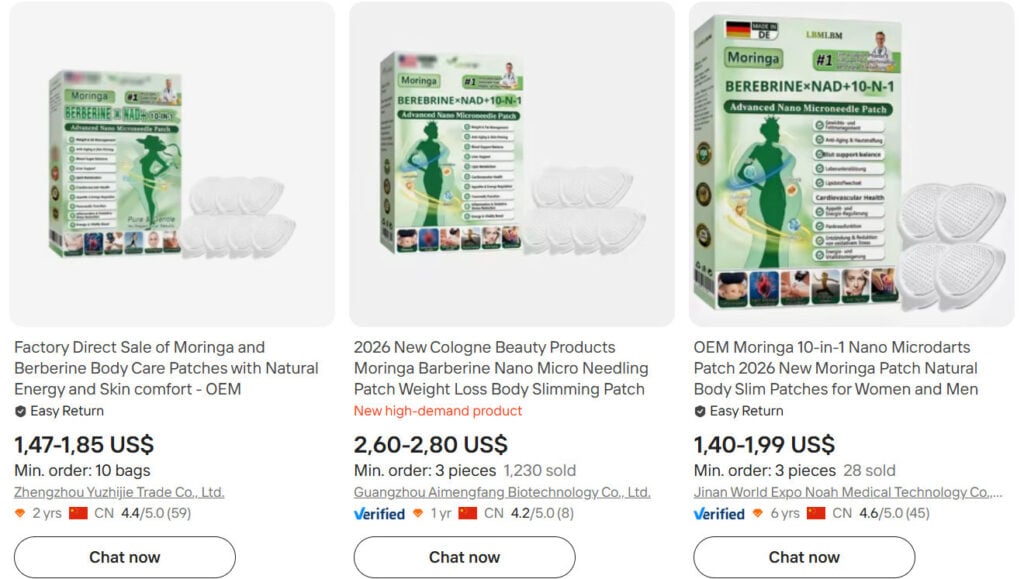
They are often private-label or OEM products that can be rebranded quickly with new names, new domains, and slightly edited benefit lists. One week it is “AMPK,” another week it is “NAD+,” and another week it is “metabolic renewal.”
When you see similar packaging styles and identical claim structures across different storefronts, it strongly suggests a network of resellers, not a single research-driven company.
So, scam or legit?
CareUplift does not present itself like a transparent, evidence-based health product.
Based on the marketing structure, the oversized health claims, the heavy reliance on badges and unverifiable authority cues, and the lack of clear clinical documentation tied to the specific product, it fits the pattern of a high-risk, marketing-driven patch operation.
That does not mean every buyer will have the same experience. But if you are deciding whether to trust it with your money and your health goals, the warning signs outweigh the assurances.
How The Scam Works
Step 1: The ad targets frustration, not curiosity
Most people discover products like CareUplift through paid ads, not through medical recommendations.
The targeting is usually built around:
- Weight loss fatigue
- Diet burnout
- “Stubborn belly fat” messaging
- Post-40 metabolism anxiety
- Blood sugar and craving concerns
- People who have tried supplements and felt disappointed
The pitch is not subtle: a patch feels easier, cleaner, and more “advanced” than pills.
That emotional positioning is the hook.
Step 2: The landing page builds belief before it asks for a decision
Once you click, the page typically walks you through a persuasion sequence:
- A strong headline with “metabolic” language
- A promise of speed (often a 7-day framing)
- A simple mechanism story (“nano absorption,” “advanced delivery”)
- Benefit lists that cover multiple health concerns
- Badges that imply standards and regulation
- A money-back guarantee claim to reduce fear
By the time you see the checkout buttons, the page has already tried to answer your doubts emotionally.
Step 3: “Science” is reduced to buzzwords and diagrams
Instead of clear, verifiable studies, the page leans on scientific-sounding phrases:
- “Nano microneedle”
- “Advanced delivery”
- “Clinically validated”
- “Doctor recommended”
- “Metabolic renewal”
These phrases can be placed on any product page. They are not evidence.
This is important because it flips the burden of proof. The customer is pushed to assume it works unless proven otherwise.
That is backwards.
Step 4: Authority stacking replaces real documentation
The page often stacks authority cues in a way that feels official:
- ISO and GMP style badges
- “Made in USA” labels
- Claims about being an “official retailer”
- Warning language about counterfeits and legal prosecution
- “FDA certified” wording that implies endorsement
This approach is designed to quiet skepticism.
A legitimate company does not need to threaten “counterfeits” as a primary persuasion tactic. It publishes verifiable company details, clear support policies, and clinical references.
Step 5: Social proof is layered to make hesitation feel irrational
Then comes the “everyone is doing it” layer:
- “Chosen by 98.8% of customers”
- “Most customers order 6 boxes”
- Before-and-after images
- Social-media style comments and testimonials
- Stories framed as professional insight (for example, a narrative about working in a pharmacy)
The goal is to make you think: “If this many people are doing it, I should not overthink it.”
But these proof formats are easy to curate, edit, or manufacture. Even when real, they are not controlled evidence.
Step 6: The pricing structure nudges you into bigger orders
A common funnel design looks like this:
- Price range shown instead of a single price
- Big discount banners like “80% off”
- Free shipping that kicks in at a higher total, often over $99
- Bundle tiers framed as “best value” or “recommended”
- Subtle language implying one box is not enough
This is how a buyer who wanted to “try one” ends up buying multiple boxes.
It happens fast, especially on mobile.
Step 7: Checkout design can create billing surprises
Even if you are careful, checkout flows can include friction points that lead to unexpected charges:
- Quantity defaults to more than one unit
- Add-ons appear late (shipping insurance, expedited processing)
- Upsells show up immediately after purchase
- Currency conversions or international processing fees are not obvious
- The merchant name on your statement does not match the product name clearly
When buyers report being charged for multiple units, this is often how it happens.
Sometimes it is poor design. Sometimes it is deliberate dark-pattern design. Either way, it produces the same outcome.
Step 8: Fulfillment often looks like international dropshipping
Many products in this category are sourced through overseas manufacturing and shipped through international logistics chains.
That typically means:
- Longer delivery windows
- Limited tracking clarity
- Packaging that may not match what you expected
- Less accountability if something goes wrong
This matters because return windows and dispute windows can run out while you are waiting.
Step 9: The return process becomes the real “business model”
The hardest part for many buyers is not the purchase. It is what happens after they want out.
Common friction includes:
- Slow support replies
- Requests for extra information and photos
- Offers of partial refunds to avoid a return
- Return requirements that demand international shipping at the buyer’s expense
- “Unopened only” rules that make returns practically pointless once you inspect the item
A money-back guarantee sounds simple on the page, but the real policy details often decide whether a refund is realistic.
Step 10: Subscription charges can be attached depending on the site
Not every storefront uses subscription billing, but this product category often appears across multiple domains and checkout systems.
In some setups, buyers get hit with:
- “Membership” charges
- Continuity billing tied to a discount
- Trial-style offers that roll into recurring charges
- Hard-to-cancel billing that requires repeated emails
If you see any charge you do not recognize, treat it seriously and act quickly.
Step 11: Rebranding keeps the network alive
One of the advantages of this style of operation is speed.
If a domain accumulates complaints, chargebacks, and negative attention, the product can reappear under a new name, on a new domain, with the same claim structure and similar packaging.
That is why these patch offers feel like they are everywhere, and why the claims often look copied and pasted.
What To Do If You Have Fallen Victim to This Scam
- Check your bank or card statement for every charge related to the purchase.
Look for multiple line items, add-on fees, or separate merchant names. - Take screenshots of the order confirmation, product page, and return policy right now.
Save the date and URL. Pages can change. - If the charge is higher than expected, contact your card issuer immediately.
Ask for dispute options and a chargeback if the billing does not match what you authorized. - If you see recurring charges, ask your card issuer to stop future payments.
Do not wait to “see if it stops.” Recurring billing rarely stops on its own. - Request a replacement card if you suspect your payment details may be at risk.
This is especially important if the merchant descriptor looks unrelated or unfamiliar. - Email the seller once with clear, simple language.
State that you want to cancel, you revoke authorization for any recurring charges, and you want a full refund. Save the sent email. - Do not get trapped in endless back-and-forth.
If support stalls, move your effort to the bank dispute process. That is usually where your leverage is. - Photograph what arrived, including the shipping label and contents.
If you received multiple units you did not knowingly order, document the quantity clearly. - Track your dispute deadlines.
Many card issuers have time limits for chargebacks. Act quickly. - Monitor your account for 30 to 60 days.
Some “test charges” or follow-up charges appear later. - Secure the email account you used during checkout.
Change your password and enable 2-factor authentication, especially if you reuse passwords elsewhere. - Report the ad where you discovered it.
Flag it as misleading. Platform reporting helps reduce distribution. - If you are in the United States, file a complaint with the FTC.
Keep it factual: what you bought, what was promised, what you were charged, and what happened when you tried to cancel or refund. - If you experienced a reaction or stopped prescribed care because of the marketing, talk to a medical professional.
Do not let a marketing page replace real care, especially for blood sugar concerns. - If the seller offers a partial refund to make you go away, decide what matters more: money or closure.
Partial refunds are often used to reduce chargebacks. If you want a full reversal, stay firm.
The Bottom Line
CareUplift Metabolic Nano Microneedle Patch is marketed like a clinical breakthrough, but it reads like a conversion-focused funnel: broad claims, fast-result promises, badge-heavy authority signals, and testimonials doing the job that real clinical evidence should do.
If you are looking for an evidence-based product you can verify, this offer does not meet that standard. The safest way to treat it is as a high-risk, potentially deceptive dropshipping-style operation that relies on exaggerated health claims to sell a low-cost patch at a premium price.
If you already paid, focus on control and documentation: stop further billing, save evidence, and use your card issuer’s dispute process if the transaction is not what you agreed to.