

CelluCare Blood Sugar Supplement has been making waves online lately with dramatic claims about its ability to help manage healthy blood sugar levels. But is this supplement all it’s cracked up to be or is it just hype? In this in-depth article, we’ll take a close look at CelluCare, its ingredients, effectiveness claims and whether it may actually be a scam.
Overview of CelluCare Blood Sugar Supplement
CelluCare Blood Sugar Supplement is marketed as a “breakthrough formula” that can “awaken your body’s feedback loop” to maintain healthy blood sugar levels and support weight management.
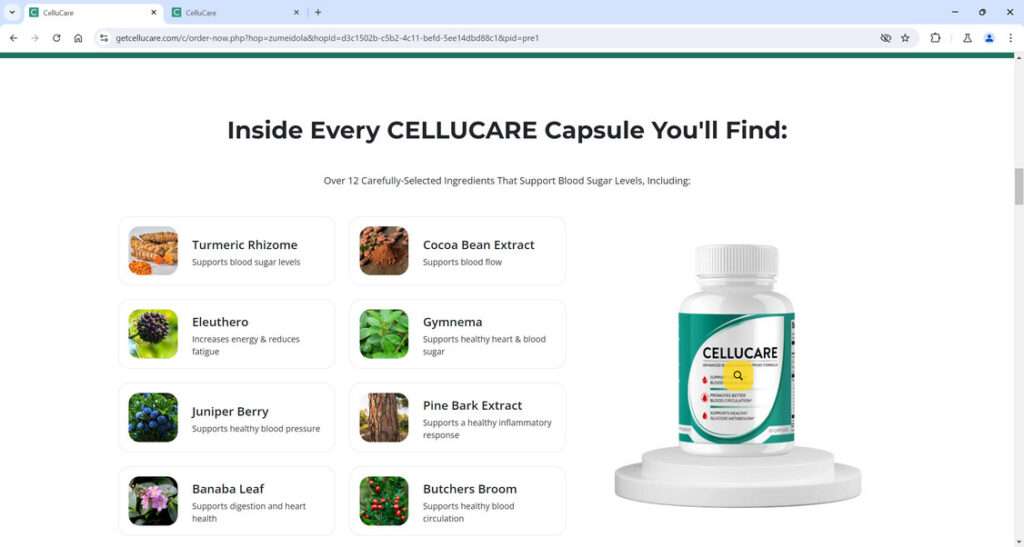
The supplement is sold exclusively online through the official CelluCare website and is said to contain a proprietary blend of 12 ingredients like turmeric, cocoa bean extract, eleuthero and more.
According to the sales page, CelluCare was created by someone named Thomas Wilson. It’s claimed to work by targeting the underlying cause of unbalanced blood sugar using natural ingredients.
Multiple Website Listings Raise Questions
One of the first red flags about CelluCare is that it’s listed on multiple websites, not just the official site. Oftentimes, legitimate supplements will stick to one official website.
Having multiple listings can be a questionable marketing tactic used to make a product appear more popular and in-demand than it really is. When you see a product sold on various sites, it’s worth digging deeper.
No Evidence of Clinical Trials
There are no references or citations for clinical trials, research or studies on the CelluCare sales page. This lack of scientific evidence supporting its big claims is concerning.
Legitimate health supplements will invest in extensive clinical trials to demonstrate safety and efficacy. The fact that CelluCare doesn’t appear to have undergone rigorous testing raises some valid questions.
Skeptically Positive Reviews
At first glance, the reviews for CelluCare seem really positive. However, when you look closer, there are some odd things that stand out.
For one, the reviews are almost unanimously glowing with barely any negative feedback. Most supplements will have mixed reviews with some reporting great results and others dissatisfied.
When reviews appear overly positive, it could suggest they are biased, fake or not paint a fully accurate picture. Authentic reviews will include both good and bad.
Who Makes CelluCare?
There is very limited information provided about the company behind CelluCare. The manufacturer is not disclosed on the sales page or anywhere obvious on the website.
When there’s a lack of transparency around the makers of a supplement, it becomes difficult to research their reputation or trust their processes. Legitimate brands should be upfront about manufacturing and quality control.
Potential Side Effects
As with any supplement targeting blood sugar, CelluCare does come with some potential side effects worth knowing.
Some users have reportedly experienced digestive upset like nausea or diarrhea after taking it. There is also a risk of allergic reaction with any supplement, especially if you have sensitivities.
CelluCare may also interact with blood thinners or other diabetes medications. Speak to your doctor before taking it to assess safety and appropriateness for your health status. Don’t assume all supplements are automatically safe.
Ingredient Research Doesn’t Prove Effectiveness
According to the website, CelluCare contains a blend of 12 natural ingredients that are each linked to health benefits like better blood flow, increased energy, blood sugar support and more.
However, the research cited for individual ingredients does not necessarily prove the efficacy of the entire CelluCare formula. There don’t appear to be any studies done on the complete supplement blend itself.
While the selected ingredients may offer advantages, it’s misleading to claim the collective formula is scientifically validated based only on unrelated ingredient studies.
No Sign of Regulatory Approvals
Reputable health supplements will go through a regulatory approval process and get certified by relevant authorities like the FDA. However, CelluCare makes no mention of being reviewed or approved by oversight organizations.
The lack of regulation raises questions about the safety, quality standards, risk of contamination and overall legitimacy of this product. Heavily marketed “miracle” supplements often bypass official protocols.
Vague Ingredient Details
Looking closely at the descriptions of the ingredients inside CelluCare, the details are quite vague. There are no in-depth explanations of how each one works, interaction effects or optimal dosages.
For turmeric, cocoa bean, eleuthero and other included ingredients, only general statements are made about assumed benefits. There is a lack of scientific research cited or specific mechanisms described for how these ingredients help manage blood sugar.
When details are murky, it suggests the formula may be relying more on hype than proven solutions. Clear, research-backed data on ingredients is a sign of credibility.
Heavy Sales Tactics
The CelluCare website employs a lot of sales tactics to get visitors to buy the supplement immediately. There are multiple links to purchase, limited time discount countdowns and claims about “limited supply.”
While marketing language is understandable for conversions, the heavy focus on driving urgency and sales on the CelluCare site outweighs in-depth, balanced information about the actual product. This is a red flag.
No Independent Customer Reviews
Real customer reviews can offer helpful insights into a supplement’s results and side effects. However, there are no independent reviews available for CelluCare.
The website does not have a community forum, social proof, review integration or anywhere obvious that shows authentic experiences from real buyers.
Without unbiased reviews, it’s difficult to gauge actual customer satisfaction and outcomes. Relying solely on website claims makes it easier to misrepresent a product’s success.
Frequently Asked Questions About CelluCare
1. What is CelluCare Blood Sugar Supplement?
CelluCare is a dietary supplement marketed online as a “breakthrough formula” to help maintain healthy blood sugar levels. It contains a blend of 12 ingredients like turmeric, banana leaf, alpha lipoic acid and more meant to support blood sugar balance.
2. Who makes CelluCare Blood Sugar Supplement?
The manufacturer of CelluCare is not disclosed. There are no details provided about the company behind this supplement, their manufacturing processes or backgrounds. Lack of transparency around the maker of a health product raises some concerns.
3. How does CelluCare work?
According to the website, CelluCare works by “awakening your body’s feedback loop” to help maintain balanced blood sugar. However, there is no clinical evidence cited to validate these claims or prove the efficacy of the complete formula.
4. What are the ingredients in CelluCare?
CelluCare contains a blend of 12 ingredients like turmeric, cocoa bean extract, eleuthero, gymnema, juniper berry, pine bark extract, banaba leaf and more. While these may offer individual benefits, there are no studies proving the efficacy of all these combined ingredients for blood sugar support.
5. Is there scientific evidence CelluCare works?
No, there are currently no published clinical trials, research or studies that validate the specific claims made about CelluCare Blood Sugar Formula. There is a lack of rigorous testing showing it lives up to the marketed benefits.
6. Does the FDA approve CelluCare?
No, CelluCare supplement does not seem to be evaluated or approved by the FDA. It lacks any clear regulatory oversight, certifications or quality approvals that help ensure safety and efficacy of health products.
7. What do the reviews say about CelluCare?
Independent customer reviews are lacking. Reviews on the sales site appear overwhelmingly positive, which can be a sign of bias. Without balanced, third-party reviews, it’s difficult to objectively evaluate customer satisfaction.
8. Does CelluCare have any side effects?
Potential side effects may include digestive upset, nausea, diarrhea, allergic reaction in sensitive individuals, and interactions with blood thinners or diabetes medications. Speak to your doctor before use.
9. Is CelluCare safe to take?
Without formal safety studies and approvals, the safety profile of taking CelluCare is unknown. Speak to your healthcare provider before trying it to assess your personal risk, especially if you have an underlying condition.
10. Is CelluCare Blood Sugar Supplement a scam?
While not definitively a scam, CelluCare exhibits a lot of questionable marketing tactics, lack of transparency and limited evidence that warrant skepticism. More unbiased research is needed to validate claims.
The Verdict: Think Twice About CelluCare
Given the multiple website listings, lack of clinical evidence, dubious reviews, undisclosed manufacturer details, potential risks, questionable ingredient blend, absence of regulatory approval and heavy marketing spin, consumers are wise to be very cautious of CelluCare Blood Sugar Supplement.
While natural supplements can be helpful for some, they are never silver bullet solutions, especially when sold using hype and limited transparency. Speak to your doctor before trying any new supplement targeting blood sugar levels.
CelluCare may or may not be an outright scam, but there are certainly enough red flags to warrant skepticism and far deeper research before purchasing. When evaluating supplements, look for clinical proof, unbiased reviews and explicit details. Make informed decisions about your health.

Reviews & discussion
0 commentsShare a firsthand experience, or ask a question.
Community reviews
CelluCare Blood Sugar
Moderated reader experiences, not an editorial verdict.
Start the conversation
Have a question or something useful to share? Add the first comment.