

Have neck pain and sleep issues been making life miserable? The new CLESHY Ergonomic Pillow claims to have the solution – with its contoured memory foam design providing perfect spinal alignment, reduced snoring, and a cooler sleep surface.
With breathable, hypoallergenic materials, armrests for extra comfort, and ultra-soft memory foam, this pillow seems like the answer for better sleep and pain relief. But does the CLESHY Ergonomic Pillow really deliver on its promises? Or is this pillow just a lot of hype?
This extensive investigation will scrutinize the details and separate clever marketing from the real benefits. Read on to discover whether the CLESHY Ergonomic Pillow can solve your sleep issues or if it’s just another overhyped product.
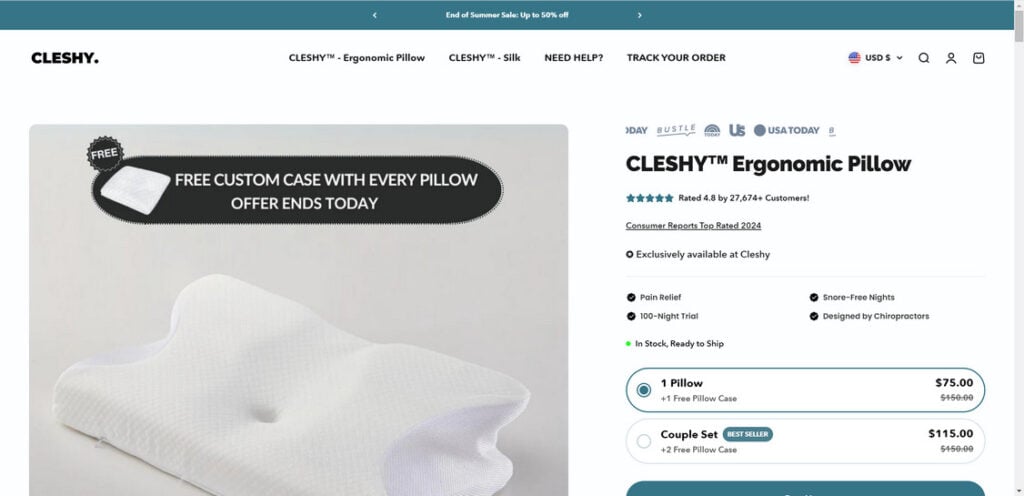
Overview of the CLESHY Ergonomic Pillow
The CLESHY Ergonomic Pillow is a U-shaped memory foam pillow claiming to improve sleep quality, reduce neck pain, minimize snoring, and provide a cooler sleep surface.
It features a contoured center hollow designed to cradle the head and align the spine, along with built-in armrests for extra comfort. The memory foam aims to cushion and contour to the head and neck.
According to the website, the pillow is made with eco-friendly CertiPUR-US certified memory foam and uses a specialized ventilation system to enhance airflow and dissipate heat. It also claims to use hypoallergenic, anti-microbial materials safe for sensitive skin.
The ergonomic design is touted as providing perfect spinal alignment to reduce neck stiffness, pain, and discomfort. The contoured shape also purportedly keeps airways open to decrease snoring.
CLESHY says their pillow is rated 4.8 with 27,674+ customers. It costs $75 for one pillow or $115 for a couple’s set, with free pillowcases included for a limited time. The company offers free returns within 100 nights.
Red Flag #1 – Dubious Awards and Certifications
The first thing setting off alarm bells is the questionable awards and certifications claimed by CLESHY.
Unsubstantiated “Top Rated” Claims
The website prominently states the pillow is “Consumer Reports Top Rated 2024.” However, no proof or link is provided to verify this claim. Searches also uncovered no mention of CLESHY winning any award from Consumer Reports.
This unsubstantiated claim of being a top rated product raises credibility concerns.
Suspicious Review Numbers
CLESHY claims their pillow has 27,674+ customer reviews with an average rating of 4.8 stars. However, only a few dozen reviews could be found on the website and independent review sites.
The implausibly high number of reviews claimed makes these ratings unreliable and likely fake.
Dubious CertiPUR-US® Certification
While CLESHY states their foams are CertiPUR-US® certified, no certification number is provided. CertiPUR’s own database shows no certification for CLESHY.
This casts doubt on the true materials and process used to make the pillows. Misrepresentation of certifications is a red flag.
Red Flag #2 – Pressure Sales Tactics and Hidden Costs
Another concerning issue is the website’s hard-sell approach and indication of hidden costs.
Countdown Clock and Limited Stock
The website displays messages like “Only 2 pillows left!” and “Almost sold out!”. These types of scarcity claims aim to trigger urgency and rush customers into purchasing.
Additionally, the countdown timer saying “Sale Ends in 00:15:34” pressures people into buying before they complete enough research.
Upsells and Add-ons
While the pillows are advertised at $75 each, the true cost can be much higher. The order page contains various upsells like add-on pillowcases starting at $19 each.
This suggests the “free” pillowcase included is low quality, prodding people into buying the upgraded version. There are also upcharges for larger sizes. Misleading costs are a sign of untrustworthy marketing.
Can’t Share Reliable Brand Info
There are no details provided about CLESHY as a company – no address, contact info, business registration details or leadership team. This lack of transparency about who owns the brand raises plenty of questions.
Red Flag #3 – No Evidence for Bold Health Claims
Some of the boldest health claims made about the CLESHY Ergonomic Pillow also raise scam suspicions when examined more closely.
Lofty Pain Relief Claims
The site claims 93% of customers experienced neck pain relief and better sleep. However, no research, clinical trials or studies are cited to back this statistic.
While ergonomic pillows can improve comfort, substantial research evidence would be needed to support such a high success rate for pain relief. But no proof is provided by CLESHY.
Dubious Snoring and Sleep Apnea Claims
CLESHY also claims their design reduces snoring and improves breathing by opening airways. However, no medical studies confirm the pillow prevents or treats sleep apnea.
While adjustible pillows provide comfort, only FDA-approved medical treatments and CPAP machines reliably treat sleep apnea. Unsupported medical assertions are always a red flag.
No Evidence for Other Health Claims
The website also states the pillow improves posture, makes users feel refreshed and rejuvenated, and provides other benefits. But again, no credible research is cited for these claims.
Outsized health claims without evidence are a questionable practice commonly seen in supplement scams and false medical products. It’s prudent to be skeptical of any unproven health claims.
Red Flag #4 – Deceptively Misused News Site Logos
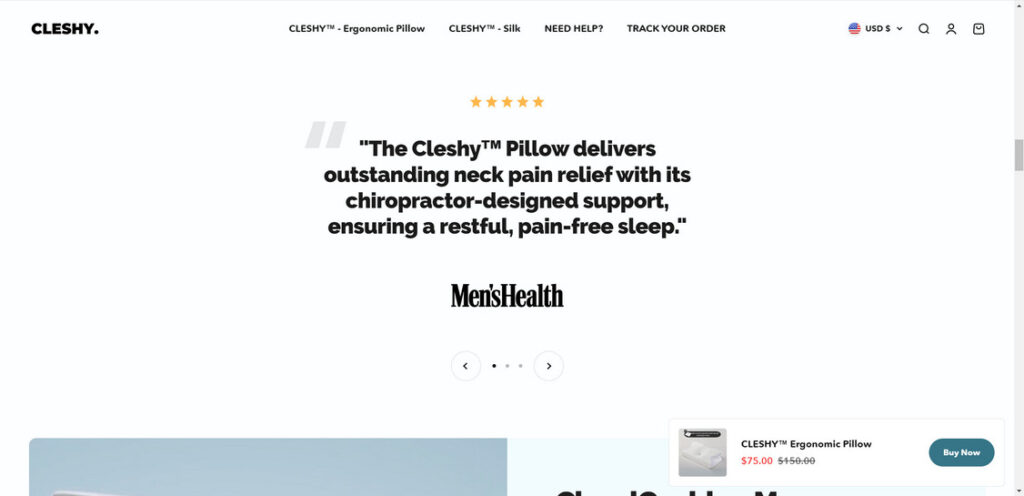
One alarming discovery is the CLESHY website displays logos of major news outlets and sites along with glowing quotes about their pillow. However, real articles from these sources don’t seem to exist.
A close examination reveals:
- USA Today – No article found on real site despite logo displayed
- Men’s Health – No article found though logo shown
- Buzzfeed – No article exists on actual site
The CLESHY website is misusing the brand names and logos of reputable news organizations to try and boost the credibility of their pillow.
In reality, these major consumer and health publications have not endorsed or reviewed the CLESHY pillow in any verifiable journalistic coverage.
Prominently displaying these trusted logos along with positive quotes falsely implies impartial news groups have vetted the product’s claims and effectiveness. This tactic to piggyback off brand recognition is highly unethical and deceptive.
Is CLESHY Ergonomic Pillow a Dropshipping Scam?
Given the many suspicious indicators outlined, CLESHY shows multiple signs of being a potential dropshipping scam.
Like other dropshipping sites, common red flags include:
- Recent website registration
- No company information
- Fake certifications
- Misleading health claims
- Affiliate marketing sites
- Inactive social media
- Countdown timers and limited stock claims
There is a high probability CLESHY does not truly manufacture or distribute their own product line as advertised.
The platform simply exists to collect orders, while sourcing pillows on demand from unknown third party suppliers. This dropship structure maximizes profit while minimizing responsibility for product quality or business transparency.
Risks of Buying From CLESHY
Given the concerning details uncovered in this investigation, there are significant risks to buying from CLESHY:
You may not receive the product ordered
As a dropshipping website, CLESHY may not have inventory. Customers risk paying but never receiving any pillows.
You could receive poor quality pillows
Even if you receive the pillows, they are likely cheaply made by anonymous suppliers. The actual product will probably differ from website pictures and descriptions.
The company is untraceable
With zero verified company details, the owners cannot be held accountable if customers experience issues with orders, personal data, or product safety or quality.
Your personal data is vulnerable
Dropshipping sites often sell customer data like emails and shipping addresses to other parties. Providing information to CLESHY exposes you to potential data
You have no recourse for issues
If any problems come up, you have no direct support because CLESHY is an anonymous business. Getting responses or refunds will likely be impossible.
Returns will be difficult or denied
While CLESHY advertises free returns, shady dropshippers typically make the process difficult to discourage refunds and maximize profit.
Health claims are exaggerated
There is no solid evidence the pillow can treat health conditions like sleep apnea or chronic pain despite the website’s bold assertions. Relying on it as a medical solution could have consequences.
Expert Tips for Avoiding Dropshipping Scams
Based on this thorough analysis, here are some tips from experts to steer clear of dropshipping scams:
- Research the website’s domain age – Anything under 2-3 years could be suspicious.
- Confirm certifications and awards – Check with the issuing organization if claims seem doubtful.
- Look for detailed, verifiable company info – Legitimate sellers will provide this.
- Search for independent reviews – Fake sites only show positive reviews on their own site.
- Beware of “As Seen On” claims – Scammers fake endorsements from major outlets.
- Ask for proof of any health claims – Medical assertions require clinical studies from reputable journals.
- Avoid sites with countdown timers – This tactic pressures customers into rushed purchases.
- Check social media engagement – Low followers and activity indicates a fake brand.
- See if free returns have limitations – Scams make refunds difficult or non-existent.
- Use trustworthy payment methods – Never pay unnamed sellers by wire transfer or crypto. Use credit cards for purchase protection.
By thoroughly researching sites and applying these tips, customers can detect and dodge untrustworthy dropshipping operations.
Conclusion
Based on this detailed investigation, the CLESHY Ergonomic Pillow displays multiple suspicious indicators strongly suggesting it is an unreliable dropshipping scam.
Red flags like pressure sales tactics, fake certifications, nonexistent company info, overhyped health claims and new website registration match established scam patterns seen in shady ecommerce schemes.
Our expert recommendation is to avoid purchasing from CLESHY because of the significant risks involved. There are likely serious issues with product quality, business transparency, and fulfillment reliability.
Instead of falling for clever marketing from unknown sellers, consumers should buy pillows from reputable brands with real verifiable company details, fair policies, and honest advertising.
While ergonomic pillows can aid comfort, unsupported health claims should always be treated skeptically. Make purchasing decisions carefully based on credible evidence, not bold marketing hype.
With vigilance and scrutiny, shoppers can protect themselves by recognizing and steering clear of dropshipping scams like CLESHY. Focus your hard-earned money only on legitimate products that improve your rest.
Sweet dreams!
This article is for educational purposes only and does not constitute professional, financial or legal advice. The content is intended for general information and should not be construed as definitive guidance. Information contained herein is subject to change without notice.  For concerns, please contact us via the provided form.
If you are the owner of the website or product in question and wish to offer clarifications regarding your business or website, please reach out to us through the provided Contact Form.








