You are checking Task Manager and you spot conhost.exe. Sometimes there is one copy. Sometimes there are several. Sometimes it spikes CPU for a moment and disappears. It looks technical enough to be important, and vague enough to feel suspicious.
In most cases, conhost.exe is legitimate. It is a normal Windows component that helps console-based programs run smoothly. But because it is a common background process, malware occasionally tries to blend in by using the same name.
This guide explains what conhost.exe does, how to confirm it is the real Windows file, the warning signs of fakes, and exactly what to do if it turns out to be malicious.
What is conhost.exe?
conhost.exe stands for Console Window Host. It is a Windows process that sits between classic console applications (like Command Prompt tools) and the Windows graphical interface, helping console windows display correctly and interact better with the desktop.
In plain terms: when a console-based program runs, conhost.exe helps Windows handle the window, fonts, copy/paste, and the way the console integrates with the rest of the system.
You will often see conhost.exe appear when you run things like:
Command Prompt commands
PowerShell commands
Terminal-based utilities
Installers and updaters that use background console tasks
Some device tools and driver installers
This is why conhost.exe can show up even when you did not open Command Prompt yourself.
Why does conhost.exe run? And why can there be multiple copies?
It is normal to see more than one conhost.exe process because Windows can create a separate instance for different console sessions or different programs.
A good rule:
If you are running apps that use command-line helpers (even silently), you may see multiple conhost.exe processes.
If you close the parent program, the associated conhost.exe should usually disappear shortly after.
If conhost.exe stays running permanently or multiplies rapidly, you should verify what is launching it.
Is conhost.exe a virus or legitimate?
Usually legitimate. The key is verifying identity.
What legitimate conhost.exe should look like
A genuine conhost.exe typically has:
A normal Windows file path (most important)
A Microsoft digital signature
A clear parent process (often cmd.exe, powershell.exe, WindowsTerminal.exe, an installer, or a known application)
The big reason people suspect it
Malware authors love trusted names. conhost.exe is perfect because:
Many users do not know what it is
It appears and disappears
It can have multiple instances, which looks “malware-like”
So conhost.exe itself is not suspicious. A conhost.exe in the wrong place is.
How to tell if conhost.exe is real (fast checks)
1) Check the file location (the quickest and most reliable test)
A legitimate conhost.exe is normally located in:
C:\Windows\System32\conhost.exe
How to check:
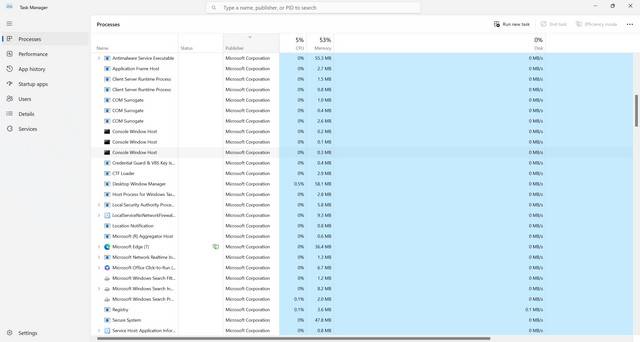
Press Ctrl + Shift + Esc to open Task Manager
Find conhost.exe
Right-click it → Open file location
What it means:
If it opens in C:\Windows\System32\, that is a strong sign it is legitimate.
If it opens in AppData, Temp, Downloads, ProgramData, or any random folder, treat it as suspicious.
Impostors commonly hide in user-writeable locations because malware can easily drop files there without admin privileges.
2) Check the digital signature
In the file’s folder, right-click conhost.exe → Properties
Go to Digital Signatures
Confirm it is signed by Microsoft and the signature is valid
No signature or an invalid signature is a major warning sign for something claiming to be a core Windows component.
3) Check the parent process (useful context)
If you see conhost.exe and want to know what spawned it:
In Task Manager, you can sort by name and watch what appears when you launch an app.
Advanced users can use Process Explorer to see the process tree clearly.
A common normal pattern is:
cmd.exe or powershell.exe → conhost.exe
A suspicious pattern is:
A random executable from AppData or Temp → conhost.exe
Why is conhost.exe using high CPU or memory?
In most legitimate cases, conhost.exe itself is not the true “problem.” It is just hosting a console session for something else.
Common legitimate reasons:
A command-line task is doing heavy work (compression, scanning, converting files, compiling)
An installer is running background scripts
A security product is running a console helper
A Windows maintenance task is running briefly
The key is whether it returns to normal once the underlying task finishes.
When high usage is a red flag
conhost.exe is high CPU for long periods with no clear parent process you recognize
It keeps reappearing after you end it
It is running from a non-system folder
You see unusual network activity tied to whatever spawned it
Common “fake conhost.exe” tricks
Malware rarely needs to replace the real conhost.exe. It usually just drops a file named conhost.exe in a different folder and tries to run it at startup.
Watch for:
Wrong location (top red flag)
Look-alike names like conhost32.exe, conhost1.exe, or subtle spelling changes
Multiple copies in strange locations
A conhost.exe that launches even in Safe Mode (often indicates persistence)
If it is malware: how to remove fake conhost.exe safely
If your checks show conhost.exe is not in System32 or it is not signed properly, treat it as malicious and do this.
STEP 1: Use Rkill to terminate malicious processes
In this first step, we will download and run Rkill to terminate malicious processes that may be running on your computer.
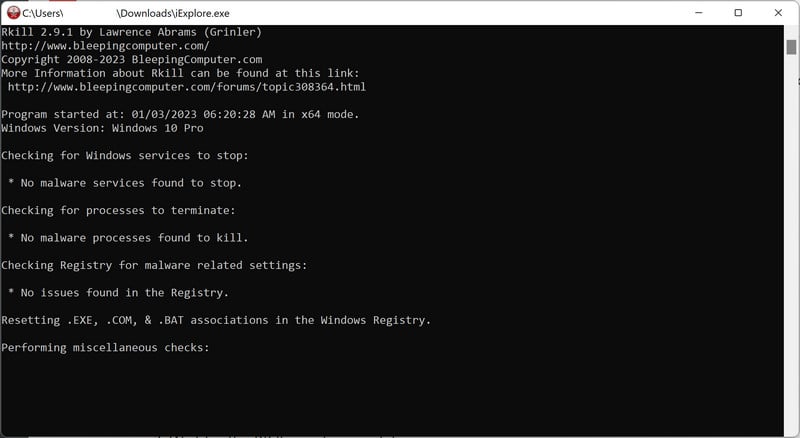
RKill is a program that was developed at BleepingComputer.com that attempts to terminate known malware processes so that your normal security software can then run and clean your computer of infections. When RKill runs it will kill malware processes and then removes incorrect executable associations and fixes policies that stop us from using certain tools.
Download Rkill.
You can download RKill to your computer from the below link. When at the download page, click on the Download Now button labeled iExplore.exe. We are downloading a renamed version of Rkill (iExplore.exe) because some malware will not allow processes to run unless they have a certain filename.
RKILL DOWNLOAD LINK (The above link will open a new page from where you can download Rkill)
Run RKill.
After downloading, double-click the iExplore.exe icon to kill malicious processes. In most cases, downloaded files are saved to the Downloads folder. The program may take some time to search for and end various malware programs.
When it is finished, the black window will close automatically and a log file will open. Do not restart your computer. Proceed to the next step in this guide.
STEP 2: Uninstall malicious programs from Windows
In this second step, we will manually check if any unknown or malicious programs are installed on the computer. Sometimes adware and browser hijackers can have a usable Uninstall entry that can be used to remove them.
Windows 11Windows 10Windows 8Windows 7
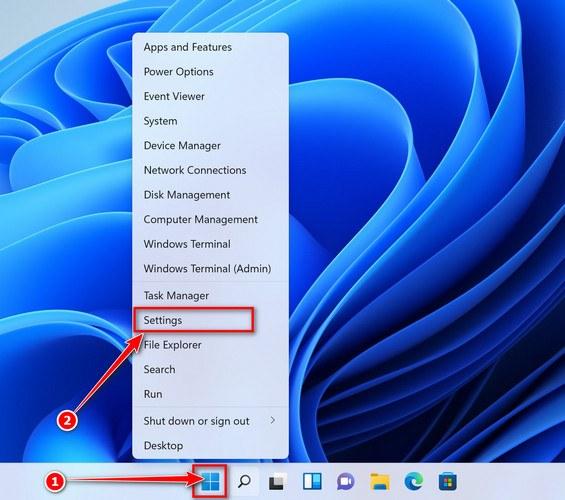
Press the Windows key + I on your keyboard to open the Settings app.
First, open Windows Settings by pressing Windows+I on your keyboard. You can also right-click your Start button and select “Settings” from the list.
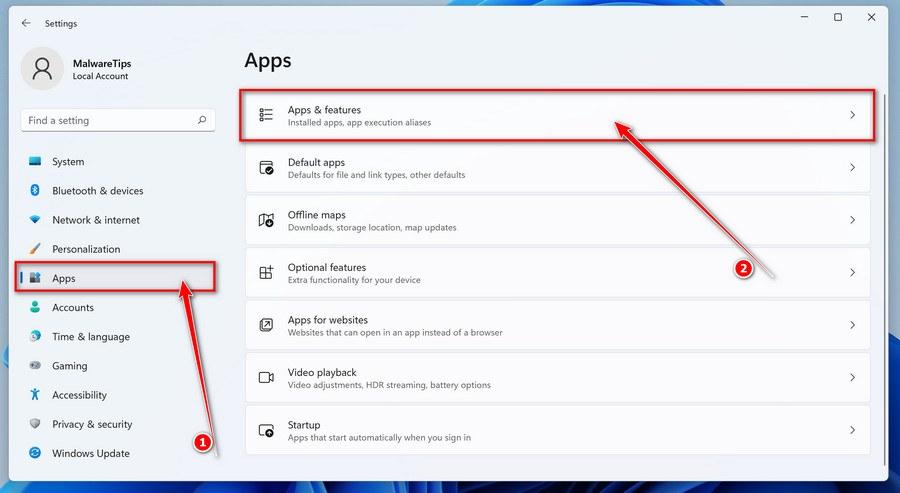
In the Settings app, click on “Apps” and then “Apps & features”.
When Settings opens, click “Apps” in the sidebar, then select “Apps & Features”.
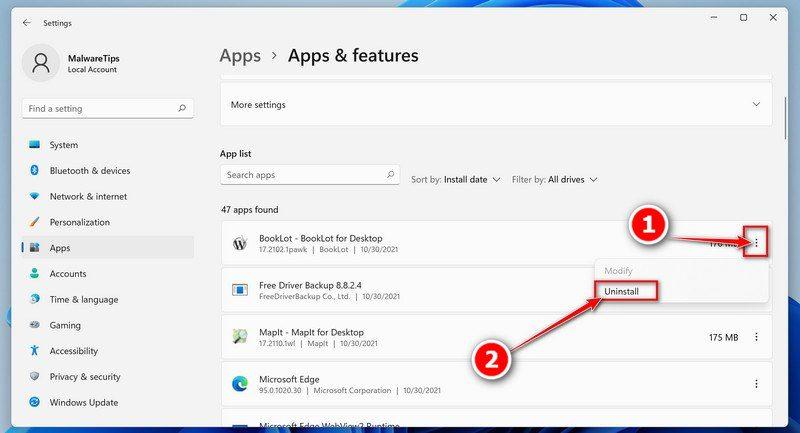
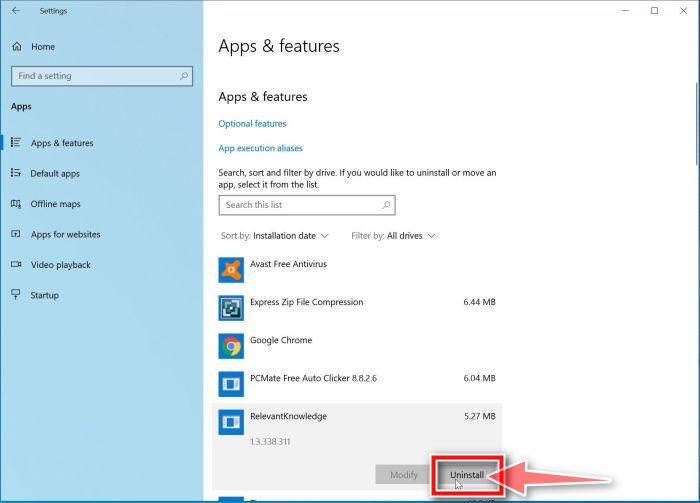
Find the malicious program in the list of installed apps and uninstall it.
In Apps & Features settings, scroll down to the app list and search for unknown or suspicious programs. To make things easier, you can sort all installed programs by their installation date. To do this, click “Sort by” and select “Install date”. Look out for any suspicious program that could be behind all the drama – anything you don’t remember downloading or that doesn’t sound like a genuine program. When you find a malicious program, click the three dots button beside it and select “Uninstall” in the menu that appears.
If you have checked your computer for malicious programs and did not find any, you can proceed with the next step in this guide.
Follow the prompts to uninstall the program.
In the next message box, confirm the uninstall process by clicking on Uninstall, then follow the prompts to uninstall the malicious program. Make sure to read all of the prompts carefully, because some malicious programs try to sneak things in hoping that you won’t read them closely.
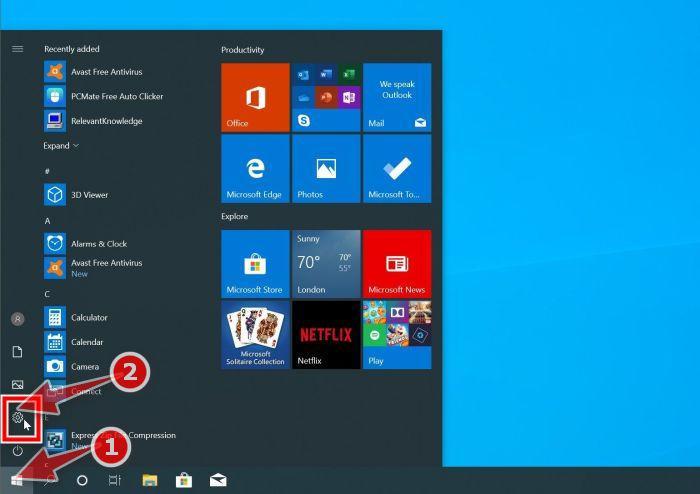
Press the Windows key + I on your keyboard to open the Settings app.
Press the Windows key + I on your keyboard to open the Settings app. You can also ope the Settings app by clicking the Start button on the taskbar, then select “Settings” (gear icon).
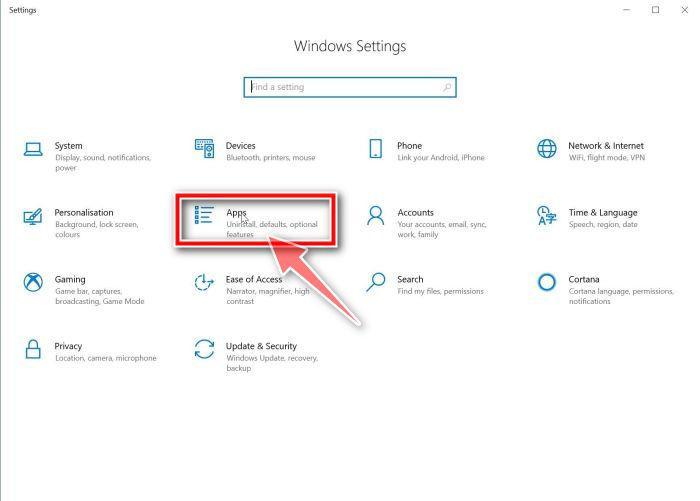
In the Settings app, click on “Apps”.
When the “Windows Settings” window opens, click on “Apps“. By default, it should open “Apps and Features” but if it doesn’t, select it from the list on the left.
Find the malicious program in the list of installed apps and uninstall it.
In Apps & Features settings, scroll down to the app list and search for unknown or suspicious programs. To make things easier, you can sort all installed programs by their installation date. To do this, click “Sort by” and select “Install date”. Look out for any suspicious program that could be behind all the drama – anything you don’t remember downloading or that doesn’t sound like a genuine program. When you find a malicious program, click on it and select “Uninstall” in the menu that appears.
If you have checked your computer for malicious programs and did not find any, you can proceed with the next step in this guide.
Follow the prompts to uninstall the program.
In the next message box, confirm the uninstall process by clicking on Uninstall, then follow the prompts to uninstall the malicious program. Make sure to read all of the prompts carefully, because some malicious programs try to sneak things in hoping that you won’t read closely.
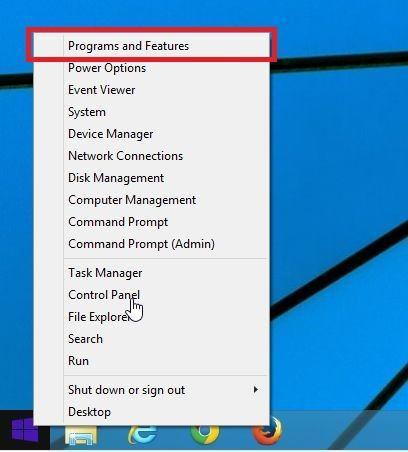
Go to “Program and Features”.
Right-click on the Start button in the taskbar, then select “Programs and Features”. This will take you directly to your list of installed programs.
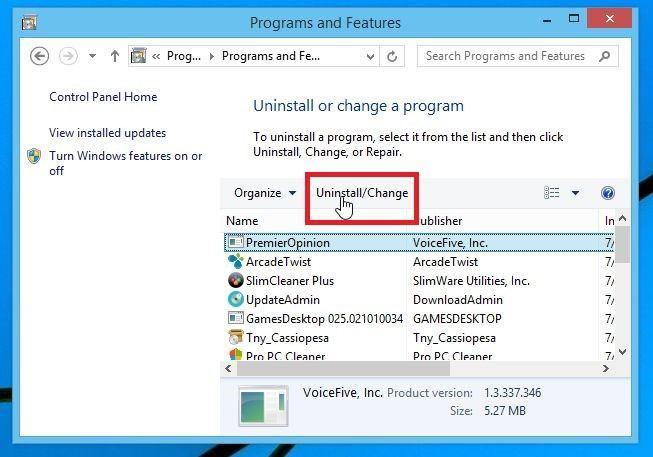
Search for malicious program and uninstall it.
The “Programs and Features” screen will be displayed with a list of all the programs installed on your computer. Scroll through the list until you find any unknown or suspicious program, then click to highlight it, then click the “Uninstall” button.
Look out for any suspicious program that could be behind all the drama – anything you don’t remember downloading or that doesn’t sound like a genuine program.
If you have checked your computer for malicious programs and did not find any, you can proceed with the next step in this guide.
Follow the on-screen prompts to uninstall malicious program.
In the next message box, confirm the uninstall process by clicking on Yes, then follow the prompts to uninstall malicious program. Make sure to read all of the prompts carefully, because some malicious programs try to sneak things in hoping that you won’t read closely.
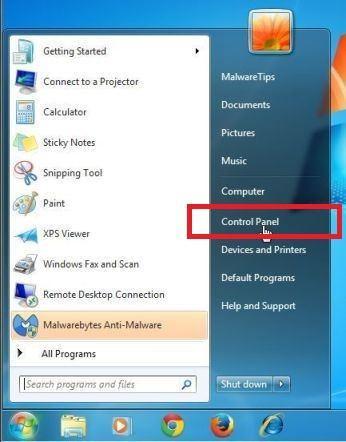
Open the “Control Panel”.
Click on the “Start” button, then click on “Control Panel“.
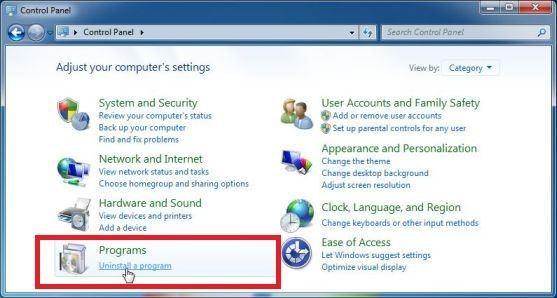
Click on “Uninstall a Program”.
When the “Control Panel” appears, click on “Uninstall a Program” from the Programs category.
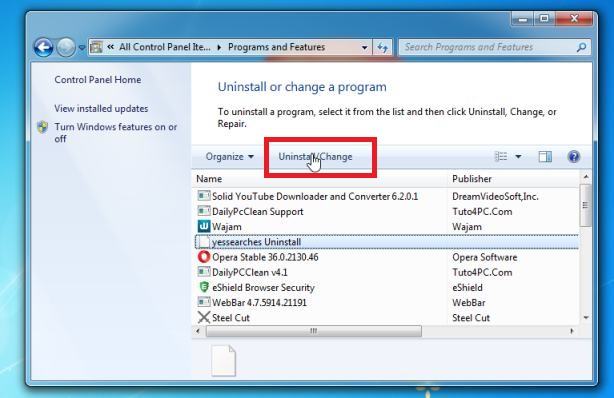
Search for malicious programs and uninstall them.
The “Programs and Features” screen will be displayed with a list of all the programs installed on your computer. Scroll through the list until you find any suspicious or unknown program, then click to highlight it, then click the “Uninstall” button. Look out for any suspicious program that could be behind all the drama – anything you don’t remember downloading or that doesn’t sound like a genuine program.
If you have checked your computer for malicious programs and did not find any, you can proceed with the next step in this guide.
Follow the on-screen prompts to uninstall malicious program.
In the next message box, confirm the uninstall process by clicking on Yes, then follow the prompts to uninstall malicious program. Make sure to read all of the prompts carefully, because some malicious programs try to sneak things in hoping that you won’t read closely.
If you are experiencing difficulty while attempting to uninstall a program, you can use Revo Uninstaller to completely remove the unwanted program from your computer.
Now that the malicious programs have been removed from your computer, we can proceed with the next step in this guide.
STEP 3: Reset browsers back to default settings
In this step, we will remove spam notifications, malicious extensions, and change to default any settings that might have been changed by malware. Please note that this method will remove all extensions, toolbars, and other customizations but will leave your bookmarks and favorites intact. For each browser that you have installed on your computer, please click on the browsers tab below and follow the displayed steps to reset that browser.
ChromeFirefoxMicrosoft EdgeInternet Explorer
Reset Chrome for Windows to default settings
We will now reset your Chrome browser settings to their original defaults. This will reset your startup page, new tab page, search engine, and pinned tabs. It will also disable all extensions and clear temporary data like cookies. Your favorites, history, and saved passwords will not be cleared.
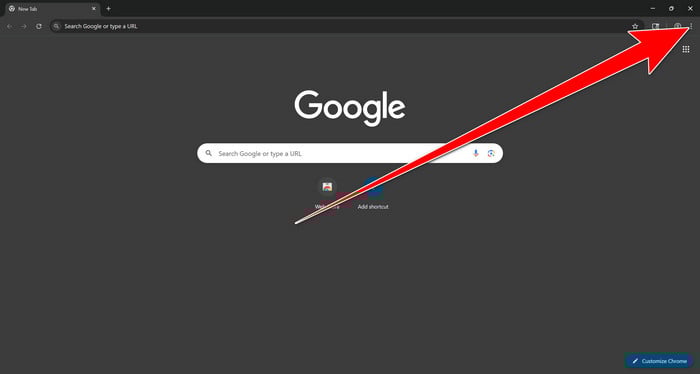
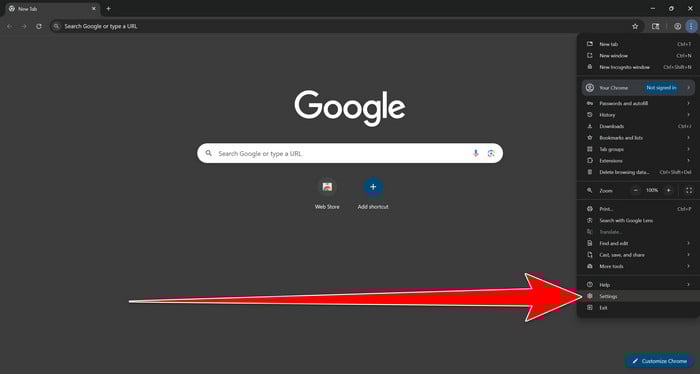
Open the Chrome menu
In the top-right corner of Chrome, click the three-dot (⋮) icon to open the menu.
Go to Settings
From the menu, select Settings.
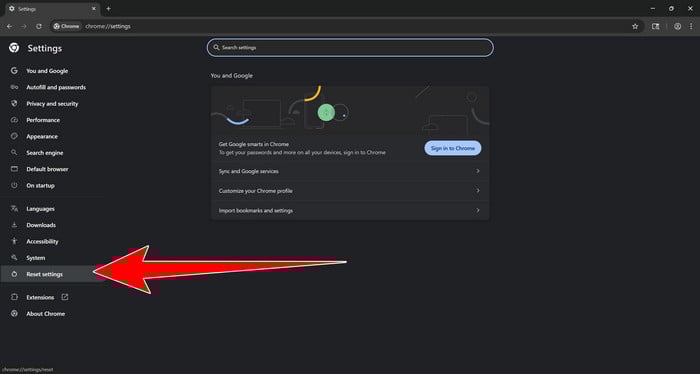
Select “Reset settings”
In the left sidebar, scroll down and click Reset settings.
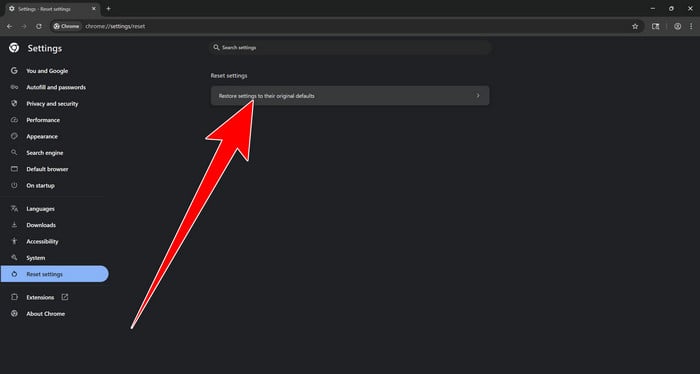
Choose “Restore settings to their original defaults”
Click the Restore settings to their original defaults option.
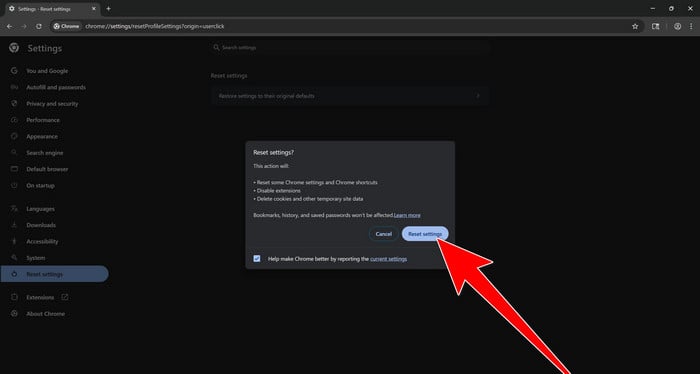
Confirm the reset
In the dialog that appears, click Reset settings to restore Chrome to its default state. Bookmarks, history, and saved passwords will remain, but extensions will be disabled and temporary data cleared.
Reset Firefox for Windows to default settings
We will now reset your Firefox browser settings to their default. The reset feature fixes many issues by restoring Firefox to its factory default state while saving your essential information like bookmarks, passwords, web form auto-fill information, browsing history, and open tabs.
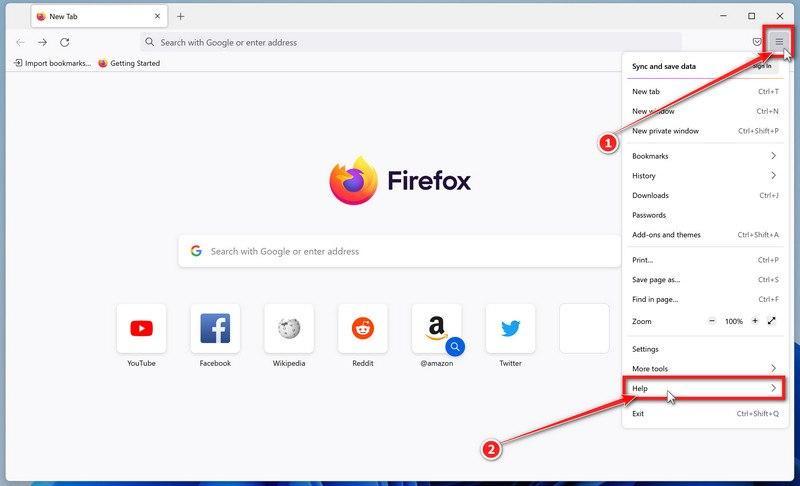
Click the three horizontal lines in the top-right corner and then click on “Help”.
Click on Firefox’s main menu button, represented by three horizontal lines. When the drop-down menu appears, select the option labeled “Help“.
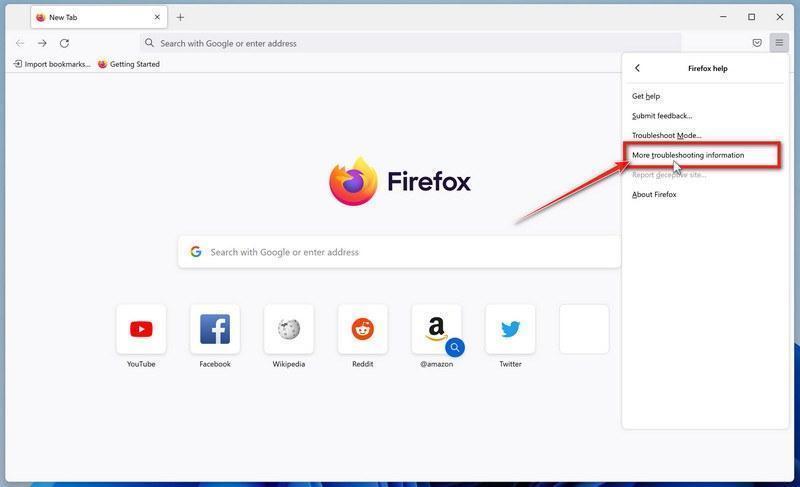
Click “More troubleshooting information”.
From the Help menu, click on “More troubleshooting information“.
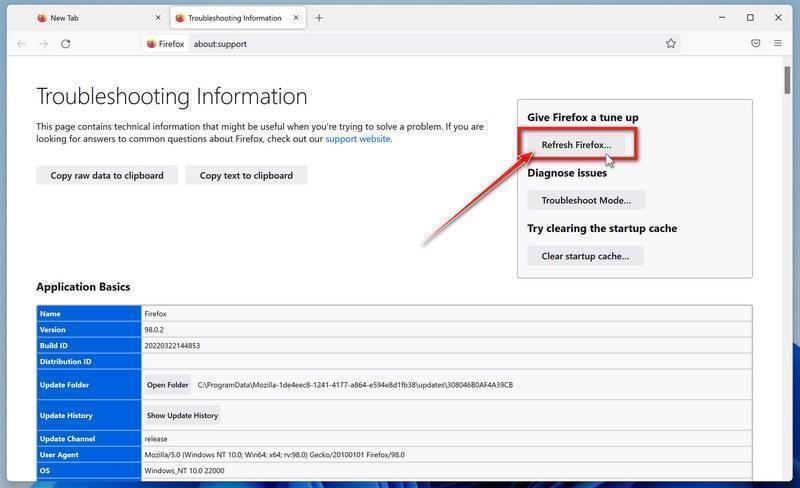
Click on “Refresh Firefox”
When the “Troubleshooting Information” page opens, click on the “Refresh Firefox” button.
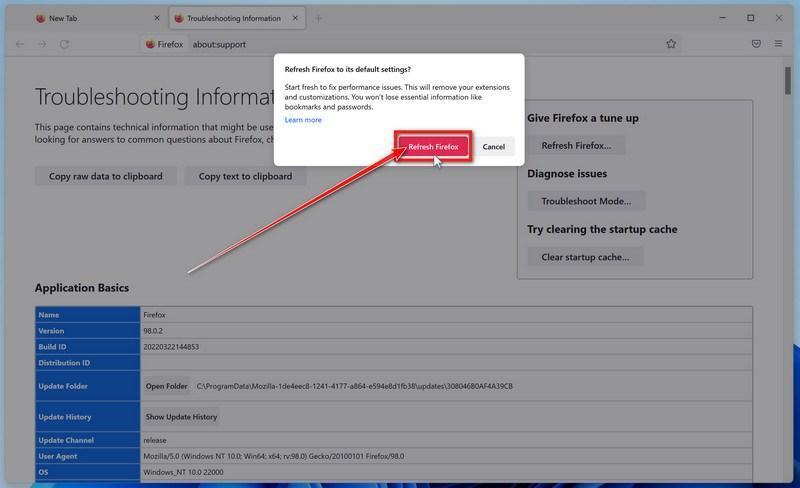
Confirm that you want to reset your browser settings.
To finish the reset process, click on the “Refresh Firefox” button in the new confirmation window that opens.
Click “Finish”.
Firefox will now close itself and will revert to its default settings. When it’s done, a window will list the information that was imported. Click on “Finish“.
Your old Firefox profile will be placed on your desktop in a folder named “Old Firefox Data“. If the reset didn’t fix your problem you can restore some of the information not saved by copying files to the new profile that was created. If you don’t need this folder any longer, you should delete it as it contains sensitive information.
Reset Microsoft Edge to default settings
We will now reset your Microsoft Edge browser settings to their default. This will reset your startup page, new tab page, search engine, and pinned tabs. It will also disable all extensions and clear temporary data like cookies. Your favorites, history, and saved passwords will not be cleared.
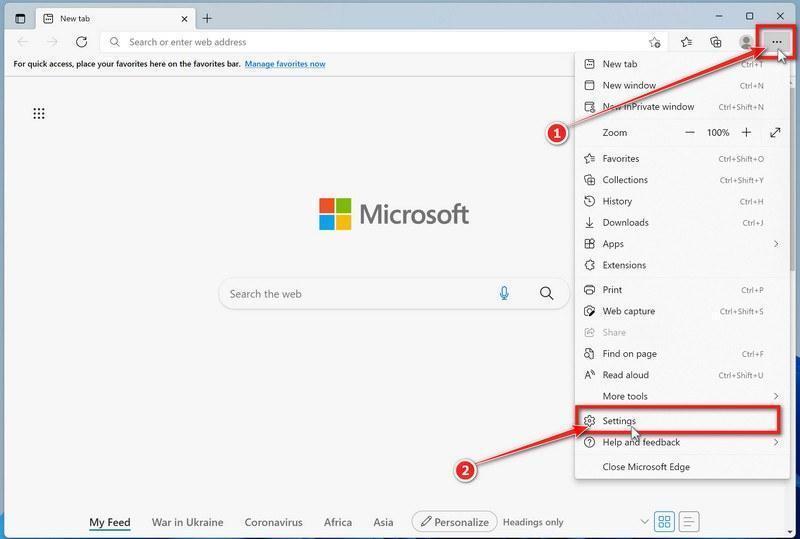
Click the three dots in the top-right corner and then click on “Settings”.
In the top right corner, click on Microsoft Edge’s main menu button, represented by three horizontal dots. When the drop-down menu appears, click on “Settings“.
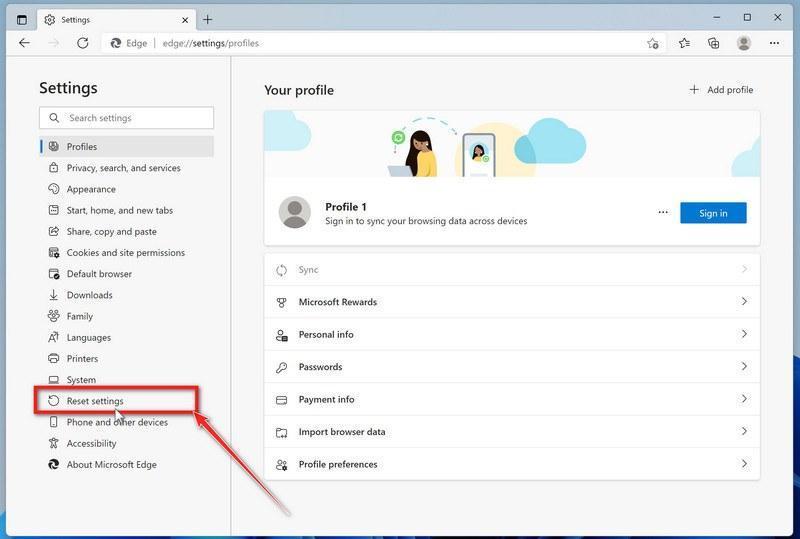
Click on “Reset Settings”.
On the left side of the window, click on “Reset Settings“.
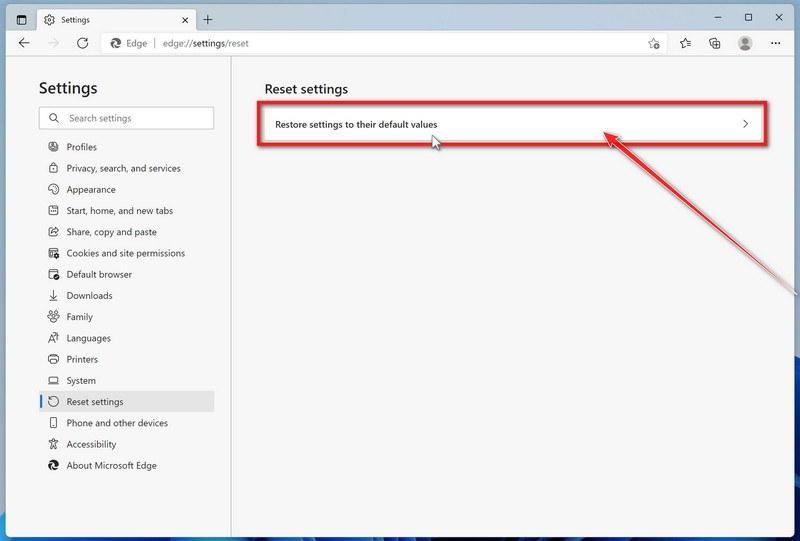
Click on “Restore settings to their default values”.
In the main window, click on “Restore settings to their default values“.
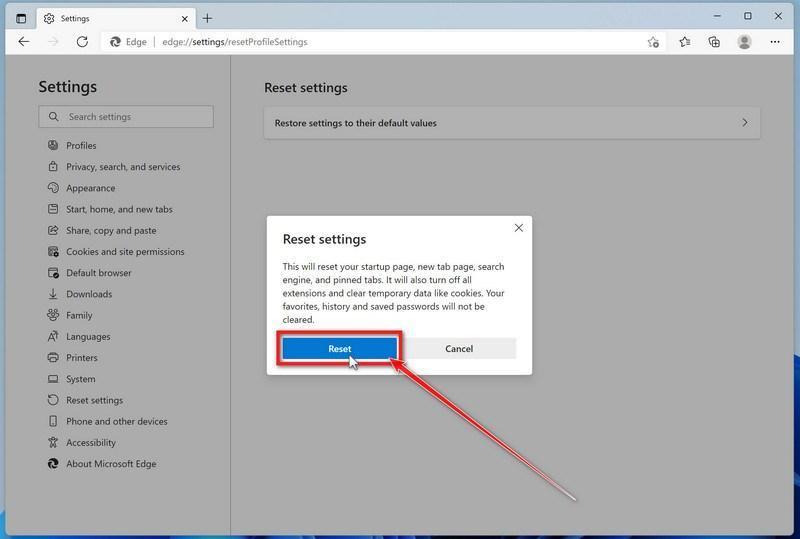
Click “Reset”.
A confirmation dialog should now be displayed, detailing the components that will be restored to their default state should you continue with the reset process. To complete the restoration process, click on the “Reset” button. Microsoft Edge will now erase all your personal data, browsing history, and disable all installed extensions. Your bookmarks, though, will remain intact and still be accessible.
Reset Internet Explorer to default settings
We will now reset your Internet Explorer browser settings to their default. You can reset Internet Explorer settings to return them to the state they were in when Internet Explorer was first installed on your computer.
Go to “Internet Options”.
Open Internet Explorer, click on the gear icon in the upper-right part of your browser, then select “Internet Options“.
Select the “Advanced” tab, then click “Reset”
In the “Internet Options” dialog box, select the “Advanced” tab, then click on the “Reset” button.
Click on “Reset”.
In the “Reset Internet Explorer settings” section, select the “Delete personal settings” checkbox, then click on the “Reset” button.
Click on “Close”.
When Internet Explorer has completed its task, click on the “Close” button in the confirmation dialogue box. Close your browser and then you can open Internet Explorer again.
STEP 4: Use Malwarebytes to remove for Trojans and Unwanted Programs
In this next step, we will we will install Malwarebytes to scan and remove any infections, adware, or potentially unwanted programs that may be present on your computer.
Malwarebytes stands out as one of the leading and widely-used anti-malware solutions for Windows, and for good reason. It effectively eradicates various types of malware that other programs often overlook, all at no cost to you. When it comes to disinfecting an infected device, Malwarebytes has consistently been a free and indispensable tool in the battle against malware. We highly recommend it for maintaining a clean and secure system.
Download Malwarebytes
Download the latest version of Malwarebytes for Windows using the official link below. Malwarebytes will scan your computer and remove adware, browser hijackers, and other malicious software for free.
(The above link will open a new page from where you can download Malwarebytes)
Install Malwarebytes
After the download is complete, locate the MBSetup file, typically found in your Downloads folder. Double-click on the MBSetup file to begin the installation of Malwarebytes on your computer. If a User Account Control pop-up appears, click “Yes” to continue the Malwarebytes installation.
Follow the On-Screen Prompts to Install Malwarebytes
When the Malwarebytes installation begins, the setup wizard will guide you through the process.
You’ll first be prompted to choose the type of computer you’re installing the program on—select either “Personal Computer” or “Work Computer” as appropriate, then click on Next.
Malwarebytes will now begin the installation process on your device.
When the Malwarebytes installation is complete, the program will automatically open to the “Welcome to Malwarebytes” screen.
On the final screen, simply click on the Open Malwarebytes option to start the program.
Enable “Rootkit scanning”.
Malwarebytes Anti-Malware will now start, and you will see the main screen as shown below. To maximize Malwarebytes’ ability to detect malware and unwanted programs, we need to enable rootkit scanning. Click on the “Settings” gear icon located on the left of the screen to access the general settings section.
In the settings menu, enable the “Scan for rootkits” option by clicking the toggle switch until it turns blue.
Now that you have enabled rootkit scanning, click on the “Dashboard” button in the left pane to get back to the main screen.
Perform a Scan with Malwarebytes.
To start a scan, click the Scan button. Malwarebytes will automatically update its antivirus database and begin scanning your computer for malicious programs.
Wait for the Malwarebytes scan to complete.
Malwarebytes will now scan your computer for browser hijackers and other malicious programs. This process can take a few minutes, so we suggest you do something else and periodically check the status of the scan to see when it is finished.
Quarantine detected malware
Once the Malwarebytes scan is complete, it will display a list of detected malware, adware, and potentially unwanted programs. To effectively remove these threats, click the “Quarantine” button.
Malwarebytes will now delete all of the files and registry keys and add them to the program’s quarantine.
Restart your computer.
When removing files, Malwarebytes may require a reboot to fully eliminate some threats. If you see a message indicating that a reboot is needed, please allow it. Once your computer has restarted and you are logged back in, you can continue with the remaining steps.
STEP 5: Use HitmanPro to remove Rootkits and other Malware
In this fifth step, while the computer is in normal back, we will download and run a scan with HitmanPro to remove Trojans, rootkits, and other malicious programs.
HitmanPro is a second-opinion scanner that takes a unique cloud-based approach to malware scanning. HitmanPro scans the behavior of active files and also files in locations where malware normally resides for suspicious activity. If it finds a suspicious file that’s not already known, HitmanPro sends it to its clouds to be scanned by two of the best antivirus engines today, which are Bitdefender and Kaspersky.
Although HitmanPro is shareware and costs $24.95 for 1 year on 1 PC, there is no limit on scanning. The limitation only kicks in when there is a need to remove or quarantine detected malware by HitmanPro on your system and by then, you can activate the one-time 30-days trial to enable the cleanup.
Download HitmanPro.
You can download HitmanPro by clicking the link below.
HITMANPRO DOWNLOAD LINK (The above link will open a new web page from where you can download HitmanPro)
Install HitmanPro.
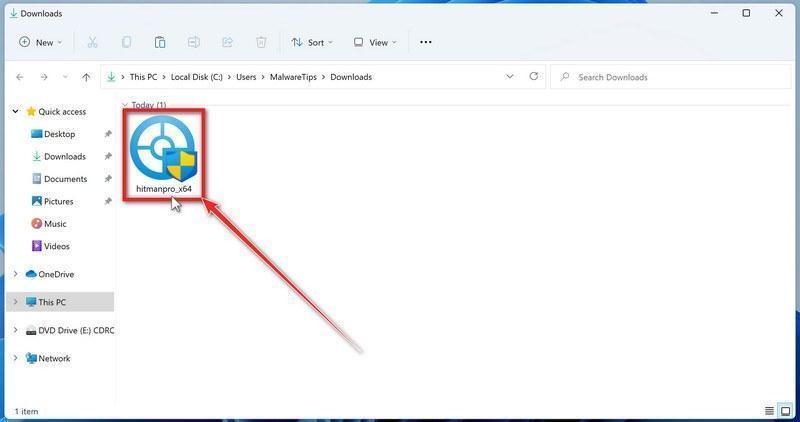
When HitmanPro has finished downloading, double-click on “hitmanpro.exe” (for 32-bit versions of Windows) or “hitmanpro_x64.exe” (for 64-bit versions of Windows) to install this program on your computer. In most cases, downloaded files are saved to the Downloads folder.
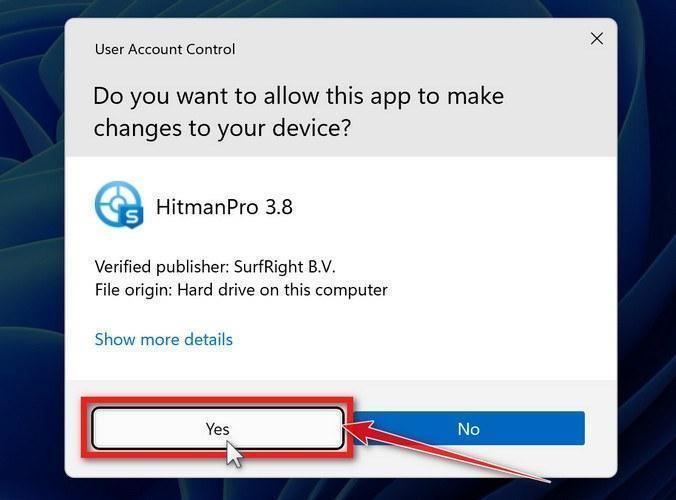
You may be presented with a User Account Control pop-up asking if you want to allow HitmanPro to make changes to your device. If this happens, you should click “Yes” to continue with the installation.
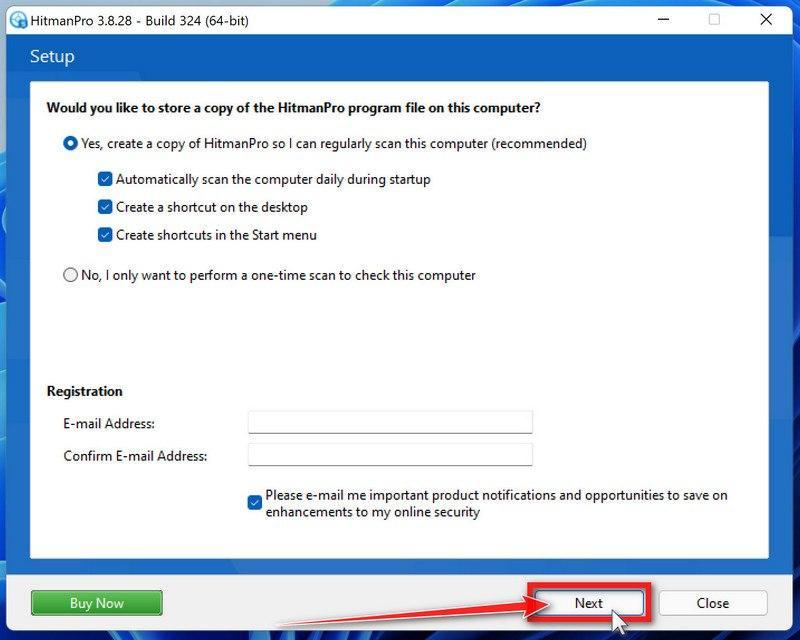
Follow the on-screen prompts.
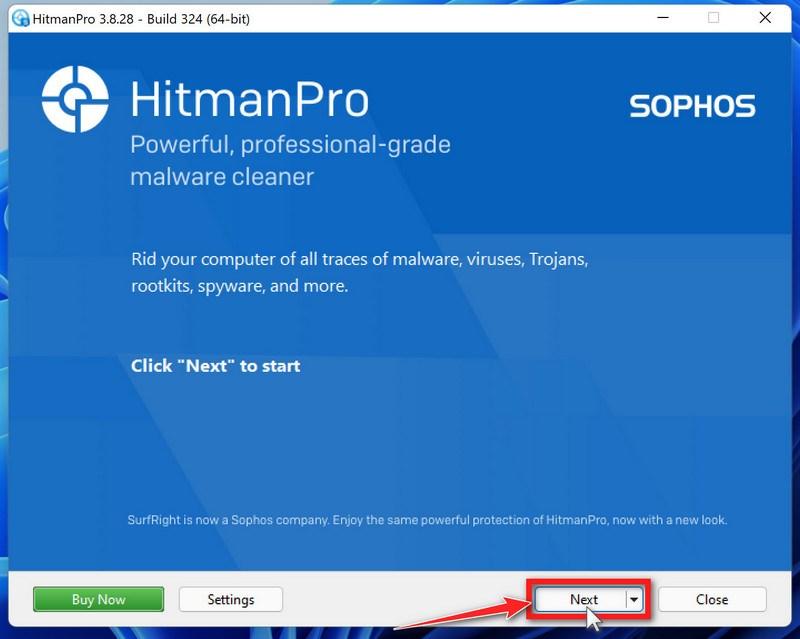
When HitmanPro starts you will be presented with the start screen as shown below. Click on the “Next” button to perform a system scan.
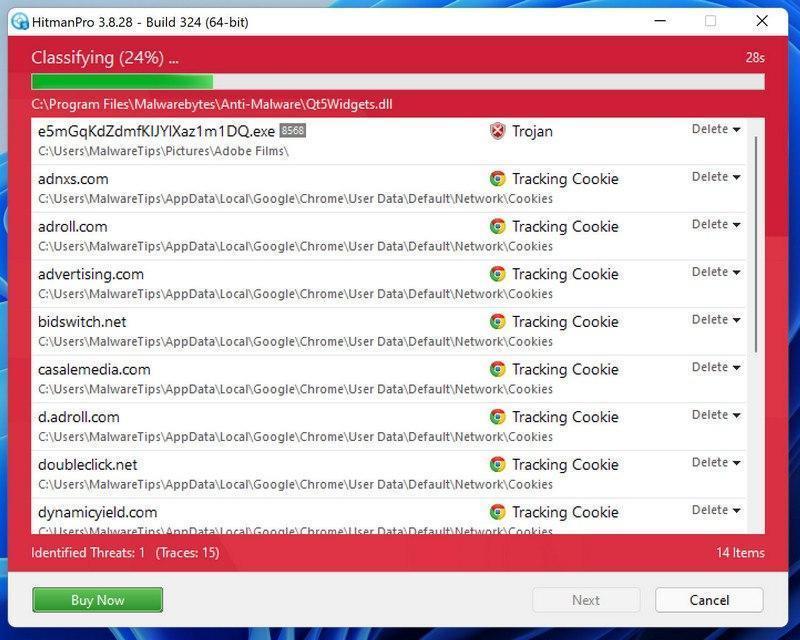
Wait for the HitmanPro scan to complete.
HitmanPro will now begin to scan your computer for malicious programs.
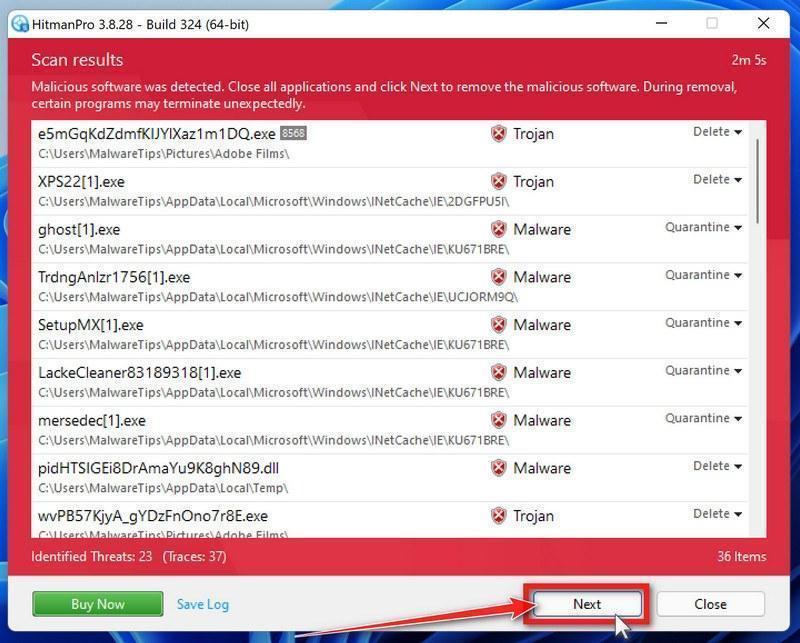
Click on “Next”.
When HitmanPro has finished the scan, it will display a list of all the malware that it has found. Click on the “Next” button to have HitmanPro remove the detected items.
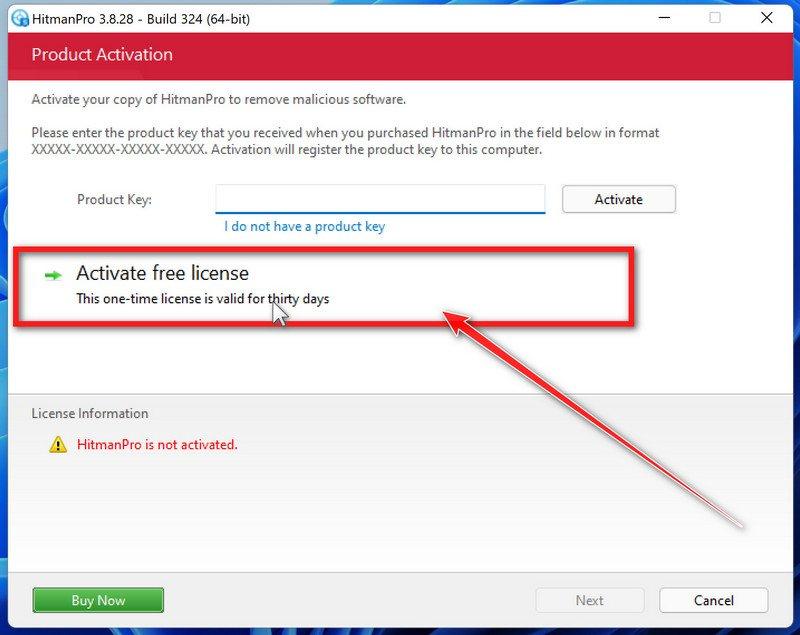
Click on “Activate free license”.
HitmanPro may now require to activate the free 30-days trial to remove the malicious files. To do this, click on the “Activate free license” button to begin the free 30 days trial and remove all the malicious files from your computer.
When the malware removal process is complete, it will display a screen that shows the status of the various programs that were removed. At this screen, you should click on the Next button and then if prompted you should click on the Reboot button. If HitmanPro does not prompt you to reboot, please just click on the Close button.
STEP 6: Use AdwCleaner to remove Malicious Browser Policies and Adware
In this next step, we will use AdwCleaner to remove malicious browser policies and unwanted browser extensions from your computer.
AdwCleaner is a free popular on-demand scanner that can detect and remove malware that even the most well-known anti-virus and anti-malware applications fail to find. This on-demand scanner includes a lot of tools that can be used to fix the side effects of adware. browser hijackers and other malware.
Download AdwCleaner.
You can download AdwCleaner by clicking the link below.
ADWCLEANER DOWNLOAD LINK (The above link will open a new web page from where you can download AdwCleaner)
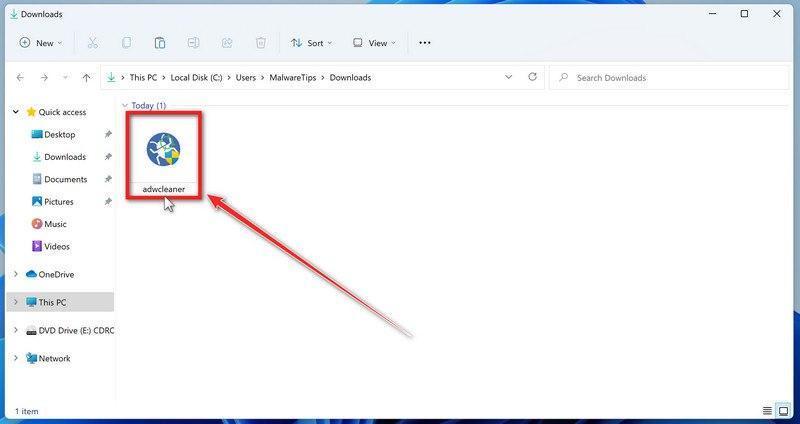
Double-click on the setup file.
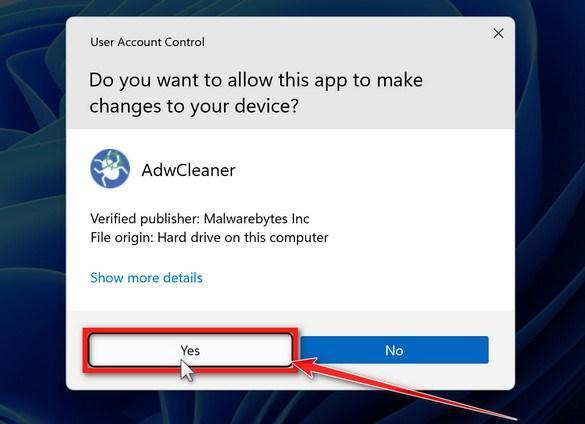
Double-click on the file named “adwcleaner_x.x.x.exe” to start AdwCleaner. In most cases, downloaded files are saved to the Downloads folder.
AdwCleaner program will now open and you will be presented with the program’s license agreement. After you read it, click on the I agree button if you wish to continue. If Windows prompts you as to whether or not you wish to run AdwCleaner, please allow it to run.
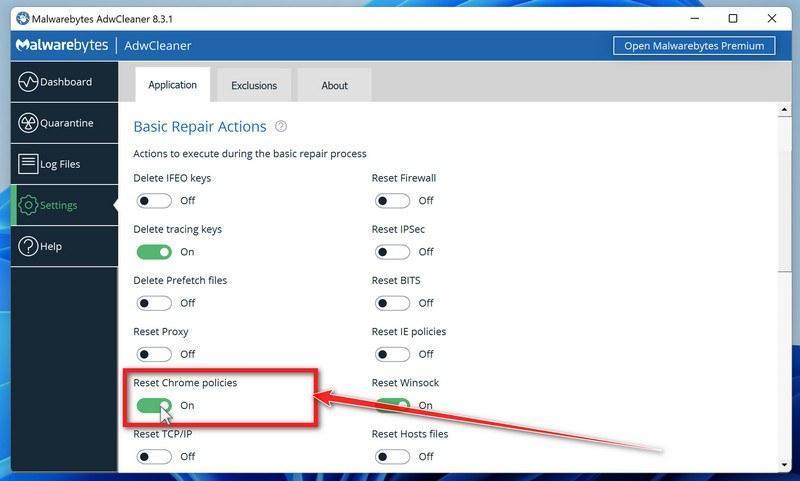
Enable “Reset Chrome policies” to remove malicious browser policies.
When AdwCleaner starts, on the left side of the window, click on “Settings” and then enable “Reset Chrome policies“.
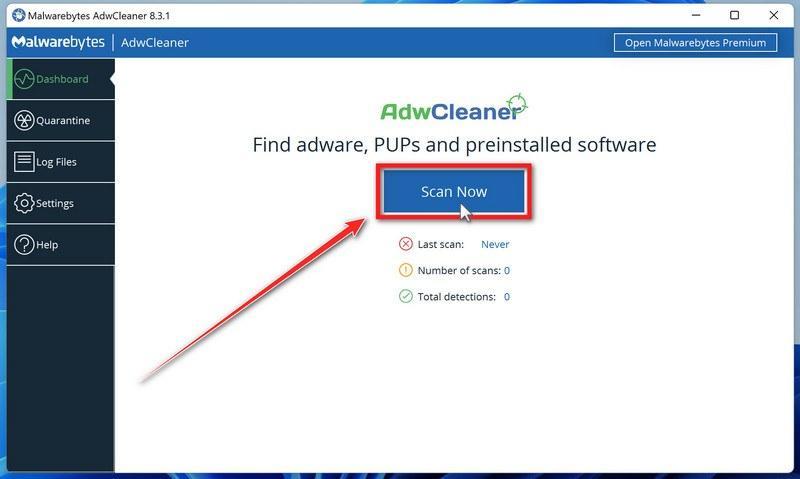
Click on the “Scan” button.
On the left side of the AdwCleaner window, click on “Dashboard” and then click “Scan” to perform a computer scan.
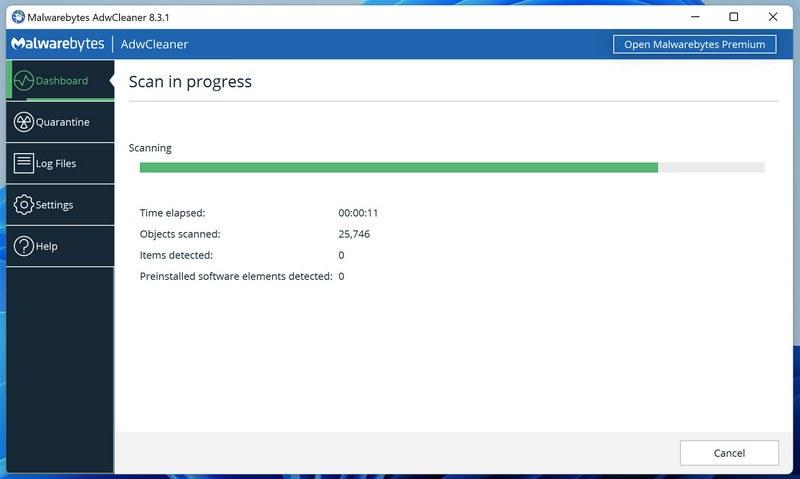
Wait for the AdwCleaner scan to finish.
AdwCleaner will now scan your computer for malware. This process can take a few minutes.
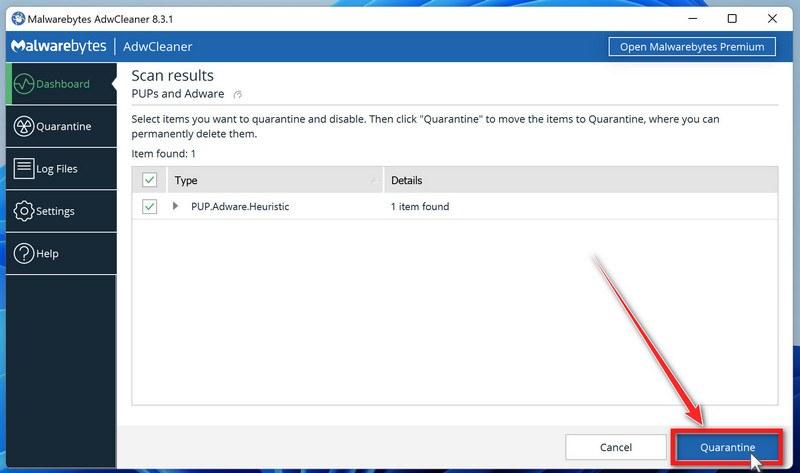
Click on “Quarantine” to remove malware.
When the AdwCleaner scan is completed it will display all of the items it has found. Click on the “Quarantine” button to remove the malicious programs from your computer.
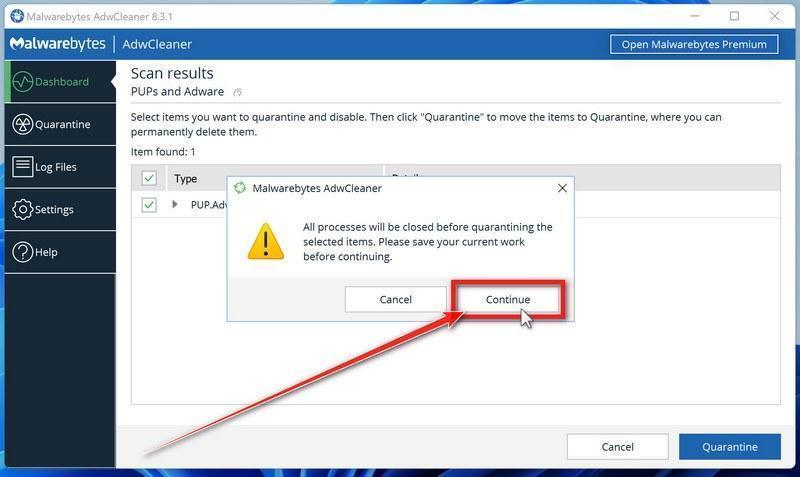
Click on “Continue” to remove the malicious programs.
AdwCleaner will now prompt you to save any open files or data as the program will need to close any open programs before it starts to clean. Click on the “Continue” button to finish the removal process.
AdwCleaner will now delete all detected malware from your computer. When the malware removal process is complete, you may be asked to restart your computer.
STEP 7: Perform a final check with ESET Online Scanner
This step involves installing and running a scan with ESET Online Scanner to check for any additional malicious programs that may be installed on the computer..
ESET Online Scanner is a free second-opinion scanner, designed to rescue your computer from malware (viruses, trojans, rootkits, etc.) that have infected your computer despite all the security measures you have taken (such as anti-virus software, firewalls, etc.).
Download ESET Online Scanner.
You can download ESET Online Scanner by clicking the link below.
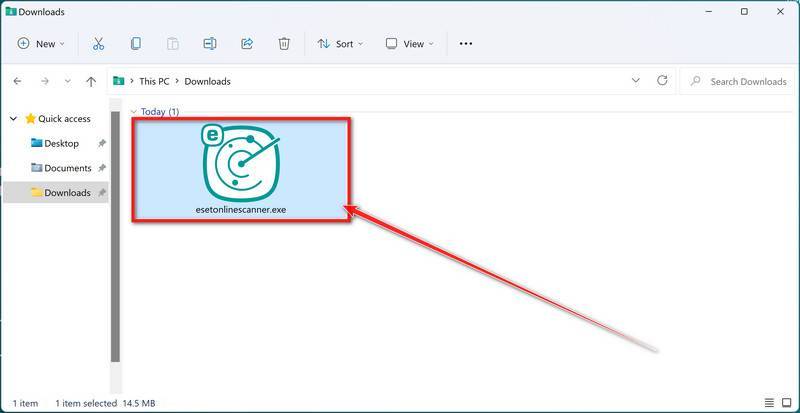
Double-click on esetonlinescanner.exe to run the installer.
When ESET Online Scanner has finished downloading, double-click on “esetonlinescanner.exe” to install it program on your computer. In most cases, downloaded files are saved to the Downloads folder.
Install ESET Online Scanner.
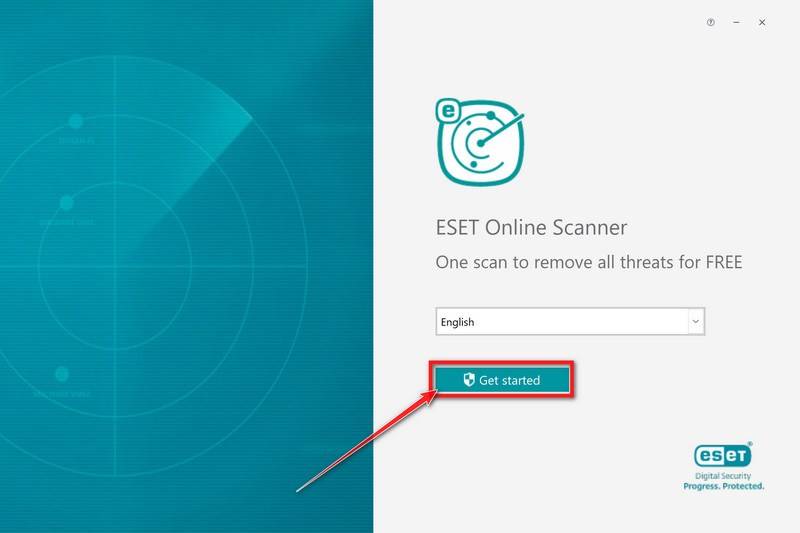
When ESET Online Scanner starts you will be presented with the start screen as shown below. Select your desired language from the drop-down menu and click Get started.
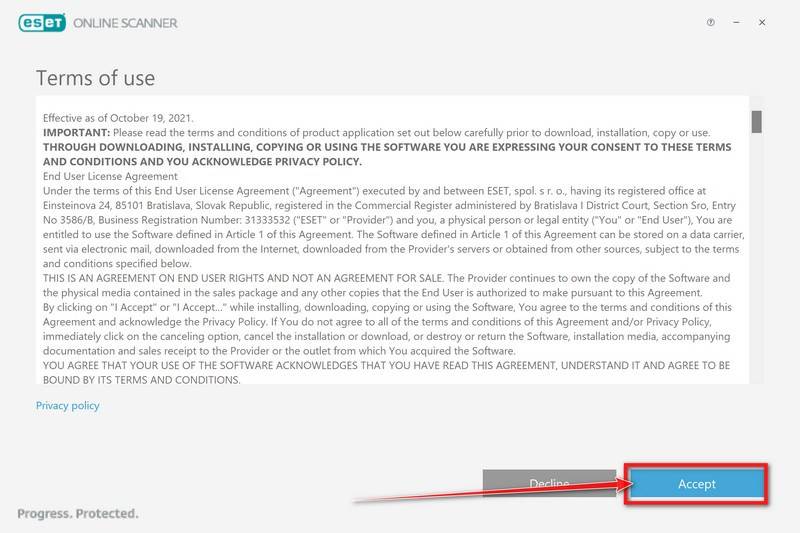
In the Terms of use screen, click Accept.
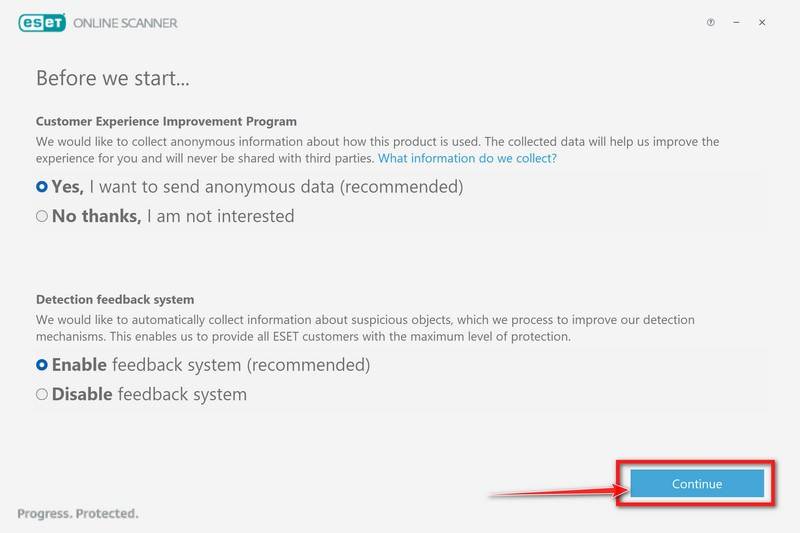
Select your preference for the Customer Experience Improvement Program and the Detection feedback system and click Continue.
Start a Full Scan with ESET Online Scanner
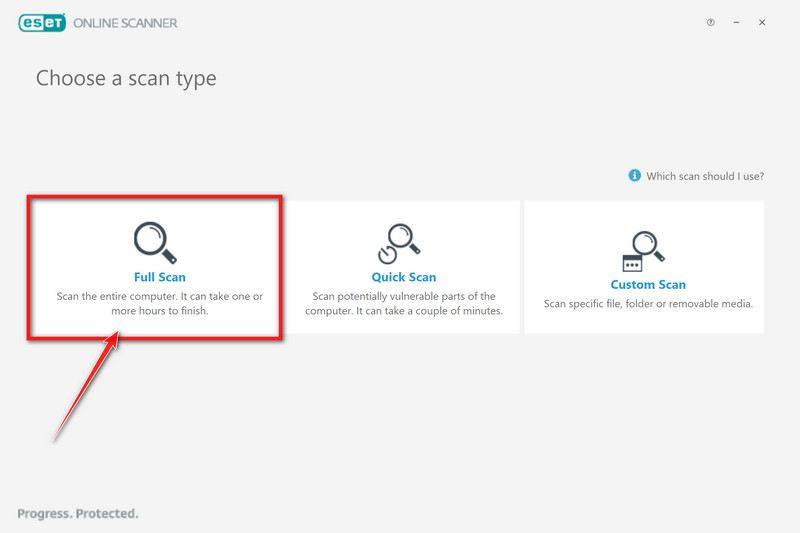
Click on Full Scan to perform an in-depth inspection of the entire computer.
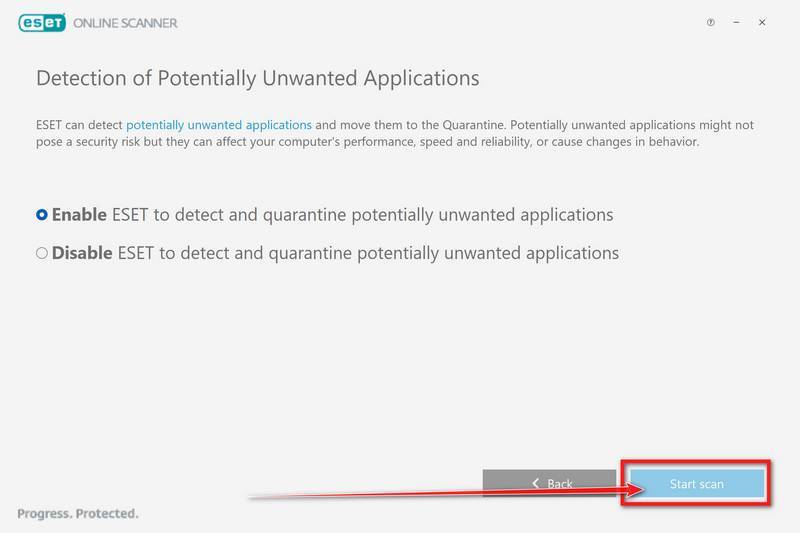
Select Enable for Detection of Potentially Unwanted Applications, then click Start scan.
Wait for the ESET Online Scanner scan to finish.
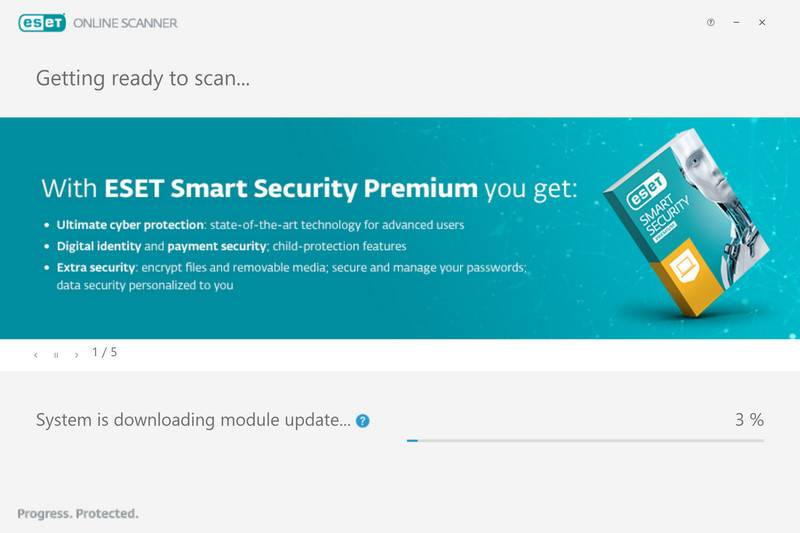
ESET Online Scanner will now begin to scan your computer for malware. This process can take quite a while, so we suggest you do something else and periodically check on the status of the scan to see when it is finished.
ESET Online Scanner will automatically remove the malicious files.
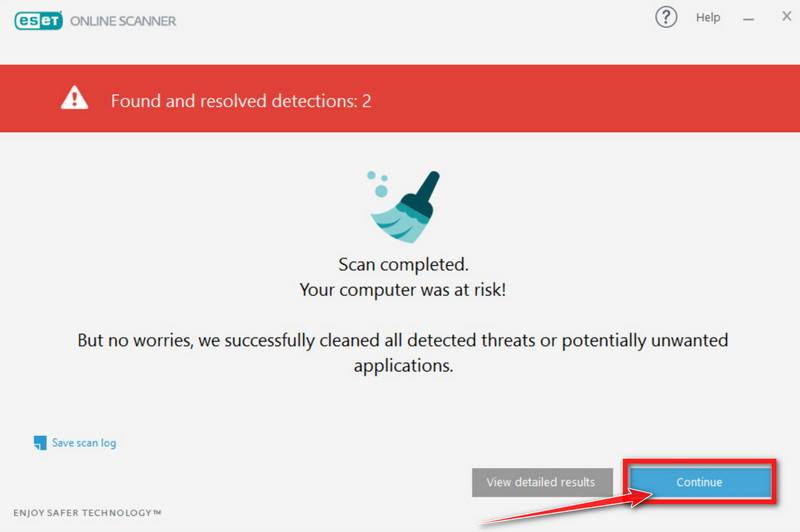
At the end of the scan, the Found and resolved detections screen will be displayed. You can click View detailed results to view specific information. Detected threats are automatically cleaned and quarantined.
STEP 8: Run the System File Checker (SFC) tool
In this step, we will use System File Checker (SFC) tool to detect and repair files that may have been corrupted by malware.
The SFC tool scans all protected system files on your computer and replaces any files that are corrupt or damaged with a cached copy that is stored in a compressed folder at %WinDir%\System32\dllcache. By running the SFC tool, you can help ensure that your system is functioning properly and fix any issues.
Open Command Prompt as Administrator.
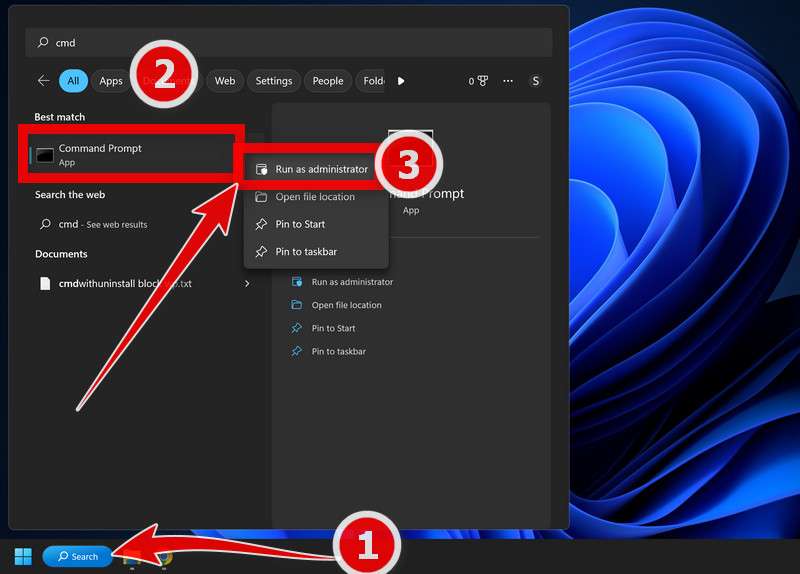
To open the Command Prompt as an administrator in Windows, type “cmd” in the search bar and then right-click on the Command Prompt result and select “Run as administrator” as shown in the image below. A User Account Control (UAC) prompt will appear asking for permission to allow the program to run. Click “Yes”.
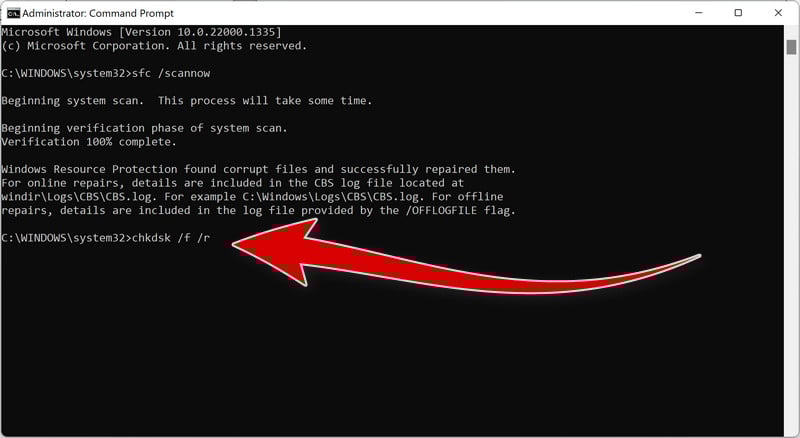
Type “sfc /scannow”.
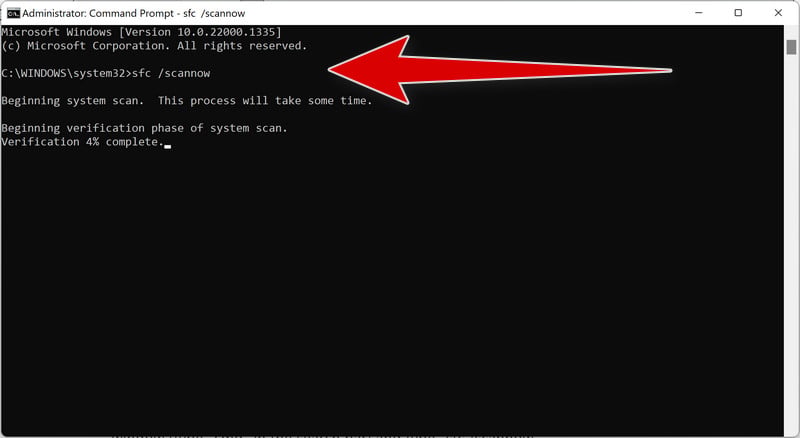
You will now be presented with a black screen called the ‘Administrator: Command Prompt’. On this screen, type “sfc /scannow” to scan for and repair any corrupt system files.
Restart your computer.
Restart your computer if sfc /scannow repaired files. System File Checker may or may not prompt you to restart but even if it doesn’t, you should restart anyway.
Run again sfc /scannow.
Run again sfc /scannow to check if the files were repaired.
STEP 9: Run the Disk Check tool
As a final step, we will utilize the Disk Check tool, commonly referred to as “chkdsk,” to identify and resolve any issues that were caused by malware.
This tool checks your hard disk for errors and can fix any issues it finds. To use the Disk Check tool, you will need to open the command prompt and enter the “chkdsk” command followed by the drive letter (e.g., “chkdsk C:”). You can also add the “/f” flag to the command to instruct the tool to fix any errors it finds. By running the Disk Check tool, you can help ensure that your hard disk is functioning properly and fix any issues that may be causing high disk usage.”
Open Command Prompt as Administrator.
To open the Command Prompt as an administrator in Windows, type “cmd” in the search bar and then right-click on the Command Prompt result and select “Run as administrator” as shown in the image below. A User Account Control (UAC) prompt will appear asking for permission to allow the program to run. Click “Yes”.
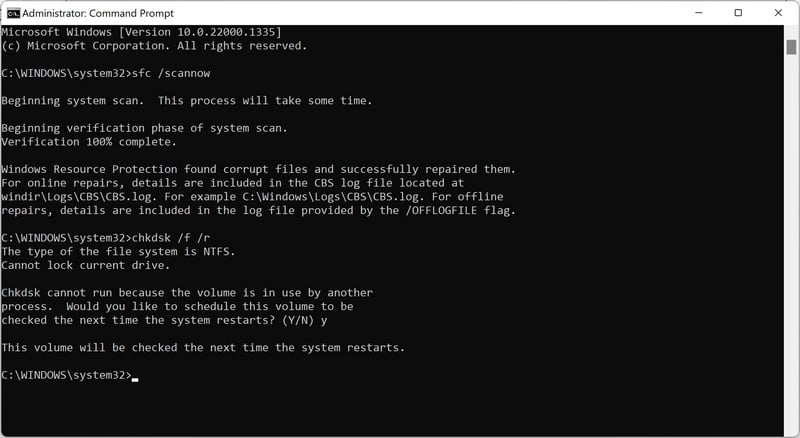
Type “chkdsk /f /r”
You will now be presented with a black screen called the ‘Administrator: Command Prompt’. On this screen, type “chkdsk /f /r” to repair any errors on your hard drive.
Restart your computer
The Disk Check tool may require you to restart your computer in order to complete the scan and repair process. Type “Y” and click on Enter, then restart the computer.
A CHKDSK command can take a long time, especially when performed on larger drives. Once it’s done, however, it will present a summary of results including total disk space, byte allocation, and, most importantly, any errors that were found and corrected.
If conhost.exe is legitimate but annoying
If your conhost.exe is in System32 and signed by Microsoft, it is almost certainly legitimate. At that point, the right troubleshooting move is to identify what is launching it:
Watch what appears at the same time as conhost.exe
Check recent installs
Check startup apps and scheduled tasks for command-line tools
If it always happens with one specific app, reinstall or update that app
Do not try to “remove conhost.exe.” It is a normal Windows component.
Conclusion
conhost.exe (Console Window Host) is usually a legitimate Windows process that helps console programs integrate with the Windows interface. The most reliable way to spot an fake is simple: check the file location. If conhost.exe is not running from C:\Windows\System32\ or it is not properly signed by Microsoft, treat it as suspicious and follow a careful removal flow: offline scan, full scan, persistence cleanup, then deletion.
If you want, paste the file path you see when you click “Open file location” for conhost.exe and I will tell you immediately whether it looks legitimate or not.
FAQ: conhost.exe (Console Window Host)
Is conhost.exe a virus?
Usually, no. conhost.exe is a legitimate Windows process used to host console windows for Command Prompt, PowerShell, Terminal tools, installers, and other background command-line tasks. It becomes suspicious mainly when it runs from the wrong folder or lacks a valid Microsoft signature.
What does conhost.exe do?
It helps Windows display and manage console-based programs, acting as a bridge between classic command-line apps and the Windows desktop interface.
Why do I see conhost.exe in Task Manager if I did not open Command Prompt?
Many programs run command-line helpers silently in the background, especially installers, updaters, driver tools, and maintenance tasks. That can spawn conhost.exe without you actively opening a console window.
Why are there multiple conhost.exe processes?
That is often normal. Windows can create separate conhost.exe instances for different console sessions or different programs that need a console host. Multiple copies are only concerning if they are coming from unusual locations or persist with no clear reason.
What is the real file location of conhost.exe?
A legitimate copy is typically located at:
C:\Windows\System32\conhost.exe
If it is running from AppData, Temp, Downloads, ProgramData, or a random folder, treat it as suspicious.
How can I check if conhost.exe is the real Windows file?
Fast checks:
Task Manager → right-click conhost.exe → Open file location
Right-click the file → Properties → Digital Signatures
Confirm a valid Microsoft signature (and that the path is System32)
Is it safe to end conhost.exe?
Sometimes, but it depends on what it is hosting. Ending it can close a console task that an installer or program is running. If it is legitimate and tied to a normal app, it will usually return when needed. If it is tied to suspicious activity, ending it is not enough, you must remove the startup mechanism.
Why is conhost.exe using high CPU?
conhost.exe is usually just the host. High CPU typically means the program using the console session is doing heavy work or stuck (installer scripts, scans, file processing, etc.). Check what launched it (the “parent” process) and what else is running at the same time.
What are the biggest signs conhost.exe is malware?
It is not in C:\Windows\System32\
No valid Microsoft digital signature
It keeps reappearing after you end it
It appears right after installing suspicious software
The file name is similar but not exact (like conhost32.exe or misspellings)
Delete the malicious file from the suspicious folder
Run:
sfc /scannow
DISM /Online /Cleanup-Image /RestoreHealth
Should I delete conhost.exe from System32?
No. If it is in System32 and properly signed, it is a normal Windows component. Deleting or disabling it can cause system issues and break console-based tasks.
Stelian leverages over a decade of cybersecurity expertise to lead malware analysis and removal, uncover scams, and educate people. His experience provides insightful analysis and valuable perspective.


 If you have checked your computer for malicious programs and did not find any, you can proceed with the next step in this guide.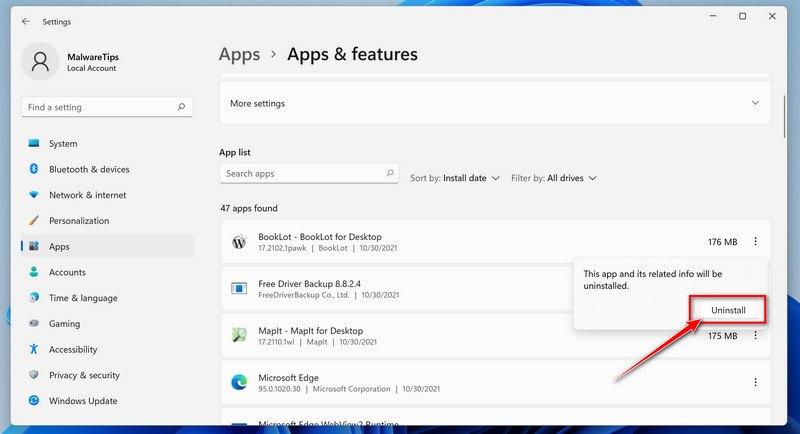
 If you have checked your computer for malicious programs and did not find any, you can proceed with the next step in this guide.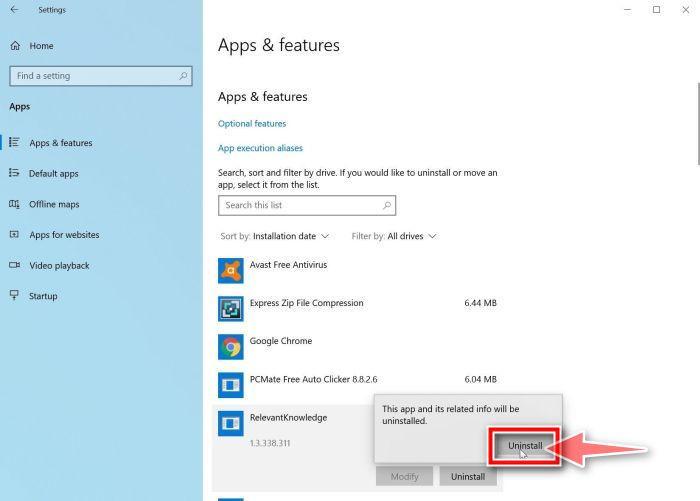













 HITMANPRO DOWNLOAD LINK