

A new diet craze promises dramatic weight loss with little effort. Social media ads rave about the Cvreoz Bee Venom Slimming Patch, claiming it offers painless fat burning just by sticking on patches filled with metabolism-boosting ingredients.
With bold announcements of 20, 30, even 50 pounds melted away in weeks, it seems too good to be true. And it is.
In this in-depth exposé, I cut through the hype and exaggeration. Analyzing the patch’s formula, producers, and real customer reviews reveals a problematic product riddled with deception.
Consumers report minimal weight loss, only temporary water reduction. Meanwhile, the faceless sellers hide behind fake endorsements as they peddle false hopes, putting profit over ethics.
The truth about this sketchy patch proves an important warning for all. When a weight loss solution seems miraculous, skepticism is warranted. Protect your health and wallet from products making outsized promises they can’t fulfill.
Now let’s scrutinize the facts on this dubious bee venom patch fad…

A Breakdown of the Viral Promotion
The Cvreoz Bee Venom Slimming Patch first gained attention through viral social media campaigns utilizing fake celebrity endorsements, fake reviews, and exaggerated claims.
There is no official website for this product. Instead, it is sold under different brand names on various shady websites:
- Cvreoz Bee Venom Slimming Patch
- Ceoerty Bee Venom Slimming Patch
- Bestore Bee Venom Slimming Patch
- FURZERO Bee Venom Slimming Patch
The packaging looks identical, only the name changes.
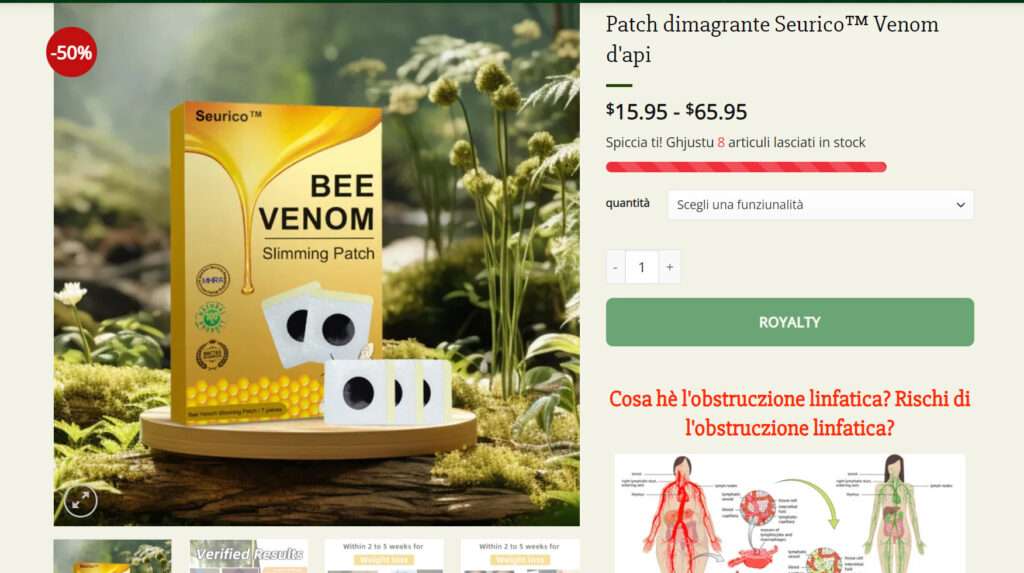

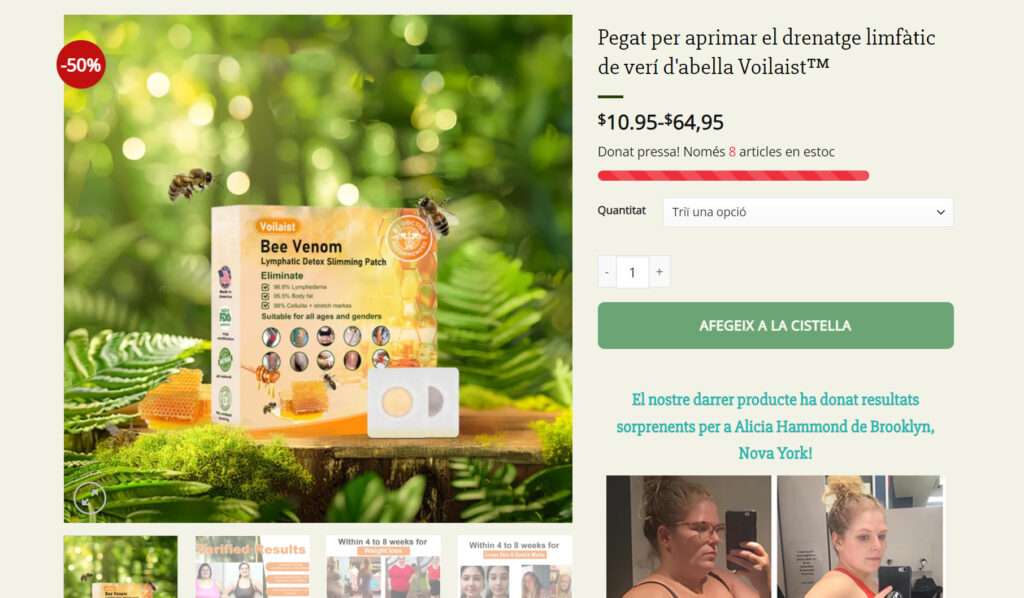


These sites utilize fake testimonials with stock images to promote the product. For example:
“This product is truly remarkable. I wanted to share my recent experience. I’ve been on the lookout for something that could help me lose weight without feeling like I’m putting in a ton of effort. After trying many different options, I finally found something that really works – the Cvreoz Bee Venom Slimming Patch. I followed the instructions and after using it for the first time, I immediately felt my digestion kick into high gear. It was like a miracle. I shed nearly 50 pounds in just a month. I wanted to share my story because I know there are others out there who might be going through what I did. Trying this patch spared me a lot of pain. And, most importantly, it’s comfortable and affordable! I can wear it anytime.” – Emily Wilkins, Brooklyn
These dramatic testimonials consistently describe extreme weight loss results (often over 20 pounds in just a few weeks). They also utilize fake celebrity endorsements claiming stars have used the patch to slim down for major events or roles.
The promotions also utilize scarcity and urgency marketing tactics with statements like “Limited Time Offer!” and “Only 5 Left!” to pressure customers into purchasing quickly before this “amazing” opportunity disappears.
Overall, the marketing raises many red flags and seems intentionally deceptive.
A Look at the Ingredients
According to the promotional content, the main active ingredients in Cvreoz Bee Venom Slimming Patches are:
- Bee Venom – Obtained from bees through a process called “etherization” which involves using anesthesia to cause bees to release venom. This substance is said to help lymphatic drainage and accelerate metabolism.
- Black Pepper Extract – Claimed to increase thermogenesis and fat breakdown.
- Ice Plant Extract – Said to inhibit formation of fat cells.
- Peppermint Menthol – Believed to stimulate lymph flow.
- Gingerol – Thought to boost metabolism.
- Milk Thistle – Used for purported liver detoxification effects.
These ingredients are described as “natural herbal extracts” that provide a breakthrough solution for lymphatic and metabolic issues.
However, the extremely exaggerated claims about the rapid weight loss capabilities of this patch suggest the ingredients are not nearly as powerful as stated. No peer-reviewed research is cited to back up any of the claims.
Analyzing the Weight Loss Claims
The Cvreoz Bee Venom Slimming Patch promotions consistently claim that this product can lead to extreme weight loss of 20-50 pounds in just a few weeks.
These dramatic claims are highly dubious and not backed by any credible science. No clinical trials with human participants are cited to validate the assertions.
According to obesity experts, losing more than about 2 pounds per week after the initial water weight loss phase is not feasible or healthy without extreme calorie restriction and excessive exercise.
The ingredients in this patch have not been clinically proven to cause such rapid fat burning. Even prescription weight loss medications do not produce the extreme results promised by the Cvreoz patch promotions.
Losing 50 pounds in one month as claimed in many of the fake testimonials would require burning over 3,500 calories more than consumed daily. This is an unrealistic amount through any external product alone.
The mechanism claimed about clearing lymphatic congestion may provide mild temporary loss of water retention, but would not directly cause substantial fat loss.
Overall, the extreme weight loss claims are exaggerated and misleading, aiming to take advantage of vulnerable consumers desperate for a weight loss miracle. The patch may provide minimal short-term water loss effects, but will not produce anything close to the dramatic fat burning results asserted.
Who Manufactures This Product?
There is no clear information about the manufacturer or company behind the Cvreoz Bee Venom Slimming Patch. As mentioned, there is no official website for this product.
The various shady websites selling this patch provide limited business details. Searches for the names listed turn up no verifiable information or history on any actual corporation manufacturing this item.
This lack of transparency is a major red flag, as reputable supplements always provide extensive details about testing, certifications, facilities, and business history. The absence of such information indicates the companies behind this patch are intentionally hiding their identities.
Without an identifiable manufacturer, there are no guarantees about safety procedures, quality control, purity testing, or ethical sourcing of ingredients.
Based on investigations into other similarly promoted diet patches sold online, many originate from unreliable sellers in China utilizing inferior formulas with minimal testing.
The unclear origins and anonymous production of the Cvreoz Bee Venom Slimming Patch makes its safety and effectiveness highly questionable.
A Look at the Potential Risks
While the patch is advertised as completely natural and safe, there are certain risks consumers should be aware of:
- Allergic Reactions – Bee venom and other ingredients may trigger allergic reactions in sensitive individuals, causing rashes, itching, swelling, and anaphylaxis.
- Skin Irritation – Topical patches worn for extended periods often lead to skin irritation, redness, and discomfort.
- Lack of Regulation – Without an identified manufacturer, there are no guarantees about safe manufacturing practices, purity, or dosage accuracy. Harmful contaminants could be present.
- Interactions – Customers are not warned about potential interactions with medications, medical conditions, pregnancies, or breastfeeding.
- Delayed Medical Care – Relying on an unproven product may cause people to delay seeking medical care for obesity-related health conditions.
- Unrealistic Expectations – Promises of extreme weight loss often lead to disappointment, poor body image, dangerous fad dieting, and eating disorders when results fail to materialize.
Overall, using any supplement with unverified ingredients and claims entails some health risks that customers should carefully consider before making a purchase.
Customer Reviews: What Real Users Are Saying
To look past the fake testimonials on the promotional websites, I searched for first-hand customer reviews of the Cvreoz Bee Venom Slimming Patch posted on independent discussion forums and e-commerce sites.
The overwhelming majority of unbiased user reviews are negative, with customers reporting:
- No noticeable weight loss effects even after extended use.
- Mild diuretic benefits at most, causing temporary water loss that quickly rebounds.
- Skin irritation, rashes, and discomfort from the patch adhesive.
- Difficulty getting refunds from unresponsive sellers.
- Disappointment in wasting money on an ineffective product
In conclusion, the majority of impartial customer reviews reinforce that this product does not provide the extreme weight loss results promoted. Users report at best temporary water loss, followed by frustration with an ineffective product and sellers refusing refunds.
The Truth About the Cvreoz Bee Venom Slimming Patch
In summary, an in-depth investigation into the Cvreoz Bee Venom Slimming Patch reveals the following:
- Viral promotions utilize fake reviews, misleading celebrity endorsements, and exaggerated weight loss claims that experts deem unrealistic.
- The formula contains some herbal extracts that may offer mild benefits, but nothing to substantiate the dramatic fat burning assertions.
- There is a complete lack of transparency about testing, manufacturing, and company behind the patch. This raises safety and purity concerns.
- The overwhelming majority of impartial customer reviews report no significant weight loss, only temporary water reduction and skin irritation.
- Customer complaints reveal dishonest sellers refusing refunds when the product fails to work as promoted.
In conclusion, the Cvreoz Bee Venom Slimming Patch appears to be a dishonest, unsubstantiated product promoted with exaggerated claims, fake reviews, and high-pressure sales tactics.
Customers report minimal benefits aside from short-term water loss and a high rate of skin irritation. The identity and reliability of the manufacturer remain unclear.
I advise consumers to avoid wasting their money on this deceptively marketed patch. Beware of scam weight loss products making outlandish promises without scientific evidence. For safe and sustainable weight management, consult qualified medical professionals.
This article is for educational purposes only and does not constitute professional, financial or legal advice. The content is intended for general information and should not be construed as definitive guidance. Information contained herein is subject to change without notice.  For concerns, please contact us via the provided form.
If you are the owner of the website or product in question and wish to offer clarifications regarding your business or website, please reach out to us through the provided Contact Form.








