

In recent years, a new type of scam has emerged that claims to leverage artificial intelligence (AI) and cloud computing to generate outsized returns for investors. One of the latest iterations of this scam is DGPT.club, which promises lucrative profits to users who invest and recruit others into the scheme.
But behind the high-tech veneer, DGPT.club exhibits all the hallmarks of a classic Ponzi scheme. This article will take an in-depth look at how the DGPT.club scam works, who is behind it, and most importantly, how to avoid being taken in by its false promises and losing your hard-earned money.
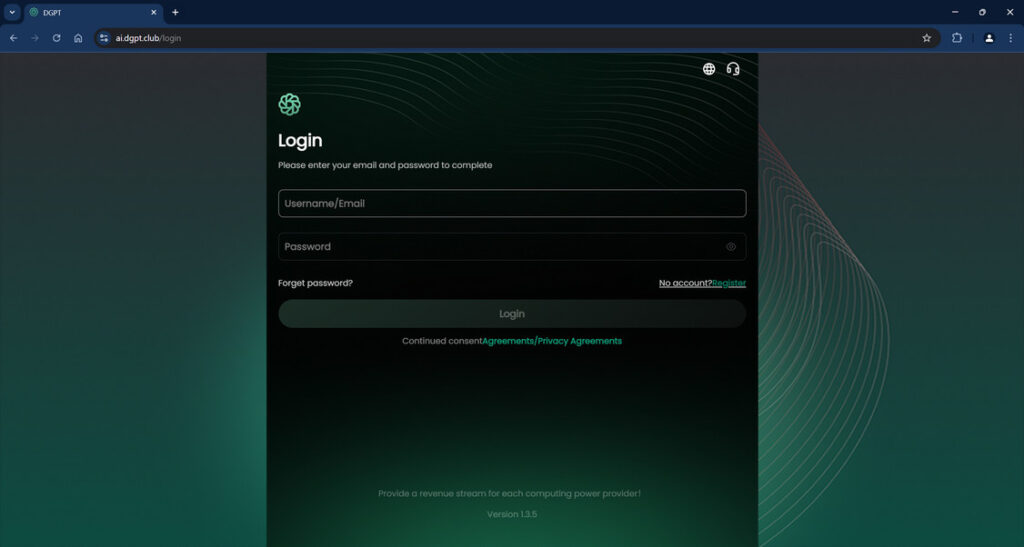
Overview of the DGPT.club Scam
DGPT.club burst onto the scene marketing itself as an AI and cloud computing platform that can generate remarkable returns on investment. The company claims to allow users to connect the computing power of their idle devices to its platform, converting them into “rentable computing resources.”
In return for lending their devices’ processing power, users can purportedly earn passive income when DGPT rents out access to this collective computing power to large companies with intensive AI and cloud computing needs.
On its website and promotional materials, DGPT.club touts the ability of its “unique algorithms” to generate lucrative returns of up to 230% on investment in as little as two months. It claims users can start earning daily profits by investing as little as $50 worth of the stablecoin USDT.
But despite these enticing claims, there is no evidence that DGPT.club actually conducts any legitimate AI or cloud computing business. The advertised returns on investment are far beyond what any real-world computing platform could sustainably generate.
In reality, DGPT.club operates as a typical Ponzi scheme, relying on money from new investors to pay earlier investors their promised returns. Like other scams of this type, once new investment dries up, DGPT.club is likely to collapse and most users will lose their money.
Domain Names and Registration Details
DGPT.club has registered several website domains, including:
- dgpt.club – Registered anonymously on August 27, 2024 through Alibaba Cloud (China)
- ai.dgpt.club – Provides access to DGPT app
The anonymous .club domain registration through a Chinese company is a red flag. Legitimate businesses have no reason to hide their domain ownership.
An analysis of DGPT’s website code also indicates it runs on Chinese platform Meiqia. This suggests the operators likely have ties to China.
No Retailable Products or Services
Another indication of DGPT.club’s fraudulent nature is that it offers no real products or services to sell to genuine retail customers.
Affiliates only market DGPT.club membership itself, which requires investing in the scheme to participate. This lack of retail sales is a hallmark of illegal pyramid and Ponzi schemes.
Regulatory Warnings
DGPT.club has already attracted scrutiny from financial regulators in some countries. For example:
- The Central Bank of Russia issued a pyramid scheme warning regarding DGPT.club on October 1, 2024
Regulatory warnings are a clear sign investors should be wary of entrusting money to DGPT.club.
How the DGPT.club Scam Works
The scam functions by recruiting individuals to invest in dubious high-yield investment plans, while also signing up new users in exchange for referral commissions. Here’s a step-by-step look at how it operates:
1. Recruitment of Affiliates
DGPT.club relies heavily on affiliate marketing, offering commissions for referring new users who invest in the scheme. Anyone can register as an affiliate simply by providing an email address.
Recruiting new affiliates is the only real focus, as there is no external retail product or service to sell.
2. Investment in “Computing Power” Plans
Once signed up, affiliates can invest in plans that supposedly leverage their devices’ processing power:
- RTX4090 – Invest 100 USDT to receive 110 USDT over 10 days
- L40S – Invest 100 USDT to receive 160 USDT over 1 month
- RTX6000 – Invest 100 USDT to receive 230 USDT over 2 months
- A5000 – Invest 500 USDT to receive 1500 USDT over 3 months
- A100 – Invest 2000 USDT to receive 10,000 USDT over 5 months
- H100 – Invest 5000 USDT to receive 35,000 USDT over 7 months
These advertised returns of 10% to 600% are outrageously and unfeasibly high for any real-world computing platform.
3. Click Daily to “Train AI”
To help “train” the AI and unlock earning potential, users must log in daily and click a button. This is presented as contributing computing power, but is just an engagement gimmick.
4. Referral Commissions for Recruitment
Affiliates earn commissions by recruiting new users who invest funds:
- Level 1 (personally recruited) – 5% to 8% of investment
- Level 2 – 3% to 6%
- Level 3 – 1% to 4%
Recruiting more affiliates and larger investments increases an affiliate’s commission rate.
5. Funds From New Affiliates Pay Earlier Ones
Like all Ponzi schemes, payouts to existing affiliates are funded through investments by newer affiliates. As long as new money flows in, earlier investors receive their promised returns.
6. Collapse is Inevitable
When new investments dry up, DGPT.club will be unable to pay promised returns and will inevitably collapse. Recent Ponzi schemes like this have crashed in 6 to 12 months after launch.
What to Do if You’ve Been Scammed by DGPT.club
If you have already invested in DGPT.club, don’t panic. Here are some steps to take right away:
- Stop investing or recruiting – Avoid throwing good money after bad. Cease any further investment or participation.
- Report it – File a complaint with your local authorities and financial regulators. This helps authorities identify and shut down scams faster.
- Warn others – Share your experience on social media and complaint sites to help prevent others from falling victim.
- Seek legal counsel – Consult an attorney on potential options to recover losses. Investors have sued the operators of similar schemes.
- Seek mental health support – Don’t be afraid to lean on loved ones and professionals to help process feelings like anger, shame, sadness that often accompany fraud victimization. Counseling can help gain perspective and closure.
While recouping losses is rare, taking proactive steps can help shut down the scam faster, preventing further harm to others. You made the best decisions you could with the information available at the time. What’s important now is to take care of yourself and prevent others from being hurt.
The Bottom Line
DGPT.club exhibits all the characteristics of a Ponzi scheme disguised as an AI and cloud computing platform. With anonymous domain registration, no retail products, exorbitant advertised returns, regulatory warnings and reliance on new affiliate money, it ticks every box for fraud.
Steer clear of entrusting any money to DGPT.club and exercise extreme caution regarding similar investment opportunities promising easy passive income through AI computing power. If it sounds too good to be true, it almost certainly is.
Stick to legitimate investments and credible opportunities. Never let the promise of easy profits cloud your judgment and override critical thinking. If in doubt, seek advice from qualified professionals not affiliated with the offer.
With countless scams surfacing every year, maintaining perspective and exercising due diligence is the key to avoiding becoming another victim. The insights in this article can help equip you to identify and steer clear of DGPT.club and other fraudulent schemes claiming to leverage new technologies like AI.
This article is for educational purposes only and does not constitute professional, financial or legal advice. The content is intended for general information and should not be construed as definitive guidance. Information contained herein is subject to change without notice.  For concerns, please contact us via the provided form.
If you are the owner of the website or product in question and wish to offer clarifications regarding your business or website, please reach out to us through the provided Contact Form.

Join the discussion
0 commentsShare your experience or ask a question about this article.
Discussion
Start the conversation
Have a question or something useful to share? Add the first comment.