


A €500 student coupon appears on your screen, complete with a code and a stream of people supposedly collecting rewards.
Eglamio makes the next move sound almost effortless. Before following it, there is something worth knowing about the crowd cheering you on.
Overview
The student pass has no named retailer
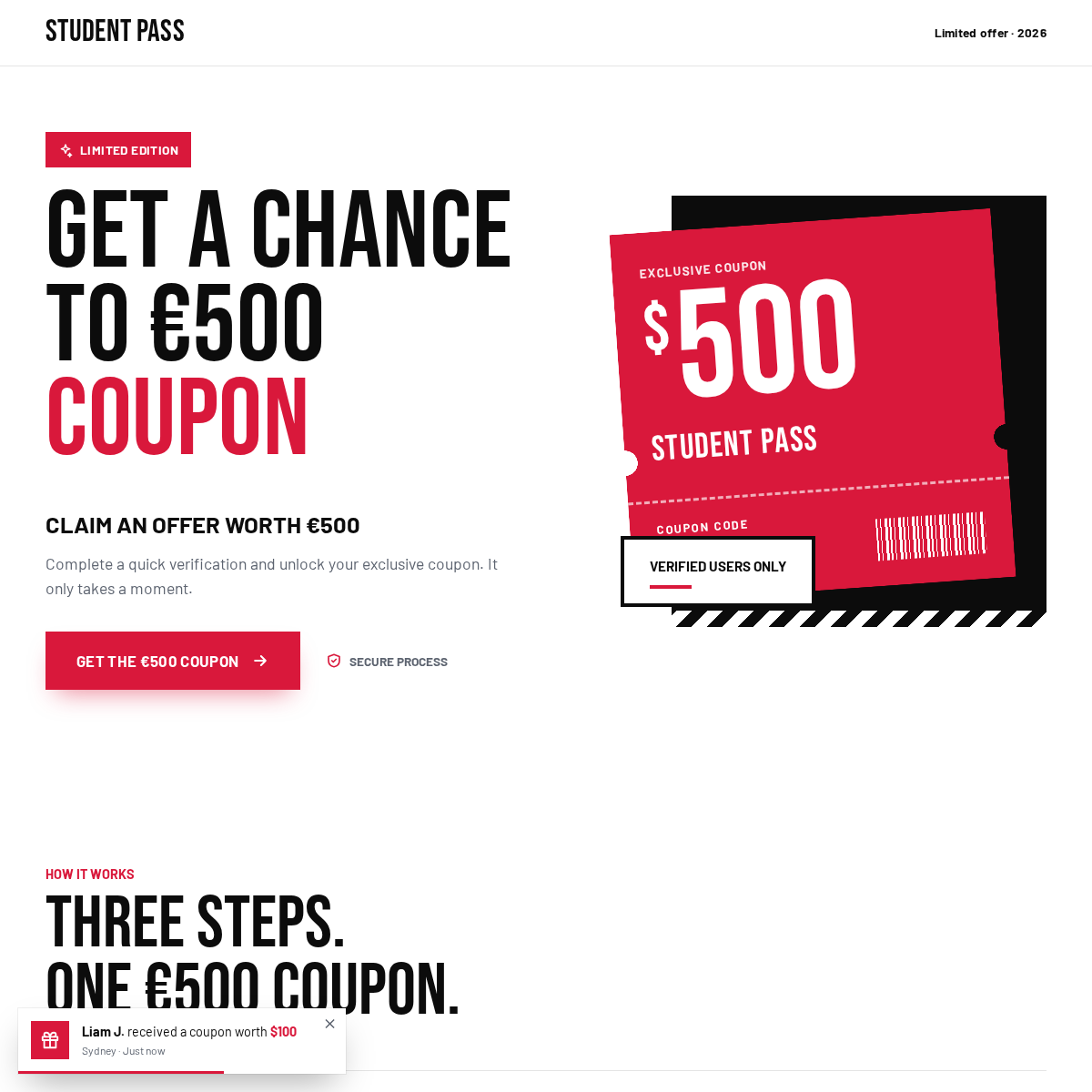
Eglamio.com promotes a €500 coupon through a page branded Student Pass. A prominent code, PASS-2026, makes the offer look ready to redeem.
However, the page never identifies the retailer that would accept it. There is no participating-store list, purchase threshold, redemption address, or clearly linked campaign contract.
Those omissions matter more than the size of the illustrated voucher. A genuine discount needs an issuer, eligible purchases, and rules explaining what the customer receives.
The apparent winners are manufactured by the page
The strongest evidence is not a low trust score. Eglamio’s own JavaScript generates recipient names, locations, amounts, and recent timestamps from preset lists.
Its notification system is configured in mock mode. These messages are scripted promotional events, not a live record of people successfully redeeming coupons.
That is a concrete deception: visitors are shown an invented crowd as reassurance that the promised reward is real and obtainable.
Verification sends you away from the offer
The verification button points to verifycodedeals.com/sl/kgvx1. That separate route redirects again, placing another operator between the visitor and the advertised coupon.
- The reward page supplies no usable retailer-specific redemption terms.
- Recent-recipient messages are assembled locally from mock data.
- The verification route leaves Eglamio rather than issuing the displayed coupon.
- Another live site uses substantially the same promotion code with a different story.
Do not follow this offer or pay to unlock it. The fabricated social proof is already sufficient reason to reject the promotion.
Inside the Fake Coupon Notifications
The little notification in the corner does important work. It suggests another ordinary person has just completed the process you are considering.
A first name, surname initial, city, and recent timestamp make the message resemble a purchase confirmation. None of those details establishes an actual transaction here.
The page contains 48 name pairs, 24 cities, and a list of possible reward amounts. A random-selection function combines them into new messages.
It also chooses a recent-looking time description. The notification is then inserted into the page after a delay, with further messages scheduled at variable intervals.
The code avoids repeating the same person immediately. That small detail helps the feed look lively rather than obviously stuck on one scripted example.
More revealing still, the configuration includes a separate server-fed mode. But the live configuration selects mock, so the genuine-data alternative is not the active source.
This distinction rules out the harmless explanation that the names simply come from a documented customer activity feed. The inspected implementation creates them itself.
Someone else’s displayed success is therefore not evidence that your verification will deliver anything. The notification exists to encourage the next click.
The currency presentation is inconsistent too. The main offer promises euros, while Eglamio’s notification template and illustrated card use $ symbols.
A currency mismatch alone could be a design mistake. Combined with the mock recipient generator, it exposes how loosely the page connects its display to reality.
The Same Template Has Another Identity
Eglamio is not the only live version of this layout. Aktioncode.com presents a €500 reviewer voucher instead of a student pass.
The colors, oversized voucher graphic, short verification pitch, and corner notifications follow the same pattern. The shared code makes the connection more specific than visual resemblance.
Both inspected pages use the same notification architecture and preset people-and-city lists. Both direct their verification button to verifycodedeals.com, using different route identifiers.
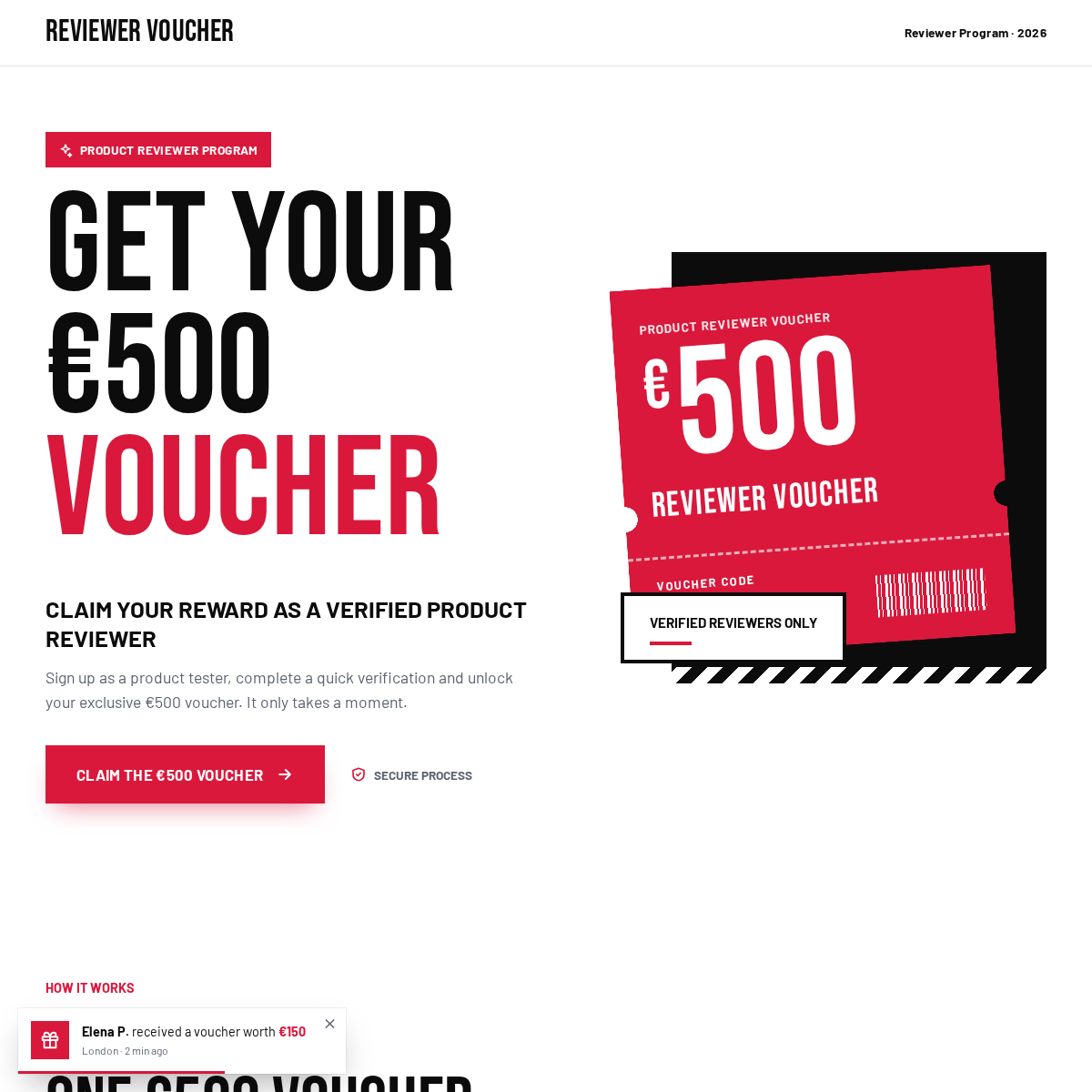
On Aktioncode, the destination is /sl/85evq. On Eglamio, it is /sl/kgvx1. The story changes, while the handoff and manufactured activity remain.
This is a documented reused promotional template. It does not identify the individuals operating both domains, but it does show why a new name proves little.
A visitor searching only for Eglamio reviews may miss the broader mechanism. The same bait can return as a product-testing opportunity or another attractive reward.
The useful recognition points are the unnamed issuer, exaggerated value, quick verification, invented success feed, and off-site handoff. Memorizing one domain is not enough.
How the Eglamio Coupon Scam Works
Step 1: The reward is made to look almost claimed
The first screen supplies an impressive amount and a coupon code before explaining any meaningful eligibility rules. That reverses the order a cautious applicant needs.
You are encouraged to picture spending the reward, not to establish who owes it to you. The Student Pass label adds a familiar eligibility story.
Yet no school, university, retailer, or student-verification provider is identified as the organizer. The label is presentation, not proof of an institutional partnership.
The limited-offer wording adds pressure without supplying a verifiable closing date. There is no reason to rush a decision on that basis.
Step 2: An invented crowd makes the next click feel safer
Notifications arrive while you read. Their names and cities suggest people elsewhere have already passed the check and received money-saving rewards.
Because the page generates those events, waiting longer only exposes you to more scripted reassurance. It does not produce additional independent evidence.
The precise amounts can make the messages feel authentic. They are still random selections from a short predefined list, rather than payment records.
This is the point where a person can mistake repetition for corroboration. Several animated messages do not mean several verified recipients exist.
Step 3: The verification label conceals a change of destination
The main button opens a verification dialog. Its wording asks you to follow the next form or offer instructions to unlock the coupon.
The dialog’s final button does not check an identity document or issue a retailer code on Eglamio. Its handler schedules navigation to the configured external address.
The short delay and verification wording create the impression that a check is underway. The actual documented action is a redirect after 700 milliseconds.
That does not establish what every subsequent visitor will see. Offer destinations can vary, and the inspected onward route did not expose a complete reward contract.
Step 4: The visitor reaches a separate funnel without a guaranteed reward
The /sl/kgvx1 route redirected to a /cl/i/ address on verifycodedeals.com. The inspected response did not demonstrate an issued €500 coupon.
Do not assume an email form, sponsored offer, trial, or payment request on a later page belongs to a genuine retailer campaign.
Each new page can introduce its own data collection and contractual conditions. A promise on Eglamio does not establish who handles those later commitments.
No purchase or registration was completed for this investigation. The confirmed findings are the fabricated recipient feed, missing redemption details, and documented off-site route.
Why a Coupon Code and a Secure Label Prove Nothing
PASS-2026 is visible to every visitor. It is not evidence that a retailer has created an individual entitlement or reserved €500 for you.
A functional coupon needs a place to redeem it. Without an issuer and eligible merchandise, the code is just text inside a marketing graphic.
The page also repeats security assurances. It does not identify the organization assessing security, explain a verification standard, or supply an independent certificate supporting those assurances.
Encrypted browsing protects information in transit. It does not make a reward genuine or compel an unknown operator to deliver it.
Likewise, a recent domain registration is context, not the main accusation. The authoritative registration record dates Eglamio.com to October 12, 2026.
The decisive issue would remain even on an older domain: the page presents randomly generated activity as if it came from successful participants.
You do not need to solve the operator’s identity before deciding against that offer. A missing company name makes recovery harder, not the fake notifications acceptable.
What Information Could Be at Risk?
A genuine student discount should tell you which merchant honors it, what qualifies, and where it can be redeemed. Eglamio does not provide those essentials.
It also does not describe what happens if verification fails, whether the offer has a minimum purchase, or which organization owes the advertised benefit.
That missing contract is different from an ordinary coupon’s exclusions. There is no practical redemption arrangement for you to inspect before leaving the page.
Do not supply a school login to bridge that gap. A university account should not be entered into an unrelated reward form simply because Student Pass appears overhead.
If a follow-up message says your reward has been reserved, compare it with what you actually completed. A marketing confirmation is not proof of a retailer-issued voucher.
The fabricated crowd remains the key finding. Additional forms or messages cannot retroactively turn those randomly generated recipients into real successful claimants.
The answer depends on what happened after the redirect. Merely seeing the coupon does not prove your password, card details, or identity documents were stolen.
If you supplied an email address, retain the page address and inspect follow-up messages carefully. An unsolicited message claiming your reward remains pending deserves particular skepticism.
If you entered a phone number, do not treat a later caller’s knowledge of that number as proof they represent a legitimate benefit or retailer.
If a later offer requested payment, identify the actual merchant and any trial agreement. An inexpensive introductory charge can be separate from the promised coupon.
A password creates another issue only if you submitted one. Reusing an important account password on an unknown reward page can expose that account.
These are exposure-specific precautions, not claims that every person visiting Eglamio suffers every outcome. The article’s warning rests on what the page demonstrably does.
What to Do if You Have Fallen Victim to This Scam
-
Leave the reward flow. Do not complete another offer, upload identification, or pay a verification charge in the hope that the next stage releases €500.
If you only viewed the page, closing it is a sensible first action. A visit alone does not justify replacing your card or wiping your device.
-
Save the exact handoff. Keep the original link, the next domain, messages, screenshots, and any confirmation. Different destinations can require different cancellation or reporting steps.
Record what you actually submitted. This helps distinguish marketing contact details from a password exposure, subscription agreement, or payment dispute.
-
Protect any reused password. Change it on the genuine account from a trusted route. Review active sessions and enable available multifactor authentication.
Do not enter a replacement password into another link claiming to cancel the reward. Open the real account provider directly.
-
Identify and cancel a real paid agreement. If you accepted a trial or subscription, use its documented cancellation process and request written confirmation.
Do not assume closing the Eglamio tab cancels a separate merchant’s billing. Check the receipt and account used for that transaction.
-
Contact your payment provider when money is involved. Explain the advertised coupon, actual charge, and any missing consent or undelivered service accurately.
Ask about dispute deadlines and preventing further unwanted recurring payments. Keep the provider’s case number; a refund is not guaranteed.
-
Report the original promotion. Include the landing page and onward destination in a report to the platform carrying the advertisement and your local consumer authority.
Ignore strangers offering guaranteed recovery for an upfront fee. A person who knows you searched for a lost reward has not proved they can recover money.
Frequently Asked Questions
Is the Eglamio €500 coupon legitimate?
Do not rely on it. The page lacks a named redeeming retailer and uses an active mock-data system to create apparent recipient activity.
Those findings undermine the promotion before any later form or offer is considered. An attractive code is not a verified entitlement.
Are the people receiving coupons in the pop-ups real?
The inspected notifications are generated from predefined names, locations, reward amounts, and timestamps. They are not evidence of the displayed people receiving coupons.
Does Verify now only check whether I am human?
No. The documented button action sends the browser to verifycodedeals.com after a short delay. That is an external handoff, not proof of completed eligibility verification.
Why does Aktioncode look like Eglamio?
The inspected sites share substantial template and notification code. Aktioncode changes the story to a reviewer voucher and uses another path on the same verification domain.
This establishes reused promotion machinery, not the legal identity or ownership of every site using it.
Should I install a scanner after opening the page?
Opening the reward page alone does not establish an infection. Investigate separately if you downloaded software, installed an extension, or granted browser permissions.
Do not buy security software merely because another page in the reward flow says a scan is required to claim the coupon.
Can I get back money paid on a later offer?
Possibly, depending on the merchant, agreement, payment method, and deadlines. Gather the receipt and cancellation record, then ask your payment provider about the appropriate dispute.
The Bottom Line
Skip Eglamio’s student coupon. Its supposed winners are generated by the page, and the €500 promise leads away without a verifiable retailer or redemption contract.
If you already continued, trace the actual information or payment you submitted. Cancel relevant agreements and seek payment-provider help rather than completing more offers.

Join the discussion
0 commentsShare your experience or ask a question about this article.
Discussion
Start the conversation
Have a question or something useful to share? Add the first comment.