

LEGO is one of the most popular and trusted toy brands renowned for its iconic interlocking plastic bricks and buildable sets. However, scammers are now attempting to profit from LEGO’s reputation by advertising fake “LEGO Clearance Sales” on social media and e-commerce sites to scam shoppers.
Overview of the LEGO Clearance Sale Scams
The LEGO clearance sale scam typically starts with targeted social media advertisements promoting unbelievable blowout deals on LEGO sets, bricks, minifigures, and other products. Scammers run sponsored posts and ads on platforms like Facebook, Instagram, TikTok, YouTube, and Pinterest using real stolen LEGO logos, images, and branding.
These ads boast attention-grabbing headlines such as “LEGO Warehouse Clearance Blowout Sale – Today Only!” or “50-90% Off ALL LEGO Sets and Bricks – Limited Time Offer”. The accompanying imagery includes high-quality photos and videos of popular LEGO sets, minifigures, bricks, and packaging.
The convincing ads are carefully formatted to mimic real discounts from an authorized LEGO retailer. Phrases like “Store Closing Sale”, “Going Out of Business”, and “Massive Clearance Event” are used to hook bargain hunters.
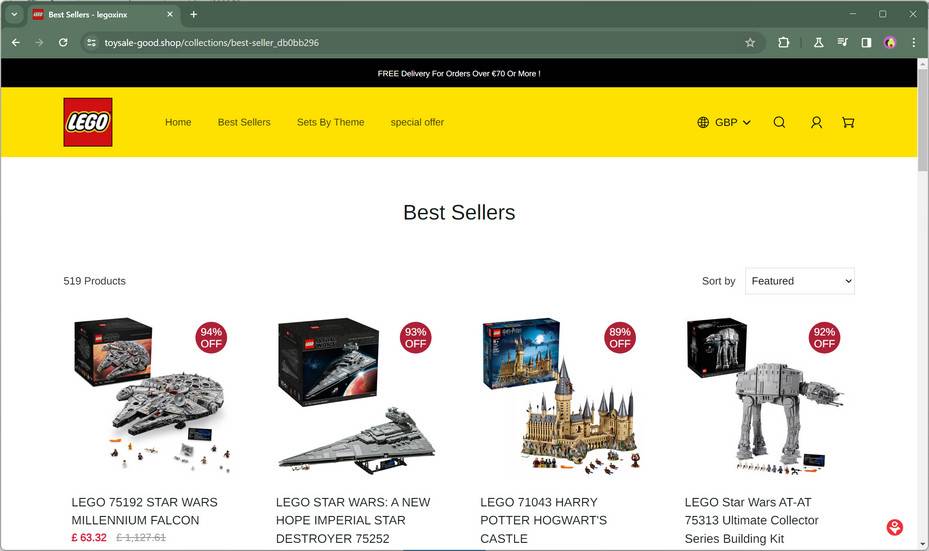
But when intrigued shoppers click through, they are redirected to elaborate fake ecommerce websites that closely mirror the look and feel of a legitimate online LEGO store.
These scam sites showcase full LEGO product catalogs with branding throughout. The homepages tempt visitors with claims of “blowout clearance sales” and “huge markdowns” offering anywhere from 50-90% off all items sitewide.
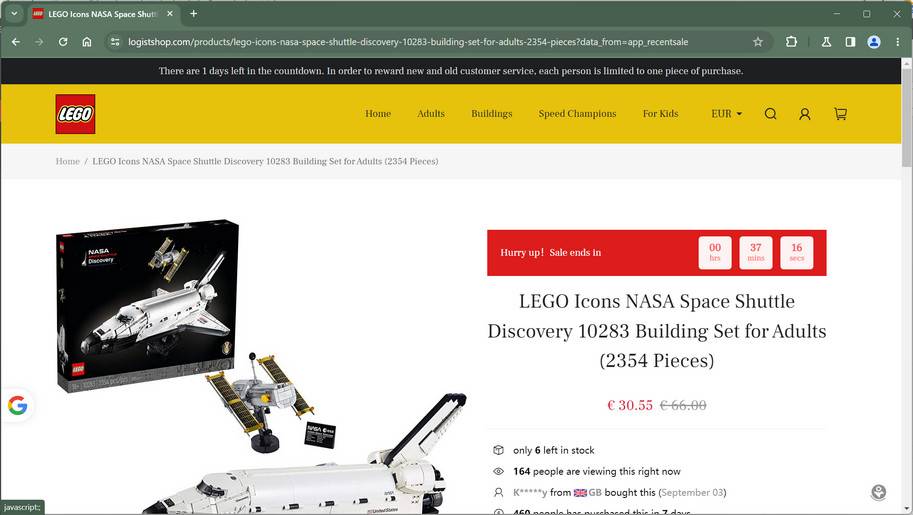
Deeply discounted prices are shown that seem unbelievably low, like a $150 LEGO Star Wars Millennium Falcon set for only $49.99. These unrealistic prices create false urgency to purchase quickly before missing out.
The scam websites also utilize other deceitful tactics to appear authentic. These include posting fake customer reviews, return policies, shipping details, contact emails and phone numbers, and legal pages all copied from real LEGO sites.
Victims who hastily place orders on these fraudulent LEGO stores believe they are buying genuine marked-down sets directly from the company. But unfortunately the sites are only elaborate scams designed to steal money and personal data from duped shoppers.
After submitting payment info and personal details, customers never receive any products ordered. The scam sites take the payments from victims and then vanish once enough funds are stolen. No items are ever shipped, leaving shoppers out of pocket.
How the LEGO Clearance Sale Scams Work
Fraudsters are heavily promoting these cons on social platforms and ecommerce sites through targeted ads and sponsored posts. Here is how the scam typically operates:
Step 1: Bait Shoppers with Social Media Ads
The scammers first post enticing ads on Facebook, Instagram and TikTok advertising unbelievable blowout deals on LEGO sets and bricks like “50-90% Off LEGO Clearance Sale Today Only”. The ads use captivating headlines like “Going Out of Business Sale”, “Limited Time Deals” or “LEGO Warehouse Clearance” to grab attention.
LEGO fans intrigued by the amazing advertised discounts will then tap or click on these ads.
Step 2: Direct to Elaborate Fake Storefronts
The social media ads redirect victims to sophisticated fake ecommerce storefronts that, at first glance, look exactly like real online LEGO stores.
The scam stores prominently use the LEGO name, branding, logos, set images and even mimic the legitimate website design down to the smallest details.
This elaborate imitation is intended to trick shoppers into thinking they are purchasing straight from LEGO or an authorized retailer. In reality, these sites have no relation to LEGO whatsoever.
Step 3: Entice Customers with Deep Discounts
To hook shoppers, the fraudulent stores prominently advertise deep discounts up to 90% off all merchandise site-wide. Prices are shown as drastically marked down to unbelievable low prices like $10 for a LEGO set that normally costs $60.
These unrealistic prices are intended to create a false sense of urgency and pressure customers to place orders quickly before missing out on the purported amazing deals.
Step 4: Further Build Trust with Fake Policies and Badges
The scam sites employ various deceptive trust-building tactics to appear more legitimate such as:
- Posting fake warranty, shipping and return policies intended to mimic real LEGO policies
- Using fake security badges falsely implying the site is secured and verified
- Listing fake mailing addresses, phone numbers and contact email addresses
- Including fabricated testimonials praising the site and its deals
These measures give unsuspecting victims further confidence they are shopping from a real store.
Step 5: Steal Credit Card and Personal Information
During checkout, victims are prompted to enter their name, home address, phone number, email address, credit card number, security code and other private data.
This sensitive information is collected directly by the scammers who will either use it directly for financial fraud or sell it on dark web marketplaces.
Step 6: Never Receive Ordered Merchandise
After submitting payment and personal information, victims never receive the deeply discounted LEGO products displayed online. Any subsequent attempts to contact the scam store go unanswered.
The elaborate ecommerce sites soon vanish as well once enough payments have been collected by the scammers. Any records of the transactions disappear along with the fake stores.
This leaves victims without any items ordered, no way to contact the “retailer” and no recourse to recover lost payment funds or compromised personal data.
Red Flags of the Fake LEGO Sales Sites
These fraudulent pop-up shops mimic legitimate websites very closely, but there are some red flags shoppers should watch out for:
- Suspiciously Low Prices – Real LEGO sets and bricks are premium-priced, so deals like 90% off are highly improbable. Discounts over 50% are a major warning sign.
- Stock Photos – Product images are usually generic stock photos found on other sites rather than unique official LEGO photos.
- Missing Contact Information – No phone number, physical address or email are provided other than a basic contact form.
- No Verifiable Company Details – The “About Us” page is vague with no specific company history, executive profiles and a generic name.
- Grammatical Errors – Scam sites often have misspellings and grammar mistakes.
- Newly Registered Domain – Scam store domains are often recently registered and without online history or reputation. Sites less than a year old with no reviews merit investigation.
- No Social Media Presence – Beyond scam ads, these sites lack any social media pages for their purported brand. Authentic brands maintain active social profiles.
If any of these factors raise suspicions, shoppers should avoid the site and instead purchase directly from LEGO’s official website or trusted authorized dealers.
How to Spot LEGO Clearance Sale Scams on Facebook
Facebook is one of the main platforms fraudsters use to promote fake LEGO sales through targeted sponsored posts and ads. Here’s what to watch out for:
- Ads with attention-grabbing headlines like “LEGO Blowout Sale”, “LEGO Warehouse Clearance” or “75% Off LEGO Sets”.
- LEGO logos, minifigures, and set images in the ads. Scammers frequently steal brand assets.
- Claims of huge sitewide discounts up to 90% off all LEGO products. This is a major red flag.
- Links in the Facebook ad leading to a website you don’t recognize as the official LEGO site or authorized dealer. Verify unfamiliar sites.
- The Facebook Page that posted the ad has no history, engagement, and was only recently created. Scam Pages lack long-term activity.
- No legitimate contact info, address or customer service channels are listed on the website.
- Researching the domain shows it was registered very recently and traces back to China rather than a LEGO entity.
Avoid engaging with any Facebook LEGO sale ads that seem suspicious. Only purchase directly from LEGO.com or authorized dealers.
How to Identify LEGO Clearance Sale Scams on Instagram
Instagram is flooded with fake LEGO promos from scam accounts with suspicious links. Warning signs:
- Targeted Instagram feed ads with LEGO logos promoting clearance sales or sitewide discounts over 50% off.
- Accounts posting the ads have no followers, posts or engagement. These scam accounts are often recently created.
- Clicking the link in the Instagram bio or posts goes to an unfamiliar ecommerce site, not the official LEGO website.
- Site uses generic LEGO images rather than unique official photos.
- No customer service, help or contact info sections on the store.
- “LEGO” name and branding used prominently without authorization or affiliation.
- Site was registered very recently under a China registrar rather than a LEGO corporate entity.
Carefully scrutinize Instagram ads for LEGO sales. Only purchase directly from LEGO via their official website.
What to Look For to Detect Fake LEGO Sales on TikTok
Like Facebook and Instagram, TikTok has many fake LEGO promos usually using video ads. Be wary of:
- Flashy TikTok video ads boasting unbeatable deals on LEGO sets more than 50% off.
- Links in the TikTok video description go to an unknown website not affiliated with LEGO.
- Generic, stolen product images on the site rather than unique official LEGO photos.
- No company info, help resources, phone numbers or ways to contact support.
- Domain registration details don’t match LEGO but trace back to a registrant in China.
- The TikTok account posting the ads has zero followers and was recently created.
- No evidence the website or TikTok account is an authorized LEGO retailer.
Carefully investigate TikTok ads for LEGO deals. Only purchase directly through official LEGO websites and stores.
What to Do if You’ve Fallen Victim to a Fake LEGO Sale Scam
If you unfortunately placed an order and submitted payment information to one of these scam websites masquerading as LEGO, take the following steps to limit damages:
Step 1: Immediately Contact Your Bank or Credit Card Company
Alert your bank or credit card provider that you have been scammed and shared your card details on a fraudulent website. Request them to block any unauthorized charges and issue you a new card number to prevent future fraudulent use.
Step 2: Report the Incident to the FTC
File a scam report with the Federal Trade Commission (FTC) via their online complaint form or by calling 1-877-FTC-HELP. Provide details on how the scam occurred and any website or payment information you may have.
Step 3: Attempt to Recover Funds
Ask your bank or credit card provider if there are any options available to recover lost funds through fraud protections or chargebacks. Provide all details of the transactions and fraudulent nature of the retailer. Recovery options will depend on policies of your financial provider.
Step 4: Monitor Your Accounts Closely
Carefully monitor all your financial accounts and credit reports over the next few months for any signs of misuse of your personal and payment information provided to the scammers. Report any fraudulent activity immediately. Enroll in credit monitoring if available.
Step 5: Warn Others About the Scam
Post warnings about the scam website on social media and scam reporting sites like Ripoff Report to make others aware and prevent more victims. Share details on how you were targeted and what occurred.
Step 6: Adjust Security Settings
Beef up security settings on your social media, payment accounts and email. Use strong unique passwords, enable two-factor authentication, limit sharing of personal information and be cautious about clicking sponsored ads.
Frequently Asked Questions About Fake LEGO Clearance Sale Scams
Spotted an unbelievable LEGO “blowout sale” or “clearance event” online? Chances are it’s a scam designed to steal your money and personal information. Here are answers to frequently asked questions about these fraudulent schemes targeting LEGO shoppers:
What Exactly Are the Fake LEGO Clearance Sale Scams?
These scams involve fake ads and websites promoted on social media for limited-time LEGO sales, often claiming to offer up to 90% off sitewide. The ads direct shoppers to sophisticated fake storefronts impersonating legitimate LEGO sites. However, these sites are not affiliated with LEGO and will simply take your money while never shipping any products.
Where Do These Scammers Advertise the Fake Sales?
The fraudulent clearance sale promotions typically appear as sponsored posts or ads on Facebook, Instagram, TikTok and other platforms. Scammers create fake accounts and profiles to place ads laden with LEGO branding and huge discount claims hoping to lure bargain seekers.
How Do the Scammers Profit Through These Cons?
The sites con victims into entering payment and personal data under the guise of deeply discounted purchases that never materialize. Scammers profit by pocketing the payments while also stealing sensitive personal information either to sell or exploit through identity theft.
What Tactics Do the Scam Sites Use to Appear Legitimate?
The fake ecommerce sites utilize a range of deceitful strategies to appear real including stolen branding assets, fake customer reviews, made-up return policies, and copied legal pages. However, telltale signs like recent domain registration dates and lack of contact details reveal their fraudulent nature.
How Can I Spot Fake LEGO Sales and Deals?
Huge red flags include discounts over 50% off, recently created domains tied to China, stolen product photos, lack of contact info, no real company information, and no evidence of being an authorized LEGO retailer. Real deals are never “too good to be true”.
What Should I Do If I Shared Payment Information with a Scam Site?
Immediately contact your credit card provider or bank to report the issue and request that charges be blocked. File complaints with the FTC and IC3. Monitor accounts closely for misuse of your data while exploring options for recovery through fraud protections and chargebacks.
Are These Scam Sites Legal? Can Anything Be Done to Take Them Down?
The sites certainly operate illegally, but most are based out of China or other countries where prosecution proves challenging. Reporting the websites to brand protection services, consumer agencies and social media platforms can sometimes succeed in getting scam storefronts removed.
How Can I Avoid Falling Victim to Fake LEGO Sales?
Stick to purchasing directly from LEGO’s official website or verified authorized dealers only. Beware of “too good to be true” deals, carefully research unfamiliar sites, read reviews, and look for signs of a scam before providing payment details. Trust your instincts.
What Precautions Should I Take Moving Forward After Almost Being Scammed?
Beef up security settings on accounts by using strong unique passwords, enabling two-factor authentication, limiting info sharing, and scrutinizing ads and links more carefully before clicking. Be extra vigilant about potential fraud through phishing emails or messages as scammers may seek to exploit your data.
Stay safe online by learning to recognize the warning signs of potential LEGO clearance sale scams before becoming another victim. Only engage with reputable retailers and think twice if an advertised sale seems unrealistic. Protect your hard-earned money and sensitive personal data.
The Bottom Line
Fake LEGO clearance sale scams posted online to social media feeds and ecommerce stores are bilking unsuspecting shoppers seeking particular deals and discounts. These scam websites impersonate real LEGO sites to peddle cheap knockoffs or no products at all while stealing payment and personal data from victims caught off guard.
However, shoppers can protect themselves by learning to recognize the warning signs of these fraudulent sites such as unbelievable discounts, recently created domains, no contact information and missing company details. Exercising caution when purchasing from unfamiliar sites advertised on social media can help the savvy shopper evade these scams. Those unfortunate enough to get caught up in one of these cons can also take action by quickly notifying banks, monitoring accounts and reporting the fraud to relevant authorities.
Being an informed and vigilant customer continues to be the best defense against the many varieties of elaborate online shopping scams actively hunting for victims. Avoiding impulse buys from unverified sellers, taking time to research unfamiliar websites, and sticking to trusted retailers remains sage advice in the digital world where scam artists are constantly evolving their tactics.

Join the discussion
0 commentsShare your experience or ask a question about this article.
Discussion
Start the conversation
Have a question or something useful to share? Add the first comment.