

Have you come across tempting online ads for high-end electric trikes priced at an unbelievable $39 or $49? As fun as it sounds to score an electric bike worth thousands for the cost of a dinner, these viral deals are actually a front for an elaborate scam stealing innocent shoppers’ money.
Don’t be fooled by flashy images of premium electric trikes with crazy low price tags. The websites are falsified storefronts running a devious e-commerce scam that ensnares victims drawn in by the bogus deals.
This article reveals the sneaky tricks used by fraudsters to rip people off through fake electric trike sales online. We uncover their step-by-step techniques to lure customers in, process payments, and vanish without delivering the non-existent products.
If you have seen cheap electric trike deals on social media that seem too good to be true, read on to learn why they are just that – a shady ruse to take your cash and run. We also provide tips to avoid becoming another victim of the fake electric trike sale scam spreading rapidly online.
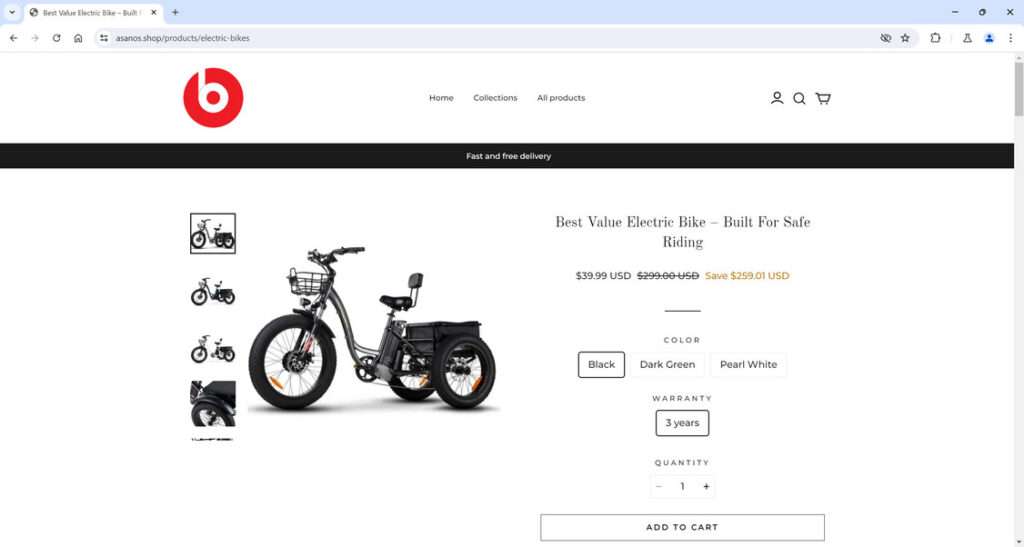
Overview of the Electric Trike Fake Sale Scam
The electric trike scam typically works like this:
Scammers set up fake ecommerce stores advertising electric trikes at impossibly low prices compared to the real market value. For example, they may claim to sell a trike that normally costs $2,000+ for only $39 or $49.
To lure in victims, the fake stores use stolen images and videos of real electric trike models. They make up fake discounts and countdown timers to create a false sense of urgency.
If a victim purchases the cheap electric trike, the site takes their money but never delivers any product. The victim’s credit card details may also be stolen for fraudulent use.
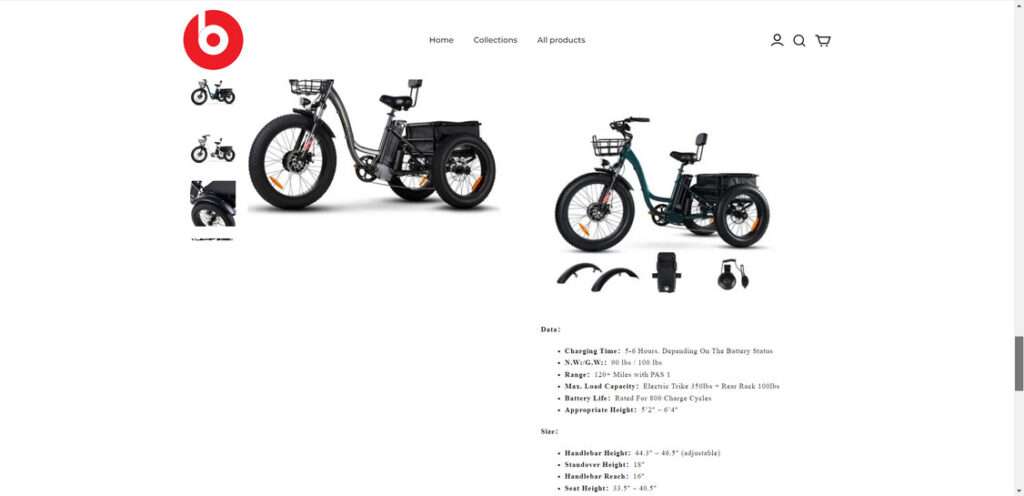
The fake stores are intentionally difficult to contact and provide no way to track orders. Any attempt to follow up on the purchase or obtain a refund is usually ignored.
This type of scam peaked in popularity around 2022-2023 but fake electric trike stores continue popping up regularly across social media and search engines. They take advantage of the growing consumer demand for electric trikes.
Some red flags to recognize these scam sites include prices too good to be true, stolen product images, countdown timers, lack of contact information, missing About Us pages, and broken links/grammar errors throughout the site.
How Criminals Set Up the Fake Stores
Cybercriminals typically create these fake electric trike stores in just a few simple steps:
- Register a domain – They buy a new domain name similar to legitimate brands, often using the “.shop”, “.top”, and “.shop” TLDs.
- Get web hosting – The site is hosted on a basic shared server to keep costs low. Hosting providers often don’t vet customers.
- Install template – A pre-made ecommerce template is installed on the domain to quickly launch the storefront. Templates allow custom branding.
- Add fake products – Stolen images and descriptions of electric trikes are added to the catalog. Prices are drastically lowered from real prices.
- Process payments – Online payment systems like Stripe and PayPal are integrated to accept credit cards. Funds from purchases go directly to the scammers.
- Launch scam ads – Fake ads are placed on Facebook, Instagram, TikTok, Google, and more to draw traffic to the store. Geotargeting and interests help target victims.
With store templates and automation tools, criminals can churn out fake shops targeting different products with minimal effort and technical skills required.
Top Electric Trike Models Targeted in the Scam
While different electric trike brands have been affected, some of the most targeted include:
Max Foot MF-30 Electric Trike
- Real MSRP: $2,499
- Fake scam price: $39 – $49
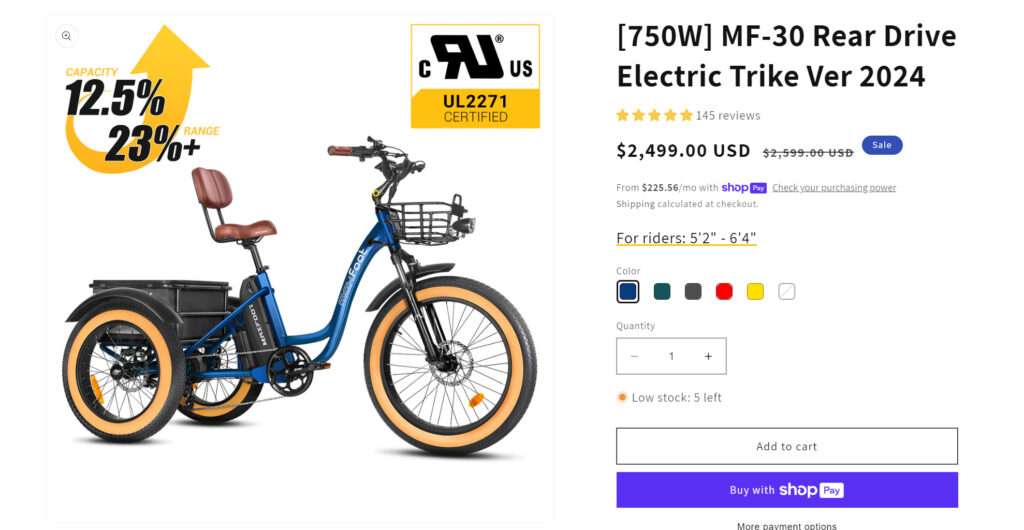
The Max Foot MF-30 is one of the most faked electric trikes in scam stores. It’s a popular cargo trike capable of handling heavier loads with its 750W motor and 48V battery.
Emojo Caddy Pro Electric Trike
- Real MSRP: $1,895
- Fake scam price: $29
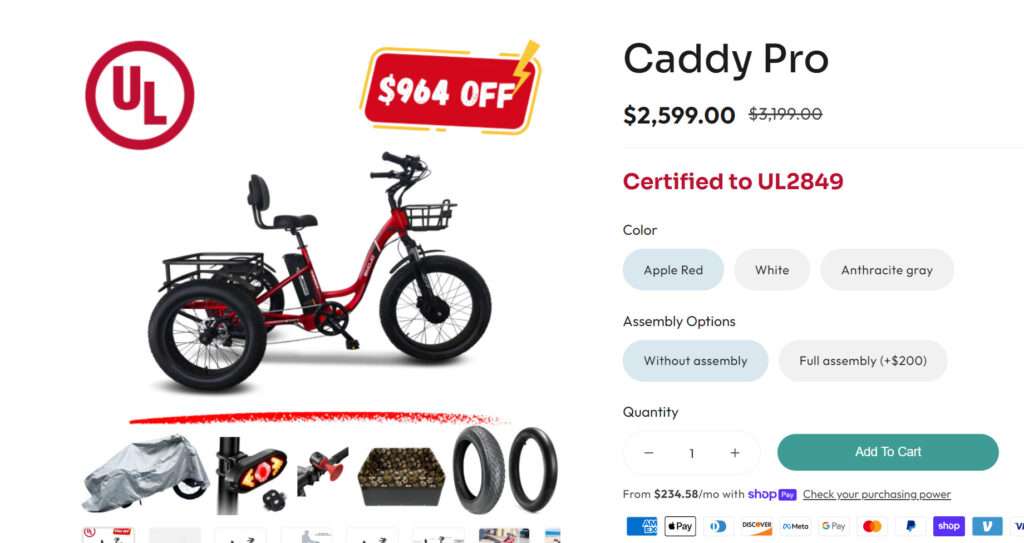
With a range up to 60 miles, the Emojo Caddy is another well-reviewed electric trike often targeted in the scam.
EWheels EW-29 Electric Trike
- Real MSRP: $2,499+
- Fake scam price: $39
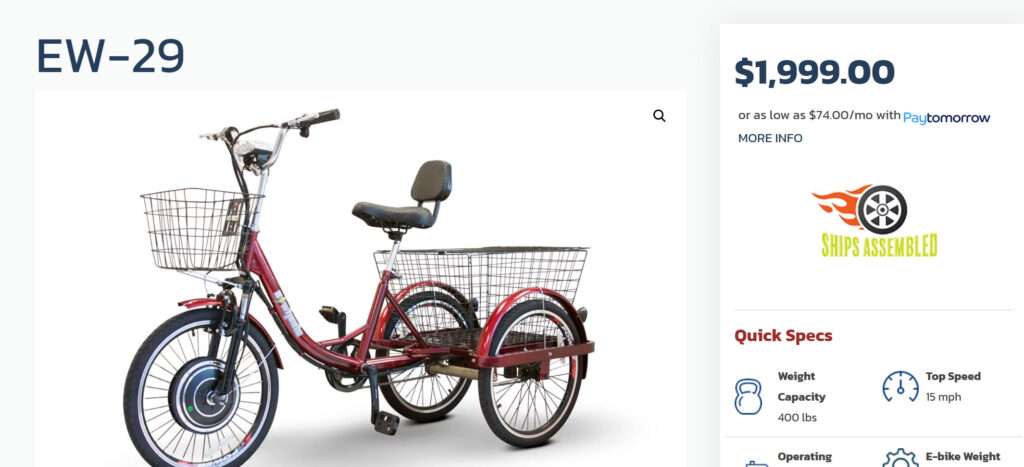
The EWheels EW-29 is a three-wheel electric bike with a 500W motor and removable battery. It’s replicated on many fake sites.
Several other trike models like the Ancheer, Addmotor, and Sherman have also appeared on scam sites. Essentially any popular electric trike can be exploited.
How the Electric Trike Scam Works
Scammers are able to successfully pull off this scam by following some standard techniques used to create convincing fake sites, generate traffic, and collect payments while evading detection. Here is a step-by-step look at how these scammers operate:
1. Setting Up Fake Ecommerce Websites
The scammers first purchase domains that appear legitimate and trustworthy at first glance. Common extensions like .shop, .store, and .deal can make scam sites look like real ecommerce stores. The sites are designed to closely mimic actual electric bike/trike manufacturer and retailer sites through:
- Copying branding elements like logos, graphics, and slogans
- Using stolen product photos and specs from real sites
- Duplicate content on “About Us” and other informational pages
- Adding fake customer reviews and testimonials
To unsuspecting visitors, these sites can appear to be the real deal at first glance. The scam stores even create fake business registration documents and certificates to seem official.
2. Promoting the Sites Through Social Media Ads
Once the fake ecommerce sites are ready, scammers focus on driving visitor traffic through social media ads and posts. Facebook, Instagram, YouTube, and TikTok are prime targets.
The ads highlight ridiculously low prices on popular electric trike models like the Max Foot 3. Prices like “$39 for a $2,500 Trike!” in bold headlines grab attention.
Images of the real trikes are used in the ads along with fake badges like “90% Off Sale” and “Today Only Deals” to create urgency. Targeting electric bike and outdoor enthusiast accounts reaches the ideal victims.
3. Collecting Payments and Personal Information
When someone clicks these ads and visits the scam sites, they are greeted with slick pages showcasing the electric trikes at unbeatable prices. After selecting a model and adding it to their cart, visitors proceed through the checkout process.
This is where the scam is completed. Visitors must enter personal details like name, address, and phone number along with financial information including credit card numbers.
The sites use legitimate-looking payment processors like Stripe which builds trust. But in reality, these processors are fake payment forms allowing the scammers to collect billing details directly.
With both personal and payment info stolen, the scammers complete the scam by processing payments without ever shipping promised products. The sites disappear soon after.
4. Disappearing Without a Trace
Once payments are processed and personal information collected, the scammers cover their tracks by taking down the sites.
The domain registrations are ended so the sites go offline. Email addresses associated with the domains are shut down. There is no trace left of the scam stores or who was behind them.
From the victims’ standpoint, the sites simply take their money and vanish without a trace. All attempts to contact the stores are met with nowhere to turn to. The scammers disappear with the payments and personal info, likely to set up new fake sites repeating the process.
This is why it is critical to avoid becoming victimized by recognizing these scammer techniques and the signs of a fake ecommerce store.
8 Ways to Spot a Fake Electric Trike Store
While scam sites continue evolving their tactics, there are key red flags to recognize these fraudulent stores:
- Ridiculously low prices – No legitimate retailer could profit selling electric trikes for just $29 or $39 when they normally cost thousands. This is the biggest giveaway.
- No real contact info – Fake sites don’t provide a real company address, phone number, or contact options beyond a web form.
- Countdown timers – Phony discounts paired with timers create a false urgency to buy before the “sale” ends.
- No real About page – Scam sites lack a detailed About Us page describing their “company”. Any text sounds vague or stolen from elsewhere.
- No mentions of warranties/guarantees – Unlike real brands, they provide no manufacturer warranties or satisfaction guarantees.
- Stock photos – Product images look generic or are stolen from the real brand sites. They lack unique photos.
- Grammatical errors – Shady sites often contain spelling/grammar errors and other signs of sloppiness.
- Social media icon links not working – Icons for Facebook, Instagram, YouTube, etc. either lead nowhere or to brand new dummy pages. Conduct additional research before purchasing. Search for reviews of the website itself, not just the product. Be very wary of any new site selling expensive products at deeply discounted prices.
What to Do If You Already Fell Victim to the Electric Trike Scam
If you unfortunately fell for one of these electric trike cons and lost money, here are steps to take immediately:
1. Call your bank
- Contact your bank or credit card provider and explain you believe the online merchant was fraudulent.
- Request to dispute the charges and file a chargeback request to get your money refunded. Act ASAP before the scammers withdraw funds.
2. Place fraud alert
- Call the major credit bureaus to place a fraud alert on your account. This warns creditors they should verify your identity for new applications.
3. Monitor statements
- Carefully review your upcoming credit card and bank statements to watch for additional fraudulent charges. Scammers may sell or use your payment information for other purchases.
4. Reset online account passwords
- Change the passwords for all financial, email, and retail accounts immediately. Use unique passwords for each account. Enable two-factor authentication wherever possible.
5. Watch for identity theft
- Fraudsters may use your name, Social Security number, or other personal info from payments to open unauthorized accounts. Monitor your credit reports and accounts closely for suspicious activity.
6. Report the fake sites
Gather any website/payment details and report the scam to the FTC and your local law enforcement agencies.
7. Spread awareness
- Prevent others from falling victim by reporting fake ads to social networks and leaving reviews about the scam websites that come up in search results. Share your experience anywhere their ads may appear.
8. Increase online shopping vigilance
- Learn from this mistake – be much more cautious when buying expensive items online going forward. Only order from established sites you can thoroughly validate.
9. Consult with an attorney
- If you suffered significant financial losses from an electric trike scam, consulting an attorney may be wise to review legal options. While rarely pursued, class action lawsuits have compelled social networks and payment processors to take action against certain fraud rings in the past.
10. Seek emotional support
- Being scammed can be extremely stressful and emotional. Don’t be afraid to open up to trusted friends/family for moral support as you work to recover your funds and secure your identity.
With persistence, most victims can get fraudulent electric trike charges reversed, have their money refunded, and prevent identity theft fallout – but fast action is critical. Don’t wait to take these important steps above.
Frequently Asked Questions About the Electric Trike Scam
1. How do I recognize a fake electric trike sale scam?
Fake electric trike scam sites often have prices too good to be true, like $39 for a trike normally priced at $2,500. Other red flags are stolen product photos, fake discounts/ timers, no real company info or warranties, and social links that don’t work. Conduct research on unfamiliar sites before purchasing.
2. What payment methods do the scammers accept?
Most fake trike stores accept major credit cards including Visa, Mastercard, American Express and Discover through legitimate processors like Stripe. Some sites even take PayPal to look more trustworthy. The scammers can collect payments successfully before the fraud is detected.
3. Why are the scam trike prices so low?
Scammers list absurdly cheap prices like $29 or $39 for a $2,000 trike to excite potential victims focused on the deal and less cautious about verifying the retailer’s legitimacy. The huge purported discounts lower skepticism.
4. How quickly do the fake sites disappear?
Scam trike sites typically vanish within days or weeks after launching and collecting payments from victims. The criminals want to process as many orders as possible before the fraud is exposed. Quickly shutting down also helps them evade detection.
5. Where are these fake electric trike stores located?
Most electric trike scam sites hide their real location but are likely operated overseas in countries like China and Russia using fake business identities. This makes legal recourse extremely difficult for victims ripped off by the sites.
6. How do I get my money back if I was scammed?
If you paid by credit card, immediately contact your card issuer to report the fraud, dispute the charges as unauthorized, and request a chargeback. This can prompt the return of your funds. PayPal also has a purchase protection program.
7. Why are these electric trike scams so common?
Electric trikes’ rising popularity paired with their high prices make them lucrative targets for scammers. More victims search for and can be convinced to buy expensive electric trikes online, especially when promised improbable discounts difficult to resist.
8. How can I report a fake electric trike website or ad?
Gather any website and payment details and report the scam to the FTC. You can also report fraudulent ads to social networks like Facebook and Instagram where you saw them. Leave online reviews detailing the experience to warn others.
9. What precautions can I take to avoid this scam?
Carefully research unfamiliar websites selling expensive specialty items at steep discounts before purchasing. Search for reviews of the site itself. Verify contact information like company address and working customer service number. Pay by credit card only.
10. What should I do if my credit card was used on a scam site?
Immediately contact your card issuer to dispute the charges and have a new card reissued. Monitor your statements closely for additional fraudulent charges. Also place a fraud alert and check your credit reports for any signs of wider identity theft.
The Bottom Line on Avoiding the Electric Trike Scam
The fake electric trike sale scam will likely continue as consumer shopping shifts online and scammers get savvier exploiting emerging product trends.
To avoid getting ripped off, remember real deals that seem too good to be true usually are. Apply extra scrutiny with any major purchase, especially from retailers you don’t already know and trust.
When buying an electric trike online:
- Verify the company behind the website and read reviews.
- Confirm details like real contact info, About pages, and warranties.
- Reverse image search product photos.
- Beware of shady sales tactics like countdown timers and prices way below market value.
- Always pay by credit card for fraud protection. Avoid direct bank transfers.
- If scammed, act immediately to minimize losses and prevent identity theft.
Stay vigilant and trust your gut – if an electric trike deal raises any concerns, walk away. Protect your hard-earned money by sticking with reputable brands and shopping sites.








