


Buying a safety harness involves more than comparing straps and buckles. For some workers and purchasing teams, where the equipment was manufactured also affects the decision.
Elk River’s American manufacturing message now faces an FTC enforcement case. Here is what the documents actually address, what the current website shows, and what buyers should do.
Overview
What the Elk River case concerns
The FTC announced action against Elk River, Inc. on November 17, 2026, challenging the manufacturer’s unqualified American-origin advertising for safety harnesses.
The agency says Alabama assembly did not justify the broader claim because the harnesses contained significant imported components. This is an origin-advertising case, not an announced product recall.
What the settlement announcement actually means
The announcement describes a proposed settlement, not a trial verdict. The FTC case listing remains pending, and the filed proposed order leaves the judge’s approval line blank.
Elk River neither admits nor denies the complaint’s allegations under that agreement. Buyers should distinguish the agency’s supported allegations from a completed judicial determination.
The practical decision for buyers
Do not rely on an old blanket American-made statement when ordering. Request current, model-specific origin documentation and keep that separate from the equipment’s safety requirements.
- Check the exact harness model and manufacturing date.
- Keep the advertisement and distributor’s original quotation together.
- Ask what domestic manufacturing claim the supplier can substantiate.
- Escalate any actual equipment defect through workplace safety procedures.
What the FTC Alleges About Elk River’s Harness Advertising
The FTC complaint identifies claims on website pages, promotional materials, social media and harness labels, including “Made in USA” and “American-made.”
Its examples concern earlier materials, not a finding that every statement remains on today’s website. The complaint describes homepage wording used through June 2026.
According to the filing, final assembly happened in Alabama, while imported items included D-rings, carabiners, snap hooks and self-retracting lifelines.
Those are not merely decorative packaging elements. The allegation concerns components performing essential functions within the equipment, rather than a foreign shipping carton or incidental label.
The distinction matters when deciding whether an origin promise influenced your purchase. A domestic assembly operation and an entirely domestic supply chain are different propositions.
The complaint also identifies distributor advertising. That makes the quotation or product listing you actually saw important, rather than assuming every reseller used identical wording.
For a purchasing team, the relevant question is straightforward: did the representation supporting this specific order accurately describe the product supplied?
A revised homepage cannot answer that historical question by itself. Conversely, a screenshot of an earlier advertisement cannot establish what a supplier promises on a new quotation.
Why Alabama Assembly Is Not the Same as Unqualified American Origin
The FTC’s American-origin guidance distinguishes an unqualified claim from a qualified explanation of domestic work and imported content.
An unqualified claim requires final assembly and significant processing in the United States, with all or virtually all components and ingredients made and sourced domestically.
A statement limited to assembly describes something narrower. It should not quietly become a promise that every important connector, textile or other component originated domestically.
The agency also considers the importance of imported content, not just a simple component count. A functional component can matter even when its cost is relatively small.
For buyers, this means a flag, factory address or familiar American brand cannot substitute for the actual origin representation attached to the product.
Ask the supplier to write down the precise claim it stands behind. Avoid replacing that answer with your own interpretation of a patriotic photograph.
A useful response identifies the model, the relevant production batch and the extent of domestic work. A general company-history paragraph does not supply those details.
You can value American assembly without accepting an unsupported claim about all materials. Accurate qualifications let customers make that choice with the information visible.
What Elk River’s Current Website Shows
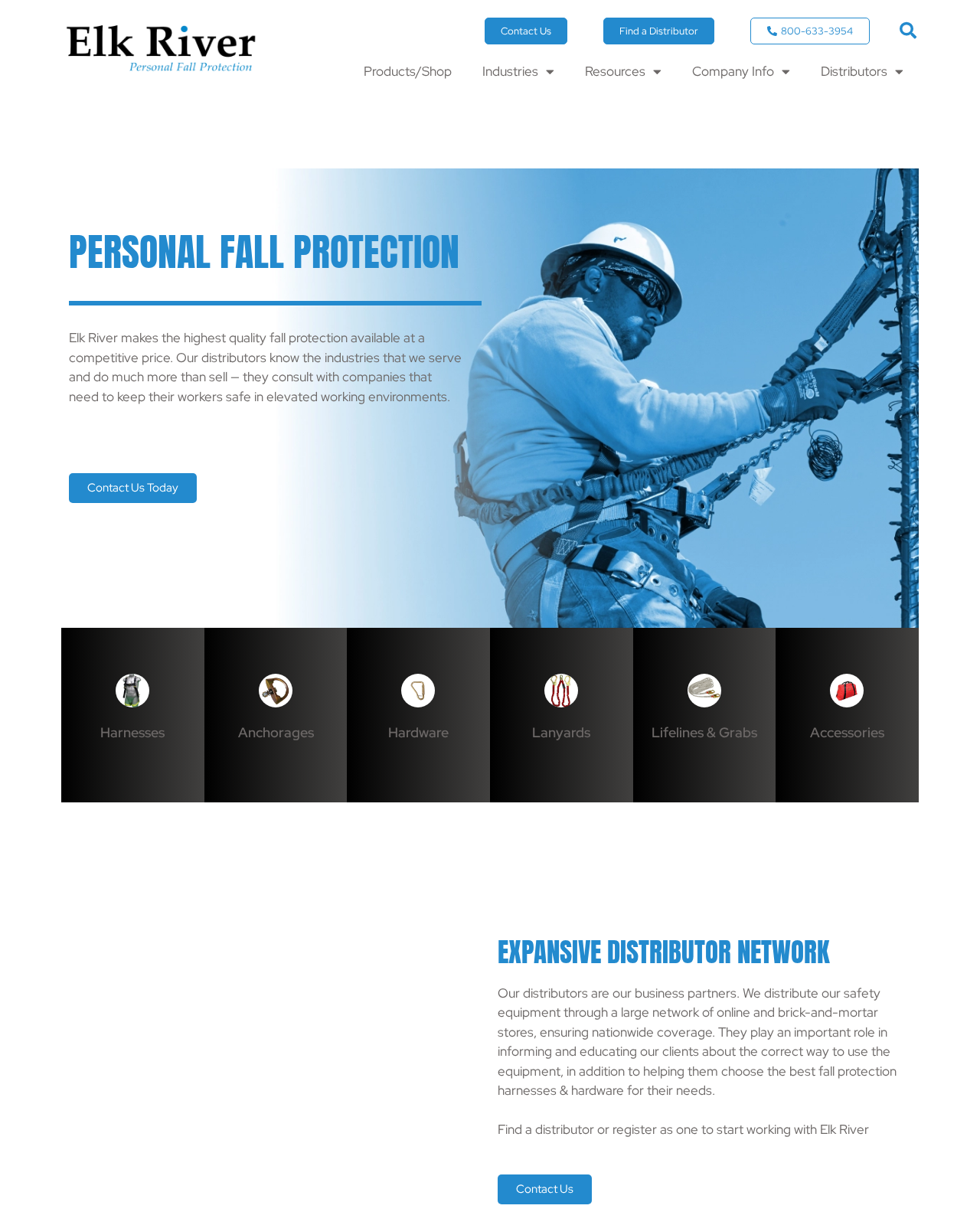
The current elkriver.com homepage describes personal fall protection and an Alabama plant. Its main heading no longer carries the blanket American-origin wording reproduced in the complaint.
The site presents a distributor network, product categories, technical resources and contact information. These observations identify an operating manufacturer, not an anonymous miracle-gadget checkout.
However, the About page still distinguishes Elk River from a low-cost import. That comparison deserves careful reading alongside the FTC’s imported-component allegations.
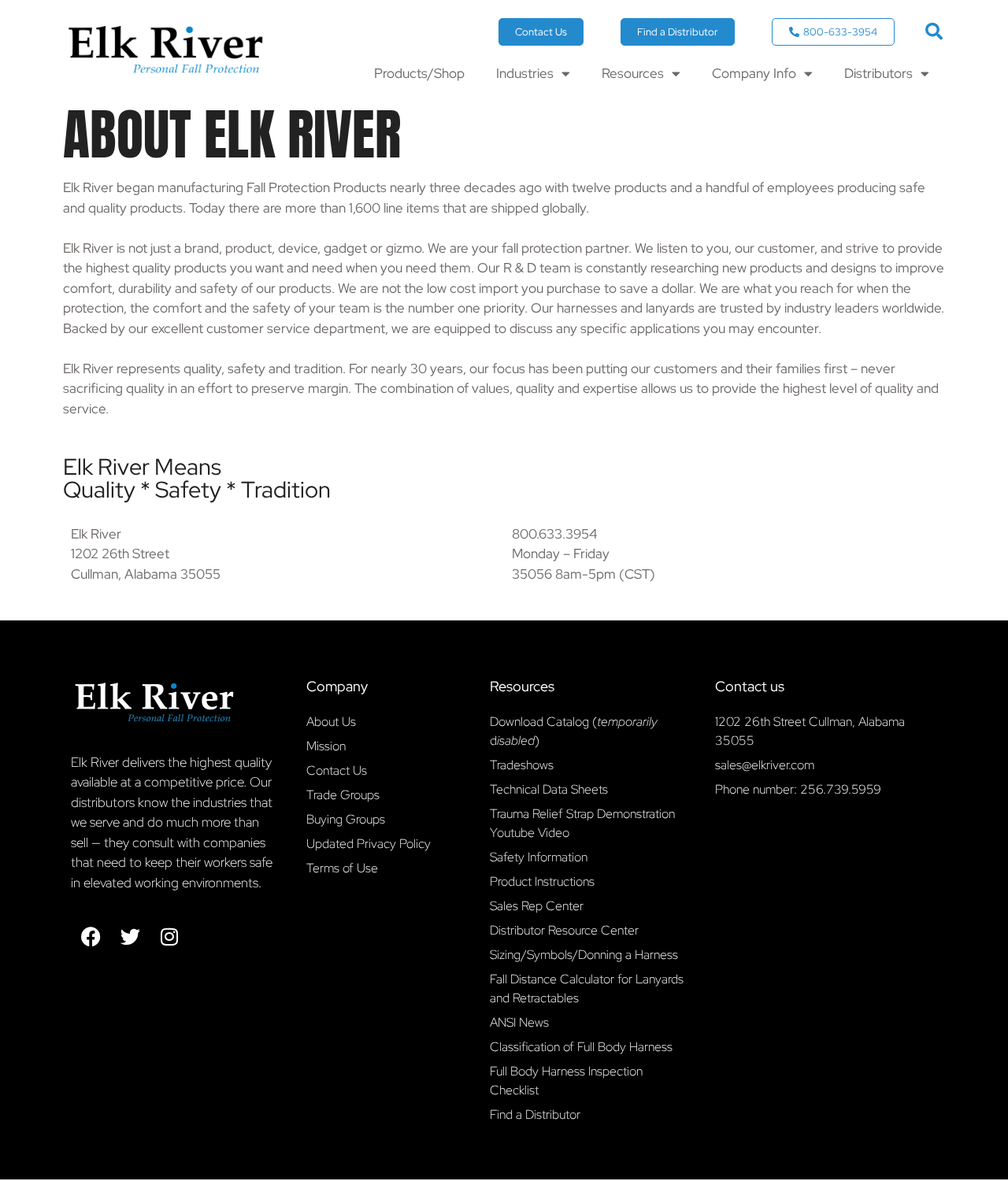
The pictured paragraph says the company is not the low-cost import someone buys to save money. That is a positioning statement, not a bill of materials.
It does not identify the origin of a particular D-ring or prove the domestic-content status of a harness on your purchase order.
The appropriate response is to request substantiation rather than assume the entire current paragraph is an express promise that every component is American-made.
Similarly, the site’s references to industry standards describe the manufacturer’s positioning. They do not resolve the separate origin dispute or independently certify an individual harness.
Our assessment concerns the published advertising, legal documents and purchase information. We have not load-tested Elk River equipment or evaluated a worker’s complete fall-protection setup.
The Company, Distribution Route and Return Information
An Identifiable Manufacturer in Cullman
The website lists Elk River in Cullman, Alabama, with a physical address, telephone numbers and company email contacts. The FTC filing identifies the same manufacturer.
This is important context for the accusation. The problem under investigation is the accuracy of particular origin claims, not evidence that the manufacturer itself is fictitious.
Keep that identity separate from whichever distributor sold your equipment. The manufacturer, invoicing business and contact handling a return may be different parties.
Distributor Orders Need Their Own Paper Trail
The homepage says its products move through online and physical distributors. Your invoice therefore matters when identifying the business responsible for your actual transaction.
If you purchased through a reseller, preserve that reseller’s listing and written assurances. Do not assume a manufacturer announcement automatically changes your distributor’s return process.
For repeat orders, ask whether the offered model or origin wording has changed. A previously approved supplier record should not replace checking a new purchase specification.
Assembly, Components and Shipping Are Separate Questions
A Cullman shipping address establishes where a shipment may originate under the posted terms. It does not establish where every constituent component was manufactured.
Equally, imported hardware does not establish that the finished harness was wholly manufactured abroad. The allegation specifically acknowledges domestic final assembly.
Request documentation matching the claim you need verified. Do not use an invoice address as a shortcut for a component-origin or performance conclusion.
The Website Has Conflicting Levels of Return Detail
The separate refund_returns page displays generic references to books, food and digital goods. It also leaves contact and destination fields as unfinished placeholders.
Those details make that page a poor standalone guide for a harness buyer. They warrant clarification, but do not prove a particular return has been refused.
The more specific Terms of Sale require prior return authorization, resale condition and customer-paid return shipping. They provide a real customer-service contact for obtaining authorization.
They also describe a limited product warranty. That warranty process is distinct from requesting compensation because an origin representation influenced the purchase.
Ask the invoicing seller which written conditions govern your order before sending equipment anywhere. Keep its answer, authorization number and shipping instructions with your receipt.
Understanding the Proposed Judgment and Customer Notices
The FTC announcement summarizes a judgment of approximately $4.4 million, largely suspended after a smaller payment because of the company’s financial position.
The filed proposed order specifies $4,367,640.74, with $72,527.50 payable before suspension of the remainder, subject to financial-disclosure conditions.
The same proposal includes restrictions on misleading origin representations and customer notifications. Its notice provision identifies purchases between August 1, 2021 and June 10, 2026.
A separate information provision concerns potential redress for purchases between May 8, 2023 and June 10, 2026. These periods serve different administrative purposes.
Neither provision establishes a guaranteed individual refund amount or a live application deadline. The filed document is proposed, and the agency has not announced a specific payment to every purchaser.
Save qualifying purchase records now rather than guessing what a future administrator might request. Keep watching the actual FTC case record for procedural developments.
Be especially cautious about messages promising immediate settlement money in exchange for a processing payment. Verify any purported notice independently before supplying sensitive information.
The useful takeaway is preparation, not an assumption that a headline judgment equals cash already available to every equipment owner.
An Origin Dispute Does Not Replace a Safety Assessment
The origin case should not be repackaged as proof that all Elk River harnesses fail, nor as reassurance that any particular item is safe.
Neither conclusion follows from the advertising allegations. Buying decisions and workplace safety decisions need their own supporting records and responsible personnel.
For general industry, OSHA’s personal fall-protection requirements address inspections, compatible components, damage, impact loading and rescue arrangements.
They require inspection before initial use during each workshift and removal of defective components. Equipment subjected to impact loading needs the specified competent-person assessment before reuse.
Other workplaces may fall under different standards. Follow the rules applicable to the job, the exact manufacturer’s instructions and your employer’s competent safety personnel.
Do not remove labels, replace connectors or perform a homemade drop test to investigate the origin controversy. Those actions could compromise equipment and destroy useful identification.
If there is an actual defect or unclear history, escalate it before use at height. A refund discussion is not a reason to keep questionable equipment working.
If the concern is solely an advertising claim, document it without substituting an improvised safety judgment. The person using the harness deserves a separate, properly supported decision.
What to Do If You Bought Elk River Harnesses
- Identify the equipment before making a claim.
Record the model, serial or batch details, purchase date, invoicing seller and quantity. Photograph readable labels without altering the equipment or its inspection history.
For a fleet purchase, link each relevant purchase order to its supplier. Avoid combining different models and production dates into one unsupported assumption.
- Preserve the origin promise that influenced your order.
Save the product page, advertisement, quotation or email containing the representation. Keep the full context and date, not only a cropped flag or headline.
If a salesperson supplied the assurance verbally, ask for written confirmation. Explain precisely which statement you relied on when choosing the product.
- Request a model-specific written explanation from both parties.
Ask the seller and manufacturer what domestic-origin claim applies to your equipment and what documents support it. Request clarification of assembly and significant imported components.
If domestic content was a contract requirement, have your purchasing or legal team compare the response with that specification. Do not treat a generic brochure as resolution.
- Keep commercial complaints separate from safety escalation.
Send any observed damage, suspected defect or incompatible component to the responsible safety professional immediately. Provide photographs and identification through the established reporting route.
Do not wait for a settlement update to address an actual workplace hazard. Conversely, do not discard serviceable equipment solely because an advertising complaint exists.
- Confirm return instructions before shipping anything.
Contact the seller named on your invoice and obtain written authorization where required. Ask about the destination, costs, condition requirements and proposed remedy.
Preserve correspondence if the answer conflicts with your purchase agreement. Do not mail valuable safety equipment to a placeholder address copied from an unfinished policy page.
- Follow the official case rather than refund solicitations.
Use the FTC record to verify developments and preserve receipts for any future instructions. A private caller cannot guarantee payment merely by citing the settlement.
If you want to report the advertising, describe your actual purchase and provide the supporting claim. Avoid adding unrelated allegations about product failures you never experienced.
Frequently Asked Questions
Is Elk River a fake company or a scam website?
The evidence identifies a real Alabama safety-equipment manufacturer and an official advertising enforcement case. It does not establish a fictitious business or non-delivery storefront.
The relevant warning is specific: do not rely on disputed blanket origin claims without current documentation matching the model you intend to buy.
Does the case mean Elk River harnesses are entirely made in China?
No such conclusion follows from the complaint. The FTC describes domestic final assembly and components originating in several countries, including China.
It challenges the broader American-origin representation. Calling every harness a wholly Chinese finished product would misstate the allegation and obscure the actual sourcing issue.
Has the court already ordered a refund for every customer?
The FTC announced a proposed settlement, and the filed order is not evidence of a guaranteed payment to each buyer. Its provisions distinguish notices from potential redress.
Keep your purchase records and follow official updates. Do not assume the proposed total judgment is an individual-refund fund already open for applications.
Should workers stop using every Elk River harness?
The documents discussed here address origin advertising, not a blanket recall. Actual equipment suitability, condition and inspection history require the normal workplace safety assessment.
Refer any damage or specific safety concern to your employer’s responsible personnel before use. This article cannot clear a harness for work at height.
Why does the website’s return page mention unrelated goods?
The separate page contains generic retail wording and unfinished contact fields. Buyers should request clarification instead of relying on it for a particular equipment return.
The posted Terms of Sale contain a more concrete authorization procedure. Your distributor’s transaction documents may also govern how you request a remedy.
What should a new purchaser ask before ordering?
Request the exact model specification, applicable safety documentation, current origin statement and written return conditions. Make any required domestic-content condition explicit in your purchase order.
Keep origin and performance questions separate. An American assembly statement does not answer every sourcing question, and an origin document does not replace equipment inspection.
The Bottom Line
Do not buy on the strength of an unsupported blanket American-made promise. Elk River’s FTC case makes model-specific documentation and preserved purchasing records particularly important.
The supported concern is serious origin advertising, not proof that every harness is counterfeit, defective or wholly imported. Request written clarification and escalate actual safety issues separately.
Existing buyers should retain invoices, labels and the original sales claim, then use their seller’s documented remedy process and official case updates rather than promises from refund callers.

Join the discussion
0 commentsShare your experience or ask a question about this article.
Community experiences
Did this happen to you?
Your experience could help someone recognize the same scam. Submit a private report for our team to review.
I experienced this tooReports are reviewed before publication. Sharing publicly is always your choice.
Discussion
Start the conversation
Have a question or something useful to share? Add the first comment.