

Scam text messages claiming to be from the delivery company EVRI informing recipients that a delivery attempt has failed and asking them to “select a new slot” are being sent by online scammers. This article will provide an overview of how this scam works, how to identify these phishing texts, what to do if you receive one, and how to avoid falling victim.
Overview of the EVRI ‘Select A New Slot’ Scam
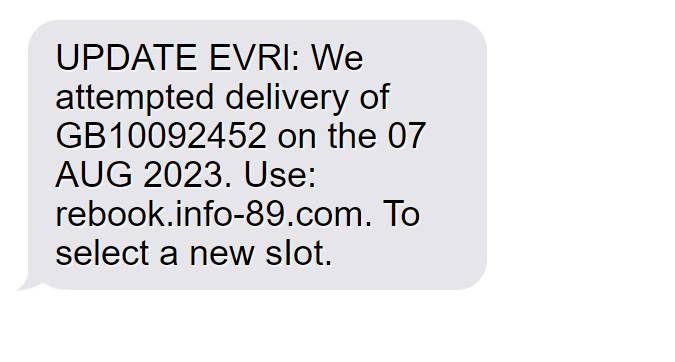
This scam involves text messages that appear to come from the legitimate delivery company EVRI. The messages claim that EVRI attempted but failed to make a delivery to the recipient, and provides a link for the recipient to “select a new slot” for redelivery.
However, the link in the text actually leads to a fake, malicious website designed to steal personal and financial information from victims. The website is made to closely resemble the real EVRI site, but entering any information will expose users to identity theft and fraud.
The text messages are being sent out en masse to random phone numbers across the UK in an attempt to scam as many victims as possible. The messages contain no legitimate tracking information, and are not actually from EVRI.
How the EVRI ‘Select A New Slot’ Scam Works
The scam text message will include wording such as:
“EVRI: We attempted delivery of GB10092452 on the 05 AUG 2023. Use: rebook.info-89.com. To select a new slot.“
It may contain a fake EVRI logo and tracking number to appear more convincing.
If the recipient clicks on the link, they will be taken to a website that mimics the look and feel of the real EVRI site. The site will prompt them to enter personal details such as name, address, contact information, and sometimes even payment card information.
In reality, the scammers behind the fake site are harvesting these details which may then be used for identity theft, selling on to other criminals, opening fraudulent accounts, or making unauthorized purchases.
Meanwhile, the recipient is unaware they have fallen victim to the scam. They believe they have simply rescheduled their “missed” delivery, when in fact they have handed over valuable personal data.
How to Spot The EVRI ‘Select A New Slot’ Scam
There are several red flags that can help identify these EVRI scam text messages:
- You are not expecting a delivery from EVRI. Scammers send messages randomly without knowing if you actually have a pending delivery.
- Generic greeting lacking your name. Authentic messages from delivery firms tend to be personalized.
- Strange link URL. Secure legitimate links use the company’s domain, like evri.com. Scam links use unrelated domains.
- Requests for personal/financial information. EVRI would never ask for sensitive details over text.
- Poor grammar/spelling errors. Genuine companies proofread messages.
- Not sent from an official shortcode. Authentic EVRI texts come from dedicated numbers.
- Urgent call to action. Scams try to rush and panic you into acting without thinking.
- No tracking information. Real EVRI delivery notices include parcel IDs that you can cross-check.
- Follow up scam texts. Once scammed, you may get more texts asking for additional details like passwords.
Being vigilant for these common red flags is key to avoiding falling victim to the “select a new slot” parcel delivery scam.
What to Do if You Receive The EVRI ‘Select A New Slot’ Scam Text
If you receive a suspicious text claiming to be from EVRI:
- Do not click on any links or provide any personal or financial information.
- Report the scam text. Forward it to 7726, a free reporting service provided by phone operators.
- Contact EVRI to confirm if you have a real pending delivery. Use their official contact details from their official website.
- Change any passwords that you may have already compromised by entering on the fake site. Enable two-factor authentication where possible.
- Monitor your accounts for any suspicious activity and alert your bank if you see any unauthorized transactions.
- Watch out for repeat scam texts. The criminals may continue to target you once they know your number is active.
- Report the scam to Action Fraud, the UK’s cybercrime reporting center, on 0300 123 2040.
Following these steps can help limit the damage and prevent you from being re-targeted.
What to Do if You Have Fallen Victim to The EVRI ‘Select A New Slot’ Scam
If you entered any personal information into the fake site and fear your identity may be compromised:
- Contact all your banks, credit card providers, and other accounts. Alert them that your information was breached and implement enhanced security protocols.
- Consider a credit freeze or credit monitoring service. This will prevent criminals opening new lines of credit in your name.
- Change all account passwords and security questions. Avoid reusing the same credentials across multiple sites.
- Be vigilant in monitoring accounts and credit reports for any fraudulent activity. Report any suspicious transactions or errors immediately.
- Beware of potential follow-on phishing attacks. Scammers who have your info may target you again, via email, texts, or calls.
- File an identity theft report with Action Fraud. This is an official record that can help you recover from any losses.
While falling victim to this scam can be stressful, taking quick action to secure your identity and accounts can help limit the potential consequences. Be vigilant for any suspicious activity going forward.
How to Avoid Falling Victim to Parcel Delivery Scams
Here are some tips to protect yourself from fake parcel delivery scams:
- Never click on links in unsolicited texts from senders you don’t know. Manually type in official websites.
- Don’t be rushed. Take time to think before providing personal information. Verify any claims directly with the company.
- Review privacy and security settings on your phone. Disable options to preview text message links.
- Be wary of texts claiming you have a delivery requiring payment or personal details. Legitimate couriers would never do this.
- Don’t assume caller ID is accurate. Scammers can spoof legitimate business names and numbers.
- Keep device and security software up-to-date. Enable firewalls and anti-virus protections.
- Never provide sensitive information by email, text or over the phone. Official companies will never request this.
- Monitor bank accounts regularly for suspicious activity. Report unauthorized transactions ASAP.
- If you suspect your device is infected with malware, you should run a scan with Malwarebytes Anti-Malware.
Staying vigilant, trusting your instincts, and verifying requests directly with companies can help you recognize and avoid delivery scams. Being cautious about sharing personal information is the best form of protection.
Frequently Asked Questions
Why are scammers sending these fake EVRI texts?
The scammers aim to steal personal and financial information by tricking recipients into believing they have a missed delivery. By harvesting data entered into the fake site, the criminals can commit identity fraud.
How are the scammers getting people’s phone numbers?
Numbers are often randomly generated and texts sent en masse. Some may come from data breaches. The scammers only need a small success rate for the scam to be profitable.
Are the scam texts coming from EVRI?
No. The texts are sent by scammers spoofing the EVRI name and brand. EVRI does not send texts with links prompting people to enter personal information.
Can I tell if an EVRI text is fake?
Yes, look for signs like an unusual link, spelling and grammar mistakes, urgent demands for information, and threats of account suspension. Verify with EVRI directly if you are suspicious.
What happens if I enter details on the fake EVRI site?
Your personal information will be stolen by the scammers who can use it for identity theft. You may have your accounts compromised or be at risk for further phishing scams.
Are these fake EVRI texts illegal?
Yes. Impersonating a legitimate company to fraudulently obtain personal information is against the law. These scams should be reported to Action Fraud.
In Conclusion
Fake text messages claiming to be from delivery companies like EVRI are an attempt to steal personal data for criminal purposes. Being able to identify the signs of a scam text, and knowing the steps to take if you fall victim, can help protect you from identity theft and financial fraud. Maintain caution providing personal details, especially when received unsolicited. If in doubt, reach out to the legitimate company directly through official channels.

Join the discussion
0 commentsShare your experience or ask a question about this article.
Discussion
Start the conversation
Have a question or something useful to share? Add the first comment.