

Getting an unexpected ticket is a pain for any driver. But sometimes those surprise parking fines popping up in text messages turn out to be complete fakes. Scammers are using bogus EWHC parking penalties to trick unsuspecting motorists into handing over their personal information and money.
This devious scam starts with an urgent-sounding text about an unpaid parking charge. The message looks credible enough to fool recipients into clicking the link and entering their details. However, it’s nothing but a fraud out to steal your data. Learn how to steer clear of the EWHC parking fine scam.
An Overview of the EWHC Parking Penalty Charge Notice Scam
The EWHC Parking Penalty Charge Notice Scam typically starts with an urgent-sounding text message stating that the recipient has outstanding parking fines in their name which require immediate payment. The message claims to be from EWHC and cites infractions like illegal parking, bus lane driving, or other violations automatically detected by license plate recognition cameras.
To create a sense of urgency and panic, the messages threaten consequences like extra fees, getting your car banned, or even court summons if the fine goes unpaid. This pushes the recipient to hastily click on the included link to review their violation and settlement options.
However, the link does not lead to any official EWHC or .gov website. Instead, it routes to sophisticated fake parking penalty sites designed by scammers to mimic real traffic ticket settlement pages. The convincing branding and design easily dupes victims into believing they are on a legitimate government domain.
Once on the fraudulent site, users are presented with a realistic-looking parking ticket or PCN which appears to be issued in their name for driving infractions committed locally. The ticket details will often incorporate the recipient’s town or street names pulled from IP location data to seem even more credible. Of course, it is just a bogus violation randomly generated for the scam, without any actual records behind it.
After deceiving the victim with the fake ticket, the site prompts them to enter personal and payment information to supposedly settle their outstanding fine and avoid the threatened legal consequences. This sensitive data enables the scammers to steal identities, clone payment cards, and gain access to bank accounts. The form commonly requests:
- Full name and home address
- Contact details like phone number and email
- Vehicle registration number
- Driver’s license number
- Credit/debit card numbers
- Account login credentials
With the stolen identity and financial information obtained, the crooks are then able to take out loans or lines of credit in the victim’s name, make fraudulent purchases online, withdraw cash from cloned debit cards, or sell the data sets on the black market. By the time victims realize they’ve been duped, the scammers have deleted all traces of their phishing sites and texts. The stolen money has already been laundered through cryptocurrencies or overseas shell companies.
This parking penalty scam has become so common because the urgent threats and painstakingly replicated fake EWHC sites seem believable enough to deceive many drivers. But there are several telltale signs that can help motorists recognize and steer clear of the scams. Being aware of the typical red flags like urgent threats, unknown sender numbers, shady URLs, and requests for unnecessary details is key to avoid being duped. Drivers should be extremely wary of any surprise texts regarding parking fines and instead verify directly with EWHC through official contact channels only.
How the EWHC Parking Penalty Charge Scam Works
Here’s an inside look at how scammers execute the phony EWHC parking fine scam at each stage:
Step 1: Send Out Mass Texts
The scams start with mass texts sent randomly to thousands of phone numbers at once. Using automation tools, these can be blasted out quickly and cheaply. The more messages sent, the more potential bites.
The texts come from constantly changing unlisted phone numbers and prepaid SIM cards. This prevents the scammers from being identified and blocked.
Each message follows templates alleging unpaid EWHC parking fines tied to the recipient’s vehicle registration under ANPR cameras. Threats create urgency to pay up immediately.
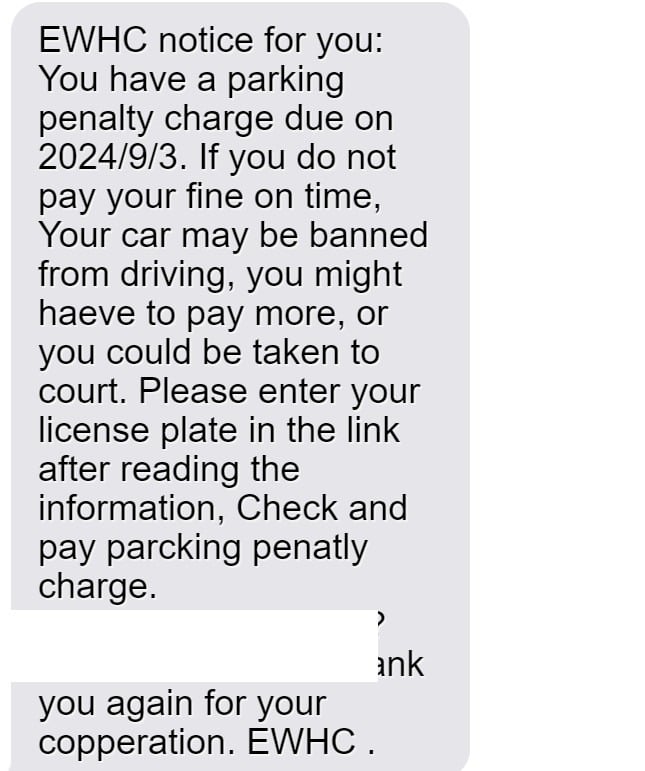
Here is how a text message might look:
EWHC notice for you:
You have a parking penalty charge due on 2024/9/26.
If you do not pay your fine on time, Your car may be banned from driving, you might haeve to pay more, or you could be taken to court.
Please enter your license plate in the link after reading the information, Check and pay parcking penatly charge.
https://qrco.be/bfplhr?WY=2TQS5c8Os
Thank you again for your copperation.
EWHC
Step 2: Direct Victims to Fake EWHC Sites
The messages provide links where recipients can supposedly review their ticket details and pay the fines. But the URLs actually route to sophisticated fake EWHC pages designed by scammers.
Shortened redirect URLs and typosquatting tricks mask the bogus sites. For example, the link may say “ewhc.uk” instead of .gov.uk. The convincing branding dupes victims.
Step 3: Display Fake Parking Violations
On the fraudulent sites, users see an official parking ticket or PCN issued in their name for infractions like illegal parking, bus lane violations, or other driving offenses detected automatically.
The tickets cite real road names and locations near where you live, pulled from IP data to seem credible. But they’re just randomly generated fakes with no records behind them.
Step 4: Collect Personal and Payment Details
After tricking victims with the ticket details, the sites present online forms to submit personal information and payment to settle the fake fine. This allows scammers to steal identities and funds.
The forms request your full name, home address, phone/email, vehicle info, driver’s license details, and crucially, bank account and credit card numbers. Victims comply to avoid presumed legal consequences.
Step 5: Steal Identities and Money
Armed with stolen personal and financial data, scammers can now easily access accounts, make unauthorized transactions, and assume identities.
They may clone debit cards to withdraw cash, make large purchases online, or sell the info on the black market where cybercriminals trade stolen identity data sets.
Step 6: Cover Tracks
By the time victims realize it’s a scam, the crooks have deleted all traces of their phishing site and throwaway phone numbers used for the texts. Stolen money moves through cryptocurrency tumblers and overseas shell companies to disappear without a trace.
Warning Signs of the EWHC Parking Fine Scam
Learning the common red flags can help motorists detect and avoid fake EWHC parking tickets:
- Getting an unexpected ticket with no prior knowledge of any parking violation.
- Texts coming from unknown phone numbers not tied to any official contacts.
- Messages urging immediate payment and threats of bans or court.
- Links going to shady redirect URLs instead of .gov.uk sites.
- Ticket details that can’t be verified through official EWHC information portals.
- Requests for unnecessary personal and financial data.
- Usage of your location pulled from IP tracking to seem more credible.
Be wary anytime you receive urgent texts claiming parking fines. Genuine tickets only come via postal mail after a violation.
What To Do if You Get a Suspicious EWHC Parking Text
If you receive a dodgy EWHC parking fine text, take these steps:
- Avoid clicking on any links within the message. They likely lead to phishing sites.
- Double check the sender’s number. EWHC only uses official contact channels.
- Call EWHC to verify if there are truly any unpaid fines under your vehicle registration.
- Carefully inspect sites before entering info. Official EWHC URLs end in .gov.uk.
- If you shared financial details, call your bank ASAP and watch for fraud.
- Report the text to Action Fraud to help authorities track the scams.
Stay vigilant about any surprise texts demanding urgent parking fine payment. Real tickets don’t come via text links from unknown numbers.
FAQs About the Bogus EWHC Parking Penalty Scam
1. What does EWHC stand for?
EWHC is short for England and Wales High Court – they do not actually issue parking tickets or fines.
2. How does the EWHC parking scam work?
Scammers send urgent texts claiming you owe EWHC parking fines and must pay immediately. The included link goes to a fake website that steals your personal and financial details when entered.
3. Are these EWHC parking texts real?
No, any texts about outstanding EWHC parking fines are fraudulent. EWHC does not issue parking or traffic tickets. Ignore them.
4. What are signs it’s a fake EWHC parking fine?
Warnings signs include surprise texts from unknown numbers, threats demanding quick payment, redirect URLs, inability to verify the ticket on EWHC’s site, and requests for unnecessary personal information.
5. What should I do if I paid a bogus EWHC fine?
Contact your bank to reverse the charges and look for fraud. Report identity theft if personal information was compromised. File reports with Action Fraud and EWHC.
6. Can I go to jail for not paying fake parking fines?
No, you cannot go to jail or face legal consequences for not paying scammer fines – they are completely fraudulent with no validity.
7. How can I report fake EWHC texts?
You should report the scam texts to Action Fraud, the dedicated fraud reporting agency in the UK. This helps authorities track the scams.
8. Why do scammers use EWHC for fake parking fines?
EWHC sounds like an authoritative legal body, so scammers exploit the name to make their parking fine scam seem more legitimate and intimidating.
9. Can my car be seized for not paying fake fines?
No, scammers cannot legally seize your vehicle or enact any other threatened consequences, as their tickets are totally invalid frauds.
10. How can I avoid EWHC parking scams?
Be wary of surprise fine texts, look for .gov URLs, call EWHC to confirm, don’t click unverified links, and never provide personal or payment data via text requests.
Don’t Let Fake EWHC Parking Fines Stop You in Your Tracks
As parking fine scams spread across the UK, drivers need to stay alert. Getting duped by a bogus EWHC ticket can lead to identity theft, drained accounts, and long-lasting damage. But with knowledge of scammer tactics, motorists can avoid being taken for a ride.
Remember, genuine tickets only arrive via post, not surprise texts. Use diligence with links and urgent payment demands. Verify fines directly through EWHC’s official contact channels only. Drivers who steer clear of shady texts can keep safe from parking penalty scammers. Don’t let them halt you in your tracks!

Join the discussion
0 commentsShare your experience or ask a question about this article.
Discussion
Start the conversation
Have a question or something useful to share? Add the first comment.