

In this blog post, we will discuss a scam email that claims to offer recipients a large sum of money as part of an Economic Devastation Recovery Relief program. We will explain what the email is, how it works, and how to avoid falling victim to such scams.

What is the “Economic Devastation Recovery Relief” scam email?
The “Economic Devastation Recovery Relief” scam email is a type of phishing email that targets unsuspecting individuals with a fake offer of financial assistance. The email is presented as a message from Relief International Inc., a charity organization based in South Africa. It informs recipients that they have been awarded a sum of $1,000,000 as part of an Economic Devastation Recovery Relief program. The email goes on to explain the current economic challenges being faced globally and the need for poverty alleviation and economic recovery programs.
It then provides contact information for a Regional Payment Administrator (RPA), who recipients are instructed to contact to receive the funds. The email asks for personal information, such as full name, address, telephone number, age, occupation, and bank account information.
Here is how typically “Economic Devastation Recovery Relief” scam email looks:
Subject: Relief International Award Notification
Relief International Inc.
2nd Floor, 351 Francis Baard St,
Pretoria Central,
Pretoria, 0001
South Africa.
Attn: E-mail Beneficiary,
Economic Recovery Fund Donation.
You have been awarded the sum of US$1,000,000 (One Million United States Dollars) as Economic Devastation Recovery Relief.
The global economic recovery is set to decelerate in this 2023 according to World Bank Economists. Global growth is slowing sharply, with worldwide economic output projected to be just 1.7% this year. World Bank economists are warning that the downturn would be widespread and any adverse developments risk pushing the global economy into recession. Slowing growth affects 95% of advanced economies and nearly 70% of emerging markets and developing economies – with the potential for increasing poverty rates in some regions. The world faces a recession in this 202, with higher borrowing costs aimed at tackling inflation causing a number of economies to contract.
Relief International Incorporated remains the world’s largest sources of funding and knowledge for low-income countries. Its five institutions share a commitment to reducing poverty, increasing shared prosperity, and promoting sustainable development.
The current challenges underscore the need to foster global distribution of funds, enhance debt sustainability and inequality, and diversify economic activity. From the predictions, it’s clear that challenging times lie more years ahead for the global economy-and particularly for developing countries-as economic stimulus slow and credit conditions tighten.
In that context, we have received Billions of Dollars from Donors who are Multi-national Corporations, Global Billionaires and some Global Financial Organizations to help in this poverty alleviation and economic recovery program. Our funds have been delivered down to our distribution points and currently secured in South Africa. Our Payment administrator will help to process and release to you the sum of US$1,000,000 (One Million United States Dollars) to enable you boost your business, financially stabilize your region, help the vulnerable and less-privileged and help stabilize the current shrinking Global Economy.
Kindly contact Regional Payment Administrator (RPA) to assist you receives this money. His information is below;
Name: Mr. Zondo Vilakazi
Phone: +27-69-273-6039
E-mail: zondovila@outlook.comEnsure to provide him with your following information;
1. Your full names.
2. Your address.
3. Your telephone.
4. Your age.
5. Your occupation.
6. Your bank account information where to receive funds.We thank you and congratulate you once again!
Dr. Thomas Yi
(Secretary)
RELIEF CHARITY INTERNATIONAL
How does the “Economic Devastation Recovery Relief” scam email work?
When individuals reply to such scam emails, scammers use various tactics to try to extract money or sensitive information from them. They may continue to engage with recipients via email or phone, trying to gain their trust and confidence by pretending to be a legitimate organization or person.
They may ask potential victims to provide personal information such as bank account details, social security numbers, or passwords, which they can then use to steal their identity or money. In some cases, scammers may ask victims to pay a fee or make a donation in order to receive the promised funds, claiming that this is required to cover administrative costs or taxes.
However, once victims send the money, the scammers may disappear or demand further payments. Ultimately, the purpose of such scams is to trick recipients into giving scammers money or personal information, which they can then use for fraudulent purposes.
How can you protect yourself from the “Economic Devastation Recovery Relief” scam email?
To avoid falling victim to the “Economic Devastation Recovery Relief” scam email or similar scams, you should follow these tips:
- Do not reply to unsolicited emails that offer you large sums of money or claim that you have won a lottery or prize.
- Do not provide any personal or financial information to anyone who contacts you via email or phone, claiming to be from a charity organization or a government agency.
- Do not send any money or make any donations to anyone who asks you to do so in order to receive your funds.
- Do not click on any links or open any attachments that are included in suspicious emails, as they may contain malware or viruses that can harm your computer or device.
- Do some research on the sender’s name, email address, phone number, and organization before responding to any email. You can use online tools such as Google or Whois.com to verify their identity and legitimacy.
- Report any scam emails that you receive to your local authorities or online platforms such as Scamwatch.gov.au or FTC.gov.
Check if you’re device is infected with malware
The “Economic Devastation Recovery Relief” Email Scam can contain malware within the attachments or links that appear in the body of the email. By interacting with the malware — for example, opening or downloading an attachment that contains a malicious payload — the user may unknowingly infect their device or network, enabling attackers to gain access to protected applications and data.
To check your computer or phone for Trojans, browser hijackers, or other malware and remove them for free, you run a scan with Malwarebytes Free.
Malwarebytes runs on Windows, Mac, and Android. Click the tab below for the device you want to scan, then follow the steps to remove any malware it finds.
Scan Your Computer with Malwarebytes for Windows
Malwarebytes is one of the most popular and trusted anti-malware tools for Windows — and it’s completely free for removing infections. It catches threats that many antivirus programs miss, including adware, browser hijackers, and trojans. Follow the steps below to scan and clean your PC in just a few minutes.
Download Malwarebytes
Click the button below to download the latest version of Malwarebytes for Windows from the official source. The free version is all you need — it will scan your computer and remove adware, browser hijackers, and other malicious software at no cost.
Download MalwarebytesOfficial installer for Windows 11 and 10. Your download starts right away.Want real-time protection? See Malwarebytes Premium Malwarebytes Free for WindowsScans and removes malware at no cost
-
Install Malwarebytes
When the download finishes, open your Downloads folder and double-click the MBSetup file. If Windows shows a User Account Control pop-up, click “Yes” to allow the installation.
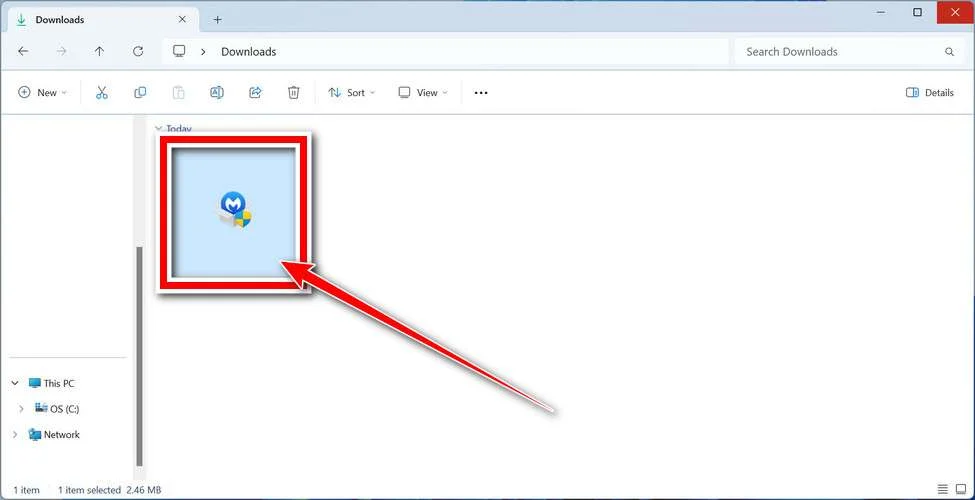
Follow the On-Screen Prompts to Install Malwarebytes
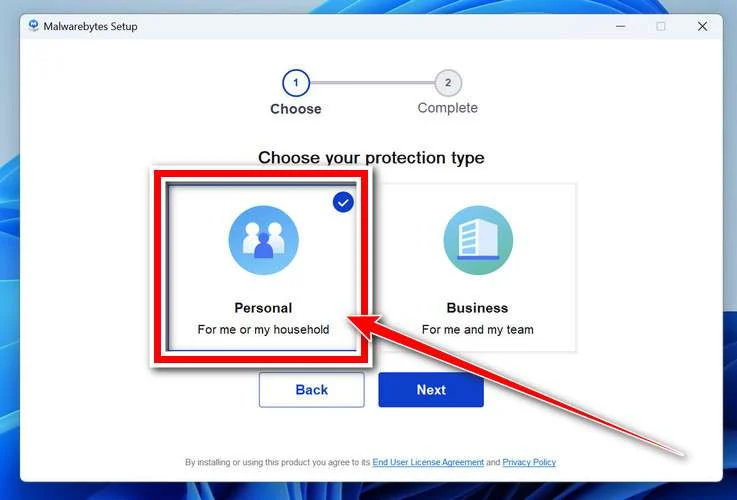
The setup wizard will walk you through a few quick screens:
-
Choose where you’re installing the program — “Personal Computer” or “Work Computer” — then click Next.
-
Malwarebytes will now install on your device. This usually takes under a minute.

-
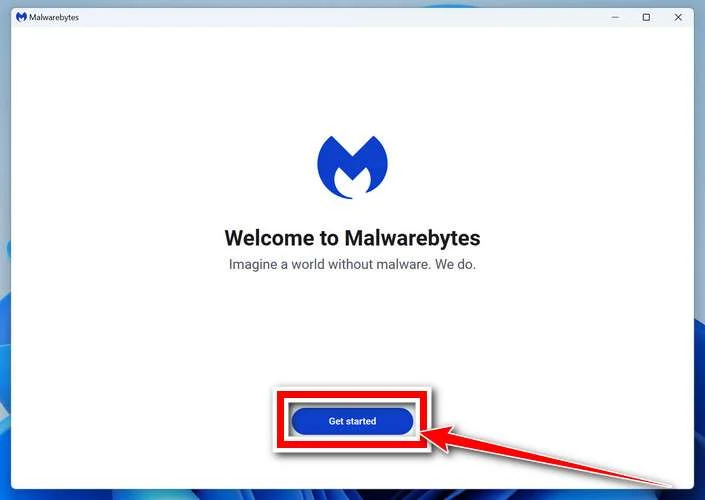
When installation is complete, the “Welcome to Malwarebytes” screen will open automatically.
-
On the final screen, click Open Malwarebytes to launch the program.

-
Enable “Scan for Rootkits”
Before scanning, turn on rootkit detection so Malwarebytes can find even the most hidden threats. Click the Settings gear icon on the left side of the screen.
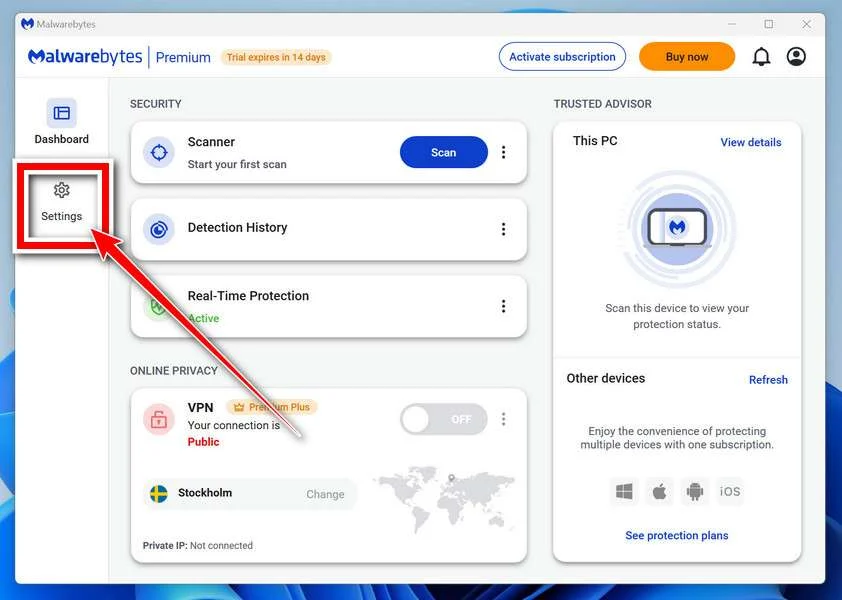
In the settings menu, find “Scan for rootkits” and click the toggle so it turns blue.

Done? Click “Dashboard” in the left pane to return to the main screen.
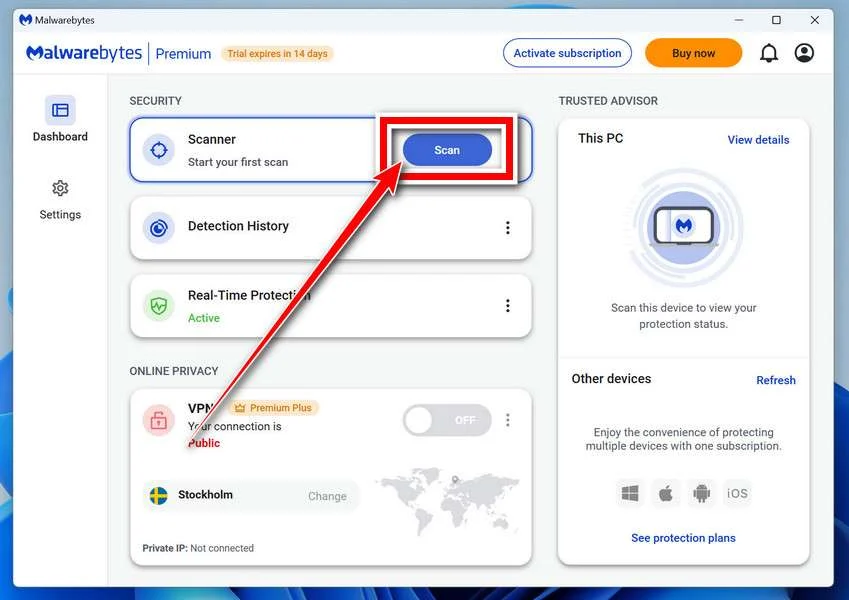
Start the Scan
Click the blue Scan button. Malwarebytes will automatically update its virus database and start checking your computer for malware.
-
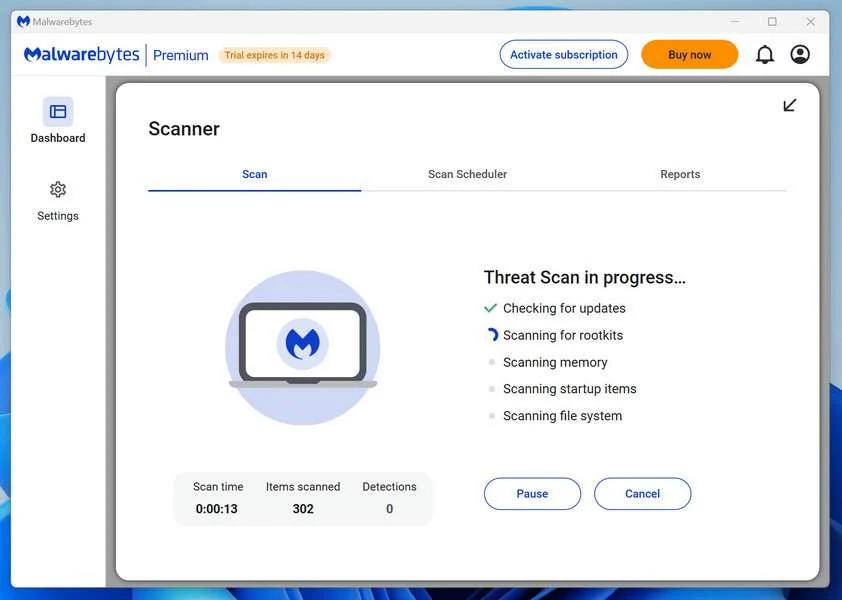
Wait for the Scan to Finish
The scan checks your entire system for browser hijackers and other malicious programs, so it can take 5 to 20 minutes depending on your computer. Feel free to do something else — just check back occasionally to see the progress.
-
Quarantine the Detected Threats
When the scan is done, you’ll see a list of everything Malwarebytes found — malware, adware, and potentially unwanted programs. Click the “Quarantine” button to remove all of them at once.
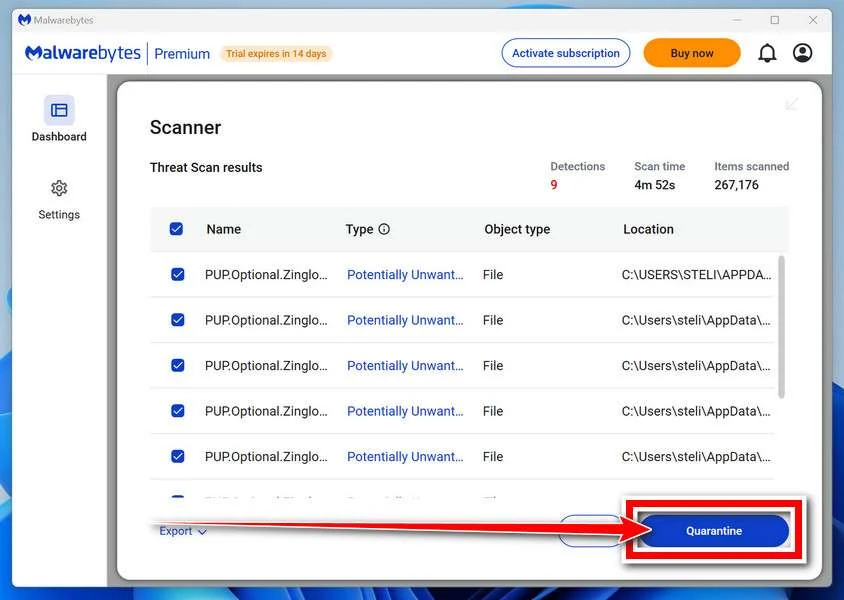
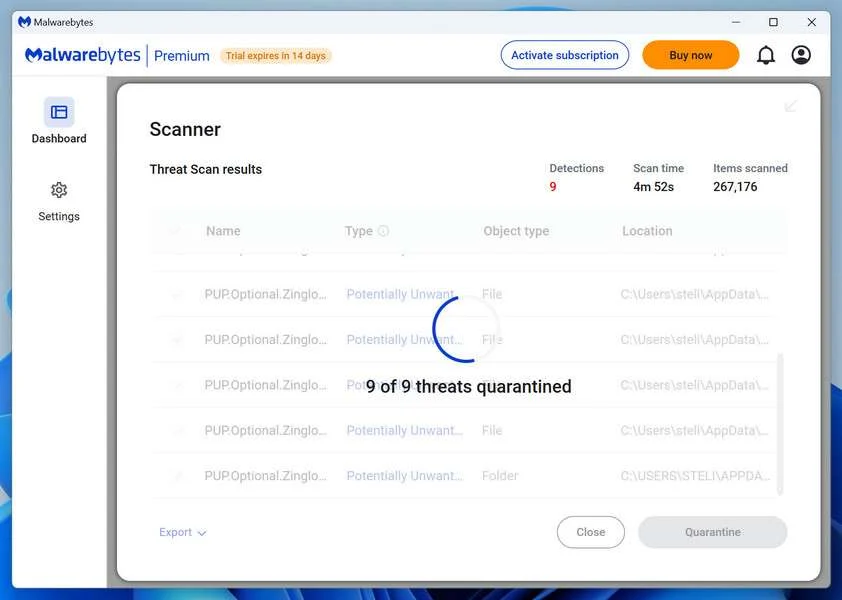
Malwarebytes will now remove the malicious files and registry entries and move them safely into quarantine.
-
Restart Your Computer
Some threats can only be fully removed after a reboot. If Malwarebytes asks you to restart, click Yes. Once you’re logged back in, Malwarebytes has finished removing the threats it found.
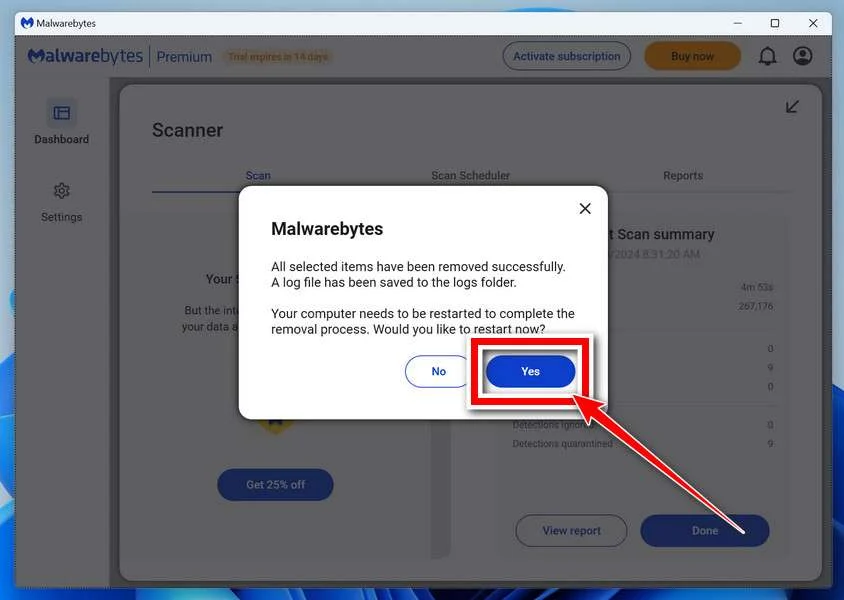
That’s it — your Windows computer is now free of trojans, adware, browser hijackers, and other malware.
If you are still having problems with your computer after completing these instructions, then please follow one of the steps:
- Run a computer scan with ESET Online Scanner
- Ask for help in our Windows Malware Removal Help & Support forum.
Scan Your Mac with Malwarebytes for Mac
Malwarebytes for Mac is a free on-demand scanner that removes the malware other security software tends to miss — adware, browser hijackers, and unwanted programs included. Cleaning an infected Mac with Malwarebytes has always been completely free, and it’s our go-to recommendation. Follow the steps below to scan and clean your Mac in just a few minutes.
-
Download Malwarebytes for Mac
Click the button below to download the latest version of Malwarebytes for Mac.
Download MalwarebytesOfficial installer for macOS. Your download starts right away.Want real-time protection? See Malwarebytes PremiumMalwarebytes Free for MacScans and removes malware at no cost -
Open the Malwarebytes setup file
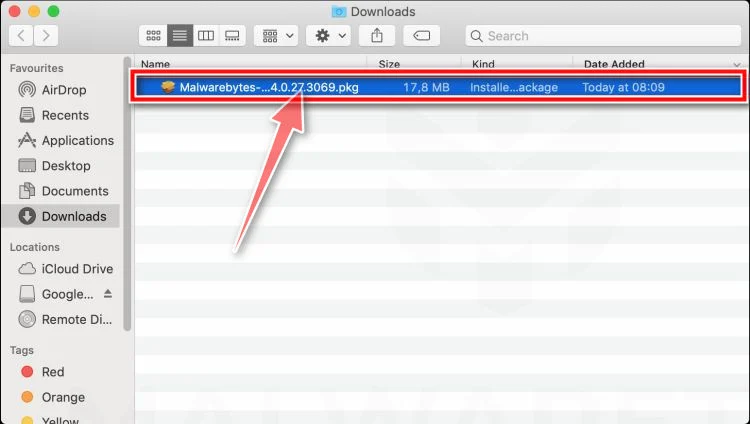
When the download finishes, open your Downloads folder and double-click the setup file to begin the installation.
-
Follow the On-Screen Prompts to Install Malwarebytes
The Malwarebytes for Mac Installer will guide you through a few quick screens. Click “Continue” and keep following the prompts until the installation completes.
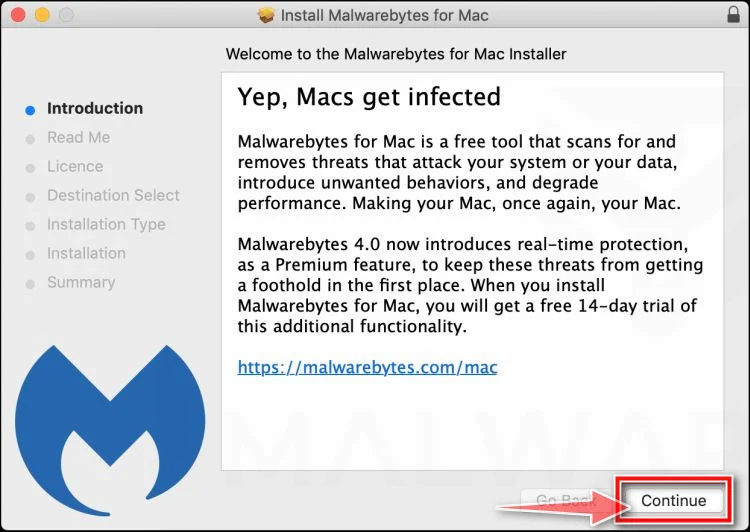
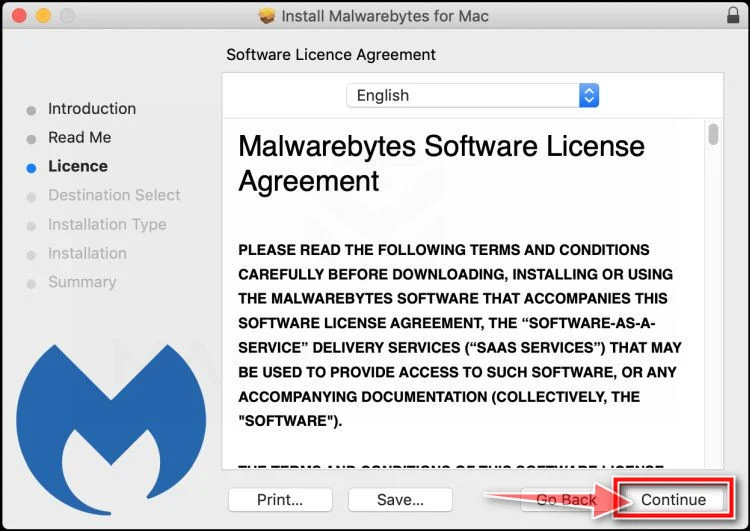
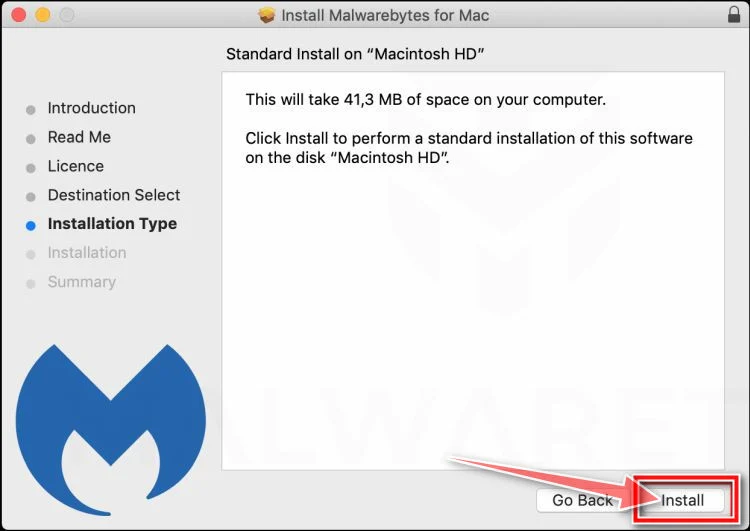
When the installation is complete, Malwarebytes opens to the Welcome to Malwarebytes screen. Click “Get started“.
-
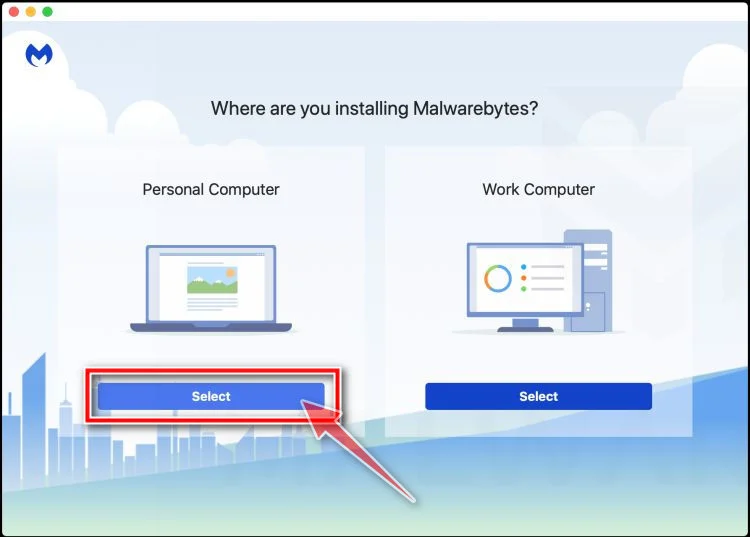
Select “Personal Computer” or “Work Computer”
Malwarebytes will ask what type of computer you’re installing it on. Click either Personal Computer or Work Computer, whichever applies.
-
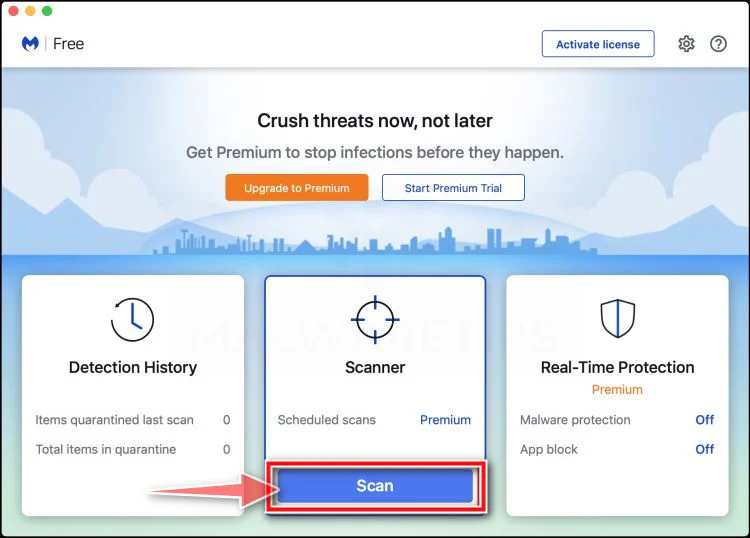
Start the Scan
Click the “Scan” button. Malwarebytes will automatically update its detection database and begin checking your Mac for malware.
-
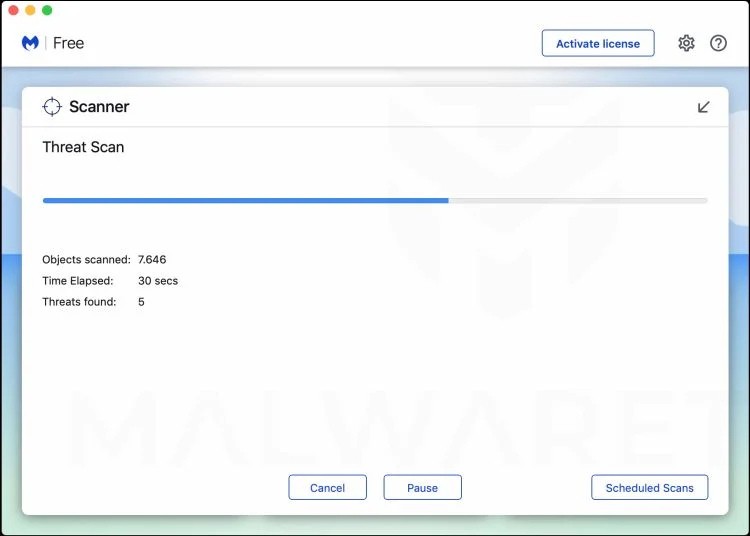
Wait for the Scan to Finish
Malwarebytes will scan your Mac for adware, browser hijackers, and other malicious programs. This can take a few minutes, so feel free to do something else — just check back occasionally to see the progress.
-
Quarantine the Detected Threats
When the scan is done, you’ll see a list of everything Malwarebytes found. Click the “Quarantine” button to remove all the threats at once.
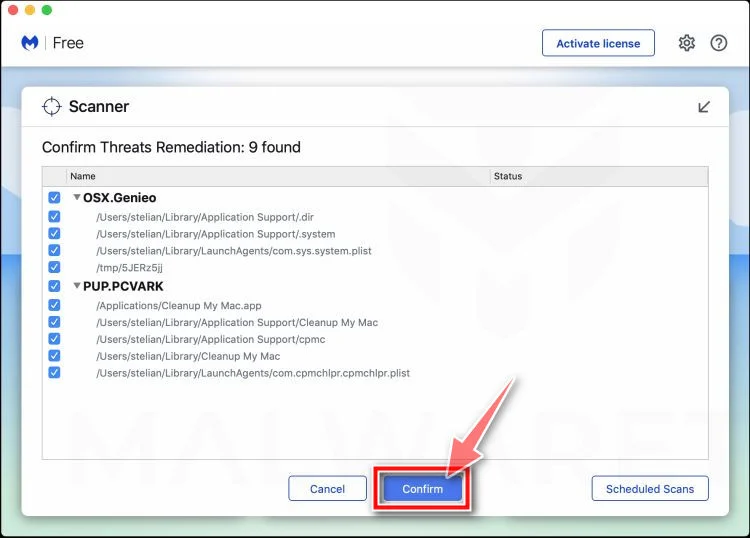
-
Restart Your Mac
Malwarebytes will now remove all the malicious files it found. Some threats can only be fully removed after a reboot — if Malwarebytes asks you to restart, allow it. Once you’re logged back in, your Mac is clean.
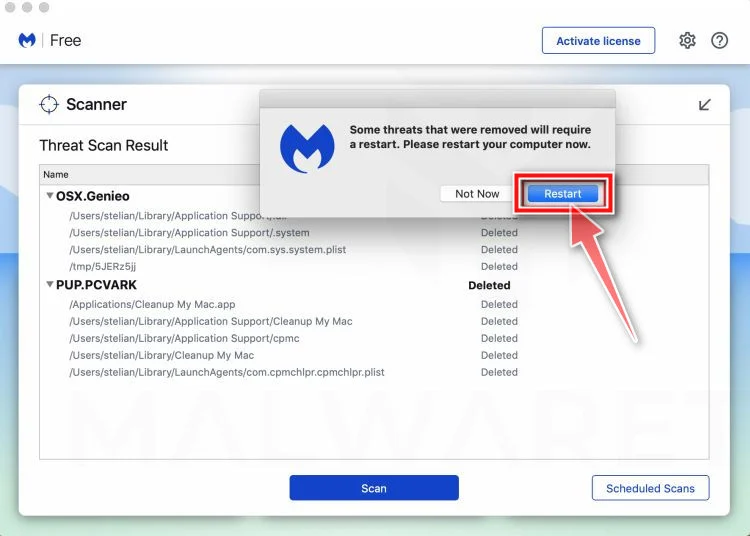
That’s it — your Mac is now free of adware, browser hijackers, and other malware.
If you are still experiencing problems while trying to remove a malicious program from your computer, please ask for help in our Mac Malware Removal Help & Support forum.
Scan Your Phone with Malwarebytes for Android
Malwarebytes for Android automatically detects and removes dangerous threats like malware and ransomware so you don’t have to worry about your most-used device being compromised. Aggressive detection of adware and potentially unwanted programs keeps your Android phone or tablet running smooth.
-
Download Malwarebytes for Android.
You can download Malwarebytes for Android by clicking the link below.
Get Malwarebytes for AndroidOpens Google Play in a new tab.Want real-time protection? See Malwarebytes Premium for AndroidMalwarebytes for AndroidScans your phone and removes malware at no cost -
Install Malwarebytes for Android on your phone.
In the Google Play Store, tap “Install” to install Malwarebytes for Android on your device.

When the installation process has finished, tap “Open” to begin using Malwarebytes for Android. You can also open Malwarebytes by tapping on its icon in your phone menu or home screen.

-
Follow the on-screen prompts to complete the setup process
When Malwarebytes will open, you will see the Malwarebytes Setup Wizard which will guide you through a series of permissions and other setup options.
This is the first of two screens that explain the difference between the Premium and Free versions. Swipe this screen to continue.
Tap on “Got it” to proceed to the next step.
Malwarebytes for Android will now ask for a set of permissions that are required to scan your device and protect it from malware. Tap on “Give permission” to continue.
Tap on “Allow” to permit Malwarebytes to access the files on your phone.
-
Update database and run a scan with Malwarebytes for Android
You will now be prompted to update the Malwarebytes database and run a full system scan.

Click on “Update database” to update the Malwarebytes for Android definitions to the latest version, then click on “Run full scan” to perform a system scan.

-
Wait for the Malwarebytes scan to complete.
Malwarebytes will now start scanning your phone for adware and other malicious apps. This process can take a few minutes, so we suggest you do something else and periodically check on the status of the scan to see when it is finished.

-
Click on “Remove Selected”.
When the scan has been completed, you will be presented with a screen showing the malware infections that Malwarebytes for Android has detected. To remove the malicious apps that Malwarebytes has found, tap on the “Remove Selected” button.

-
Restart your phone.
Malwarebytes for Android will now remove all the malicious apps that it has found. To complete the malware removal process, Malwarebytes may ask you to restart your device.
That’s it — your Android device is now free of malicious apps, adware, and browser redirects.
If you are still having problems with your phone after completing these instructions, then please follow one of the steps:
- Restore your phone to factory settings by going to Settings > General management > Reset > Factory data reset.
- Ask for help in our Mobile Malware Removal Help & Support forum.
Remember that if something sounds too good to be true, it probably is. Be vigilant and cautious when dealing with unsolicited emails that offer you money or other benefits. By following these tips, you can protect yourself from becoming a victim of the “Economic Devastation Recovery Relief” scam email or similar scams.

Join the discussion
0 commentsShare your experience or ask a question about this article.
Discussion
Start the conversation
Have a question or something useful to share? Add the first comment.