

The call came at exactly the right time: one day after a bank customer had already noticed something odd involving a card.
The person on the line sounded prepared to help. Before long, however, a fraud check had turned into payments, a new account, and instructions that no real bank employee would give.
Overview
A recent card concern made the timing believable
The UK customer had seen a card attempt fail after an incorrect expiry date was entered. The next day, a No Caller ID call claimed to come from the Barclays fraud team.
The caller knew the customer’s name and spoke about an Android device, Google Pay activity, and spending in another area. Those details made the call feel connected to the earlier card problem.
But knowing personal information is not the same as proving identity. Details can come from phishing, merchant data, previous account testing, public records, or questions that encourage the victim to fill in the gaps.
A real payment page was given a fake purpose
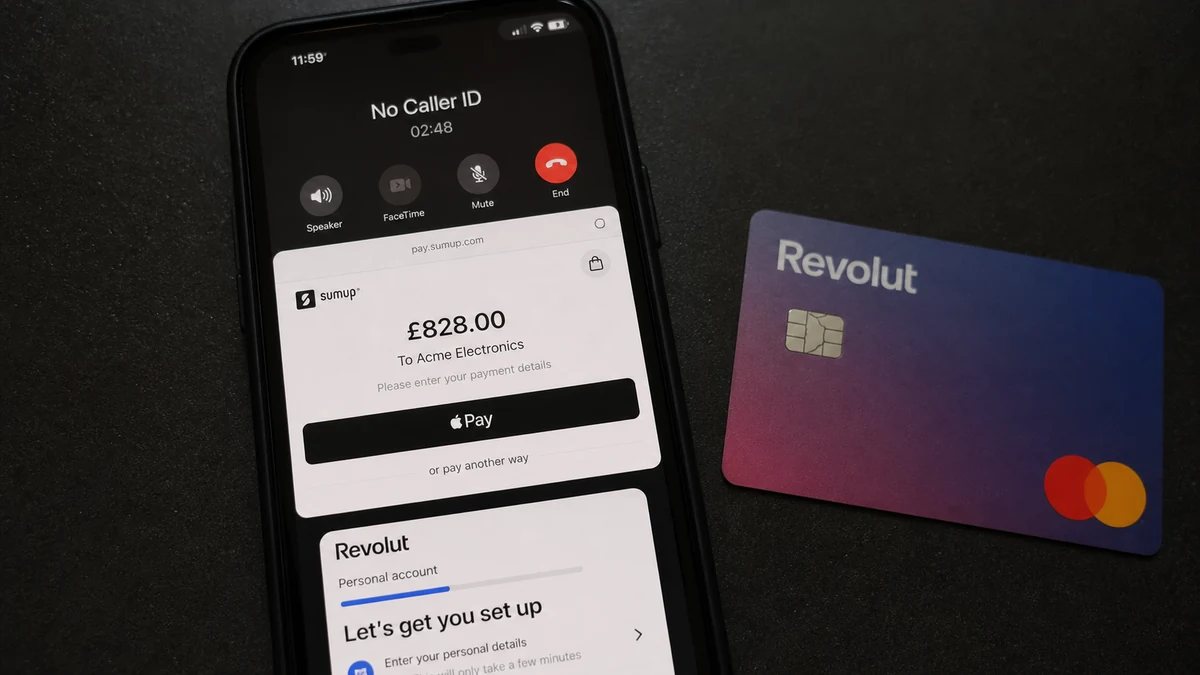
The caller claimed a bank insider might be involved and said special transactions were needed to investigate. A SumUp payment link arrived, and the customer was told to approve the charge with Apple Pay.
SumUp and Apple Pay are legitimate services. That did not make the caller legitimate. A real checkout can still collect a real payment for a scammer who lies about why the payment is being made.
The charge was described as something that would return automatically. Then Revolut was introduced as a safer place for money from the current and savings accounts. The caller also wanted card details and the CVV.
The caller eventually asked the customer to lie
The scammer expected that Barclays might question the unusual activity. The customer was coached to describe the payments as household purchases rather than say an alleged fraud investigator had directed them.
That instruction exposed the operation. A real bank does not need a customer to conceal a transaction from its own fraud team. The lie was meant to stop genuine safeguards from interrupting the transfer.
The most important warning signs were:
- The unexpected call used No Caller ID.
- The caller treated known personal details as proof of employment.
- An alleged corrupt insider was used to make normal bank channels seem unsafe.
- A SumUp merchant checkout was described as a fraud-investigation tool.
- The customer was asked to approve the payment through Apple Pay.
- A new Revolut account became the supposed route to safety.
- The caller requested card information and the CVV.
- The customer was told to give Barclays a false reason for the transactions.
A Real Checkout Can Be Part of a Scam
SumUp provides payment links so merchants can collect card payments from customers. Its official payment-link page describes a straightforward checkout service, not a bank security test.
That distinction is easy to miss during a stressful call. The page can use HTTPS, display familiar wallet options, and process the payment correctly. The deception sits in the caller’s explanation of who the merchant is and why the charge is necessary.
Apple Pay approval also does not mean Barclays approved the purpose. It means the person holding the device authorized a card payment shown on the wallet screen. A wallet cannot verify a story told over the phone.
Before approving, read the merchant name, amount, and description. If the screen describes a purchase you did not independently choose, cancel it. A fraud investigation should not look like buying something from an unfamiliar merchant.
How the Fake Barclays Fraud Call Scam Works
Step 1: The scammer finds a useful piece of account context
The operation may begin with a phishing form, a leaked record, a declined card test, or a small unauthorized attempt. Even a name and bank relationship can make a later call feel personal.
Timing does the rest. When someone has just noticed card trouble, an incoming fraud call feels like the expected response rather than a separate attack.
Step 2: The caller impersonates the fraud department
The caller describes suspicious spending, a mobile-wallet enrollment, or a device the customer does not recognize. The tone may be calm and professional, with case numbers and security language.
No Caller ID is explained as a safety feature. In practice, the hidden number prevents the customer from comparing it with an official contact and makes an independent callback even more important.
Step 3: An insider story isolates the customer
The caller suggests that a Barclays employee, branch, or support worker may be involved. This is a powerful twist because it turns normal verification into something that seems dangerous.
Once the customer believes the bank itself may be compromised, the scammer can dismiss the app, branch, next phone agent, or fraud warning as part of the investigation.
Step 4: A SumUp link collects an authorized payment
The link is called a test, reversal, trace, or way to expose the insider. The customer is told that the money will bounce back after the system recognizes the transaction.
What actually happens is simpler: the customer approves a merchant payment. The caller controls the story, while the checkout provider records an authorization to the merchant shown on screen.
Step 5: Revolut is presented as an escape route
The customer is told to create a new fintech account during the call. Keeping the setup live prevents the customer from asking why a genuine bank investigation would need an unrelated account.
Money moved to the new account may then be sent onward, spent, or converted under the scammer’s direction. Calling it a safe account does not change where the money is going or who controls the next step.
Step 6: The scammer coaches answers to fraud warnings
The bank may pause a transfer and ask whether anyone is giving instructions. The caller prepares a harmless cover story such as household items, family expenses, or a personal purchase.
Revolut’s impersonation-scam guidance warns about callers who tell victims to lie about a payment. The false answer is meant to defeat the very check designed to stop the scam.
Step 7: The call continues until someone interrupts it
Scammers often keep the victim on the line while moving through current accounts, savings, cards, and wallets. The continuous conversation leaves little room for another person or a genuine bank employee to challenge the premise.
In the account behind this warning, someone nearby reportedly overheard the call and helped stop the process. A simple outside question can be more effective than a dozen on-screen warnings after the caller has explained them away.
The Safe Account Is the Scammer’s Destination
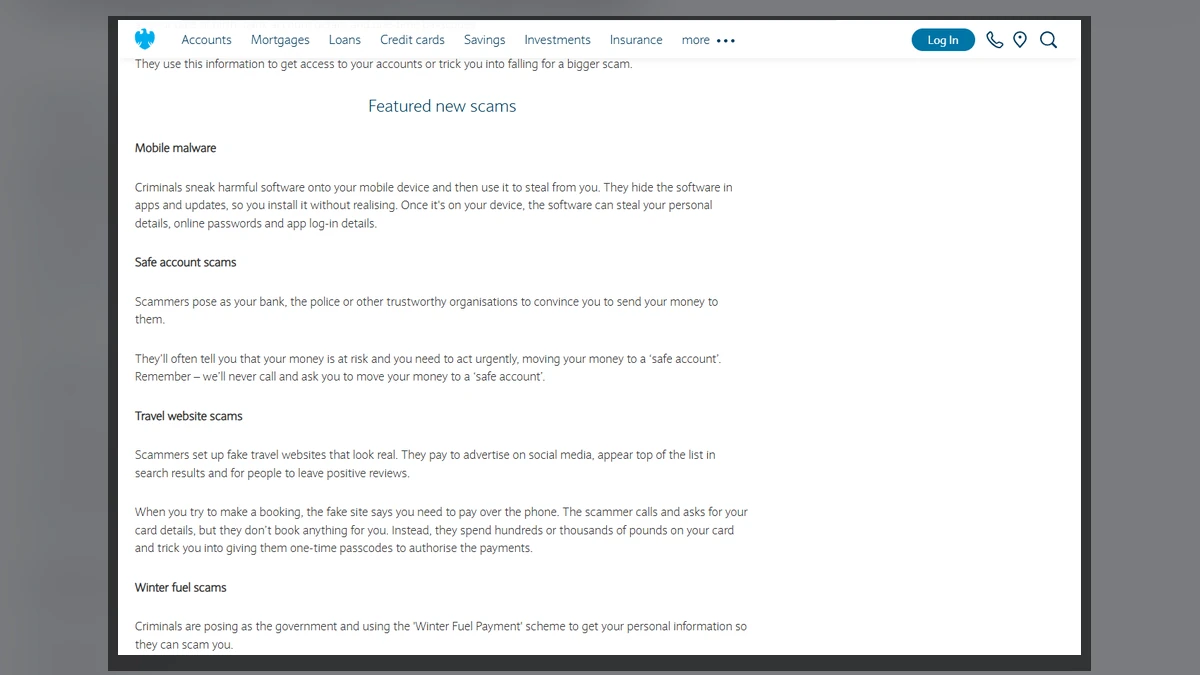
Barclays says in its scam guidance that it will never call and ask a customer to move money to a safe account. No investigator needs the customer to protect funds by transferring them to a newly created wallet.
The phrase “safe account” is designed to hide a basic outgoing transfer. The destination may belong to the criminal, a money mule, or an account opened in the victim’s name but operated under the caller’s guidance.
The insider story supports the same trick. It explains why the transfer must remain secret and why warnings from real bank staff should supposedly be ignored. In reality, secrecy protects the scammer from interruption.
Never allow an unexpected caller to choose the recipient, amount, payment description, or answer to a fraud question. End the call as soon as money movement becomes part of the proposed investigation.
The MalwareTips report on fake Citibank fraud-desk calls shows the same underlying move: familiar banking details are used to make a caller feel authentic before the caller asks for control.
Why Personal Details Do Not Authenticate the Caller
A caller may know the customer’s full name, bank, phone number, card ending, or a recent attempted charge. None of those details are secret enough to replace an independent callback.
Some information may have come from the same card testing that triggered the concern. A scammer who attempts a transaction can then call and accurately predict that a fraud alert is about to appear.
Other details can be gathered during the conversation. A caller might say “the account ending in…” and pause, allowing the customer to supply the last digits without noticing.
Do not correct or confirm the caller’s claims. Hang up, open the Barclays app independently, and call the number on the physical card. If possible, use another phone so there is no doubt the original call has ended.
Ask the genuine agent whether Barclays initiated the call and whether the described transactions or device enrollments exist. The bank can investigate without asking the customer to move money or reveal a CVV.
What to Check Even if No Money Was Lost
Stopping before a transfer completes is an excellent outcome, but it does not erase the information exposed during the call. A full card number, expiry date, or CVV should be treated as compromised.
Ask Barclays to replace the card, not just freeze it temporarily. Review whether the card was added to Apple Pay, Google Pay, or another wallet, and remove tokens or devices you do not recognize.
If a Revolut account was created, secure it through the official app. Check linked cards, personal details, beneficiaries, transfers, and active sessions. Contact support before closing the account so evidence is preserved.
Change any password disclosed or typed where the caller could see it. Start with the main email account because it can be used to reset access to banking and payment services.
Tell Barclays that the caller appeared to know about the earlier card attempt. That connection may help the fraud team investigate whether a merchant, phishing page, or account-testing event exposed the data.
Also contact the mobile carrier if phone security information was shared. Adding an account PIN and port protection can reduce the risk of someone moving the number to another SIM.
A Safe Response to Any Unexpected Bank Call
Do not solve the alleged emergency while the unexpected caller remains connected. Say that you will call the bank back, then end the conversation. A real fraud case will still exist when you use a verified channel.
Freeze the card through the official app if that option is available. Do not follow a link sent by the caller, and do not rely on a search advertisement for the support number.
When speaking with the genuine bank, describe the caller’s exact claims. Mention No Caller ID, SumUp, Apple Pay, Revolut, the insider allegation, and any instruction to conceal the reason for a payment.
Read fraud questions honestly. If someone told you to make the transfer, say so. The caller’s cover story is designed to make a risky payment look normal to the bank’s systems.
Save the payment link without reopening it. The URL, merchant descriptor, amount, and receipt may help SumUp locate the receiving merchant account.
Write a timeline while the details are fresh. Include the original declined attempt, call time, claims, links, wallet prompts, account setup, and every contact with a legitimate provider.
Tell a trusted person what is happening before making any transfer. Scammers create urgency and secrecy because a second listener is likely to hear the contradiction immediately.
Company, Address, and Fulfillment Checks
The Barclays name did not verify the caller
Barclays is a real bank, but an incoming caller did not prove employment there. A correct name or account detail is not an authenticated communication channel.
End the call and contact Barclays through its app or the number on the card. Ask whether the fraud team actually attempted to reach you.
The SumUp merchant needed its own investigation
A genuine SumUp checkout can still route money to a dishonest merchant. The page’s technical legitimacy does not validate the caller’s explanation.
Record the URL, merchant name, descriptor, amount, and receipt. Report those details to SumUp and the card issuer without using contact information supplied by the caller.
The Revolut account was not a protected bank destination
Revolut is legitimate, but an account opened under a stranger’s direction is not automatically safe. The caller’s control over the setup and next transfer creates the danger.
Use only the official Revolut app and support route. Never share passcodes, card details, verification codes, or screen access with an alleged investigator.
No real purchase supported the payment story
The suggested household-items explanation had no order, invoice, delivery address, or goods behind it. It existed only to make the transaction look ordinary.
Tell the bank what actually happened. Hiding the caller’s involvement prevents the fraud team from applying the protections designed for impersonation scams.
What to Do if You Have Fallen Victim to This Scam
- End the call immediately. Do not stay connected because the caller knows personal details or claims the account will be emptied.
- Contact Barclays independently. Use the official app or number on the card and report every instruction, attempted payment, and exposed detail.
- Freeze and replace compromised cards. Treat a disclosed card number, expiry date, or CVV as unsafe even if no charge completed.
- Contact SumUp and Revolut. Provide the payment URL, merchant information, new-account details, receipts, and case numbers. Ask both companies to preserve records.
- Secure digital wallets. Review Apple Pay, Google Pay, and bank wallet tokens. Remove unfamiliar devices and authorizations.
- Tell investigators the real payment purpose. Explain that a fake Barclays caller coached you to describe the transactions as household purchases.
- Preserve the evidence. Save call times, messages, payment links, screenshots, receipts, account setup records, and the caller’s exact claims.
- Check any device exposed to remote access. Disconnect it, remove unauthorized tools, and run a full scan with Malwarebytes.
- Reduce exposure to malicious links. AdGuard can block many phishing pages, but it cannot authenticate a caller or reverse a payment.
- Report the fraud. Victims in England, Wales, or Northern Ireland can file through Report Fraud and follow the formal complaint processes at the bank and payment providers.
Keep every case number together and ask providers to note the cross-platform connection. A SumUp payment, Apple Pay approval, and Revolut account may look unrelated unless the impersonation call is clearly documented.
Frequently Asked Questions
Would Barclays ask me to move money to Revolut?
No. Barclays says it will not ask a customer to move money to a safe account. End the call and verify through the bank’s official channel.
Can a genuine SumUp link still be used in a scam?
Yes. The checkout can be real while the caller lies about the merchant, the purpose of the charge, and the promised refund.
Does Apple Pay approval prove the transaction is safe?
No. It authorizes the payment displayed in the wallet. It does not confirm that a caller described the transaction honestly.
Why did the caller know about a declined card attempt?
The detail could come from card testing, phishing, leaked data, or information gathered during the call. It should be investigated, but it does not authenticate the caller.
What should I do if I stopped before sending money?
Replace exposed cards, secure wallets and accounts, report the call, and review the device. Stolen data can be used in a later attempt.
Should I follow a caller’s answer to a bank fraud question?
No. Hang up and answer the genuine bank truthfully. Coaching you to lie is one of the clearest signs of an impersonation scam.
The Bottom Line
The Fake Barclays Fraud Call connected a real card concern with a convincing series of legitimate services. The SumUp page, Apple Pay screen, and Revolut app all looked familiar, but the story linking them came from a criminal.
The request to lie to Barclays revealed the purpose. End unexpected calls, contact the bank independently, and never let a stranger design the route your money should take.

Join the discussion
0 commentsShare your experience or ask a question about this article.
Discussion
Start the conversation
Have a question or something useful to share? Add the first comment.