


You’re planning a trip to the United States and fill out an ESTA form you found online. The page accepts your payment, but the confirmation doesn’t arrive.
Then your phone starts to ring about something that seems unrelated. It’s worth knowing what the application and those calls could have in common.
Overview
The smaller charge may not be the biggest problem
A fake ESTA application scam can compromise two things at once: your travel plans and the private information you submitted while trying to confirm them.
ESTA stands for Electronic System for Travel Authorization. Eligible Visa Waiver Program travelers use it to request permission to travel to the United States under that program.
A lookalike may collect money without ever submitting an application. It can also collect the details you expected to give US Customs and Border Protection, known as CBP.
That means the charge on your card isn’t the only thing to investigate. Consider what was entered, whether an official record exists, and who is contacting you now.
Why a bank call can follow a travel scam
In the case reported by The Guardian, British actor Lisa Riley said a lookalike asked for passport, payment, and personal details but sent no usable travel confirmation.
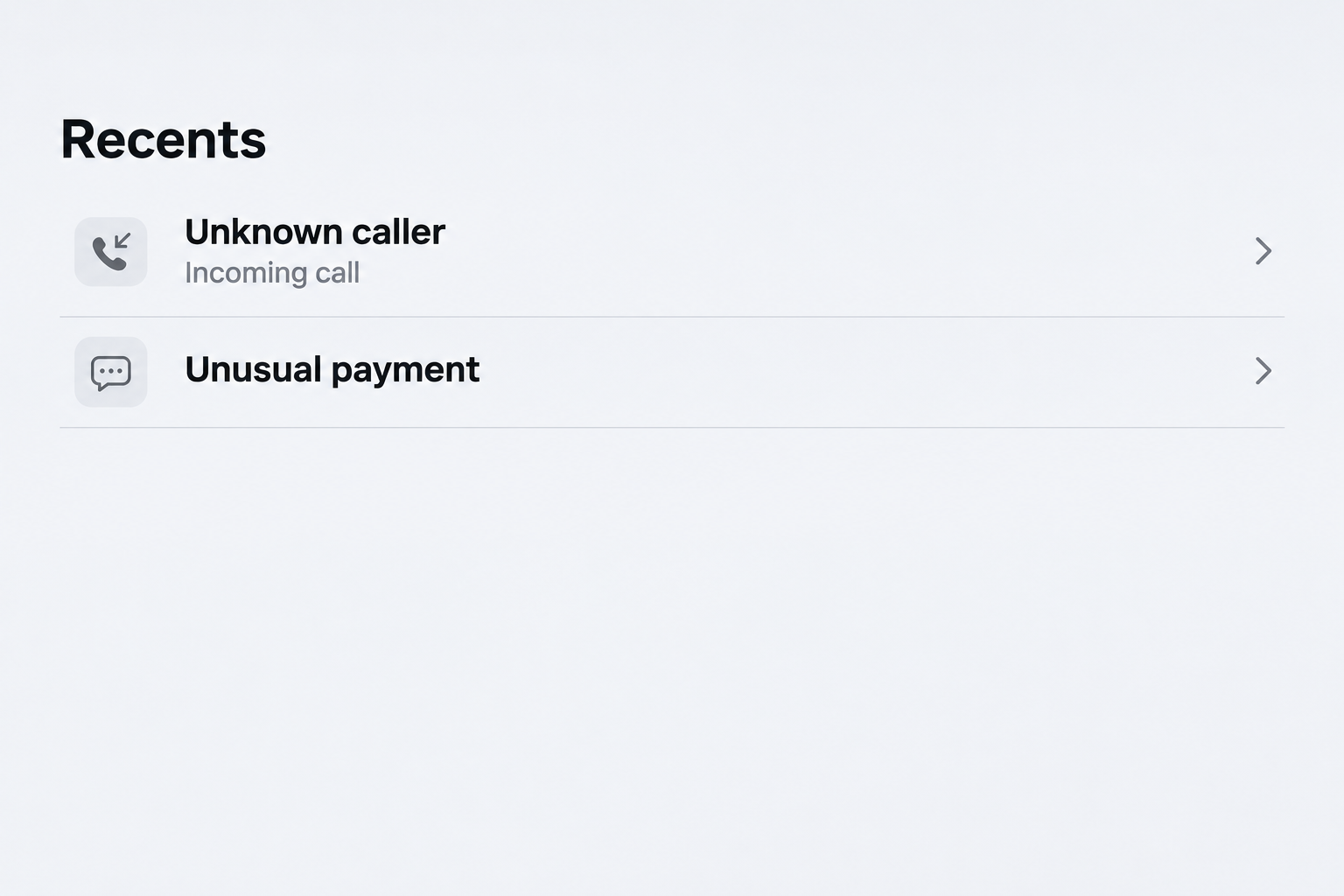
She later reported repeated calls and texts, some posing as her bank and asking about a money transfer. The first fee didn’t describe the full disruption.
It’s not possible to determine who made every later call from that account of events. The practical risk is that scammers can reuse information after the first contact.
A caller who knows your name or other correct details may sound convincing. Those details are not a substitute for opening your bank account through its usual channel.
Three checks that address different risks
- Check the actual authorization with CBP, not through a payment receipt or the original email.
- Check which details went into the form, including information you submitted for other travelers.
- Check any supposed bank alert directly through the provider you normally use.
You can run these checks in parallel if your departure is close. One authority won’t be able to solve every problem the fake form may have created.
How the Fake ESTA Application Scam Works
Step 1: You reach a form while looking for a government service
The person searching may know they need an ESTA but not know where the official form lives. Booking flights and lodging can make that search feel like another errand.
Search placement is not a declaration that a page belongs to the government. Riley told the Guardian the imitation she saw looked highly similar to the official site.
Enter CBP’s official ESTA site independently. If the page you found belongs to a different organization, don’t enter data assuming the official-looking title makes it the same service.
Some organizations sell application assistance rather than pretending to issue approvals. The distinction matters, but the safest way to avoid both deception and an unnecessary service fee is applying directly.
Step 2: An ordinary application creates a record outside the official system
A traveler expects to enter information about their identity and passport. That makes it easy to overlook the fact that a page has not established who receives it.
A fraudster may make the checkout look like the last step of the application. Your receipt only tells you something about the transaction, not whether CBP received the form.
If the site asks for another payment to unlock the result, don’t pay it. Check for an official application instead of trying to solve a problem inside the same site.
It’s possible to have a genuine pending application that isn’t approved immediately. The absence of an instant confirmation isn’t enough by itself to conclude a form was fake.
Step 3: The traveler starts chasing a missing result
When the trip is getting closer, it can be tempting to use the help address on the receipt. That may just return you to the person who took your details.
In Riley’s case, the reply she received after asking for confirmation was part of what made her question the site. It didn’t give her a way to verify the authorization.
A supposed agent might send another link or ask you to resubmit your passport. Check through CBP first instead of reinforcing the original exposure with a second submission.
If the official status check returns no match, review the details you entered. Contact CBP for help rather than trusting the payment receipt to override that result.
Step 4: A later message uses personal information to sound familiar
A later call may not mention immigration at all. It could sound like a bank investigation or a request to confirm or block a transfer.
Knowing something true about you isn’t the same as having access to your account. It might only show that the caller has a record about you.
Don’t approve a request in your bank app because a caller describes it as a cancellation. Read what the app actually says before doing anything.
If the caller wants you to stay on the line while you check, end the call. Open the app directly or use a known number to ask about the claim.
Verify the ESTA Without Using Anything the Seller Sent
Check for a government record, not a confirmation picture
Start a fresh browser session or go directly to an official app. Do not reopen the original payment link just to compare the colors or layout.
CBP’s application and status guidance describes how to check an existing application from the official site. The status there is more useful than any screenshot.
If you didn’t keep the application number, use the official lookup options rather than asking the original sender to find it. Follow only the government site’s own prompts.
An ESTA isn’t a visa and doesn’t guarantee entry at the border. Get eligibility and travel guidance from CBP or other relevant official services, not the seller.
Keep every traveler’s application separate
When one person arranges a family trip, the suspect page may have received more than one passport record. Write down exactly whose details went into it.
Check the authorization associated with each traveler where appropriate. One family member’s status doesn’t answer whether everyone else in the booking has a valid record.
Tell the other adults whose information was entered. If the form included a child’s details, tell their guardian what was shared as well as how you discovered it.
Avoid sending scans among group chats to organize the response. Different people may need to check with the issuer of their own passport or their own bank.
Don’t let a fee dispute delay travel verification
A credit or debit dispute may take longer than the time remaining before departure. Work out the status of the travel authorization even while the bank investigates.
An authorization tied to a previous passport may not cover your new one. Follow CBP’s instructions for the passport you plan to use on the trip.
Check current fees on the official site rather than taking a price from an old article. A search ad or receipt may include an intermediary’s charges.
A higher fee may be an intermediary charge rather than evidence of data theft. Verify both the official record and who you paid before deciding what happened.
How to Handle Calls That Arrive Later
Start with the thing the caller wants you to do. A payment, a code, an app approval, or a new contact number all require verification outside that conversation.
If the message appears in an existing text thread, don’t let that decide whether it is genuine. Use your own route to the bank and check the activity there.
Read the bank’s actual description of a notification. A prompt about adding a device or making a payment won’t become safe because somebody calls it a reversal.
A bank employee you reach through the real app can explain what controls are available. Request a record of any dispute you open and keep it with the relevant transactions.
Keep a brief log of later calls if they persist. The date, the organization claimed, and the action requested help you distinguish real changes from pressure.
You don’t need to prove a particular call came from the people who ran the website. Answering that question won’t change the fact that a code should stay private.
Read the Receipt and the Call Log Side by Side
Start with what you authorized at checkout
You may have agreed to the original charge under a false impression and never agreed to anything afterward. Tell your bank about both situations rather than treating them as identical.
Compare the receipt with your own statement. Keep the currency and date as they appear in your account, especially if a seller converted the total during checkout.
If you see only a pending transaction, don’t assume it has disappeared or that it has settled. Ask your card provider what it can do at that stage.
Don’t assume every authentic alert means somebody has your passport
A real fraud text can arrive after a false call. Authenticate it in the normal banking app or by calling the bank through a known route.
If the actual alert concerns your card, ask which transaction triggered it. Don’t attribute a later charge to the website unless the available records support that connection.
The same distinction applies to changes in an email account. Work from the account’s own recovery information instead of trusting messages that say someone is already inside.
Decide what you can safely leave unanswered
An unverified caller doesn’t need your remaining passport digits, address, or travel dates to help you check a payment. Leave that conversation and verify the claim independently.
If the caller says they need to speak to another person on the application, let that person know directly. Don’t help the caller identify or contact your traveling companions.
What to Do if You Have Fallen Victim to This Scam
Verify the travel authorization directly with the issuing authority.
Check your application on the official ESTA service and resolve discrepancies through CBP. Do not accept the seller’s offer to fast-track or privately confirm the record.
Check every affected traveler before departure. If you need to make or correct an application, follow the official process for the passport you’ll actually use.
Notify the bank or provider whose payment details you entered.
Explain what the page collected and identify the charge from your own statement. If you authorized that payment, say so and distinguish it from later unfamiliar charges.
Ask what the provider can do to secure the card or account. Inquire about disputes and how to report new transactions rather than assuming replacement answers every question.
Record the passport and personal information you supplied.
Preserve the suspect page address, receipt, dates, and what you remember entering. Don’t return to the form to test whether it still accepts your details.
If a passport copy or important identifying details went to the site, seek guidance from the authority that issued the passport. Don’t assume the document was automatically canceled.
Protect accounts involved in the form or the follow-up.
If you entered a password used elsewhere, change it on the affected real services. Review login or recovery changes if you think an account was accessed.
If a caller obtained a one-time code or prompted an approval, tell the relevant provider exactly what you did. Preserve the wording of the authentic notification if available.
Report the suspected fraud without forwarding your identity documents.
In the United Kingdom, check Report Fraud’s reporting guidance for the right route; Scotland uses Police Scotland. In the United States, the FTC accepts fraud reports.
If another country is involved, use the reporting channel for your location. Give the relevant records privately, with information about the initial form and later contact separated.
Frequently Asked Questions
Can I use the receipt as proof that my ESTA was approved?
The receipt does not establish your authorization status. Look up the official application using CBP’s service and follow its instructions if the record is missing or incorrect.
Is every third-party ESTA website fake?
A paid intermediary might sell a real service, but it isn’t the government issuer. Use the official route if you want to avoid unnecessary fees and exposure.
Should I worry if my bank has not seen any unauthorized charges?
Yes, because a suspect form may have collected more than your card details. Keep your records and verify any later calls without sharing additional information.
Does the bank call prove my passport was used?
A call does not establish any use of your passport, even if the speaker knows your name. Ask the issuer for advice on exposed passport information.
What if I submitted the information but never finished paying?
Don’t assume that leaving the payment screen kept earlier information private. Note what you entered and ask the relevant providers about sensible precautions.
Can a credit card dispute fix the missing authorization?
A dispute addresses what happened to your payment. It can’t put a valid ESTA into the government system, so check and resolve that separately.
The Bottom Line
Don’t use an unverified form to apply for an ESTA or settle a missing confirmation. Go to CBP yourself and check what the government has on record.
If you already entered details, contact your card provider and address any exposed identity information. Treat follow-up bank calls as new claims that need independent verification.

Join the discussion
0 commentsShare your experience or ask a question about this article.
Community experiences
Did this happen to you?
Your experience could help someone recognize the same scam. Submit a private report for our team to review.
I experienced this tooReports are reviewed before publication. Sharing publicly is always your choice.
Discussion
Start the conversation
Have a question or something useful to share? Add the first comment.