


If you have heard of OpenClaw, a site using its name might look familiar before you read what it offers. That first impression can carry more weight than it should.
In this case, the most useful clue is the job the page says the software will do. It is not the job described by the real project.
Overview
The lookalike advertised a Solana trading analyst
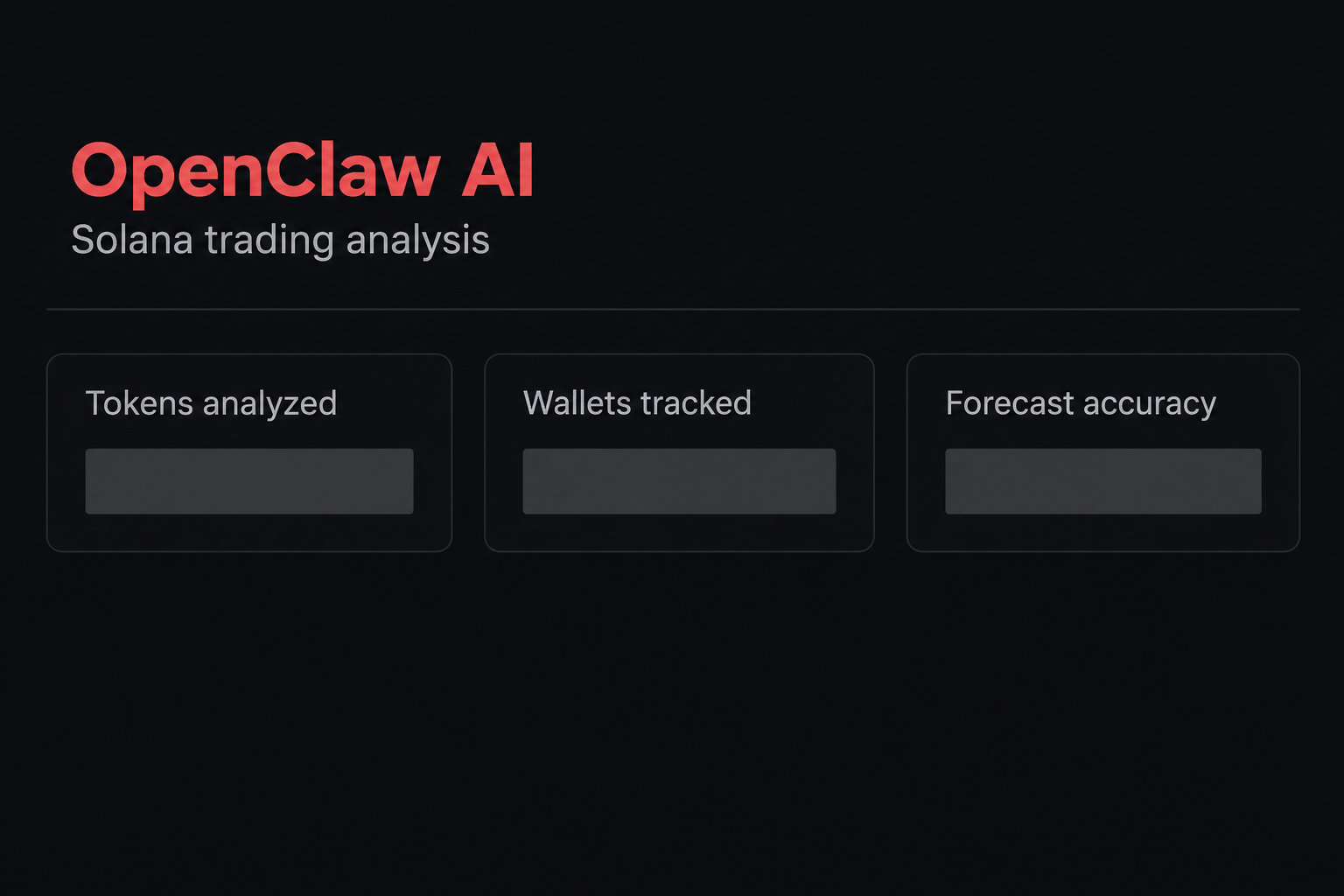
The fake OpenClaw AI page at opneclawai[.]top described itself as a personal crypto trading analyst. It claimed to track portfolios, analyze tokens, and forecast prices for Solana holdings.
The archived landing page used OpenClaw’s name and a similar red mascot. The trading pitch itself was different from the genuine project’s description.
Under the introduction were several counters. The page claimed 12,847 tokens analyzed, 3,291 wallets tracked, and 94.2% forecast accuracy.
Those figures establish what a visitor saw, not how anything was measured. The capture does not show an independent benchmark, documented trades, or a reliable definition of accuracy.
The actual OpenClaw project serves a different purpose
OpenClaw’s official FAQ describes an assistant you can run on your own infrastructure and use through familiar messaging services. It is not the forecast dashboard pictured in the report.
The project says its foundation offers no hosted product, paid tier, or token. A similar mascot does not connect the trading offer to that foundation.
Independent developers may build tools using open-source software. That possibility does not make an unrelated website an official product, and it does not authenticate any request for wallet access.
This warning applies to the documented trading page. It does not claim the genuine OpenClaw project stole money or that anyone who uses the real software has been compromised.
The evidence identifies the pitch and a wallet chooser
The archive shows the trading page and wallet selector. It does not show a signed transaction or a verified loss attributable to this page.
That distinction matters because visiting a page, connecting an address, and authorizing a transaction are separate events. The right response depends on what the visitor actually did.
Before acting on a similar offer, consider these checks:
- Compare the actual domain to the verified project website.
- Check whether the claimed product exists in the project’s own documentation.
- Look for independent evidence behind any quoted performance figure.
- Treat any wallet request as a separate decision rather than a test of legitimacy.
A precision claim is not a reason to settle any of those questions by connecting a wallet.
How the Fake OpenClaw AI Trading Scam Works
Step 1: It borrows a name that already sounds useful
A visitor who knows OpenClaw may associate the name with an assistant that performs tasks. A site claiming to analyze a portfolio borrows that existing expectation.
The trading pitch also attracts people who have never used the real assistant. To them, the site might look like a new product that happens to use familiar AI language.
Neither reaction is evidence of affiliation. The first comparison to make is between what the reported website promises and what the project’s official materials describe.
Do not assume that a word added to a project name means an official new version. Product names and terms such as “AI” are easy to reuse.
Step 2: Quoted metrics give the page an appearance of precision
The displayed forecast accuracy was 94.2%, but the number did not tell the visitor what counts as a correct forecast. That missing definition is more important than the decimal.
For example, predicting a direction, a price range, or an exact price are different tasks. Accuracy on one does not establish useful performance on another.
Likewise, the number of wallets allegedly tracked would say nothing about whether a single visitor made money. A high counter can look impressive without answering the relevant question.
The SEC’s investor alert on AI and investment fraud explains why claims involving AI trading deserve independent verification. That guidance does not identify who operated this particular page.
Step 3: The page presents the wallet as a prerequisite for analysis
According to the landing page, a connected wallet would allow the tool to analyze activity and produce insights about the user’s holdings. That made a connection sound necessary to continue.
But there is a difference between looking up public address activity and asking for an action from its owner. Reading a public transaction history does not require a private key.
The captured page displayed a list of wallet providers. Recognizing one of them does not show that it reviewed the site, vouched for the service, or tested the forecast claims.
If you only want to see positions, use a trusted tool you already know. You do not need to let an unfamiliar site define the access it should receive.
Step 4: The wallet’s request determines the exposure
An ordinary connection usually shares public account information with a site. A message signature, asset approval, or transaction may have a different effect depending on what is being requested.
Look at the request itself rather than the button’s description. A page may say “analysis” while your wallet asks you to approve an action you never intended.
Decline unexplained requests rather than treating approval as a way to learn more about the tool. You can investigate the product without approving anything.
The archived flow does not establish the exact request an individual received after choosing a wallet. Use your account history and official support to determine what happened in your case.
Step 5: Finding the imitation does not tell you whether you lost funds
A familiar-looking site can be closed without granting anything. A reader who stopped there should not assume that an unrelated balance change came from this page.
Someone who approved an action has more to check. Look for the address, network, time, and any affected assets before deciding whether to revoke access or report a transfer.
Do not use the imitation’s own support or a private message to undo a suspected approval. Those channels can create a second request when your attention is already divided.
If someone contacts you promising to recover funds, verify their role independently. Knowledge of a public transaction does not give them authority over it.
What to Do if You Have Fallen Victim to This Scam
-
Close the page and preserve evidence already in your possession. Note the address and the original message or referral without opening the page again to gather more material.
Write down whether you saw only the landing page, selected a wallet, or responded to a separate request. That sequence matters more than how realistic the site appeared.
-
If you used only the page, do not assume that your real assistant was affected. An imitation in a browser does not establish a compromise of a separate OpenClaw installation.
If you installed an unrelated program after following instructions elsewhere, treat that as another exposure. This recorded page does not establish that software was installed.
-
If you connected a wallet, remove the site from its connection list. Start from the wallet you already have rather than an online tool suggested by the page.
Look at the active account and network around the time you visited. If you selected more than one account, check them separately.
-
If you authorized something, inspect the action and its effect. Review any record available in the wallet or a trusted explorer. Ask official support if the request is unclear.
Where supported, revoke permissions you did not mean to grant. Disconnecting a site is not generally a substitute for removing a permission recorded by another system.
-
If a recovery phrase or private key was exposed, create a fresh wallet. Use a trusted device and new recovery information, then seek guidance about safely protecting the remaining assets.
See Phantom’s guidance for scam victims or the equivalent page for your wallet. Do not give a support contact the secret you are trying to protect.
-
If you find a transfer you did not approve, save its identifying details. Record the destination, time, asset, and amount, without handing over access to anyone who asks.
Notify the affected provider and any identifiable exchange through official channels. A confirmed transaction generally cannot be reversed by the wallet company, but records may help a report.
How to Check Claims About an AI Trading Tool
Confirm what the real project actually ships
Begin with the project’s main documentation, not an advertisement or a forwarded screenshot. Find the official description of the product and compare it with the service you are being offered.
A real assistant can be extended by independent developers. Verify who published any outside application, what access it requires, and how its performance was measured.
Cloning a look and cloning capabilities are different things. A logo or familiar character does not tell you which software is behind a website.
Read performance numbers as questions, not answers
Ask when a prediction is made, what outcome it is predicting, and which data was used to measure accuracy. A value with no definition is not useful evidence.
A forecasting tool may be evaluated after the fact, or only on selected examples. Neither tells you whether the model performed reliably on unseen cases before results were known.
A visitor’s main concern here is not improving the forecast score. It is keeping a supposed prediction service from turning a simple lookup into an unexplained financial permission.
Leave before the demonstration requires a commitment
A publisher should be able to explain a product’s purpose and access requirements before you connect anything. Compare those requirements with the task you actually need.
If a site says wallet access is the only way to find out who built the tool or what it does, stop. That offers no independent basis for trusting it.
People sometimes share a promotional image to ask whether it is official. Send the real project’s documentation in reply rather than a live link to the imitation.
Distinguish accuracy from a useful financial result
The page’s 94.2% figure had no visible explanation of the timeframe it covered. A forecast that is right after an hour may be wrong after a day.
The relevant question is also what data was included. Results measured on a selected set of examples cannot establish that a tool works on assets the visitor actually holds.
Even a valid accuracy claim would not describe fees, risk, or potential losses. There is a large gap between correctly predicting a move and demonstrating a usable trading result.
None of those checks requires a visitor to sign anything. A test claimed by the promoter should be explained independently of the visitor’s decision to expose an account.
Read a quoted service counter in its proper context
A count of wallets tracked could refer to public addresses, active customers, or a value chosen by the page. The displayed total did not explain which meaning applied.
Likewise, a reported token count does not establish an official relationship with Solana or the OpenClaw project. Those are separate claims that need separate evidence.
If a second website repeats the same figures, check whether it obtained them independently. Repetition of a promotional number is not a second measurement.
Keep the genuine software out of the recovery decision
A report about an imitating site does not make an unrelated local installation suspect. Start with what device, wallet, and account you actually used during the encounter.
If the browser and the genuine assistant were open at the same time, that alone does not connect them. Review any permissions you gave rather than guessing from timing.
If you warn another user, identify the false product specifically. Saying the trading page was unrelated is more accurate than saying every application built around an assistant is fraudulent.
Frequently Asked Questions
Is the real OpenClaw an official cryptocurrency trading platform?
The genuine OpenClaw FAQ describes a self-hosted assistant. The reported Solana forecasting page used the name for a different product and had no verified affiliation with the project.
Was the 94.2% forecast accuracy verified?
The number is documented as a claim displayed on the page. The record does not show a methodology, independent test, or results that would verify it.
Did the fake page offer the official OpenClaw token?
The captured page pitched a trading analyst rather than an official token sale. The real OpenClaw Foundation says it does not offer a token.
Does a wallet chooser mean an approval already happened?
The chooser is only an invitation to select an app. Check whether you actually connected and whether you later approved anything to understand the exposure.
Do screenshots of balances prove the service traded successfully?
Screenshots can show edited, simulated, or unrelated figures. They do not demonstrate that a strategy performed as advertised or that the publisher controlled the assets pictured.
Should I uninstall the genuine OpenClaw assistant because of this page?
There is no evidence in this case that the real installation is involved. If you interacted with the imitation, inspect the specific account or wallet you used there.
The Bottom Line
Do not connect a wallet to the reported trading page. OpenClaw is a real project, but the site misrepresents its documented purpose.
If you acted on the page, check what you shared or authorized using trusted wallet tools. Do not depend on the site to tell you whether that access was safe.

Join the discussion
0 commentsShare your experience or ask a question about this article.
Community experiences
Did this happen to you?
Your experience could help someone recognize the same scam. Submit a private report for our team to review.
I experienced this tooReports are reviewed before publication. Sharing publicly is always your choice.
Discussion
Start the conversation
Have a question or something useful to share? Add the first comment.