

At first glance, Galdovia.com could pass for an established brand’s online shop, with polished product photos, detailed descriptions and prices that feel too good to pass up.
Before checking out, you should know who’s really behind this site and what usually happens once your money leaves your account.
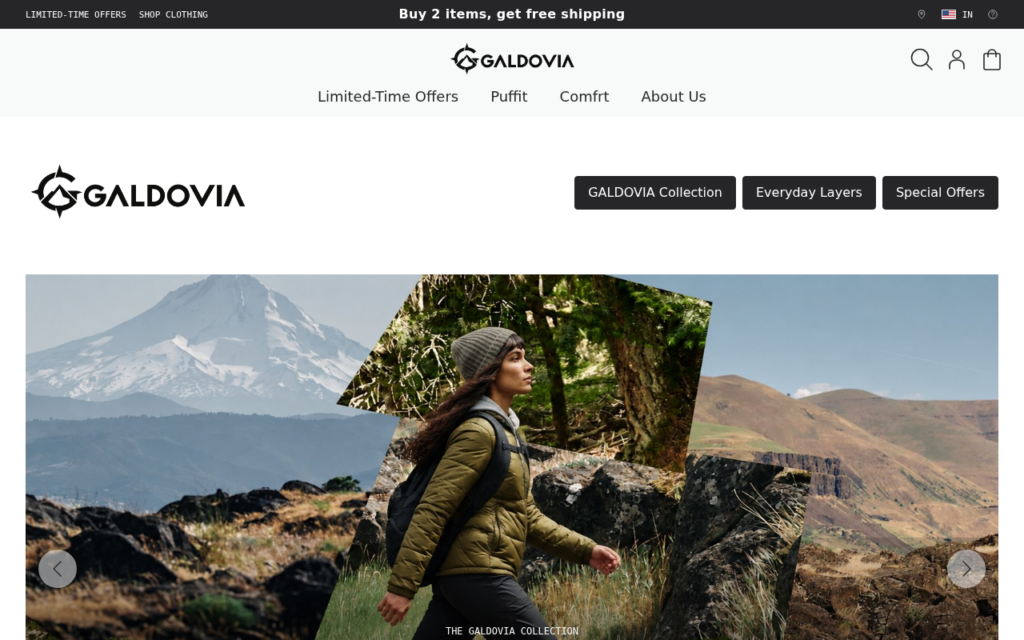
Overview
A copied catalog behind an unfamiliar address
Galdovia.com is not run by any of the real brands or stores it copies its catalog, photos and branding from. Those genuine sellers trade from their own websites instead.
On mobile, that’s easy to miss. Everything on the page looks right, the products look familiar and the checkout button does its job.
As complaints build, the network behind copycat stores like this one simply moves to new domains. Until then, it runs heavy ads and collects as many orders as it can.
The truth about the low prices
Picture an item that normally sells for $180, now showing at $39. That discount is the hook, and it often comes with a countdown timer or a “closing sale” banner.
The goal isn’t to clear inventory. It’s to get you through checkout before you look closely enough to see the store isn’t who it says it is.
A real sale comes from the brand’s own site or a retailer it names. A 70% cut across a whole catalog from an untraceable store isn’t one.
What comes of an order
The usual result of ordering from a fake store like Galdovia.com is one of these:
- No delivery at all. You get a tracking number that never updates, or one tied to somebody else’s shipment.
- The box holds a knockoff. It’s cheaply made, and the size, materials and finish don’t match the genuine item.
- A random item shows up. Cheap and unrelated, it’s mailed for one reason: to generate a delivery record.
- Charges you didn’t make show up. Payments you never authorized start landing on the card you used at checkout.
Do not shop at Galdovia.com. This fake store is built on a copied catalog, and its checkout should never see your card details.
What We Found on Galdovia.com
Here’s what stands out about Galdovia.com:
- Galdovia.com was registered on September 17, 2026, only 37 days ago.
- The MalwareTips URL scanner gives Galdovia.com a Safety Score of 38/100, rated High Risk (full report).
How the Galdovia.com Scam Works
The good news is that the script repeats. It runs across hundreds of copycat stores, so knowing its steps helps you spot the next one before you pay.
Step 1: An ad that borrows its photos
A sponsored post on Facebook, Instagram or TikTok is the hook. It uses photos and videos taken from real brands and stores, so there’s nothing that looks off.
A sense of now-or-never runs through the caption: an anniversary sale, a warehouse clearance, a “we’re closing our stores” farewell. Comments may be closed, or full of short, sunny praise.
From the ad, one tap lands you on Galdovia.com, a page with the look of an established shop.
Step 2: A store cloned down to the details
Copied product photos sit next to copied descriptions, all wrapped in branding taken from real stores. The menus, guides and “free returns” badges can be identical as well.
Copying a real company is another matter. For stores like this, the business name, address and support details are usually absent or don’t lead anywhere useful.
Start with the footer, then the legal pages. Those are usually the weakest parts of the copy: a generic company name, a missing address, a free email address.
Step 3: Pay now, think later
You’ll see countdown timers, “only 3 left” badges and pop-ups saying “12 people are viewing this.” They keep you moving, since a longer look would reveal more holes.
Every card that reaches checkout is a chance to collect more. That’s why free-shipping thresholds and “buy 2, get 1 free” bundles keep pushing the basket total higher.
Step 4: Silence after the confirmation email
The first thing you get after checkout is a normal-looking order confirmation. That normal look is intentional. It holds off your questions while the store buys itself time.
A week later there may be a tracking number. Often that number never moves, shows only “label created,” or points to a delivery in a city you’ve never lived in.
Every day of waiting eats into your card’s dispute window. The store knows that, and the delay is part of the plan.
Step 5: Knockoff goods or nothing in the mail
If something lands on your doorstep, it’s usually a cheap overseas copy. It doesn’t match the photos, and it isn’t the product you bought.
Some shops mail a cheap accessory or another token item to a real address. Why bother? Once tracking says “delivered,” they’ll use it to fight your refund.
Step 6: No refund, no matter how long you wait
Support emails get ignored or answered with a script about “a few more days.” Once a refund is finally offered, it comes with strings nobody can meet.
You may be offered 20% to keep the item, or told to send it to China on your dime. Both options leave the store holding most of your money.
Red Flags at Galdovia.com
One strange detail alone doesn’t prove a store is fake. Stores like Galdovia.com collect several at once, and you can check each in about a minute.
A web address the real brand never uses
The real brand sells from its own domain or through retailers it lists on its official site, and Galdovia.com isn’t among them.
Start a fresh search for the brand and open its official site. Then check your browser’s address against it. They should be identical, and if they’re not, you’re elsewhere.
There’s no company behind the branding
Stores like this rarely show a registered company, a tax number or a physical address you can verify. That leaves no one to hold responsible when a problem comes up.
Before entering your card, look for the seller’s company name. A genuine brand’s website usually lists it in the footer, its terms of service or an imprint page.
Contact options that lead to a dead end
A generic email address or a contact form is usually as far as support goes on stores like this. Don’t expect a phone number, live chat or local return address.
On the real brand’s site, you’ll usually see phone support, store locations and a returns center. A fake store would rather you couldn’t find it at all.
Policies that clearly belong to a different store
If the refund, shipping or privacy page sounds like it was written for another shop, that’s typical of copycat stores. Sometimes the wrong store, country or currency is still mentioned.
Go over the returns page line by line. On copycat stores, the real rule (returns to China, at your cost) is often buried below a headline that sounds generous.
Markdowns no real brand would run
Real, established brands rarely take 70% or more off everything at once. A sale where every single item is discounted that heavily isn’t a real sale.
That “original” price next to the deal? It’s often invented too, added only to make the fake discount look more impressive.
Untraceable reviews
Click around those five-star reviews and you’ll rarely reach a real buyer. Look them up elsewhere online, and you usually won’t find a match.
Here’s a simple test. Search the store’s address followed by “reviews.” A copycat store usually comes up empty, or it comes up with complaints from people waiting on orders.
How to Spot These Scam Websites
Fake brand stores have become harder to spot. Many of them now use AI-generated ads, polished product videos and copied checkout pages that look identical to the real thing.
The good news is that the same few checks still catch almost all of them:
- Check the address, not the logo. Open the brand’s official site yourself and compare addresses. One extra word or an odd ending is enough.
- Scan the site before you pay. Paste the address into the MalwareTips Website Scanner. It shows the domain’s age, security results and known warning signs in seconds.
- Look up who owns the domain. A Whois.com lookup shows when it was registered. A brand’s official shop doesn’t sit on a newly registered domain.
- Find the company behind the store. A real brand names its legal company, address and tax details. A copycat store leaves them out or invents them.
- Be suspicious of “closing down” sales. Store-closure, anniversary and warehouse-clearance stories are the most common hooks in fake brand ads.
- Search for outside reviews. Look the store up on Trustpilot and in search results. No history at all is as telling as a wall of complaints.
- Watch the payment options. A checkout that pushes bank transfers, crypto or a payment page on another domain is a reason to stop.
A browser extension can help. Malwarebytes Browser Guard blocks many known scam and phishing sites, and Malwarebytes ScamGuard checks suspicious links and messages before you click.
How to Buy the Real Thing Safely
Still want that item from Galdovia.com? You can usually buy the real version without the gamble:
- Head to the official website. Search for the brand yourself and buy there. A link in an ad or comment isn’t the place to start.
- Consult the retailer list. Many brands name their authorized sellers. A shop that doesn’t appear there isn’t authorized.
- Trust the brand’s own announcements. Real clearances appear on the brand’s website or verified social accounts. A sale you only see in sponsored ads isn’t one of them.
- Go through a marketplace with buyer protection. Buying from the brand’s official storefront there, if it has one, means a clear refund route.
- Pick a payment that protects you. Credit card or PayPal, yes. Bank transfer, gift card or crypto, never.
Don’t let Galdovia.com’s price pull you back. A real seller may charge more, but you get the genuine product and refunds that are honored.
What To Do If You Already Fell For the Scam
If you paid a fake store, move quickly. The sooner you act, the better your chances of getting the money back and stopping further charges.
- Call your bank or card issuer. Say you paid a fake store and ask for a chargeback. Disputes have time limits, often around 120 days, so don’t wait.
- Open a PayPal dispute if you paid that way. Choose “item not received” or “significantly not as described.” PayPal generally accepts claims within 180 days of payment.
- Block or replace your card. If you typed your card details into the site, ask for a new card and turn on transaction alerts.
- Save your evidence. Keep the order email, the tracking number, screenshots of the product page and any messages from the store.
- Watch for follow-up scams. Fake delivery texts asking for a “customs fee” or “address update” often follow these orders. Don’t pay them or click their links.
- Change reused passwords. If you created an account on the store with a password you use elsewhere, change it on those other sites.
- Protect your data. Your name, address and phone number are now in the wrong hands. Malwarebytes Personal Data Remover finds where your details are exposed and helps remove them.
- Cut off the ads. These stores find people through ads. AdGuard blocks many malicious ads and pop-ups in your browser, so fewer of them reach you.
- Report the store. Report the ad on the platform where you saw it. In the US, file a report at ReportFraud.ftc.gov. For cross-border purchases, use econsumer.gov.
If you downloaded anything from the store, such as an “order tracking” app or a file attached to an email, scan your device with Malwarebytes Free.
Frequently Asked Questions
Is Galdovia.com a legitimate store?
No. Galdovia.com is a fake store. Its catalog is copied, with photos and descriptions lifted from real brands that don’t run the site.
Why does Galdovia.com look so convincing?
Nearly everything you see was lifted from real brands and stores: product photos, descriptions, menus, even guides. The one piece it lacks is an actual business behind them.
Will I receive my order from Galdovia.com?
Maybe. Probably not what you paid for, though. With stores like this, buyers often get nothing, or a cheap copy that looks nothing like the photos.
I already paid. Can I get my money back?
Frequently, yes, when you act fast. Go straight to your card issuer or PayPal and dispute the charge as “item not received” or “not as described.”
Keep the order email, tracking number and screenshots of the product page safe. You don’t need the store’s answer first, so don’t wait for it.
Should I replace my card?
Yes, as long as your card details went into Galdovia.com. Your bank can issue a new card, and you should check your statements for small test charges.
Where can I report Galdovia.com?
Saw it in an ad? Report it on that platform. Then warn the brand whose photos were copied and file a complaint with your country’s consumer protection agency.
The Bottom Line
Galdovia.com borrows its whole catalog from real brands, photos and products alike. Those low prices are just bait, and the items you pay for probably never arrive.
Do not buy from Galdovia.com. Head to the brand’s official website instead, or pick a retailer the brand lists, if you want the product.
Ordered already? Today, call your bank or open a PayPal dispute. Keep every email and screenshot, and if your card details went in, ask for a new card.

Reviews & discussion
0 commentsShare a firsthand experience, or ask a question.
Community reviews
galdovia.com
Moderated reader experiences, not an editorial verdict.
Reviews
Be the first to review
Approved reviews for this site or product will appear here.