

If you found GFOUK Moringa Berberine Patch through a flashy ad, you probably saw the same promise most people see: quick, painless weight loss without changing much.
A patch that “does it all” sounds like the perfect modern shortcut. No pills, no complicated routine, no uncomfortable side effects, and supposedly results you can feel fast.
But when a product is marketed like a miracle and sold through a high-pressure funnel, it’s smart to slow down and look at how the operation works, not just what it claims.
This article breaks down what the GFOUK Moringa Berberine Patch is, the red flags behind the marketing, and what to do if you already bought it.
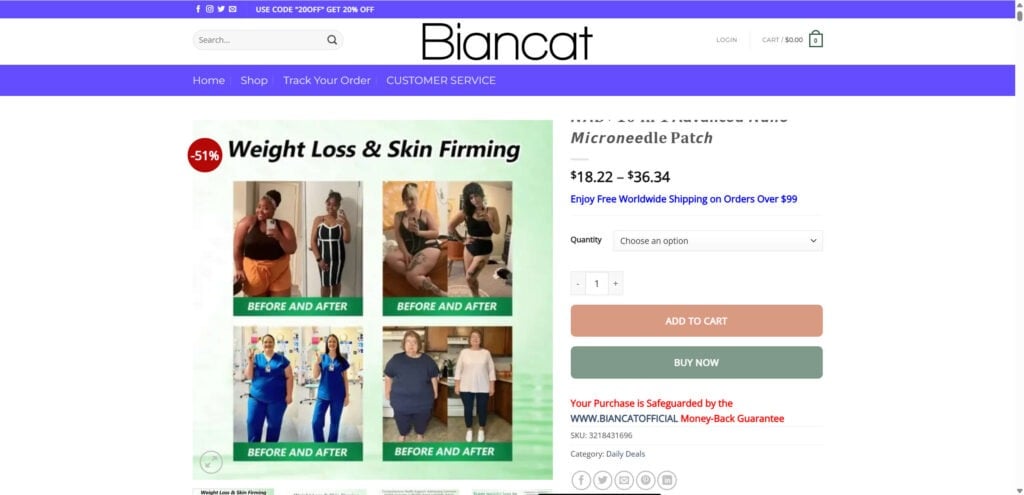
Overview
What the GFOUK Moringa Berberine Patch claims to be
GFOUK Moringa Berberine Patch is typically presented as a “next-gen” weight management solution, often framed as a modern alternative to traditional weight loss pills, powders, or injections.
The marketing commonly positions it as an “advanced nano microneedle patch” or a “10-in-1” patch that combines multiple trending ingredients and wellness buzzwords into one simple daily habit.
Depending on the site selling it, you may see claims like:
- “Clinically validated formula”
- “Doctor recommended”
- “Endocrinology team’s top recommendation”
- “Noticeable improvements in 7 days”
- “No rebound effect”
- “Targets stubborn fat”
- “Supports blood sugar balance, gut health, liver support, mood, and energy”
- “High absorption rate,” sometimes with a specific number like 98%
On paper, it reads like a product that’s doing the job of several supplements, a diet plan, and a lifestyle change, all at once.
That’s the first reason people should be cautious.
When a single patch claims to transform weight, cravings, metabolism, energy, mood, skin firmness, digestion, and more, you are no longer in the territory of a realistic consumer product. You are in the territory of marketing designed to overwhelm you into buying before you think.
Why these claims are so effective
These sales pages are built around a familiar emotional story:
- You’ve tried diets and exercise, but your progress feels slow.
- You’re tired of “harsh” weight loss products that don’t work.
- You want something easy and sustainable.
- You want results that finally feel real.
Then the pitch flips the blame away from you and onto the method.
It suggests you didn’t fail. The “old solutions” failed you.
That kind of framing is powerful, especially when it’s paired with phrases like “science-backed,” “clinically tested,” and “made in a certified facility.”
The goal is to make you feel relief first, then urgency.
Relief: “Finally, something made for people like me.”
Urgency: “If I wait, I’ll miss the discount, the free bonuses, or the limited stock.”
The biggest red flags on pages selling GFOUK
Here are the patterns that repeatedly show up with products like GFOUK, and why they matter.
1) “Clinically validated” without clinical proof
A legitimate brand can usually point you to something verifiable, not just a vague statement.
That might include:
- A published clinical trial (or at least a clearly described study)
- The study design (randomized, controlled, sample size, duration)
- Where it was conducted
- What exactly was tested (the product itself, not a single ingredient in isolation)
With many patch-style “metabolism” products, the page relies on the existence of research around certain ingredients, then implies the finished patch has the same effects.
That is not the same thing.
An ingredient having studies is not proof that a specific patch sold online will deliver meaningful results, especially when the exact dosage and delivery method are unclear.
2) “Doctor recommended” imagery that feels manufactured
Many of these sites use doctor photos, medical-style graphics, or “clinical team” narratives that create instant authority.
Sometimes the images look overly polished, generic, or even AI-generated. Sometimes the “doctor” has no full name, no license details, no clinic affiliation, and no external footprint.
That matters because the image is not there to inform you. It’s there to lower your skepticism.
If the product is truly endorsed by a medical professional or supported by a clinical team, that information should be specific and verifiable.
3) Big numbers with no source
You may see stats like:
- “98% absorption rate”
- “Most customers order 6 boxes”
- “Users lost 6 to 8 pounds in 1 week”
- “Thousands of satisfied customers”
- “Rated 4.8/5 from 17,000+ reviews”
When numbers are real, there is usually context:
- Who measured it?
- How was it measured?
- Over what time period?
- What was the baseline?
- Where are the reviews hosted outside the brand’s website?
When numbers exist only on the sales page, they can be marketing props rather than real data.
4) “FDA certified retailer” and similar wording games
This is a huge one.
The FDA does not “certify” random online retailers the way these pages often imply. You can see language designed to sound official while staying just vague enough to avoid a clear, legally testable claim.
You might also see:
- “FDA approved facility”
- “GMP certified”
- “HACCP”
- Badges that look like regulators endorsed the product
Even if a facility follows a standard, that does not automatically validate the product’s marketing claims, effectiveness, or quality.
Badges are frequently used as trust decoration.
5) Aggressive discounts and urgency tactics
Many GFOUK-style pages run constant “today only” sales, often in the 50% to 80% off range, with:
- Countdown timers
- “Low stock” warnings
- Free gift bundles
- Buy-more-save-more pricing
This is a classic direct-response tactic. It pushes people to buy emotionally.
If the product were strong enough to stand on evidence and reputation, it wouldn’t need to be sold like a limited-time emergency.
6) The product category itself is a common scam magnet
Patches are not automatically scams. But “weight loss patch” is a category that attracts copycat storefronts for one simple reason: it’s hard for customers to verify what they are getting.
A patch is small, generic-looking, and easy to private label.
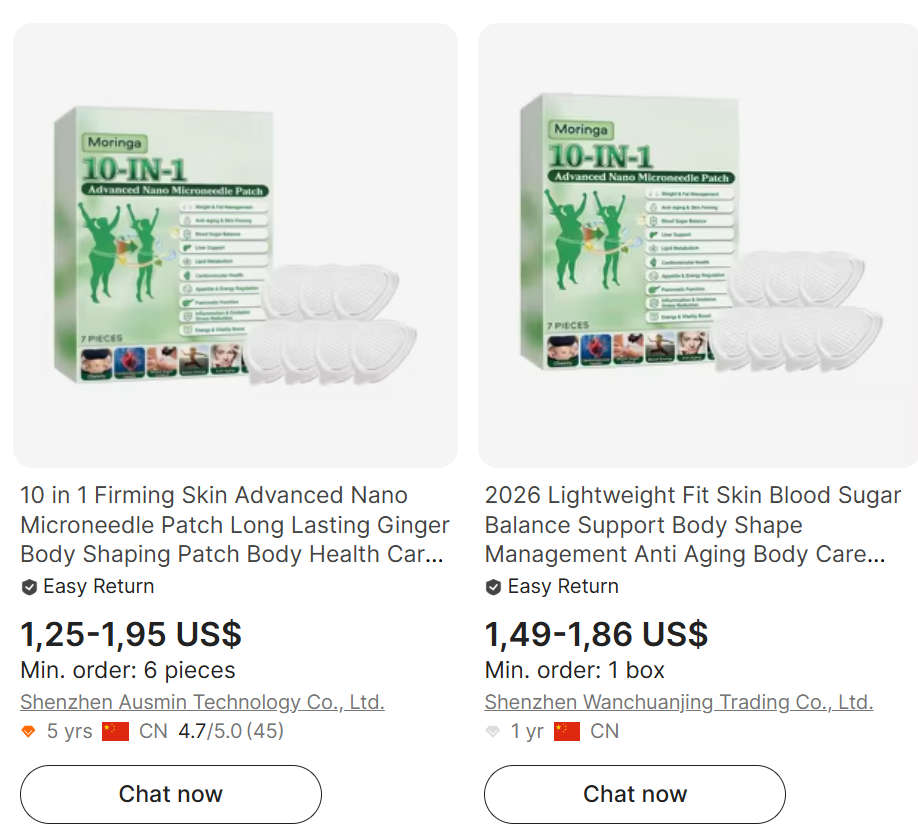
A seller can put any story around it, then ship a low-cost item that looks “close enough” to avoid instant rejection.
What a legitimate brand would usually provide
If a product is real, well-managed, and confident in its quality, you typically see:
- Clear company identity (not just a storefront name)
- A real support address and phone line
- Transparent ingredient listing and realistic explanations
- Clear subscription terms (if subscriptions exist)
- Return instructions that are practical and local, not designed as a barrier
- Reviews that exist across independent platforms, not only on the sales page
- Claims that are restrained, specific, and measurable
With many patch funnels, what you get instead is a beautiful website and a story that is hard to verify.
The most common customer outcomes reported with similar operations
When people buy heavily marketed “miracle” health products from new storefronts, the outcomes are usually one of these:
- They receive a cheap, generic product that doesn’t match the premium marketing.
- Shipping takes longer than expected, often because it originates overseas.
- Customer support is slow, vague, or unhelpful.
- Returns are technically “allowed,” but only if you ship back to a far location at your own cost.
- Refunds become a negotiation rather than a policy.
- Some buyers report surprise recurring charges if the checkout included an auto-ship plan or membership style offer.
Not every customer experiences every issue, but the pattern is common enough that it should influence how you assess risk before buying.
A realistic way to think about GFOUK
Here is a grounded way to summarize the situation:
- The marketing is making medical-adjacent promises using authority cues.
- The proof is often not independently verifiable.
- The sales funnel feels optimized for conversion, not for transparency.
- The fulfillment and return setup often looks like a classic dropshipping structure, where the hard part is not buying, it’s getting your money back.
If you want a simple “buy or skip” answer based on risk, not hype: for most people, this is a skip.
How The Operation Works
Below is how these patch operations typically run, step by step, so you can recognize the machine behind the product.
Step 1: Social media ads do the targeting
Most people don’t find GFOUK through careful research. They find it through an ad.
These ads are usually built around:
- Before-and-after transformations
- A “new discovery” story
- A dramatic problem statement (“nothing else worked”)
- A simple solution (“just apply the patch”)
- A strong emotional hook (hope, frustration, urgency)
The targeting is often tuned toward people who have shown interest in weight loss, metabolism, blood sugar topics, menopause, or wellness supplements.
This matters because the ad is not designed to educate. It’s designed to trigger a click.
Step 2: The landing page takes over your attention
Once you click, you land on a page that feels like it has “everything.”
It’s long, polished, and loaded with credibility signals.
Common elements include:
- “Clinically validated” headlines
- A founder story or pharmacist story
- A medical team narrative
- A list of benefits that covers almost every struggle you can think of
- A product graphic showing many ingredients at once
- Testimonials that read like a movie script
The goal is to keep you scrolling until your skepticism is tired.
When you’ve read that much, you start thinking, “They wouldn’t write all this if it wasn’t real.”
But long pages are not proof. They’re persuasion.
Step 3: Authority stacking creates trust without verification
This is one of the most important steps.
The page builds “borrowed trust” using:
- Doctor photos
- Lab coat imagery
- Scientific charts
- Words like “endocrinology,” “clinical,” “validated,” “patented”
- Badges like GMP and FDA-related language
Even if none of it is directly false in a technical sense, it can be misleading in the way it’s presented.
It encourages a feeling:
“This is medical-grade.”
But a feeling is not a credential.
Step 4: The science is written to sound specific while staying vague
You might notice the page mixes detailed-sounding language with missing specifics.
For example:
- Lots of claims about absorption
- Lots of talk about “supporting metabolism”
- Lots of talk about “balancing blood sugar”
- But no precise dosing, no clear mechanism, and no solid evidence for the finished product
Even the ingredient story is often structured to create the impression of a powerful formula:
“Berberine + moringa + NAD+ + collagen peptides + probiotics + turmeric + milk thistle + more.”
The problem is that combining a list of popular ingredients is not automatically effective, especially when:
- You don’t know the dose
- You don’t know the quality source
- You don’t know the delivery performance through skin
- You don’t have a real study on the actual product
It’s a familiar trick: name enough ingredients and people assume the formula must be serious.
Step 5: Pricing and bundles push you to overbuy
The checkout is rarely just one option.
Instead, you’ll often see:
- A “most popular” bundle
- A “best value” bundle
- A suggestion that real results need multiple boxes
- A stronger discount if you buy more right now
This is not accidental.
These funnels often make most of their money on larger orders, because the cost of acquiring a customer through ads can be high.
So they push volume immediately.
Step 6: The checkout may contain terms people miss
This is where some buyers get burned.
Depending on the storefront, you may see:
- Pre-selected add-ons
- “Shipping protection”
- A subscription option framed as a discount
- Fine-print terms about recurring shipments
Not every site does this, but enough do that it’s worth checking carefully.
If someone later says, “I only ordered once, but I got charged again,” it’s often because the offer included an auto-ship or membership element that wasn’t obvious in the moment.
Step 7: Fulfillment often looks like a dropshipping pipeline
Here’s the part most buyers never consider until it’s too late.
Many of these operations do not hold inventory locally. Instead:
- The storefront collects orders.
- The order is forwarded to an overseas supplier or fulfillment partner.
- A low-cost product ships directly to the customer.
This can explain why:
- Tracking looks strange
- Shipping takes longer than expected
- Packaging appears generic or different from the website
- The product feels cheaper than the premium marketing implied
It’s not uncommon for these items to be sourced from mass-market suppliers, then rebranded with a story.
Step 8: Customer support becomes a delay system
When customers ask questions like:
- “Where is my order?”
- “How do I return this?”
- “Why did I get charged again?”
- “This doesn’t match the ad”
They often hit one of these walls:
- Slow replies
- Copy-paste responses
- Requests to “wait a bit longer”
- Partial refund offers to avoid returns
- Return instructions that are difficult to follow
This is a common pattern in high-complaint ecommerce funnels.
Support is not designed to solve. It’s designed to reduce refunds.
Step 9: Returns are technically possible, but practically difficult
This is where the “no refunds” experience often comes from.
Even when a return policy exists, it may require:
- Shipping the product back to a far location, sometimes in China
- Paying return postage yourself
- Using tracking
- Meeting strict time windows that are hard to meet with slow shipping
If you paid $30 to $60 for a product and return shipping costs $25 to $40, most people give up.
That’s why the return policy can exist on paper while still functioning like a refund barrier.
Step 10: The brand can vanish, rebrand, or move domains
Because these stores are often built on a template, they can be cloned quickly.
If complaints rise, an operation can:
- Change the product name
- Change the domain
- Launch the same funnel with new branding
- Keep running ads
That’s why the safest approach is to evaluate the structure, not just the brand name.
If the setup looks like a funnel-first, proof-light, hard-to-refund operation, the risk is already high.
What To Do If You Have Bought This
If you already purchased GFOUK Moringa Berberine Patch, don’t panic. You still have options. The key is acting quickly and keeping everything documented.
- Gather your proof right now
Save screenshots of:- The product page claims
- The price you paid
- The return policy shown at the time
- Your order confirmation page
- Any emails or receipts
- Check your bank or card statement for multiple charges
Look for:- A second charge a few days later
- A “membership” style charge
- A charge from a different business name than the website
- Search your confirmation email for subscription language
Look for words like:- “Auto-ship”
- “Subscription”
- “Recurring”
- “Monthly”
- “Membership”
- “Replenishment”
- Email customer support and request cancellation in writing
Keep it short and direct:- Ask to cancel any recurring program
- Ask for written confirmation
- Ask for a refund if the product hasn’t shipped, or if you want to return it
- If the product has not shipped, request a cancellation immediately
Many stores will claim “processing” for days. Send the cancellation request anyway and keep the timestamp. - If you suspect misleading terms or recurring charges, contact your card issuer
Explain calmly:- You believe the product was marketed with misleading claims
- You are having difficulty obtaining a refund
- You want to dispute the charge or block future charges
- If the item arrives, photograph the package before opening
Take pictures of:- The shipping label
- Any company names shown
- The packaging
- The product itself
- Be cautious about using it if you have health conditions or take medications
A patch marketed for metabolism or blood sugar can be especially risky for people managing health conditions. If you are unsure, talk to a qualified healthcare professional before trying it. - Do not pay extra money to “unlock” a refund
Some shady operations will suggest additional fees for customs, reshipment, or “return processing.” Treat that as a red flag. - Report the ad if it felt deceptive
If you found it through social media, report the advertisement. It won’t fix your purchase, but it can reduce harm to others. - Monitor your statements for 60 days
Even after cancellation emails, keep checking for unexpected charges. - If you receive additional packages you didn’t order, document them immediately
Save the packaging and contact your card issuer if charges appear connected.
The Bottom Line
GFOUK Moringa Berberine Patch is marketed like a breakthrough, but the operation behind it often shows the same warning signs people see in dropshipping-style health product funnels: big promises, weak verification, heavy urgency, and refund friction.
If you want the safest choice, skip it. If you already bought it, focus on documentation, checking for recurring charges, and escalating to your payment provider quickly if support becomes evasive.
FAQ
What is the GFOUK Moringa Berberine Patch?
It’s marketed as an “advanced” weight loss and metabolism patch (often labeled as a nano or microneedle patch) that claims to support fat loss, cravings, blood sugar balance, and energy. The concern is that many sites selling it rely on exaggerated marketing while shipping a low-cost product from overseas.
Is the GFOUK patch a scam or legit?
The product is commonly promoted using red-flag tactics: big medical-style claims, vague “clinical” language, aggressive discounts, and hard-to-verify statistics. That combination makes it high-risk and, for most buyers, better to avoid.
Do weight loss patches actually work?
Some patches can deliver certain substances through skin in specific medical contexts, but “weight loss patches” sold online often lack credible proof that the actual product produces meaningful fat loss. If a site promises fast results with no lifestyle changes, that’s usually marketing, not evidence.
Why do these sites claim “FDA certified” or “clinically validated”?
Those phrases are often used to create trust. They may be worded in a way that sounds official without providing real verification, published studies, or clear details that you can independently confirm.
Why do people say it ships from China?
Many of these operations use a dropshipping model. The storefront takes orders, then a third-party supplier fulfills the shipment, often from overseas. This can mean longer delivery times and packaging that looks generic or different from what the website shows.
Can I get a refund if I already ordered?
Sometimes, but it can be difficult. Some sellers require returns to an overseas address, which can cost enough in shipping that people give up. If support stalls or refuses, your best option is to contact your card issuer and dispute the charge with your documentation.
How do I know if I was enrolled in a subscription?
Check your order confirmation email and your bank statement. Look for words like “auto-ship,” “membership,” “replenishment,” or recurring charges under a different billing name than the website.
What should I do if I’m getting unexpected packages?
Save the packaging, take photos of labels and contents, and check for related charges. If you see charges you did not authorize, contact your card issuer right away and ask about blocking future payments and disputing the transactions.

Join the discussion
6 commentsShare your experience or ask a question about this article.
Discussion
I was absolutely a victim of this scam, and should have known better. The only thing I got was a chemical burn anywhere I put a patch.
In reply to Joan Lunsmann
A chemical burn is not a side effect to shrug off – please have a doctor or pharmacist look at it if it is blistering, weeping or not settling, and take photographs of the marks now, dated, even if it is healing. That documentation is what makes everything below work.
And please drop the “should have known better”. These are advertised with fabricated clinical results and stolen medical branding; recognising that from a video is not a reasonable expectation.
Three things to do. Dispute the charge with your card issuer as not as described, mentioning the injury, and ask for a new card number if there was any subscription. Report the reaction to the FDA at fda.gov/medwatch, and because it caused a physical injury, to the CPSC at saferproducts.gov – the CPSC can act on a product that burns skin in a way no refund ever will. And keep the packaging, since the lot number is what allows anyone to trace which batch it came from.
Surely this is illegal trading, how are they allowed to get away with it?
When I first saw these adverts I thought it finally was a breakthrough with weight loss, but the more I saw them increasing I couldnt believe that they would be allowed to get away with it. I knew it couldnt be true or why arent we all skinny!! But I just had to try it in case they really had hit on a “miracle”.
NO – JUST WISHFUL THINKING. SILLY ME!! THEY ONLY ARRIVED TODAY, I AM JUST ABOUT TO TAKE MY FIRST ONE OFF. MAYBE I WILL WAKE UP SKINNY – HA HA HA HA. MANY THANKS FOR THE INFORMATION
In reply to RITA
Hi Rita, in many cases the marketing may be misleading or deceptive, but enforcement often moves much more slowly than the scams themselves. That is one reason these operations keep spreading. Thank you for sharing your experience, and I hope the article helped before you spent even more money.
Yes..it is a scam and the contents are very questionable as the shipment originates from Wuhan! This is not a joke. I ordered mine and tracking showed shipment from Shonobo facility from Wuhan
Wonder what’s in those patches?
Is this a CCP ‘slow kill’ patch marketed in English ( not a word of Chinese), exclusively for markets outside of China?
I have used 1 box….it shows no effect.
But am more concerned about the real contents innit as it comes from China with all the logos claiming from USA FDA, GMP.
Packaging is cheap and sub standard.
For security…do not buy these. And if bought, pls dump them as this is clearly a sneaky con job.
In reply to Kaz
The concern about what is in them is reasonable, but I would separate it from the city on the shipping label, because that part does not tell you much. A very large share of ordinary consumer goods ships from Chinese fulfilment centres, including products from brands you would trust, so the origin is not what makes these patches questionable.
What does is the absence of everything that would let anyone check: no traceable manufacturer, no batch or lot number, no ingredient panel that corresponds to any testing, and nobody to contact if a batch is contaminated. When products in this category have been independently analysed, findings have included ingredients not on the label, wildly different quantities from those claimed, and occasionally undeclared pharmaceuticals. That is the real risk, and it applies regardless of which warehouse it left from.
So: I would not use them. If you have had any skin reaction, mention it to a pharmacist, and report it at fda.gov/medwatch – the FDA does act on unapproved products making health claims. Then dispute the charge with your card issuer as not as described, ask for a new card number if there is any recurring element, and file at reportfraud.ftc.gov.
One practical note: the transdermal claim fails before any of this. The ingredients advertised in these patches are not absorbed through intact skin in quantities that do anything, so there is no dose being delivered whatever the contents turn out to be.