

A disturbing Facebook post about a missing 15-year-old girl named Gracie Mae Thompson from Texas has been making the rounds on social media, tugging at people’s heartstrings and generating widespread shares. But before you hit that share button, beware – this viral post is actually an insidious scam designed to manipulate people’s emotions for nefarious purposes. In this in-depth article, we’ll dive into the details of the Gracie Mae Thompson missing girl scam, explore how it works, and provide actionable advice on what to do if you’ve fallen victim.
Scam Overview
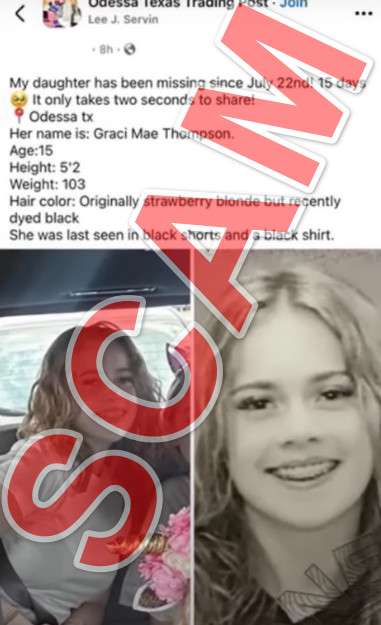
The Gracie Mae Thompson missing girl scam typically appears as a Facebook post featuring a photo of a young teenage girl, along with an urgent plea to help find the supposedly missing child. The post claims the 15-year-old went missing from Texas on July 22, 2024 and includes some identifying details like her height, weight, hair color, and what she was last seen wearing.
Scammers have been sharing the same girl’s photo across Facebook pages and groups, often using slight variations of the name like “Graci May Thompson” or “Gracie Mae Thompson.” The posts employ emotive language and even emojis to capture people’s attention and pull at their heartstrings, increasing the chances that well-meaning individuals will share the content far and wide.
However, upon closer inspection, several red flags emerge that point to the post being a malicious hoax rather than a legitimate missing person alert. For one, the post lacks a clear call-to-action with instructions on what to do if someone has information about the missing girl’s whereabouts. Most genuine missing person alerts will direct people to contact law enforcement or the National Center for Missing and Exploited Children.
Additionally, the supposed missing person case has not been featured in any reputable news outlets or acknowledged by law enforcement, despite the post claiming Gracie has been missing for over two weeks. The gratuitous use of emojis is also highly atypical for a serious missing person announcement.
Perhaps most tellingly, some variations of the viral post contain a link to suspicious websites that deploy adware and try to force visitors to disable their VPN and ad-blocking software. The missing posts have also increased in Facebook buy/sell groups rather than on personal pages.
All of these inconsistencies and warning signs point to the Gracie Mae Thompson post being a carefully crafted scam with an underlying motive very different from simply locating a missing child. Understanding how this scam operates can help people avoid falling for similar hoaxes in the future.
How The Scam Works
The Gracie Mae Thompson missing girl scam is a classic example of like-farming (also known as like-harvesting), where bad actors create emotive, shocking, or controversial content with the aim of generating as many likes, comments, and shares as possible. But unlike a typical social media post, the goal isn’t to connect with friends and family or to raise awareness for a legitimate cause.
Instead, like-farming scams are all about artificially inflating the popularity and credibility of a social media page or website. Scammers exploit people’s natural inclination to help, especially when it comes to missing children, to quickly amass a huge number of interactions on their fraudulent posts.
Here’s how the scam typically unfolds:
Step 1: Creating the Bait Post
Scammers start by crafting a post designed to maximize shares and engagement. They use a random photo of a young girl and invent an alarming story about her being missing, often from a different state or country than where the post claims she disappeared. Details are kept vague and hard to verify.
Step 2: Seeding the Post in Facebook Groups and Pages
To get initial traction, the scammers share the post in various high-traffic Facebook groups and pages, particularly local buy/sell groups where people may engage with the post thinking it’s relevant to their community. Posting in multiple groups helps the scam post gain momentum.
Step 3: Accelerating Reach Through Likes and Shares
As people encounter the missing girl post, many can’t help but interact by reacting, commenting with well-wishes, and sharing the post to their own feed in hopes of helping find the child. Scammers know that the more people engage with the post, the more Facebook’s algorithms will display it to extended networks, causing a snowball effect.
Step 4: Editing the Post to Introduce Malicious Links
Once a post has garnered sufficient likes and shares, the scammers will often edit it to include links to suspicious third-party websites, like the “Obituaryremembrance.info” site connected to some versions of the Gracie Mae post. Clicking these links may trigger pop-up ads, transmit malware, steal personal information, or pressure you to make purchases.
Step 5: Transforming the Page into a Spam Hub
After the post has served its viral purpose, scammers may strip the page of its previous content and transform it into a vehicle for pushing spam products, spreading misinformation, or promoting other scams. With a large follower base built from the missing girl post, the page has a ready-made audience to blast malicious content at.
Through this methodical process, like-farming scams manage to exploit people’s compassion for missing children to boost the popularity of a page for improper financial gain. While participating in a missing person search is commendable, it’s critical to scrutinize any such requests carefully.
What to Do If You’ve Fallen Victim to This Scam
If you’ve already engaged with the Gracie Mae Thompson post or similar missing person hoaxes on Facebook, don’t panic. While accidentally sharing a scam post is far from ideal, you can take steps to mitigate the harm and protect yourself and others going forward:
- Delete your share of the fraudulent post. Go to your Facebook timeline/profile, locate where you shared the post, and delete it to avoid spreading the scam further to your friends and followers.
- If you clicked any suspicious links associated with the post, run a malware scan on your device to check for any unwanted programs that may have been installed. Consider changing passwords on sensitive accounts as well.
- Unfollow/unlike any pages or groups that were spreading the scam post, as they likely share other questionable content that isn’t worth your time or attention. Disengaging can help deprive scammers of the audience they crave.
- Inform friends and family who may have also interacted with the post that it is a hoax. Encourage them to delete their shares and be cautious of similar content in the future. Many people don’t realize they’re caught up in a scam.
- If you spot other possible like-farming scam posts in the future, report them to Facebook. Click on the three dots in the upper right of the post, select “Report post,” and follow the prompts to file a report for false information.
- Be more discerning about the posts you interact with on Facebook, especially missing person reports. Look for official sources, proper spelling/grammar, and clear instructions for helping. Avoid knee-jerk shares of provocative content.
- Consider tightening up your Facebook privacy settings to limit who can see your future posts and shares. The less publicly available information about you, the lower your risk of being targeted by hoaxes and scams.
- Stay informed about common social media scams making the rounds. Consult reputable sources like Snopes.com when a questionable post arises so you can see if it’s been debunked. Knowledge is power in the fight against scammers.
By being proactive in correcting your own engagement with the scam post and educating others about the risks, you can turn an unfortunate situation into an opportunity to cultivate a safer, more authentic Facebook environment for everyone.
Frequently Asked Questions About the Gracie Mae Thompson Missing Girl Facebook Scam
Q1. What is the Gracie Mae Thompson Missing Girl Facebook Scam?
A: The Gracie Mae Thompson Missing Girl Facebook Scam is a viral post circulating on Facebook that claims a 15-year-old girl named Gracie Mae Thompson went missing from Texas on July 22, 2024. The post, which includes a photo of a young girl, is designed to generate shares and likes but is not a legitimate missing person report.
Q2. How can you tell the Gracie Mae Thompson post is a scam?
A: There are several red flags that indicate the post is a hoax:
- The post lacks a clear call-to-action or instructions for helping locate the missing girl
- There has been no media coverage or official statements about the case
- The post contains suspicious links to malicious websites
- The post is being shared primarily on buy/sell pages rather than personal accounts
- The post uses emojis and emotional language atypical of legitimate missing person alerts
Q3. What is the purpose of the Gracie Mae Thompson scam post?
A: The post is an example of like-farming or like-harvesting, where scammers create emotive content to quickly gain likes, comments, and shares. Once the post goes viral, the scammers may edit it to include malicious links or later transform the page into a hub for spreading spam and misinformation.
Q4. What should you do if you’ve shared the Gracie Mae Thompson post?
A: If you’ve interacted with the post, take these steps:
- Delete your share of the post from your timeline
- Run a malware scan if you clicked any suspicious links
- Unfollow pages and groups that were spreading the post
- Inform friends and family who may have also shared the post that it is a hoax
- Report the post to Facebook for false information
Q5. How can you avoid falling for similar missing person hoaxes on Facebook?
A: Be cautious when encountering missing person posts and look for these signs of legitimacy:
- The post comes from an official law enforcement source
- It includes a clear call-to-action for reporting information
- The case has been covered by reputable media outlets
- The post does not contain suspicious links or emojis
If in doubt, do a quick search on fact-checking websites like Snopes.com to see if the story has been debunked.
Q6. Are all missing person posts on Facebook scams?
A: No, not all missing person posts on Facebook are hoaxes. Some are legitimate reports shared by family members or law enforcement to solicit help from the public. However, it’s essential to exercise caution and verify the authenticity of any such post before sharing to avoid unwittingly spreading misinformation.
Q7. What should you do if you think you’ve found a real missing person?
A: If you locate a missing person, it’s crucial to contact law enforcement or the number listed on the missing person alert immediately. Give them as many details as possible about the person’s location and appearance. Do not personally approach or try to detain the individual, as this could put both them and yourself in harm’s way. Law enforcement professionals are trained to handle these delicate situations.
Q8. How does sharing missing person posts on Facebook help locate individuals?
A: Sharing authentic missing person alerts on social media can greatly increase the number of people on the lookout for the individual, especially in the critical first 48 hours after a disappearance. Facebook allows information and photos to circulate rapidly, potentially reaching people in the area where the missing person may be. However, this exposure is only beneficial if the missing person post is legitimate.
Q9. Why do people create missing person hoaxes like the Gracie Mae Thompson post?
A: Scammers create these hoax posts for a variety of reasons:
- To gain likes and shares that make their page appear more popular and credible
- To spread malware through malicious links edited into the viral post
- To transform a popular page into a vehicle for selling spam products or spreading misinformation later on
- To phish for people’s personal information through linked websites
- To make money through pay-per-click advertising on linked websites
The increased visibility of a viral post allows bad actors to cast a wide net for potential victims.
Q10. How can you help combat the spread of missing person hoaxes on Facebook?
A: There are several ways you can take action:
- Share information about common hoaxes, like the Gracie Mae Thompson post, to educate others
- Encourage people to fact-check before sharing missing person posts
- Report scam posts to Facebook and other relevant authorities
- Refrain from engaging with posts that seem suspicious to avoid boosting their visibility
- Share official missing person alerts from law enforcement and reputable organizations instead
By being proactive, we can work together to minimize the impact of these harmful hoaxes and make social media a place for genuine connection and support.
The Bottom Line
The Gracie Mae Thompson missing girl Facebook scam is a stark reminder of how scammers exploit people’s natural inclination to help others in need. By presenting a shocking story and image of a supposedly missing child, these like-farming posts provoke an emotional reaction that leads to rapid shares and engagement.
However, upon closer inspection, the posts exhibit several red flags that point to their true nature as a manipulative hoax. The lack of a clear call-to-action, the absence of media coverage, the presence of suspicious links, and the proliferation on buy/sell pages rather than personal accounts all suggest that something is amiss.
Scammers use these tactics to quickly boost the popularity of their pages, only to later transform them into hubs for pushing spam, misinformation, and other malicious content. While falling for such a scam is an unsettling experience, taking prompt action to delete shares, inform others, and report the offending posts can help stop the spread.
Ultimately, developing a keen eye for spotting potential hoaxes and being judicious about the content we interact with on social media are essential skills in our digital age. By slowing down and verifying information before reacting, we can cultivate a healthier, more trustworthy online ecosystem that brings out the best in one another.
Though the instinct to help locate missing children is praiseworthy, it’s crucial to ensure that our efforts are directed toward legitimate cases. Relying on official sources, clear calls-to-action, and common sense can help us steer clear of manipulative traps like the Gracie Mae Thompson post and focus our energies on making a positive difference in our communities – both online and off.








