

Hasbro, the iconic toy and game company behind brands like Transformers, My Little Pony, and Monopoly, does not currently have any authorized clearance sales or discount events taking place online. However, scam websites are proliferating that pretend to offer Hasbro toys at deep discounts in order to defraud customers.
These fraudulent sites, heavily promoted through social media ads and email campaigns, trick shoppers by using Hasbro’s branding and intellectual property under the pretense of a “Hasbro Clearance Sale”, “Hasbro Warehouse Sale”, or other fake blowout event. Unsuspecting customers place orders believing they are getting an incredible deal on Hasbro toys, only to receive nothing, cheap counterfeits, used products, or completely incorrect items.
Overview of the Hasbro Clearance Sale Scam
The Hasbro Clearance Sale scam is a form of e-commerce fraud that aims to capitalize on the brand recognition and trust associated with Hasbro. Scammers create convincing fake e-commerce websites advertising clearance sales on Hasbro toys, games, and other products.
These sites prominently use Hasbro’s trademarks, imagery, and product photos without authorization. Prices are set extremely low, often 80-90% off retail value, in order to entice customers seeking a good deal.
After customers place orders by submitting their personal and payment information, the scam sites either take the money and never ship anything, send knock-off or used toys instead of authentic new Hasbro products, or ship random cheap items unrelated to the order.
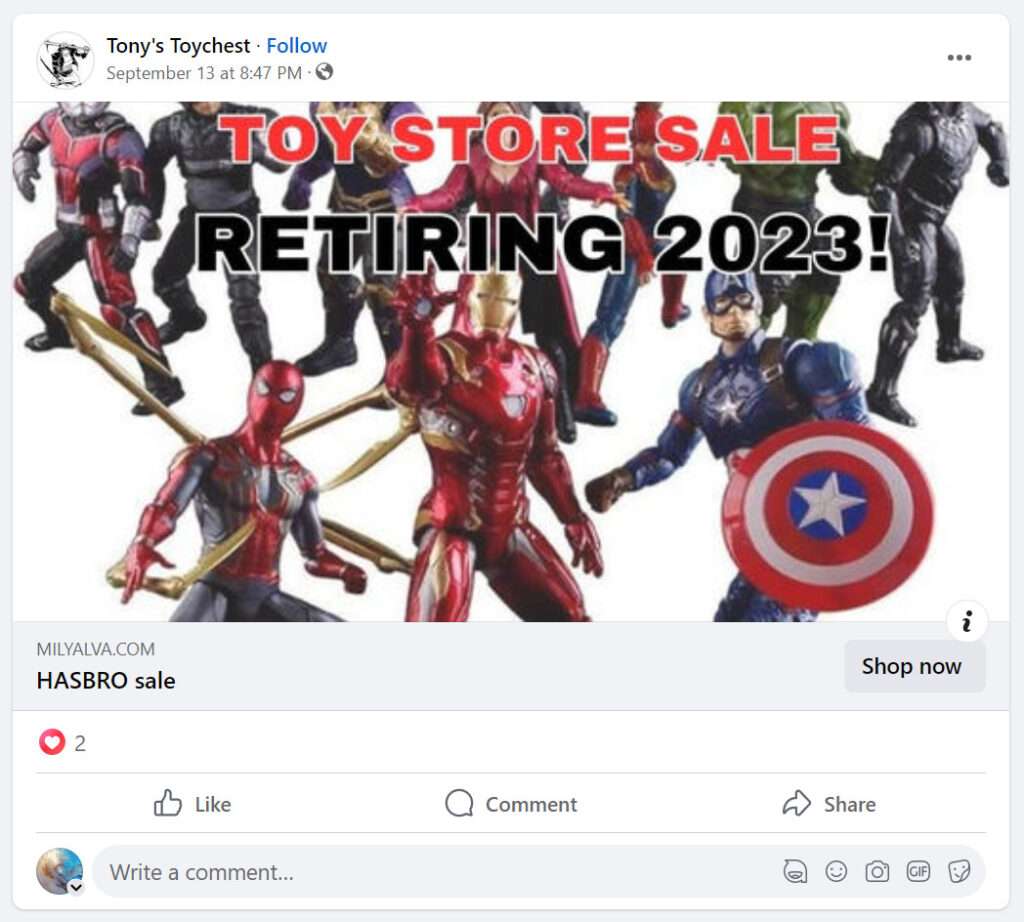
This scam network originates out of China and relies on digital advertising, primarily Facebook ads, to drive traffic to the fraudulent sites. The ads typically showcase Hasbro toys deeply discounted with messages like “Going out of business!”, “Store closing sale!”, and “Hurry limited quantities!”.
These sites are essentially phantom stores. They do not have any products or inventory. Their sole purpose is collecting payment and customer data. The scam network manages dozens of these fraudulent websites to maximize revenue from defrauded customers.
How the Hasbro Clearance Sale Scam Works
The Hasbro Clearance Sale scam employs a variety of deceptive techniques to appear credible and trick customers into placing orders. Here is an overview of how the scam operates at each stage:
1. Fake Website and Brand Impersonation
The first component of the scam is the website itself. Scammers design the sites to seamlessly mimic legitimate e-commerce stores. The layout, branding, product listings, and checkout process closely resemble a real online toy shop.
All Hasbro trademarks, logos, characters, and product imagery are used without authorization. The sites feature banners reading “Hasbro Clearance Sale”, “Hasbro Warehouse Sale”, and other phony promotions. Prices are set extremely low, often 80-90% below actual retail value.
Without carefully examining the URL and security indicators, visitors are unlikely to distinguish these scam sites from a genuine Hasbro store.
2. Social Media and Email Marketing
To drive traffic to their fake sites, scammers rely heavily on Facebook ads and Instagram influencer promotions. The ads showcase Hasbro products at unbelievable prices, alongside urgency cues like “Going out of business sale!” and “Today only!”.
Email spam campaigns are also used, with messages promoting the clearance sale and linking directly to the fraudulent sites. These aggressive marketing tactics aim to attract bargain hunters and create a false sense of exclusivity and limited availability.
3. Deceptive Order Process
The online order process at these scam sites closely imitates a real shopping experience. Customers can add products to a cart, apply coupons and promo codes, and proceed to checkout.
At checkout, visitors are prompted to enter their name, shipping address, contact information, and credit card number. This allows scammers to collect customers’ personal and financial data.
After completing checkout, shoppers receive an order confirmation email with a fake tracking number. The professional templates and order documentation make the interaction feel like an authentic e-commerce transaction.
4. Failure to Deliver Goods
After securing payment and collecting personal information, scam sites either disappear completely or never fulfill the orders. The most common outcome is no products ever ship out.
Some customers eventually receive a phony shipment confirmation, but the tracking number either shows an error or invalid status when checked. No deliveries arrive since scammers never send anything.
For orders they do fulfill, scam websites ship cheap knock-offs, defective products, or random undesirable items in place of the expected Hasbro toys. For example, used Transformers may arrive instead of new or completely different toys may ship.
Either way, the customer ends up scammed without receiving what they ordered. Yet the scammers still retain the payment and personal data taken from victims unless transactions are reversed.
Red Flags of the Hasbro Clearance Sale Scam
These fraudulent Hasbro toy sites can be difficult to distinguish from legitimate stores at first glance. However, upon closer inspection, there are a number of red flags that indicate a scam:
- Unbelievably Low Prices – Authentic Hasbro toys retail for standard market prices. Discounts over 90% off are a telltale sign of a scam.
- Limited Contact Information – Scam sites only provide an email address with no phone number, physical address, or company details.
- Privacy Policy & Terms Plagiarized – Legal policies are often copied word-for-word from other scam sites.
- Website Recently Created – Scam sites use new domains registered very recently to avoid detection.
- No Social Media Presence – The website lacks any associated social media accounts or user engagement.
- Spelling/Grammar Errors – Shoddy spelling mistakes indicate amateur scam work.
- Aggressive Sales Tactics – Language urging immediate action is manipulative.
- No Shipping Details – Order process lacks shipping cost calculations or logistics.
- No Customer Reviews – All legitimate retailers advertise customer reviews, but scam sites have none.
Carefully checking for these warning signs can help shoppers avoid becoming victimized by Hasbro clearance sale scams.
How to Spot This Scam on Facebook
The Hasbro clearance sale scam proliferates on Facebook through targeted ads and sponsored posts. Here are some tips to recognize this scam on Facebook:
- Scrutinize Facebook Ads – Be wary of Facebook ads promoting clearance sales on Hasbro toys at extremely low prices. The ads often use urgency cues like “going out of business” or “limited quantities”.
- Check URL – Click through on the Facebook ad and carefully examine the destination URL. Scam sites will have a suspicious looking domain name that doesn’t match Hasbro’s websites.
- Look For Verified Badge – Facebook ads from legitimate businesses have a blue verified badge on their page and ad. Scam ads will be missing this verified indicator.
- Research Page History – Click the Page name on the Facebook ad and check when it was created. Fraudulent pages are often recently made right before launching scam ads.
- Watch For Banned Ad Topics – Hasbro toy ads are prohibited from targeting children under 13. Scam toy ads may illegally target all ages.
- Ask For Feedback – Comment on scam posts asking existing followers if the deals and products are legitimate. No responses or deleted inquiries may signal a scam.
- Report Suspicious Ads – Use Facebook’s reporting tool if an ad appears fraudulent. Facebook will review and remove confirmed scam ads.
Stay vigilant about scam warning signs when shopping from Facebook ads and retail pages. Apply extra scrutiny for offers that seem too good to be true.
What to Do If You Are Scammed by a Fake Hasbro Website
If you placed an order at a website impersonating Hasbro that turned out to be fraudulent, here are some important steps to take immediately:
- Contact Banks/Credit Card Companies – Notify your bank and credit card provider that you believe your payment information was compromised. Request that they reverse any unauthorized charges and issue a new card number.
- File Chargeback Request – For credit card payments, file a chargeback request to dispute the charges and request a refund. Provide information documenting the scam to strengthen your claim.
- Gather Details – Compile any emails, receipts, ads, notes, or messages related to the scam purchase. These will serve as evidence to support your case when escalating the issue.
- Alert Authorities – Report the scam website to agencies like the FBI Internet Crime Complaint Center (IC3), Federal Trade Commission, and state consumer protection offices. Authorities can investigate and potentially pursue legal action against scam operators.
- Call Hasbro – Contact Hasbro’s customer service phone line or email address to notify them that scam websites are illegally using their brand name and intellectual property. Hasbro can issue takedown notices.
- Change Passwords – If you used the same password on the scam site and other accounts, immediately change your passwords for security. Enable two-factor authentication where possible.
- Warn Community – Share details about the scam website on neighborhood groups and social media to prevent others falling victim to the same frauds. Posting scam alerts helps take down these sites faster.
Frequently Asked Questions
Q: Are there really huge clearance sales running on Hasbro toys right now?
A: No. Hasbro is not currently running any authorized warehouse clearances, liquidations, or blowout sales on its websites. Any advertisements you see promoting clearance prices up to 90% off are scams.
Q: How can I tell if a Hasbro toy website is real or fake?
A: Fake sites have very low prices, grammatical errors, no contact info, and cannot provide order tracking. Real Hasbro toy stores are https://www.hasbrotoyshop.com/, https://www.hasbro.com/, and major retailers like Amazon, Walmart, and Target.
Q: I ordered toys from a Hasbro clearance sale website. How do I know if it was fraudulent?
A: If you never received a shipment, got knock-off toys, or random low-quality items, you were scammed. Also, if you cannot get order status updates, you likely got defrauded.
Q: What happens after I place an order at a scam website?
A: Most often your order is never fulfilled, and you will not receive any products. Or you may get cheap counterfeit toys shipped from overseas. Either way, the scammers collect your money and personal information.
Q: Can I get my money back if I was scammed?
A: Yes, contact your bank and credit card company immediately to report fraudulent charges. File disputes and chargebacks to request refunds for any unauthorized transactions. Provide details on the scam purchase.
Q: How can I report these fraudulent Hasbro toy websites?
A: Report scam sites immediately to the FBI Internet Crime Complaint Center at ic3.gov, Federal Trade Commission at ftc.gov, Hasbro, and your state consumer protection agency to put these frauds on the authorities’ radars.
Q: How do I avoid clearance sale scams when shopping online?
A: Carefully research unfamiliar sites, watch for red flags like new domains and prices that seem too good to be true. Only provide your information to secure sites with verified contact info. Avoid making purchases through social media ads.
Conclusion
Hasbro is an iconic brand in children’s toys and games with many nostalgic fans. Scammers are preying on consumer demand for Hasbro products by creating sophisticated fake e-commerce websites falsely claiming to sell Hasbro items at steep clearance sale discounts.
These scam sites advertise heavily on social media while impersonating Hasbro’s branding without authorization. After customers submit orders and payment details, the sites either disappear or ship knock-off, defective, or completely random products. Victims receive nothing like what was advertised.
Shoppers can protect themselves by watching for red flags like prices that seem too good to be true, recent domain registration dates, plagiarized policies, and other signs of fraud. Report any scam websites to authorities and Hasbro immediately to help purge these frauds targeting shoppers online. Always use secure payment methods that allow chargebacks, monitor statements routinely, and avoid entering personal information on unfamiliar sites.
With caution and awareness, consumers can identify these malicious clearance sale scams impersonating trusted brands like Hasbro and avoid losing money to online fraud.








