

The inheritance email scam involves using fake emails to deceive people into believing they have inherited a large sum of money, often from a distant relative or unknown deceased person, and requesting a fee to release the inheritance. The scammer may pose as a lawyer, government official, or other authority figure and use real names or organizations to appear legitimate.

What is the Inheritance email?
The Inheritance email scam is a type of phishing scam that involves the scammer posing as a The inheritance email scam is a type of scam that involves the use of fake emails to trick people into believing they have inherited a large sum of money. The scammer may claim to be a lawyer, a government official, or someone else with authority, and may use the name of a real person or organization in order to lend credibility to the scam.
In this type of scam, the victim is often told that they have inherited a large sum of money from a distant relative or a deceased person they have never heard of. The scammer may provide fake documents or other evidence to support their claim, and may ask the victim to pay a fee in order to release the inheritance.
It is important to remember that no legitimate organization or individual would ask for money in exchange for an inheritance. If you receive an email claiming that you have inherited a large sum of money, do not respond to it and do not send any money. Instead, report the email to the authorities and delete it from your inbox.
Here is what a typical Inheritance scam message looks like:
Subject: REF:-XVGNN82023
( I.M.F ) Head Office
Paris Office
64-66, Avenue d’lena
75116 Paris, France
Tel:+33757906502,+33757935732
REF:-XVGNN82023I am Franks Jeffrey, a highly placed official of the International
Monetary Fund (IMF). It may interest you to know that reports have
reached our office by so many correspondences on the uneasy way which
people like you are treated by Various Banks and Courier Companies/
Diplomat across Europe to Africa and Asia /London Uk and we have
decided to put a stop to that and that is why I was appointed to
handle your transaction here in
U/K and U.S.AAll Governmental and Non-Governmental prostates, NGOs, Finance
Companies, Banks, Security Companies and Courier companies which have
been in contact with you of late have been instructed to back up from
your transaction and you have been advised NOT to respond to them
anymore since the IMF is now directly in charge of your payment.The most annoying thing is that the bad officials won’t tell you the
truth that on no account will they ever release the fund to you,
instead they allow you spend money unnecessarily, I do not intend to
work here all the days of my life, I can release this fund to you if
you can certify me of my security.I hope this is clear. Any action contrary to this instruction is at
your own risk. Respond to this e-mail on ( officice6@gmail.com) with
immediate effect and we shall give you further details on how your
fund
will be released.1.Full Name:………
2.Address:……….
3.Nationality:……
4.Age:……..Date of Birth:………..
5.Occupation:…………
6.Phone :……………Mobile:
………….:……………. …
7.State of Origin:………………….Country:……………..
8. Copy of your identity CardYours sincerely,
Franks Jeffrey
Director, IMF Europe Office
Subject: COMPLIMENT OF THE SEASON
From The Desk Of Mr
Alassane Bala Sakande,
Manager Audit Account Dept,
Bank Of Africa Ouagadougou
Burkina-Faso.Good Day.
I am Mr.
Alassane Bala Sakande Manager Audit/Accounting Department BANK OF AFRICA
U.B.A Ouagadougou Burkina-Faso, I would like to know if this proposal
will be worthwhile for your acceptance have a Foreign Customer,
Manfred Hoffman from Germany who was an Investor, Crude Oil Merchant
and Federal Government Contractor, he was a victim with Concord Air
Line, flight AF4590 killing 113 people crashed on 25 July 2000 near
Paris leaving a closing balance of eighteen Million five Hundred
Thousand United States Dollars ($18.500 000 ) in one of his Private US
dollar Account that was been managed by me as his Customer’s Account
Officer.Base on my security report, these funds can be claimed without any
hitches as no one is aware of the funds and it’s closing balance
except me and the customer who is (Now Deceased) therefore, I can
present you as the Next of Kin and we will work out the modalities for
the claiming of the funds in accordance with the law.Now, if you are interested and really sure of your trustworthy,
Accountability and confidentiality on this transaction without
disappointment, you can contact me using my private email address:
alassanebalasaknde98@gmail.comOur sharing ratio will be 50% for me and 40% for you, While 10% will
be for the necessary expenses that might occur along the line.I expect your reply
Sincerely
Mr
Alassane Bala Sakande.
It is important to be aware of the Inheritance email scam and to be cautious of any unsolicited emails claiming that you are the next of kin to a deceased individual or that you are entitled to inherit a large sum of money. Do not provide personal information or send money in response to these emails, as they are likely scams designed to steal your money or identity. If you receive an email of this nature, it is best to delete it and to report it to the appropriate authorities.
Is the Inheritance email real?
No. The Inheritance email is a scam that tries to trick you to provide personal information and sending money to facilitate the transfer of the donation. To make the email more credible, these scammers use fake invoice numbers, renewal dates, official logos, and promotional banners.
Here are signs that this email is a scam, even though it looks like it comes from a company you know — and even uses the company’s logo in the header:- A generic greeting is used in place of a name (eg. “customer,” “account holder,” or “dear”).
- The sender’s email address is not associated with a legitimate domain name
- The email invites you to click on a link to resolve an issue. Most reputable organizations will not ask users to disclose sensitive information (e.g. credit card numbers) by clicking on a link.
- There is a time limit or uncharacteristic sense of urgency
- Poor grammar, spelling, and sentence structure may hint that an email is not from a reputable source.
What should I do now?
We recommend that you ignore the content of the Inheritance email and delete it from your Inbox.
If you have downloaded any attachments or clicked on any links from this email, or if you suspect that your computer might be infected with malware, you can follow the below steps to scan your device for malware with Malwarebytes and remove it for free.
Check if you’re device is infected with malware
The Inheritance phishing emails may contain malware within the attachments or links that appear in the body of the email. By interacting with the malware — for example, opening or downloading an attachment that contains a malicious payload — the user may unknowingly infect their device or network, enabling attackers to gain access to protected applications and data.
To check your computer or phone for Trojans, browser hijackers, or other malware and remove them for free, you run a scan with Malwarebytes Free.
Malwarebytes runs on Windows, Mac, and Android. Click the tab below for the device you want to scan, then follow the steps to remove any malware it finds.
Scan Your Computer with Malwarebytes for Windows
Malwarebytes is one of the most popular and trusted anti-malware tools for Windows — and it’s completely free for removing infections. It catches threats that many antivirus programs miss, including adware, browser hijackers, and trojans. Follow the steps below to scan and clean your PC in just a few minutes.
Download Malwarebytes
Click the button below to download the latest version of Malwarebytes for Windows from the official source. The free version is all you need — it will scan your computer and remove adware, browser hijackers, and other malicious software at no cost.
Download MalwarebytesOfficial installer for Windows 11 and 10. Your download starts right away.Want real-time protection? See Malwarebytes Premium Malwarebytes Free for WindowsScans and removes malware at no cost
-
Install Malwarebytes
When the download finishes, open your Downloads folder and double-click the MBSetup file. If Windows shows a User Account Control pop-up, click “Yes” to allow the installation.
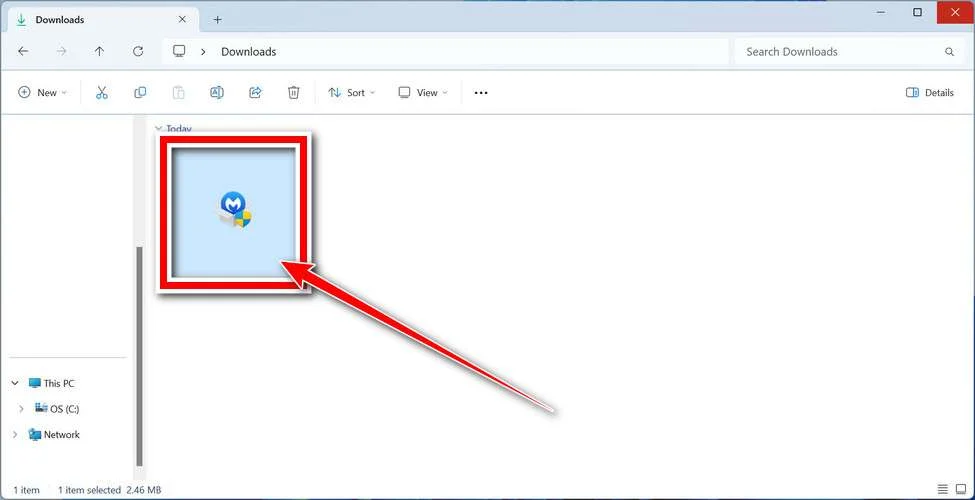
Follow the On-Screen Prompts to Install Malwarebytes
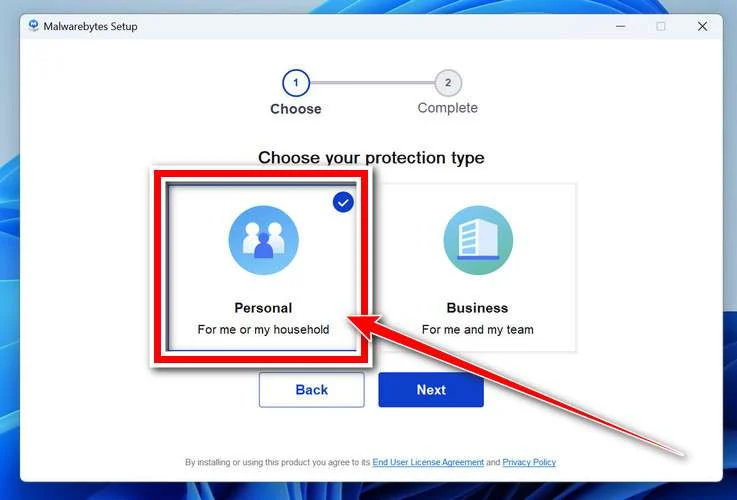
The setup wizard will walk you through a few quick screens:
-
Choose where you’re installing the program — “Personal Computer” or “Work Computer” — then click Next.
-
Malwarebytes will now install on your device. This usually takes under a minute.

-
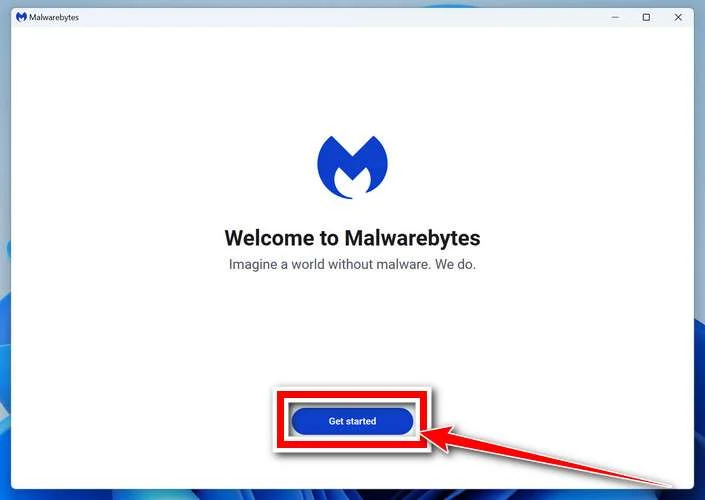
When installation is complete, the “Welcome to Malwarebytes” screen will open automatically.
-
On the final screen, click Open Malwarebytes to launch the program.

-
Enable “Scan for Rootkits”
Before scanning, turn on rootkit detection so Malwarebytes can find even the most hidden threats. Click the Settings gear icon on the left side of the screen.
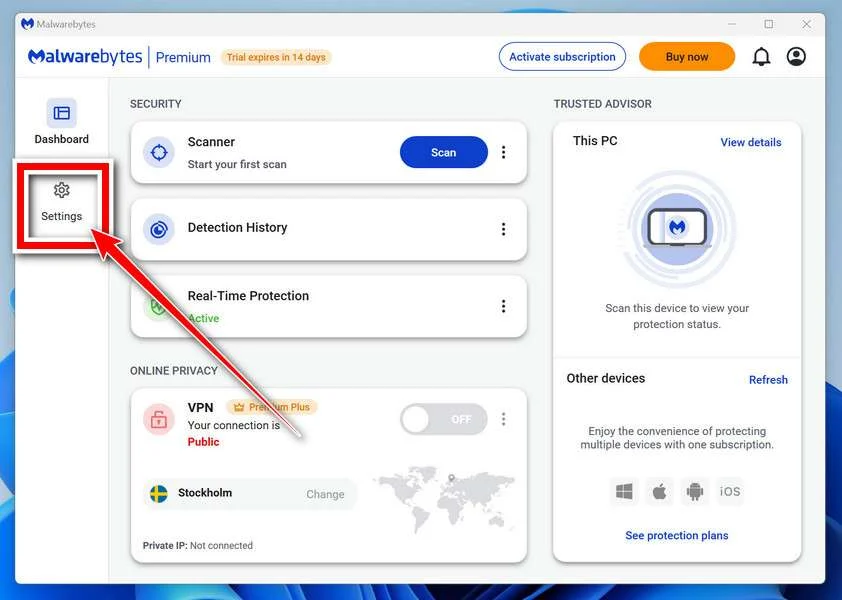
In the settings menu, find “Scan for rootkits” and click the toggle so it turns blue.

Done? Click “Dashboard” in the left pane to return to the main screen.
Start the Scan
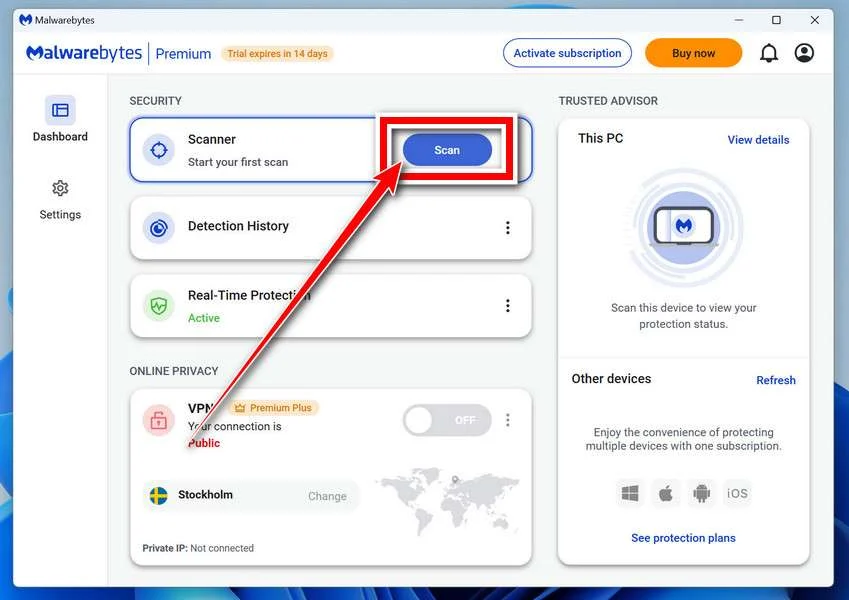
Click the blue Scan button. Malwarebytes will automatically update its virus database and start checking your computer for malware.
-
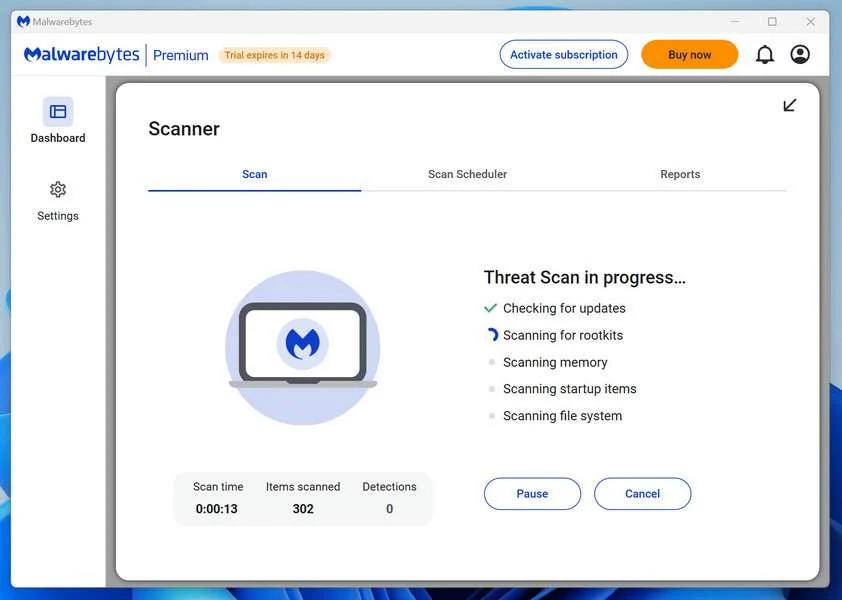
Wait for the Scan to Finish
The scan checks your entire system for browser hijackers and other malicious programs, so it can take 5 to 20 minutes depending on your computer. Feel free to do something else — just check back occasionally to see the progress.
-
Quarantine the Detected Threats
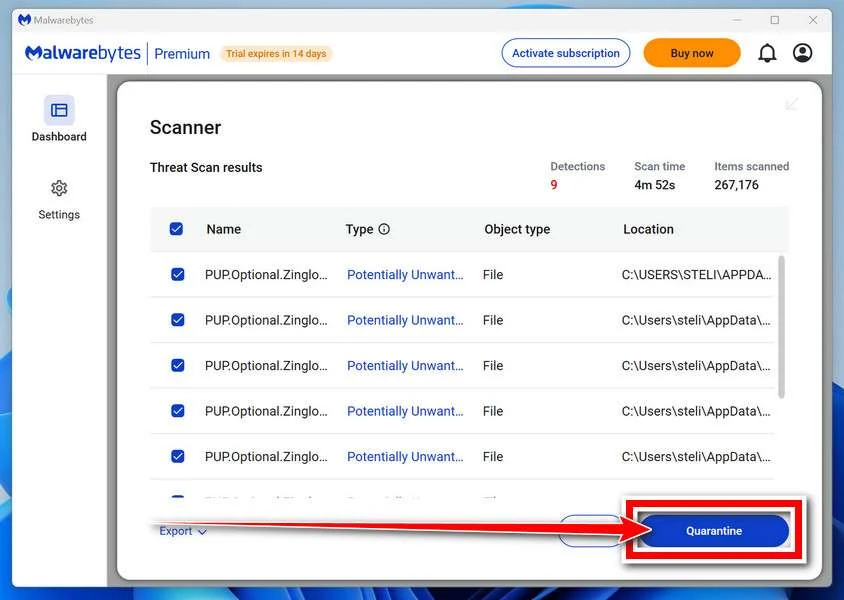
When the scan is done, you’ll see a list of everything Malwarebytes found — malware, adware, and potentially unwanted programs. Click the “Quarantine” button to remove all of them at once.
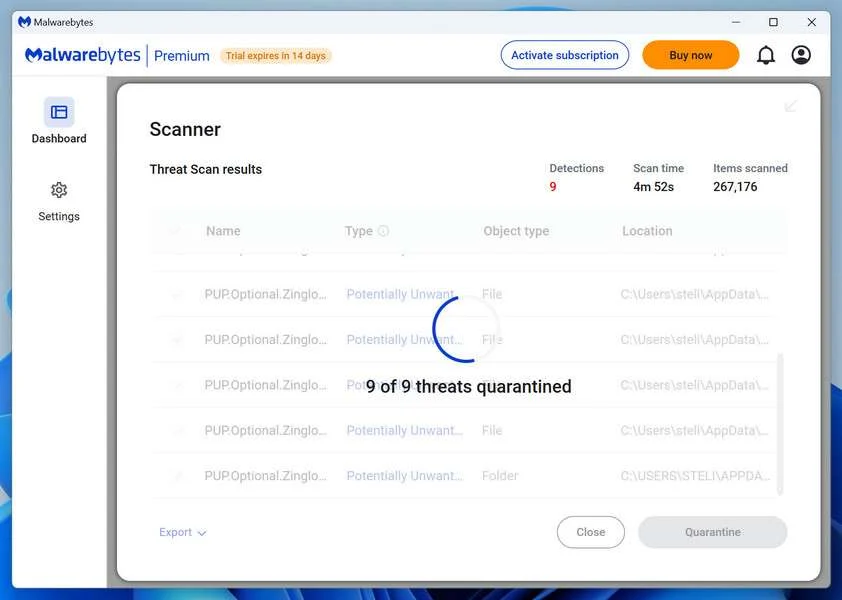
Malwarebytes will now remove the malicious files and registry entries and move them safely into quarantine.
-
Restart Your Computer
Some threats can only be fully removed after a reboot. If Malwarebytes asks you to restart, click Yes. Once you’re logged back in, Malwarebytes has finished removing the threats it found.
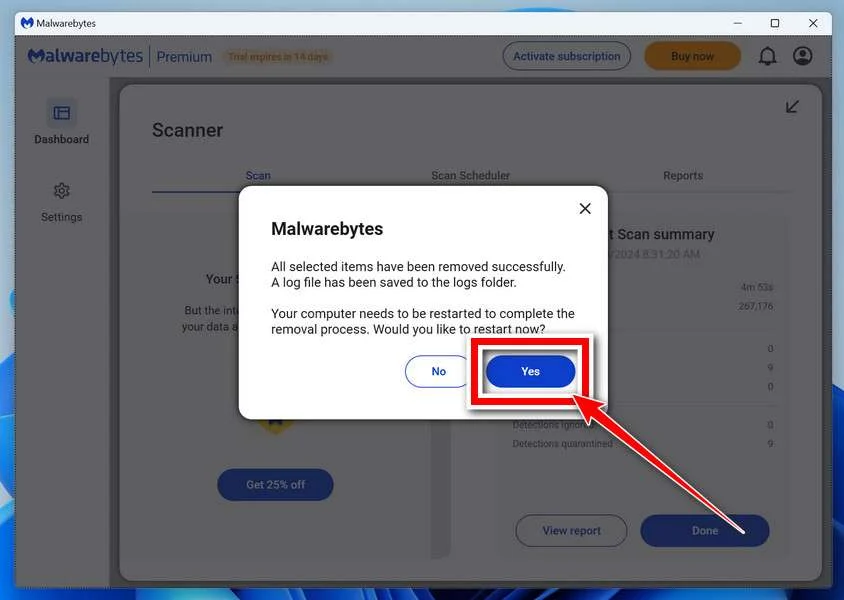
That’s it — your Windows computer is now free of trojans, adware, browser hijackers, and other malware.
If you are still having problems with your computer after completing these instructions, then please follow one of the steps:
- Run a computer scan with ESET Online Scanner
- Ask for help in our Windows Malware Removal Help & Support forum.
Scan Your Mac with Malwarebytes for Mac
Malwarebytes for Mac is a free on-demand scanner that removes the malware other security software tends to miss — adware, browser hijackers, and unwanted programs included. Cleaning an infected Mac with Malwarebytes has always been completely free, and it’s our go-to recommendation. Follow the steps below to scan and clean your Mac in just a few minutes.
-
Download Malwarebytes for Mac
Click the button below to download the latest version of Malwarebytes for Mac.
Download MalwarebytesOfficial installer for macOS. Your download starts right away.Want real-time protection? See Malwarebytes PremiumMalwarebytes Free for MacScans and removes malware at no cost -
Open the Malwarebytes setup file
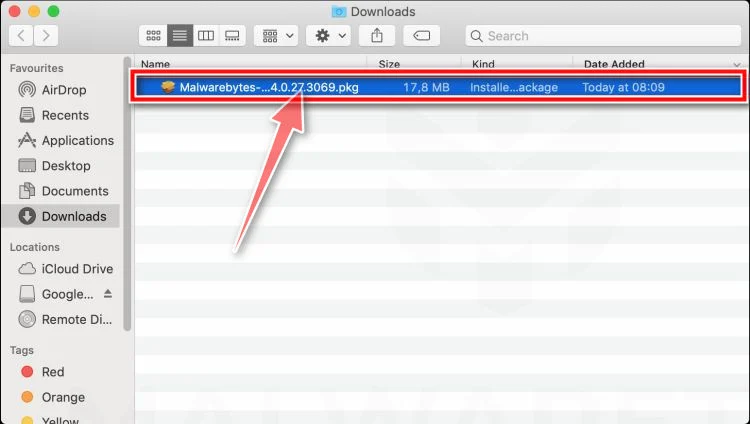
When the download finishes, open your Downloads folder and double-click the setup file to begin the installation.
-
Follow the On-Screen Prompts to Install Malwarebytes
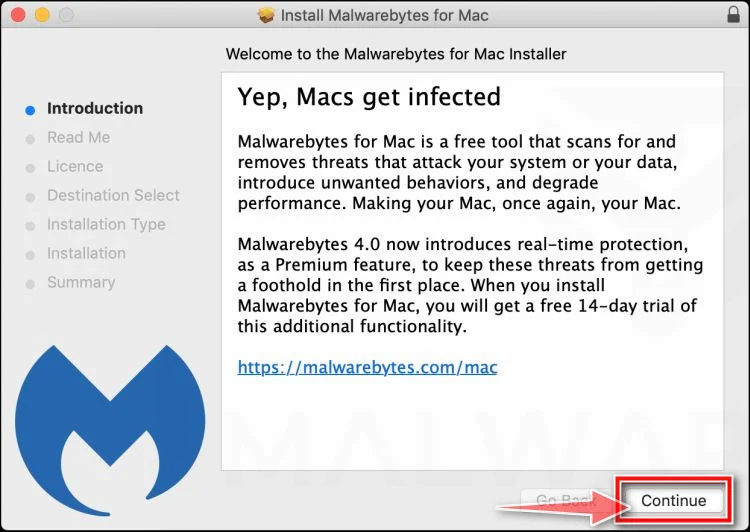
The Malwarebytes for Mac Installer will guide you through a few quick screens. Click “Continue” and keep following the prompts until the installation completes.
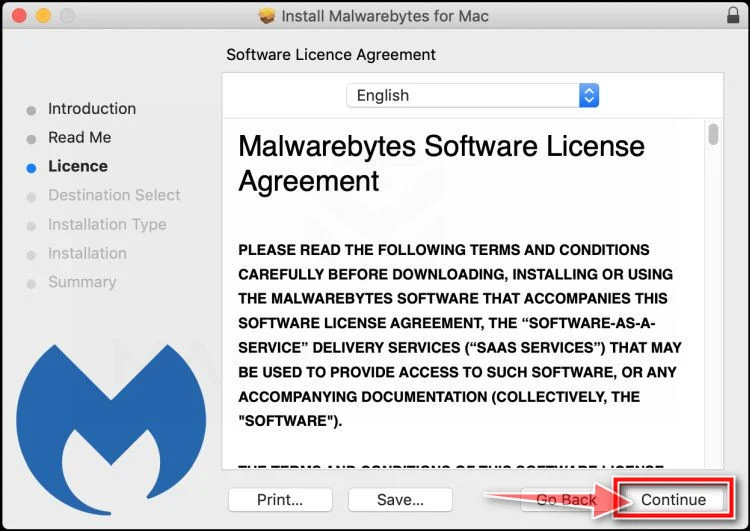
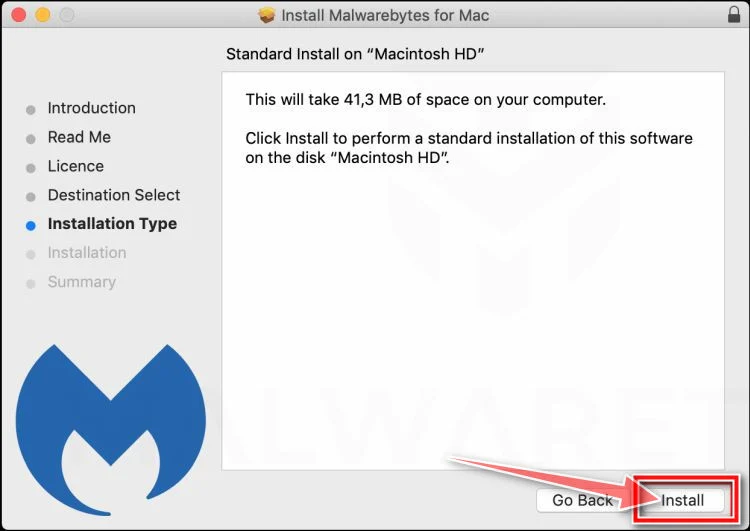
When the installation is complete, Malwarebytes opens to the Welcome to Malwarebytes screen. Click “Get started“.
-
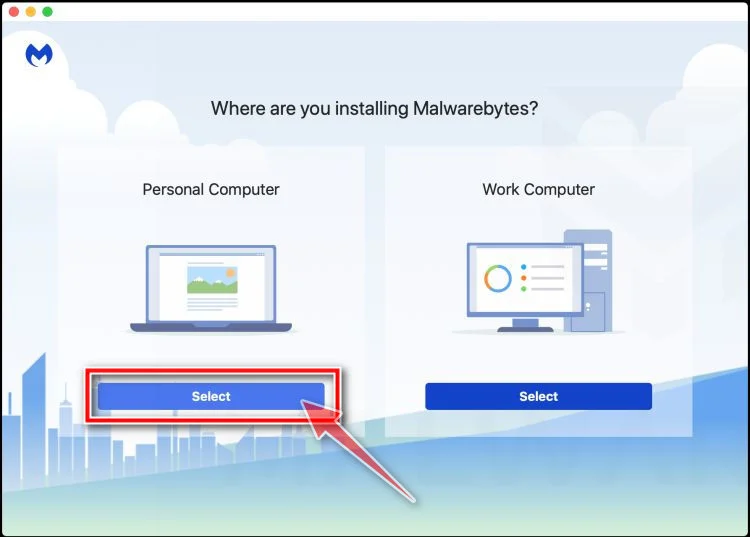
Select “Personal Computer” or “Work Computer”
Malwarebytes will ask what type of computer you’re installing it on. Click either Personal Computer or Work Computer, whichever applies.
-
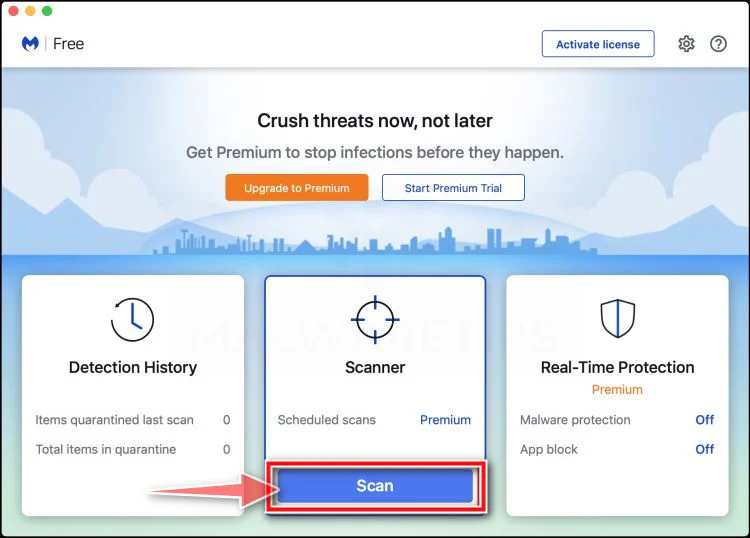
Start the Scan
Click the “Scan” button. Malwarebytes will automatically update its detection database and begin checking your Mac for malware.
-
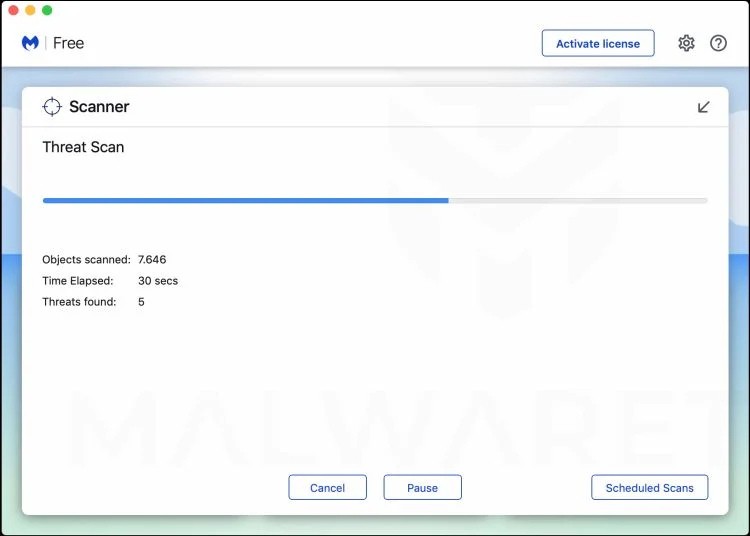
Wait for the Scan to Finish
Malwarebytes will scan your Mac for adware, browser hijackers, and other malicious programs. This can take a few minutes, so feel free to do something else — just check back occasionally to see the progress.
-
Quarantine the Detected Threats
When the scan is done, you’ll see a list of everything Malwarebytes found. Click the “Quarantine” button to remove all the threats at once.
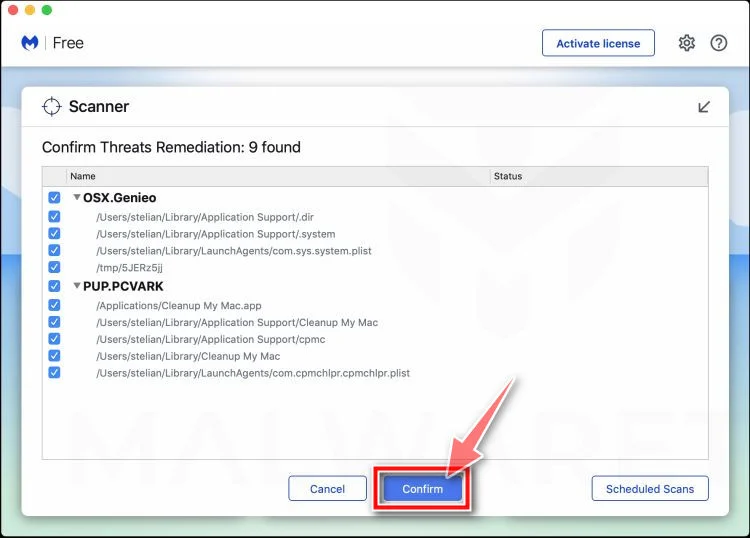
-
Restart Your Mac
Malwarebytes will now remove all the malicious files it found. Some threats can only be fully removed after a reboot — if Malwarebytes asks you to restart, allow it. Once you’re logged back in, your Mac is clean.
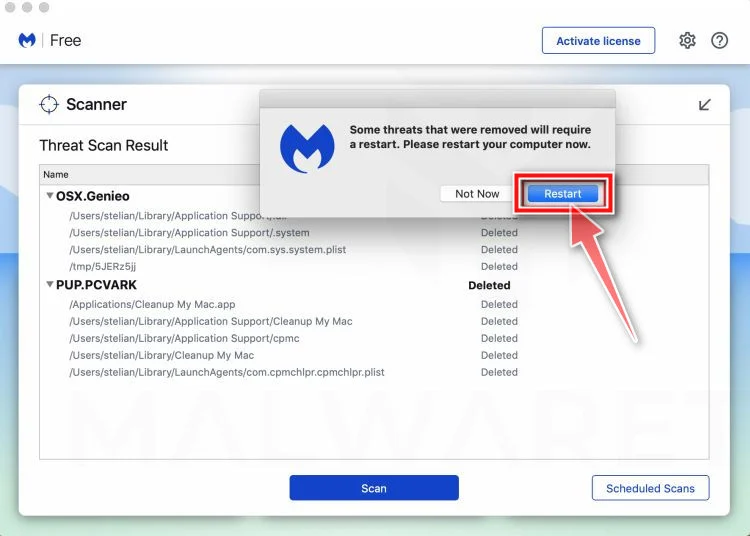
That’s it — your Mac is now free of adware, browser hijackers, and other malware.
If you are still experiencing problems while trying to remove a malicious program from your computer, please ask for help in our Mac Malware Removal Help & Support forum.
Scan Your Phone with Malwarebytes for Android
Malwarebytes for Android automatically detects and removes dangerous threats like malware and ransomware so you don’t have to worry about your most-used device being compromised. Aggressive detection of adware and potentially unwanted programs keeps your Android phone or tablet running smooth.
-
Download Malwarebytes for Android.
You can download Malwarebytes for Android by clicking the link below.
Get Malwarebytes for AndroidOpens Google Play in a new tab.Want real-time protection? See Malwarebytes Premium for AndroidMalwarebytes for AndroidScans your phone and removes malware at no cost -
Install Malwarebytes for Android on your phone.
In the Google Play Store, tap “Install” to install Malwarebytes for Android on your device.

When the installation process has finished, tap “Open” to begin using Malwarebytes for Android. You can also open Malwarebytes by tapping on its icon in your phone menu or home screen.

-
Follow the on-screen prompts to complete the setup process
When Malwarebytes will open, you will see the Malwarebytes Setup Wizard which will guide you through a series of permissions and other setup options.
This is the first of two screens that explain the difference between the Premium and Free versions. Swipe this screen to continue.
Tap on “Got it” to proceed to the next step.
Malwarebytes for Android will now ask for a set of permissions that are required to scan your device and protect it from malware. Tap on “Give permission” to continue.
Tap on “Allow” to permit Malwarebytes to access the files on your phone.
-
Update database and run a scan with Malwarebytes for Android
You will now be prompted to update the Malwarebytes database and run a full system scan.

Click on “Update database” to update the Malwarebytes for Android definitions to the latest version, then click on “Run full scan” to perform a system scan.

-
Wait for the Malwarebytes scan to complete.
Malwarebytes will now start scanning your phone for adware and other malicious apps. This process can take a few minutes, so we suggest you do something else and periodically check on the status of the scan to see when it is finished.

-
Click on “Remove Selected”.
When the scan has been completed, you will be presented with a screen showing the malware infections that Malwarebytes for Android has detected. To remove the malicious apps that Malwarebytes has found, tap on the “Remove Selected” button.

-
Restart your phone.
Malwarebytes for Android will now remove all the malicious apps that it has found. To complete the malware removal process, Malwarebytes may ask you to restart your device.
That’s it — your Android device is now free of malicious apps, adware, and browser redirects.
If you are still having problems with your phone after completing these instructions, then please follow one of the steps:
- Restore your phone to factory settings by going to Settings > General management > Reset > Factory data reset.
- Ask for help in our Mobile Malware Removal Help & Support forum.

Join the discussion
0 commentsShare your experience or ask a question about this article.
Discussion
Start the conversation
Have a question or something useful to share? Add the first comment.