

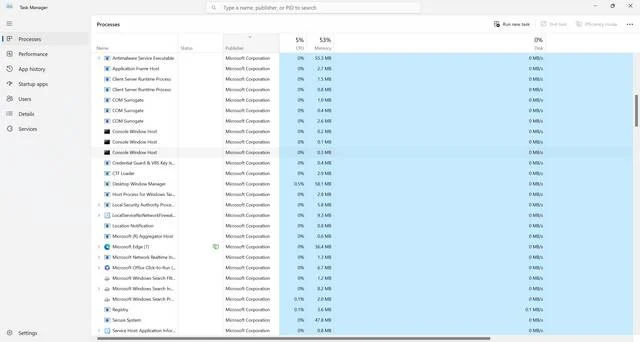
When you open the Task Manager on your Windows computer, you may come across a process called “Intel(R) Security Assist” running in the background. This can be a cause for concern for some users who are unfamiliar with this process and its purpose. In this article, we will explore what the Intel(R) Security Assist process is, why it is running in Task Manager, and whether it poses any security risks to your system.
Understanding the Intel(R) Security Assist Process
The Intel(R) Security Assist process, also known as “isa.exe,” is a legitimate component of Intel’s software suite. It is designed to assist in managing security features on Intel-based systems. The process is responsible for providing support for Intel(R) Security Assist technology, which helps protect your computer from various security threats.
Intel(R) Security Assist is primarily associated with Intel’s Active Management Technology (AMT) and Intel(R) Small Business Advantage (SBA). These technologies provide remote management capabilities and security features for business and enterprise systems.
Why is the Intel(R) Security Assist Process Running in Task Manager?
The Intel(R) Security Assist process runs in Task Manager to ensure that the security features provided by Intel are functioning correctly. It monitors and manages the security settings and configurations on your system, ensuring that your computer remains protected from potential threats.
While the Intel(R) Security Assist process is primarily found on business and enterprise systems, it can also be present on consumer-grade computers that have Intel processors. This is because some consumer systems may come pre-installed with Intel’s software suite, which includes the Intel(R) Security Assist component.
Is the Intel(R) Security Assist Process Safe?
Yes, the Intel(R) Security Assist process is safe and does not pose any security risks to your system. It is a legitimate component of Intel’s software suite and is designed to enhance the security features of your computer.
However, it is important to note that malware or viruses can sometimes disguise themselves as legitimate processes to avoid detection. If you suspect that the Intel(R) Security Assist process on your system is malicious, it is recommended to scan your computer for viruses and malware using a reliable security software like Malwarebytes Free.
How to Determine if the Intel(R) Security Assist Process is Genuine
If you want to verify the authenticity of the Intel(R) Security Assist process running on your system, you can follow these steps:
- Open the Task Manager by pressing Ctrl + Shift + Esc or by right-clicking on the taskbar and selecting “Task Manager.”
- Click on the “Processes” tab.
- Locate the “Intel(R) Security Assist” or “isa.exe” process in the list.
- Right-click on the process and select “Properties.”
- In the Properties window, navigate to the “Digital Signatures” tab.
- Check if the digital signature is valid and issued by Intel Corporation.
If the digital signature is valid and matches Intel Corporation, you can be confident that the Intel(R) Security Assist process running on your system is genuine.
Conclusion
The Intel(R) Security Assist process is a legitimate component of Intel’s software suite and is responsible for managing security features on Intel-based systems. It runs in Task Manager to ensure that your computer remains protected from potential threats.
While the process is safe, it is always recommended to stay vigilant and scan your computer for viruses and malware regularly. If you suspect any malicious activity, use a reliable security software like Malwarebytes Free to ensure the integrity of your system.
Remember, understanding the processes running on your computer can help you identify any potential security risks and take appropriate action to protect your system.

Join the discussion
0 commentsShare your experience or ask a question about this article.
Discussion
Start the conversation
Have a question or something useful to share? Add the first comment.